Aug 21, 2026 Written by 

Struggle for Liberation from the corrupt, and court life

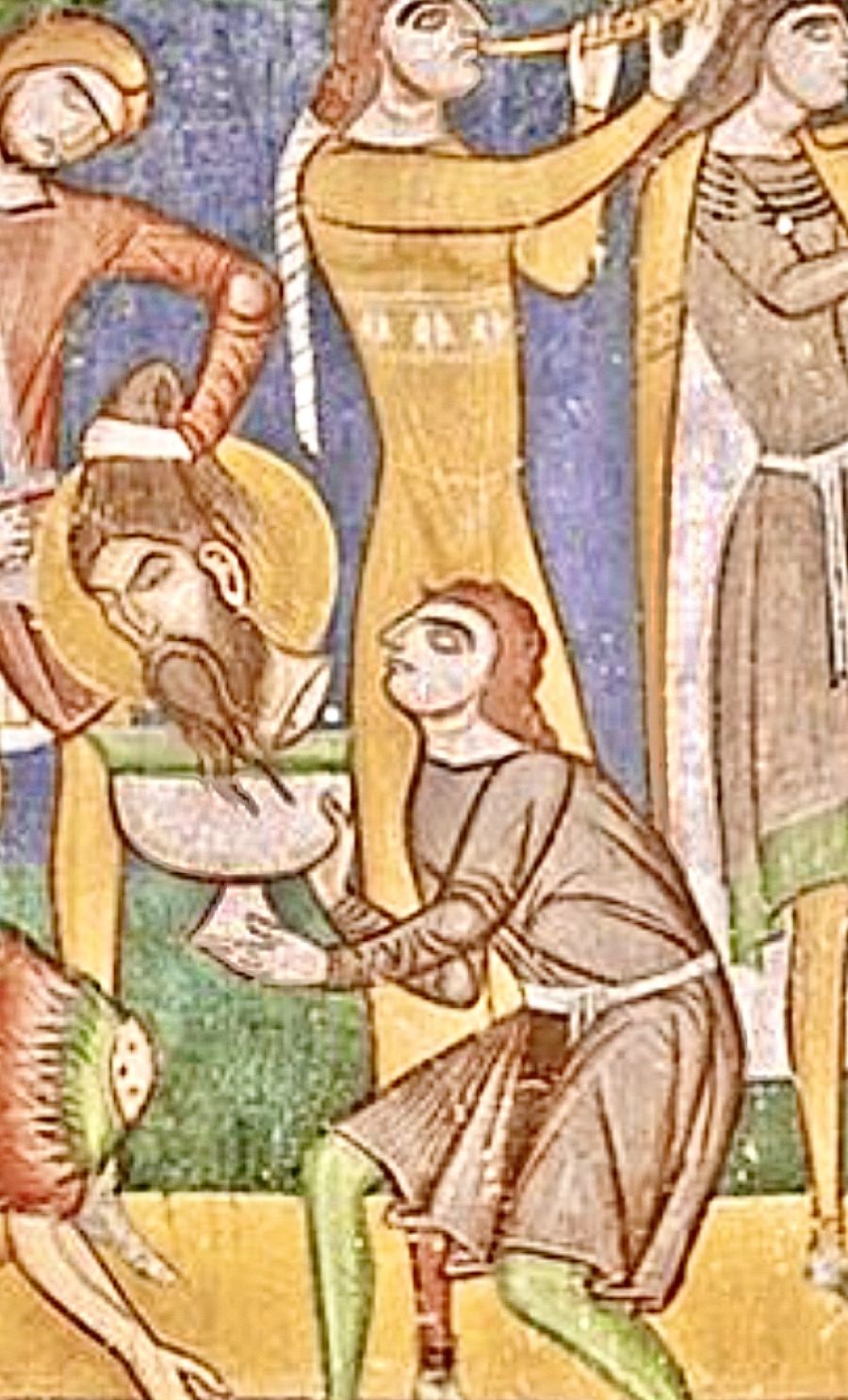
(Mk 6:17-29)


The question «Jesus, Who is he?» grows throughout the Gospel according to Mk, up to the answer of the centurion under the Cross (15:39).

The assessment of the opinions of the people (vv.14-16) suggests that even around the first assemblies of believers someone tried to understand Christ starting from what was already known.

Not a few wished to understand his Person on the basis of criteria drawn from the Scriptures or from the Oral Tradition of the Chosen People; from ancient beliefs and suggestions - even superstitious (as in the case of Herod).

But the Herald of God was not a purifier of the Temple, nor was He a simple healer of dated religiosity, of domesticated cultural ideas. Not even one of the many "reformers"... all in all conformists.

He overturns the hopes of the people, thus disturbing any school of thought; in particular, those who hold the exclusivity.


When feel a danger, those who are shrouded in luster and power become brazen and willing to do any violence, even for a false point of honor.

Tyrants always scoff at the isolated, uncomfortable and defenseless.

But leaders and powerful are also cowards: they do not intend to lose face in front of the allies of their immoderate and uncontrolled environment, cloaked in exemptions.

Josephus [Flavius] reports that John was in prison for fear of a popular uprising - evaluating that it was good for him to act early.

The assassination plot was occasional.


The brave one who denounces abuses is cut off, but the Voice of his martyrdom is no longer silent.

For this reason the episode does not lead Jesus to greater prudence.  Once an Envoy is killed, another greater and more incisive takes over: the last of the Prophets, the Son of God.

It seemed absurd that someone in that society dared to break the conspiratorial wall that guaranteed the troublemakers to consider themselves untouchable.

Faced with the unceremonious blackmail of the privileged who had control of every social and cultural class, it seemed impossible to start a new path, or to say and do anything that was not aligned.

John and Jesus challenge the status quo and attract upon themselves the vengeance of those who try to perpetuate the prerogatives of the ancient hierarchical cosmos, and the anger of those who are exposed in their hypocrisy.

This is the real difficulty encountered in the proclamation of the new Kingdom in the world. His contemptuous refusal and every attempted murder will be a litmus test of our noble critical frankness, the ‘revelation’ of which will run parallel the Two.


The Master stood up in defense of conscience and of the divine law itself, against the opportunist authorities, which he challenged openly.

Even today he asks for courage not to surrender in the face of corruption, evil, the current mentality; to be different in the way of thinking, speaking, choosing and acting.

Not listened to, derided, opposed by many courtiers, the children of God bear witness to the Truth, paying in person: perfect Joy.

Authentic Fullness.


To internalize and live the message:


Who is Jesus according to you and the others?


[Martyrdom of St. John the Baptist, August 29]

96 Last modified on Friday, 21 August 2026 04:20
don Giuseppe Nespeca

Giuseppe Nespeca è architetto e sacerdote. Cultore della Sacra scrittura è autore della raccolta "Due Fuochi due Vie - Religione e Fede, Vangeli e Tao"; coautore del libro "Dialogo e Solstizio".

We see this great figure, this force in the Passion, in resistance to the powerful. We wonder: what gave birth to this life, to this interiority so strong, so upright, so consistent, spent so totally for God in preparing the way for Jesus? The answer is simple: it was born from the relationship with God (Pope Benedict)
Noi vediamo questa grande figura, questa forza nella passione, nella resistenza contro i potenti. Domandiamo: da dove nasce questa vita, questa interiorità così forte, così retta, così coerente, spesa in modo così totale per Dio e preparare la strada a Gesù? La risposta è semplice: dal rapporto con Dio (Papa Benedetto)
The lamp is a symbol of the faith that illuminates our life, while the oil is a symbol of the charity that nourishes the light of faith, making it fruitful and credible (Pope Francis)
La lampada è il simbolo della fede che illumina la nostra vita, mentre l’olio è il simbolo della carità che alimenta, rende feconda e credibile la luce della fede (Papa Francesco)
Jesus wants our existence to be laborious, that we never lower our guard, so as to welcome with gratitude and wonder each new day given to us by God. Every morning is a blank page on which a Christian begins to write with good works (Pope Francis)
Gesù vuole che la nostra esistenza sia laboriosa, che non abbassiamo mai la guardia, per accogliere con gratitudine e stupore ogni nuovo giorno donatoci da Dio. Ogni mattina è una pagina bianca che il cristiano comincia a scrivere con le opere di bene (Papa Francesco)
And this is the problem: when the People put down roots in the land and are the depository of the Law, they are tempted to place their security and joy in something that is no longer the Word of God (Pope Benedict)
Ed ecco il problema: quando il popolo si stabilisce nella terra, ed è depositario della Legge, è tentato di riporre la sua sicurezza e la sua gioia in qualcosa che non è più la Parola del Signore (Papa Benedetto)
Despite the scarcity of information about him, St Bartholomew stands before us to tell us that attachment to Jesus can also be lived and witnessed to without performing sensational deeds. Jesus himself, to whom each one of us is called to dedicate his or her own life and death, is and remains extraordinary (Pope Benedict)
La figura di san Bartolomeo, pur nella scarsità delle informazioni che lo riguardano, resta comunque davanti a noi per dirci che l'adesione a Gesù può essere vissuta e testimoniata anche senza il compimento di opere sensazionali. Straordinario è e resta Gesù stesso, a cui ciascuno di noi è chiamato a consacrare la propria vita e la propria morte (Papa Benedetto)
Faith is more than just empirical or historical facts; it is an ability to grasp the mystery of Christ’s person in all its depth [Pope Benedict]
La fede va al di là dei semplici dati empirici o storici, ed è capace di cogliere il mistero della persona di Cristo nella sua profondità [Papa Benedetto]
More than 600 precepts are mentioned in the Law of Moses. How should the great commandment be distinguished among these? (Pope Francis)
Nella Legge di Mosè sono menzionati oltre seicento precetti. Come distinguere, tra tutti questi, il grande comandamento? (Papa Francesco)
The invitation has three characteristics: freely offered, breadth and universality. Many people were invited, but something surprising happened: none of the intended guests came to take part in the feast, saying they had other things to do; indeed, some were even indifferent, impertinent, even annoyed (Pope Francis)

Due Fuochi due Vie - Vol. 1 Due Fuochi due Vie - Vol. 2 Due Fuochi due Vie - Vol. 3 Due Fuochi due Vie - Vol. 4 Due Fuochi due Vie - Vol. 5 Dialogo e Solstizio I fiammiferi di Maria

duevie.art

don Giuseppe Nespeca

Tel. 333-1329741


Disclaimer

Questo blog non rappresenta una testata giornalistica in quanto viene aggiornato senza alcuna periodicità. Non può pertanto considerarsi un prodotto editoriale ai sensi della legge N°62 del 07/03/2001.
Le immagini sono tratte da internet, ma se il loro uso violasse diritti d'autore, lo si comunichi all'autore del blog che provvederà alla loro pronta rimozione.
L'autore dichiara di non essere responsabile dei commenti lasciati nei post. Eventuali commenti dei lettori, lesivi dell'immagine o dell'onorabilità di persone terze, il cui contenuto fosse ritenuto non idoneo alla pubblicazione verranno insindacabilmente rimossi.






