Aug 13, 2026 Written by 

No forced surrendering

The Great Commandment: only profound Quality obliges

(Mt 22:34-40)


That of the ‘Great commandment’ was the most familiar catechism rule, even to infants.

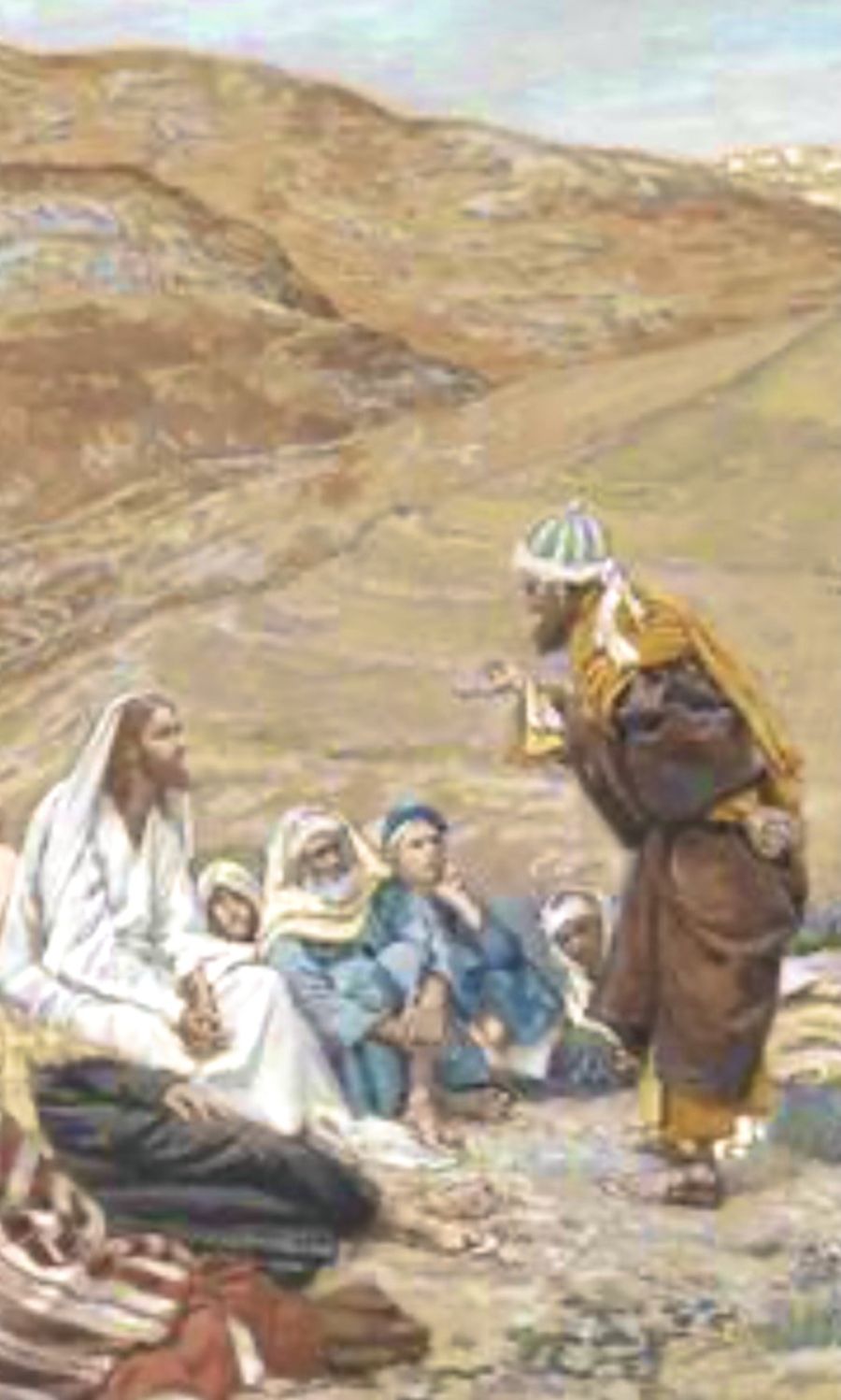
Jesus is questioned to retort: and why do you not keep the one commandment that even God fulfils - the Sabbath rest?

The unique disposition in which the Father recognizes himself is Love, not some particular precept - because only profound Quality obliges.

The spiritual proposal of the Master makes the narrative of God's people and the practice of the Prophets its own: all heart, feet, hands - and intelligence.

Complete Love for God envelops the creature in every decision [heart], every moment and aspect of its concrete 'life', all its resources [strength].

Mt does not explicitly mention this last aspect, perhaps to emphasize that the Father does not absorb energies in any way, but transmits them.

And Jesus adds to the nuances of authentic understanding with God enumerated in the First Testament an unexpected side to those who think of love as a feeling only emotional.

The Lord suggests study, discernment and understanding of our perceptions (v.37) - the mental and deep intelligence aspect that complements Dt 6.

At first glance, it appears to be a secondary facet or even a frill for the qualitative leap from a common religious sense to the wisely and personally configured existence of Faith.

The exact opposite is true: we are children of a Father who does not supplant us, nor absorb our forces or potential, depersonalising us; not even from the mental point of view.

Practicality alone makes us fragile, not very aware; and when we are not convinced, we will not be reliable either, always at the mercy of changing situations and the conformist, fashionable, other people’s opinion.

Jesus does not speak of love for God in terms of intimacy and feeling, but of a totally involving affinity, made less oscillating precisely by the development of our sapiential measure on issues.

Here is a decisive appointment, of the Love in the round.

It would be unnatural to recognise a Lord of Heaven who does not come to meet us and instead towers over us with an objective of his own, which is extrinsic to us and makes us marginal.


Loving «How [and Because] yourself»: it is a new Genesis in the spirit of Giving.

The paradox suggested by Jesus is that we love for the care to meet - and because we love ourselves - by expanding the I into the You.

God’s «great command» affects real life and concerns not only the quality of relationship with the world and neighbour, but the reflexive global with oneself. 

We should not be afraid of other doctrines and disciplines, neglecting the challenges even intellectual ones that call into question beliefs, works, one’s worldview, language, style, and thought itself.

All added values.

Needless to complain, if the ecclesial realities that do not update or deepen, and remain in the inherited commonplaces [or vogues] slowly decay, then disappear.

Therefore to the ancient notes of true love, the Son of God adds the ‘quality of mind’: we are not gullible, clueless, one-sided.

Our outstretched hands are the result of free and conscious choice. No forced surrender.

«Faith that does not become culture is a faith that is not fully accepted, not entirely thought out, not faithfully lived» [John Paul II].


To internalize and live the message:


What is Great for you? Do you document and update yourself in order to better correspond to God’s Call?


[Friday 20th wk. in O.T.  August 21, 2026]

27 Last modified on Thursday, 13 August 2026 07:20
don Giuseppe Nespeca

Giuseppe Nespeca è architetto e sacerdote. Cultore della Sacra scrittura è autore della raccolta "Due Fuochi due Vie - Religione e Fede, Vangeli e Tao"; coautore del libro "Dialogo e Solstizio".

More than 600 precepts are mentioned in the Law of Moses. How should the great commandment be distinguished among these? (Pope Francis)
Nella Legge di Mosè sono menzionati oltre seicento precetti. Come distinguere, tra tutti questi, il grande comandamento? (Papa Francesco)
The invitation has three characteristics: freely offered, breadth and universality. Many people were invited, but something surprising happened: none of the intended guests came to take part in the feast, saying they had other things to do; indeed, some were even indifferent, impertinent, even annoyed (Pope Francis)
L’invito ha tre caratteristiche: la gratuità, la larghezza, l’universalità. Gli invitati sono tanti, ma avviene qualcosa di sorprendente: nessuno dei prescelti accetta di prendere parte alla festa, dicono che hanno altro da fare; anzi alcuni mostrano indifferenza, estraneità, perfino fastidio (Papa Francesco)
Those who are considered the "last", if they accept, become the "first", whereas the "first" can risk becoming the "last" (Pope Benedict)
Proprio quelli che sono considerati "ultimi", se lo accettano, diventano "primi", mentre i "primi" possono rischiare di finire "ultimi" (Papa Benedetto)
The dialogue of Jesus with the rich young man, related in the nineteenth chapter of Saint Matthew's Gospel, can serve as a useful guide for listening once more in a lively and direct way to his moral teaching [Veritatis Splendor n.6]
Il dialogo di Gesù con il giovane ricco, riferito nel capitolo 19 del Vangelo di san Matteo, può costituire un'utile traccia per riascoltare in modo vivo e incisivo il suo insegnamento morale [Veritatis Splendor n.6]
St Augustine rightly commented: “Christ showed himself indifferent to her, not in order to refuse her his mercy but rather to inflame her desire for it” (Sermo 77, 1: PL 38, 483) [Pope Benedict]
Sant’Agostino commenta giustamente: “Cristo si mostrava indifferente verso di lei, non per rifiutarle la misericordia, ma per infiammarne il desiderio” (Sermo 77, 1: PL 38, 483) [Papa Benedetto]
In the divine attitude justice is pervaded with mercy, whereas the human attitude is limited to justice. Jesus exhorts us to open ourselves with courage to the strength of forgiveness, because in life not everything can be resolved with justice. We know this (Pope Francis)
Nell’atteggiamento divino la giustizia è pervasa dalla misericordia, mentre l’atteggiamento umano si limita alla giustizia. Gesù ci esorta ad aprirci con coraggio alla forza del perdono, perché nella vita non tutto si risolve con la giustizia; lo sappiamo (Papa Francesco)
The Second Vatican Council's Constitution on the Sacred Liturgy refers precisely to this Gospel passage to indicate one of the ways that Christ is present:  "He is present when the Church prays and sings, for he has promised "where two or three are gathered together in my name there am I in the midst of them' (Mt 18: 20)" [Sacrosanctum Concilium, n. 7]
La Costituzione sulla Sacra Liturgia del Concilio Vaticano II si riferisce proprio a questo passo del Vangelo per indicare uno dei modi della presenza di Cristo: "Quando la Chiesa prega e canta i Salmi, è presente Lui che ha promesso: "Dove sono due o tre riuniti nel mio nome, io  sono in mezzo a loro" (Mt 18, 20)" [Sacrosanctum Concilium, 7]
For Jesus we are not a "mass", a "multitude"! We are individual "persons" with an eternal value, both as creatures and as re-deemed persons! He knows us! He knows me, and loves me and gave himself for me! (Gal 2:20) [John Paul II]

Due Fuochi due Vie - Vol. 1 Due Fuochi due Vie - Vol. 2 Due Fuochi due Vie - Vol. 3 Due Fuochi due Vie - Vol. 4 Due Fuochi due Vie - Vol. 5 Dialogo e Solstizio I fiammiferi di Maria

duevie.art

don Giuseppe Nespeca

Tel. 333-1329741


Disclaimer

Questo blog non rappresenta una testata giornalistica in quanto viene aggiornato senza alcuna periodicità. Non può pertanto considerarsi un prodotto editoriale ai sensi della legge N°62 del 07/03/2001.
Le immagini sono tratte da internet, ma se il loro uso violasse diritti d'autore, lo si comunichi all'autore del blog che provvederà alla loro pronta rimozione.
L'autore dichiara di non essere responsabile dei commenti lasciati nei post. Eventuali commenti dei lettori, lesivi dell'immagine o dell'onorabilità di persone terze, il cui contenuto fosse ritenuto non idoneo alla pubblicazione verranno insindacabilmente rimossi.






