May 31, 2026 Written by 

Beatitudes and reversing, between ability and fragility

Turnover in the Church, antidote to unilaterality

(Mt 5:1-12)


We feel ephemeral and often disappointed, yet we want to be happy, not just here and there: we are uncertain, yet we seek full and lasting joy.

Of course we can only find it in a disconcerting proposal.


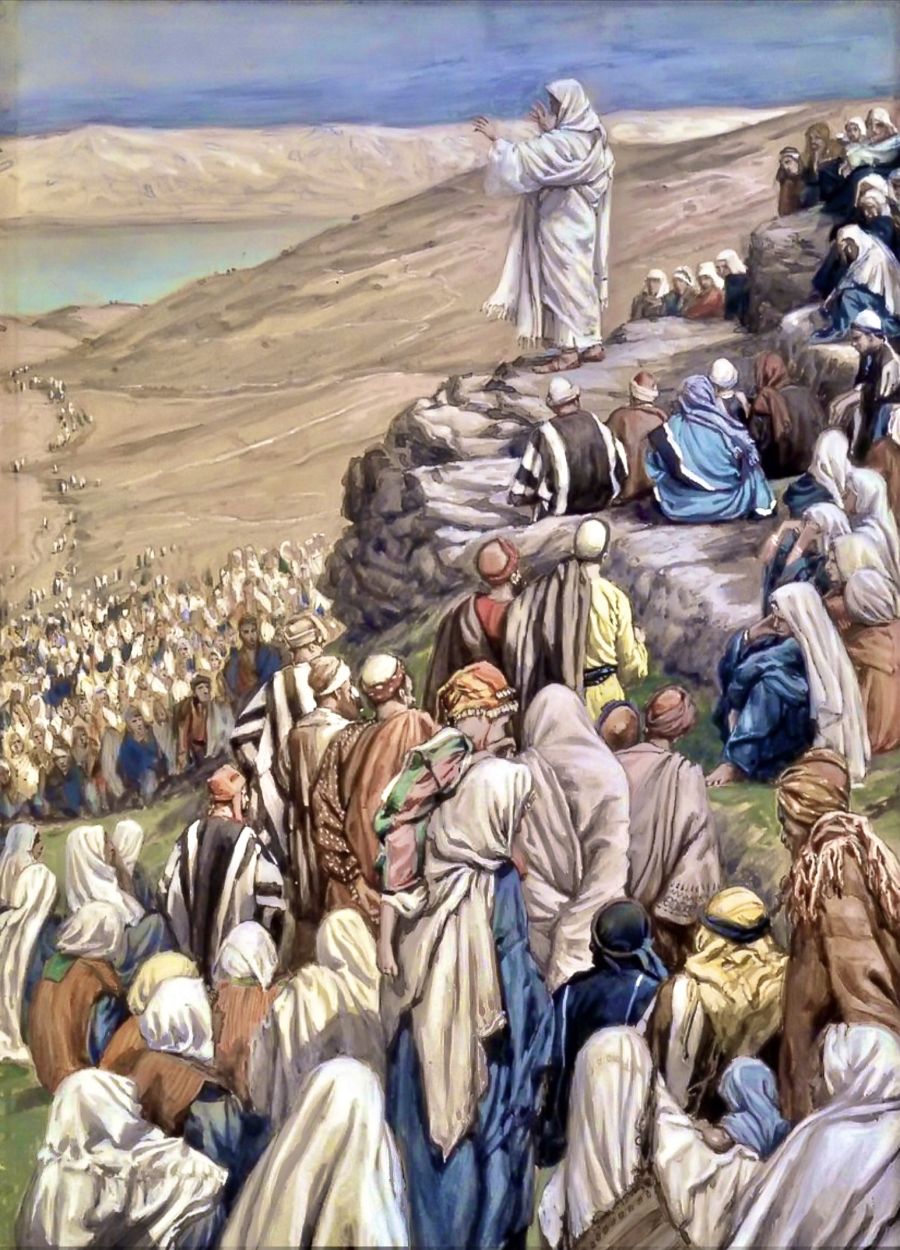
In the Gospel of Mt Jesus is the new Moses who rises on «the Mount». But the young Legislator does not proclaim norms on a stone code, but his own experience of the Father... «by seeing the crowds» (v.1).

At the crossroads between divine condition and fullness of humanization, the new Rabbi outlines a sort of his Self-Portrait: as a Son; in favor of his brothers. Gathered in Family spirit.

A sprout of hospitable world - which in its small churches Mt wants to encourage. Where there is no man above and little ones always below; or the character in front and the others behind.

Only humanizing upheavals [such as the reversal of roles and conditions] that strengthen the concordant tissue.

So in the House of All there will have to be a replacement and reversal of figures, of situations and criteria of eminence, therefore chains of command - signs of the Coming Kingdom. 

Overturning capable of sharpening the sensitivities to Communion [at that time there was lively friction between Judaizing experts, first in the class, and the last arrived at threshold of fraternities in the faith].


On «the Mount» is announced the discreet work of the Spirit, which designates the character of a modest holiness, animated by gift’s Love, in itself divinizing and humanizing [quality that is manifested in the so-called "poor in Spirit"].

In fact, the authentic disciple reaches tears: they express the dimension of intimate energy that purifies external ideas; it makes us true from within, and essential on the outside.

Affliction drives to return into ourselves; it re-proposes the contact with our land and the virtues that regenerate.

Sadness that in the condition of finitude and conscious limit, makes us empathetic, splendidly human.

Deeply dissatisfied: opponents of injustices. Because every person who is not placed in the position of being able to express his abilities is an insult to the Salvation Design.

In fact, in each excluded person hides an Artist who is not allowed to express himself, who is neither discovered nor valued in favor of himself and others; rather, considered extraneous or deviant.


The Spirit of Christ is spontaneously identified not with the usual aggressive energy of the feral animals, of those who prevail because more astute and strong.

We are women and men characterized by heart of flesh - not of beast (Dan 7).

The Beatitudes - the new Decalogue of «the Mount» - allude precisely to a sort of divine condition embodied and transmissible to anyone, pacified and creative like love, therefore all to be discovered.

This is not a proposal that pushes back eccentricities: on the contrary, very nice and lovable, inclusive.

That of the Blessed is therefore the condition that makes us Unique - not sanctity regulated by procedures, which is always there to abhor the danger of the unusual.

Nor does it exclude our right to do something great... but it does not identify it with having, power, appearing.

There is no "race" to be won. And the Lord makes us reflect on the authentic realization: it is not an outward conquest.


Blessed is the trait and outcome of the true and full development of the divine project on humanity - paradoxical in character.

The Lord is pleased with those who undertake this orientation, where his feelings become deeply ours.

Blood relatives; already here and now able to experience the blissful life of Heaven: being with and for others, being ourselves.


[Monday 10th wk. in O.T.  June 8, 2026]

99 Last modified on Sunday, 31 May 2026 03:57
don Giuseppe Nespeca

Giuseppe Nespeca è architetto e sacerdote. Cultore della Sacra scrittura è autore della raccolta "Due Fuochi due Vie - Religione e Fede, Vangeli e Tao"; coautore del libro "Dialogo e Solstizio".

An ancient hermit says: “The Beatitudes are gifts of God and we must say a great ‘thank you’ to him for them and for the rewards that derive from them, namely the Kingdom of God in the century to come and consolation here; the fullness of every good and mercy on God’s part … once we have become images of Christ on earth” (Peter of Damascus) [Pope Benedict]
Afferma un antico eremita: «Le Beatitudini sono doni di Dio, e dobbiamo rendergli grandi grazie per esse e per le ricompense che ne derivano, cioè il Regno dei Cieli nel secolo futuro, la consolazione qui, la pienezza di ogni bene e misericordia da parte di Dio … una volta che si sia divenuti immagine del Cristo sulla terra» (Pietro di Damasco) [Papa Benedetto]
"How will we be able to live without him?". In these words of St Ignatius we hear echoing the affirmation of the martyrs of Abitene: "Sine dominico non possumus" [Pope Benedict]
"Come potremmo vivere senza di Lui?". Sentiamo echeggiare in queste parole di Sant’Ignazio l’affermazione dei martiri di Abitene: "Sine dominico non possumus" [Papa Benedetto]
The kingdom of Christ is manifested, as the Council teaches, in the 'kingship' of man [John Paul II]
Il regno di Cristo si manifesta, come insegna il Concilio, nella “regalità” dell’uomo [Giovanni Paolo II]
In the middle of the dense forest of rules and regulations — to the legalisms of past and present — Jesus makes an opening through which one can catch a glimpse of two faces: the face of the Father and the face of the brother. He does not give us two formulas or two precepts: there are no precepts nor formulas. He gives us two faces [Pope Francis]
In mezzo alla fitta selva di precetti e prescrizioni – ai legalismi di ieri e di oggi – Gesù opera uno squarcio che permette di scorgere due volti: il volto del Padre e quello del fratello. Non ci consegna due formule o due precetti: non sono precetti e formule; ci consegna due volti [Papa Francesco]
Whoever is inscribed in God's name participates in God's life, and lives. Therefore to believe is to be inscribed in the name of God. Thus we are alive. Whoever has a share in God's name is not dead but rather belongs to the living God. In this sense we should be able to understand the dynamism of faith, which entails enrolling our names in the name of God and in this way entering into life [Pope Benedict]
Chi è scritto nel nome di Dio partecipa alla vita di Dio, vive. E così credere è essere iscritti nel nome di Dio. E così siamo vivi. Chi appartiene al nome di Dio non è un morto, appartiene al Dio vivente. In questo senso dovremmo capire il dinamismo della fede, che è un iscrivere il nostro nome nel nome di Dio e così un entrare nella vita [Papa Benedetto]
As sometimes happens in the Gospel, faced with the trap set for him by his enemies, Jesus, with his response, rises above the contingent controversy and goes far beyond the particular and mutually divergent positions (John Paul II)
Come talora accade nel Vangelo, di fronte al tranello mossogli dai suoi nemici, Gesù, con la sua risposta, s’innalza al di sopra della polemica contingente e va ben oltre le posizioni particolari e tra loro divergenti (Giovanni Paolo II)
This Name clearly expresses that the God of the Bible is not some kind of monad closed in on itself and satisfied with his own self-sufficiency but he is life that wants to communicate itself, openness, relationship [Pope Benedict]

Due Fuochi due Vie - Vol. 1 Due Fuochi due Vie - Vol. 2 Due Fuochi due Vie - Vol. 3 Due Fuochi due Vie - Vol. 4 Due Fuochi due Vie - Vol. 5 Dialogo e Solstizio I fiammiferi di Maria

duevie.art

don Giuseppe Nespeca

Tel. 333-1329741


Disclaimer

Questo blog non rappresenta una testata giornalistica in quanto viene aggiornato senza alcuna periodicità. Non può pertanto considerarsi un prodotto editoriale ai sensi della legge N°62 del 07/03/2001.
Le immagini sono tratte da internet, ma se il loro uso violasse diritti d'autore, lo si comunichi all'autore del blog che provvederà alla loro pronta rimozione.
L'autore dichiara di non essere responsabile dei commenti lasciati nei post. Eventuali commenti dei lettori, lesivi dell'immagine o dell'onorabilità di persone terze, il cui contenuto fosse ritenuto non idoneo alla pubblicazione verranno insindacabilmente rimossi.






