Mar 11, 2026 Written by 

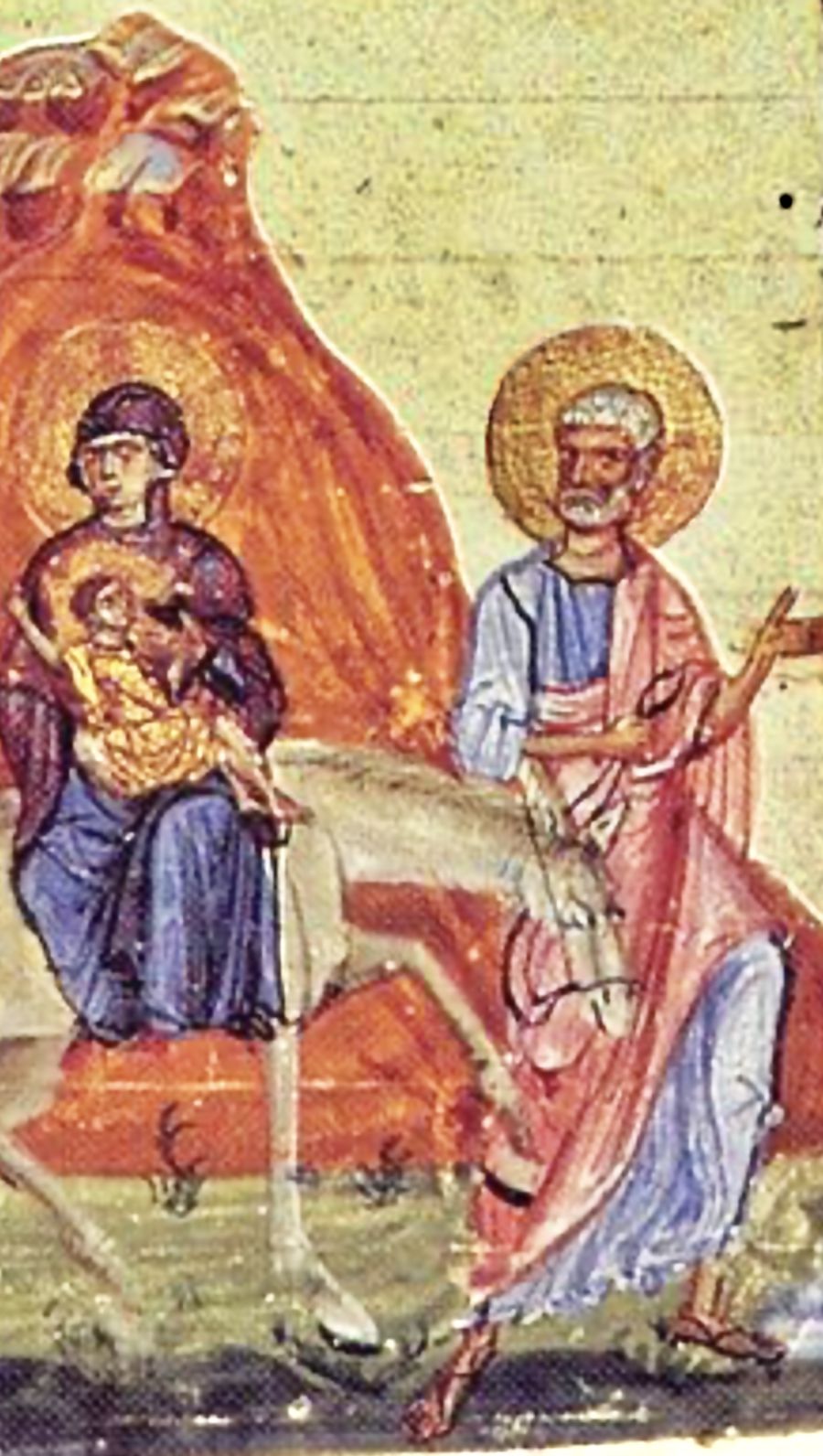
Annunciation to Joseph: meaning and value of Doubt

(Mt 1:16.18-21.24)


«Even through Joseph’s fears, God’s will, his history and his plan were at work. Joseph, then, teaches us that faith in God includes believing that he can work even through our fears, our frailties and our weaknesses. He also teaches us that amid the tempests of life, we must never be afraid to let the Lord steer our course. At times, we want to be in complete control, yet God always sees the bigger picture» [Patris Corde n.2].


Incarnation: the Father places himself alongside his sons and daughters. Not only He isn’t afraid of becoming impure in contact with things that concern human dynamics: in their Condition even recognizes Himself.

For this reason, the culmination of the entire Salvation Story springs from Joseph's embarrassment.

Sources attest that he was not at all a character with a lily in his hand, but perhaps this may interest us up to a certain point.

The narration of Mt is striking, because the distinction and the possibility of the irruption (of the summit itself) of God's plan on humanity seem to arise not from a certainty, but from a Doubt.

The question mark involves. Discomfort sows a new Germ inside. It tears and cuts down all the alike seedlings of the grass infesting the full Life - which was the chiseled Law on appearances.

The "problem" leads to dreaming of other horizons to open, and in the first person. Hesitation leads out of the mental cages that mortify relationships, previously reduced to casuistry.

The perplexity makes common opinion overlook, because conformity attenuates and extinguishes the Novelty of God.

Hesitation seeks existential fissures: it wants to introduce us into territories of life - where others can also draw on different experiences, varied perceptions, and moments in which to have decisive insights as a gift.

Its wise Energy finds gaps and small passages; it acts to make us evolve as children of Eternity - also arousing inconvenience, which flood existence of creative suspensions and new passion.

Its lucid Action is introduced through Dreams that shake off the usual projects, or states of mind that put them in the balance; and bottlenecks of marginalized thinking that makes us rediscover the reason we were born, discover our part in the world.

Every swing, every pain, every danger, every move, can become a ‘birth’ towards Originality - without identifications first.

Uniqueness does not make us lose the Source that ‘watches’ in us. Woe to shirk: we would lose our destination.

The Spirit that slips into the crevices of standard mindsets finds an intimate spot that allows us to flourish differently now, able to bring out the essence of who we authentically are, and stop copying clichés.

Then we will not keep asking: Whose fault is it? How should we buffer the situation? Who should we lean on?. But rather: What is the new ‘life’ I have to explore? What is yet to be discovered?.

In fact, the bite of doubts does not make one become believer-garbage, as hypothesized in disciplined, legalistic religions - in puritan philosophies with artificial wisdom - vice versa friends, adopted sons [ie chosen] and heirs.

Thanks to the Relation of Faith, we are no longer lost in the desert - because the many things and the hazards become dialogue of specific weight: we are at Home, respecting our mysterious character and Call.

We begin like Joseph to be present to ourselves. And by changing gaze, we will enjoy the Beauty of the New.


«Saint Joseph reminds us that those who appear hidden or in the shadows can play an incomparable role in the history of salvation. A word of recognition and of gratitude is due to them all» [Patris Corde intr.].


To internalize and live the message:


On what occasion did ‘doubt’ open horizons to astound you? In the beautiful and colorful moments of life, did you start from your certainty?


 [St. Joseph, March 19]

90 Last modified on Wednesday, 11 March 2026 04:51
don Giuseppe Nespeca

Giuseppe Nespeca è architetto e sacerdote. Cultore della Sacra scrittura è autore della raccolta "Due Fuochi due Vie - Religione e Fede, Vangeli e Tao"; coautore del libro "Dialogo e Solstizio".

Because of this unique understanding, Jesus can present himself as the One who revealsr the Father with a knowledge that is the fruit of an intimate and mysterious reciprocity (John Paul II)
In forza di questa singolare intesa, Gesù può presentarsi come il rivelatore del Padre, con una conoscenza che è frutto di un'intima e misteriosa reciprocità (Giovanni Paolo II)
Yes, all the "miracles, wonders and signs" of Christ are in function of the revelation of him as Messiah, of him as the Son of God: of him who alone has the power to free man from sin and death. Of him who is truly the Savior of the world (John Paul II)
Sì, tutti i “miracoli, prodigi e segni” di Cristo sono in funzione della rivelazione di lui come Messia, di lui come Figlio di Dio: di lui che, solo, ha il potere di liberare l’uomo dal peccato e dalla morte. Di lui che veramente è il Salvatore del mondo (Giovanni Paolo II)
It is known that faith is man's response to the word of divine revelation. The miracle takes place in organic connection with this revealing word of God. It is a "sign" of his presence and of his work, a particularly intense sign (John Paul II)
È noto che la fede è una risposta dell’uomo alla parola della rivelazione divina. Il miracolo avviene in legame organico con questa parola di Dio rivelante. È un “segno” della sua presenza e del suo operare, un segno, si può dire, particolarmente intenso (Giovanni Paolo II)
In the rite of Baptism, the presentation of the candle lit from the large Paschal candle, a symbol of the Risen Christ, is a sign that helps us to understand what happens in the Sacrament. When our lives are enlightened by the mystery of Christ, we experience the joy of being liberated from all that threatens the full realization (Pope Benedict)
Nel rito del Battesimo, la consegna della candela, accesa al grande cero pasquale simbolo di Cristo Risorto, è un segno che aiuta a cogliere ciò che avviene nel Sacramento. Quando la nostra vita si lascia illuminare dal mistero di Cristo, sperimenta la gioia di essere liberata da tutto ciò che ne minaccia la piena realizzazione (Papa Benedetto)
Doing a good deed almost instinctively gives rise to the desire to be esteemed and admired for the good action, in other words to gain a reward. And on the one hand this closes us in on ourselves and on the other, it brings us out of ourselves because we live oriented to what others think of us or admire in us (Pope Benedict)
Quando si compie qualcosa di buono, quasi istintivamente nasce il desiderio di essere stimati e ammirati per la buona azione, di avere cioè una soddisfazione. E questo, da una parte rinchiude in se stessi, dall’altra porta fuori da se stessi, perché si vive proiettati verso quello che gli altri pensano di noi e ammirano in noi (Papa Benedetto)
Each of us can discover in Joseph – the man who goes unnoticed, a daily, discreet and hidden presence – an intercessor, a support and a guide in times of trouble. Saint Joseph reminds us that those who appear hidden or in the shadows can play an incomparable role in the history of salvation. A word of recognition and of gratitude is due to them all [Patris Corde, intr.]
Tutti possono trovare in San Giuseppe, l’uomo che passa inosservato, l’uomo della presenza quotidiana, discreta e nascosta, un intercessore, un sostegno e una guida nei momenti di difficoltà. San Giuseppe ci ricorda che tutti coloro che stanno apparentemente nascosti o in “seconda linea” hanno un protagonismo senza pari nella storia della salvezza. A tutti loro va una parola di riconoscimento e di gratitudine [Patris Corde, intr.]

Due Fuochi due Vie - Vol. 1 Due Fuochi due Vie - Vol. 2 Due Fuochi due Vie - Vol. 3 Due Fuochi due Vie - Vol. 4 Due Fuochi due Vie - Vol. 5 Dialogo e Solstizio I fiammiferi di Maria

duevie.art

don Giuseppe Nespeca

Tel. 333-1329741


Disclaimer

Questo blog non rappresenta una testata giornalistica in quanto viene aggiornato senza alcuna periodicità. Non può pertanto considerarsi un prodotto editoriale ai sensi della legge N°62 del 07/03/2001.
Le immagini sono tratte da internet, ma se il loro uso violasse diritti d'autore, lo si comunichi all'autore del blog che provvederà alla loro pronta rimozione.
L'autore dichiara di non essere responsabile dei commenti lasciati nei post. Eventuali commenti dei lettori, lesivi dell'immagine o dell'onorabilità di persone terze, il cui contenuto fosse ritenuto non idoneo alla pubblicazione verranno insindacabilmente rimossi.






