Feb 28, 2026 Written by 

Water’: Well vs Source

(Jn 4:5-42)


In the passage of the Samaritan woman, Jn contrasts the mechanisms of religiosity and the dynamics of Faith, comparing the images of an ancient Well to a fresh Source of Water [cf. Greek text].

While on a well one has to stoop to draw with effort, the Source is there at disposal. It does not absorb energies, it activates them.

And from the perspective of Faith, it becomes overall, generative: cosmic outside and acutely divine within.

One can even immerse oneself in it without danger of becoming trapped and drowning.

The ever-flowing and ever-new pool of water is every proposal that Providence offers to grasp in the events of the inner life and in the ever-changing reality.

The water in the well is at the bottom of a dark tunnel - only here and there animated by reflections, from distant light sources, external.

It is almost stagnant and does not definitively cure the thirst, rather it demands to be drawn again and again, with undiminished sweat.

Sometimes the bucket with which one claims to draw the Person of the Christ who is already there, is pulled up badly, wobbles and falls down - with no chance of recovery.

The common religious sense leads to having to continually recover or procure perfections - by centring examination, therapy, and relationships, on the self: examine, detect, correct, redo; verify and start over again.

In the end exhausted, disappointed, annoyed.

Devotion and regulatory fulfilments do not produce satiety - we know this well - indeed, paradoxically, they accentuate God Face thirst.

In such growing laceration, unfulfilled desire threatens to ruin the main lines of our personality, and the impulse for the Path towards Another realisation - imprecise perhaps, but Ours.

Despite the constant forced return to drink and despite the 'certainty' of doctrines and disciplines, when religious piety becomes self-centred, it produces existential dissatisfaction and spiritual bewilderment.


Living Faith is a Relationship. It proceeds from a God who reveals Himself, questions us and calls by name.

In evolution, this dynamic establishes an invisible Presence in the hidden Self, unquenchable fire of our founding Eros.

Relationship of the believer with God has several approaches. A first stage is that of the Faith-Assent: the person recognises himself in a knowledges’ world that corresponds to her/him.

But already in the First Testament, Faith speaks of a stronger bond: the reliance of the Bride who has full confidence on the Bridegroom.

Faith lived in the Spirit of the Risen One then takes on other facets, which are decisive in bringing colour, maturity, fullness, and joy of life.

The son of God makes himself brother and intimate with the Lord not simply by a common believing, even passionate, but by a personal inner action.

Step which is precisely a kind of Appropriation. Faith-Magnet: it is configured like a ‘coup de main’.

The soul-bride reads the sign of the times, interprets the surrounding reality, own inclinations... and grasping the brought, meaning and scope of the Future, anticipates and actualizes it.

But the ultimate (I would say the pinnacle) perhaps even more “perfect” stage, of such Faith-Trigger is that of Faith-Marvel.

Revelation-Amazement: it configures the specific belief of the Incarnation, because it recognises the Treasures that are hidden behind our dark sides.

Pearls that will be a wonder to discover.

In this way, the pierced cocoon will make its Butterfly, which is not “confirmation”, or prototype-approved construction, but Enchantment.

It is magic and a new pact of sunsets and sunrises. Unveiling, from a glowing magma, that gushes forth.


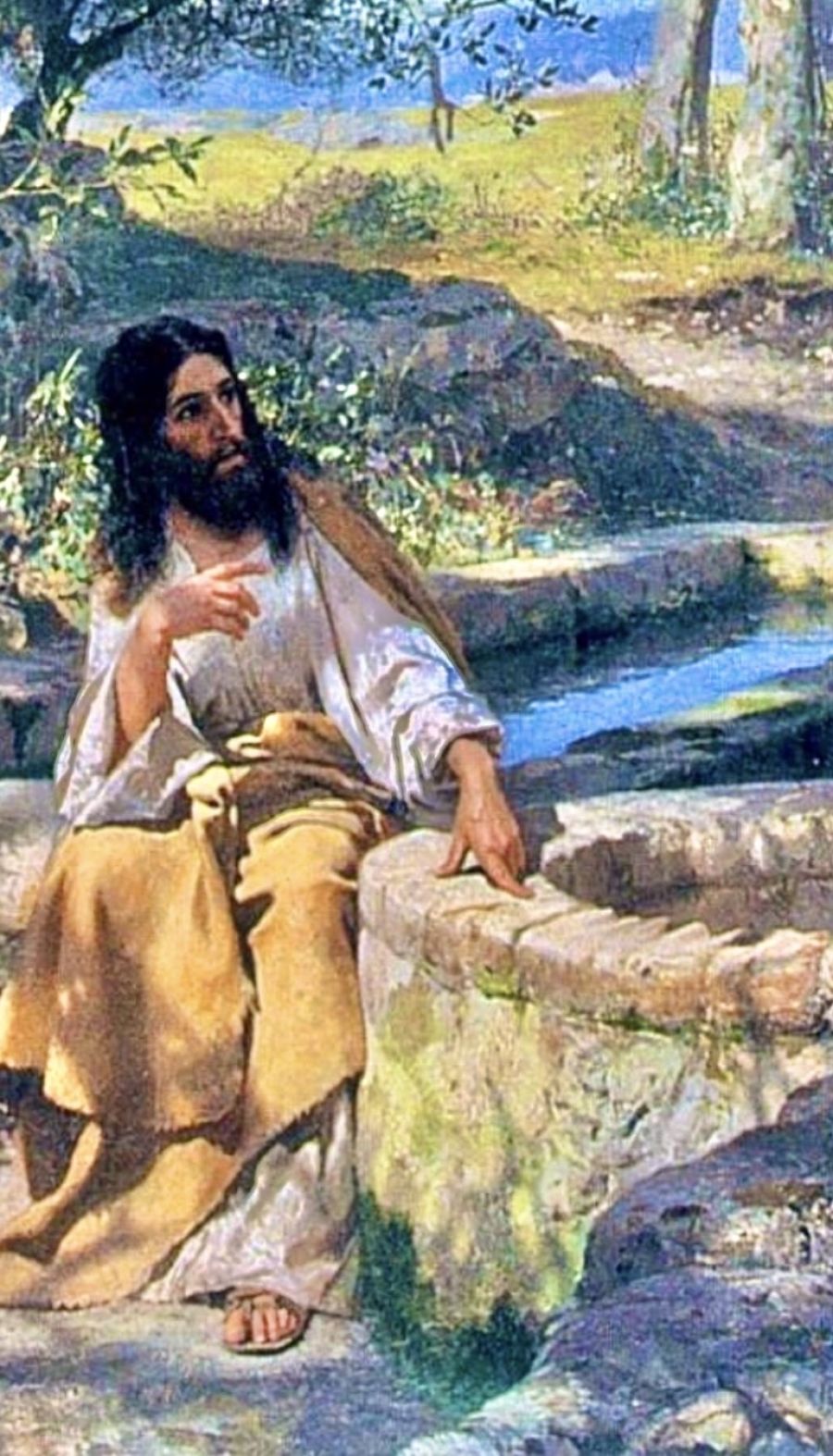
Christ sits on the Source, not on the well. Rather, he overlaps it.


[3rd Sunday of Lent (year A), March 8, 2026]

84 Last modified on Saturday, 28 February 2026 04:41
don Giuseppe Nespeca

Giuseppe Nespeca è architetto e sacerdote. Cultore della Sacra scrittura è autore della raccolta "Due Fuochi due Vie - Religione e Fede, Vangeli e Tao"; coautore del libro "Dialogo e Solstizio".

“Give me a drink” (v. 7). Breaking every barrier, he begins a dialogue in which he reveals to the woman the mystery of living water, that is, of the Holy Spirit, God’s gift [Pope Francis]
«Dammi da bere» (v. 7). Così, rompendo ogni barriera, comincia un dialogo in cui svela a quella donna il mistero dell’acqua viva, cioè dello Spirito Santo, dono di Dio [Papa Francesco]
The mystery of ‘home-coming’ wonderfully expresses the encounter between the Father and humanity, between mercy and misery, in a circle of love that touches not only the son who was lost, but is extended to all (Pope John Paul II)
Il mistero del ‘ritorno-a-casa’ esprime mirabilmente l’incontro tra il Padre e l’umanità, tra la misericordia e la miseria, in un circolo d’amore che non riguarda solo il figlio perduto, ma si estende a tutti (Papa Giovanni Paolo II)
The image of the vineyard is clear: it represents the people whom the Lord has chosen and formed with such care; the servants sent by the landowner are the prophets, sent by God, while the son represents Jesus. And just as the prophets were rejected, so too Christ was rejected and killed (Pope Francis)
L’immagine della vigna è chiara: rappresenta il popolo che il Signore si è scelto e ha formato con tanta cura; i servi mandati dal padrone sono i profeti, inviati da Dio, mentre il figlio è figura di Gesù. E come furono rifiutati i profeti, così anche il Cristo è stato respinto e ucciso (Papa Francesco)
‘Lazarus’ means ‘God helps’. Lazarus, who is lying at the gate, is a living reminder to the rich man to remember God, but the rich man does not receive that reminder. Hence, he will be condemned not because of his wealth, but for being incapable of feeling compassion for Lazarus and for not coming to his aid. In the second part of the parable, we again meet Lazarus and the rich man after their death (vv. 22-31). In the hereafter the situation is reversed [Pope Francis]
“Lazzaro” significa “Dio aiuta”. Lazzaro, che giace davanti alla porta, è un richiamo vivente al ricco per ricordarsi di Dio, ma il ricco non accoglie tale richiamo. Sarà condannato pertanto non per le sue ricchezze, ma per essere stato incapace di sentire compassione per Lazzaro e di soccorrerlo. Nella seconda parte della parabola, ritroviamo Lazzaro e il ricco dopo la loro morte (vv. 22-31). Nell’al di là la situazione si è rovesciata [Papa Francesco]
Brothers and sisters, a frequent flaw of those in authority, whether civil or ecclesiastic authority, is that of demanding of others things — even righteous things — that they do not, however, put into practise in the first person. They live a double life. Jesus says: “They bind heavy burdens, hard to bear, and lay them on men’s shoulders; but they themselves will not move them with their finger (v.4). This attitude sets a bad example of authority, which should instead derive its primary strength precisely from setting a good example. Authority arises from a good example, so as to help others to practise what is right and proper, sustaining them in the trials that they meet on the right path. Authority is a help, but if it is wrongly exercised, it becomes oppressive; it does not allow people to grow, and creates a climate of distrust and hostility, and also leads to corruption (Pope Francis)
Fratelli e sorelle, un difetto frequente in quanti hanno un’autorità, sia autorità civile sia ecclesiastica, è quello di esigere dagli altri cose, anche giuste, che però loro non mettono in pratica in prima persona. Fanno la doppia vita. Dice Gesù: «Legano infatti fardelli pesanti e difficili da portare e li pongono sulle spalle della gente, ma essi non vogliono muoverli neppure con un dito» (v.4). Questo atteggiamento è un cattivo esercizio dell’autorità (Papa Francesco)

Due Fuochi due Vie - Vol. 1 Due Fuochi due Vie - Vol. 2 Due Fuochi due Vie - Vol. 3 Due Fuochi due Vie - Vol. 4 Due Fuochi due Vie - Vol. 5 Dialogo e Solstizio I fiammiferi di Maria

duevie.art

don Giuseppe Nespeca

Tel. 333-1329741


Disclaimer

Questo blog non rappresenta una testata giornalistica in quanto viene aggiornato senza alcuna periodicità. Non può pertanto considerarsi un prodotto editoriale ai sensi della legge N°62 del 07/03/2001.
Le immagini sono tratte da internet, ma se il loro uso violasse diritti d'autore, lo si comunichi all'autore del blog che provvederà alla loro pronta rimozione.
L'autore dichiara di non essere responsabile dei commenti lasciati nei post. Eventuali commenti dei lettori, lesivi dell'immagine o dell'onorabilità di persone terze, il cui contenuto fosse ritenuto non idoneo alla pubblicazione verranno insindacabilmente rimossi.






