


don Giuseppe Nespeca
Giuseppe Nespeca è architetto e sacerdote. Cultore della Sacra scrittura è autore della raccolta "Due Fuochi due Vie - Religione e Fede, Vangeli e Tao"; coautore del libro "Dialogo e Solstizio".
The "stars" set aside
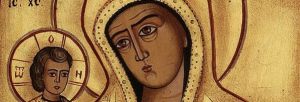
Two sons: «No» and «Me!»
(Mt 21:28-32)
Matthew writes half a century after the death of the Master and notes that the majority of Abraham's children - his people - did not recognise Jesus as the Messiah.
In his communities in Galilee and Syria, pagans quickly became the majority - elevated to the rank of children.
They did not undergo gruelling trials, but spontaneously recognised the Lord.
It is an invitation to the veterans of the church who are still Judaizing to review their religiosity (much of it superficial), which believes it has understood everything but fails to grasp the essence of God's plan for humanity - and does not set out to do the "work".
[Reassuring cults, traditional legalism or hysterical dreams only save appearances].
Matthew wants churchgoers not to have any presumption of feeling that they are in the right, almost by birthright.
Like Peter (Matthew 16:16-28), senior leaders were sometimes willing to commit themselves to a Messiah they only had in their heads - not to bear witness to the Lamb committed to transmitting life to the new; to rejoice in it, promote it, and give it.
[Of course, today we are not qualified to identify with the 'third son', the one who... 'says "yes, sir" and works'].
It is the supposed dregs of society, those excluded from the kingdom of God (vv. 31b-32) who 'take the place' of the leaders - those who have sophisticated ideas or the same 'correct' tradition.
Compared to the top of the class, the newcomers were no more deserving than the experts and the habitual, but being without a respectable screen, they gradually became willing to love.
Those whom the ancient leaders considered responsible for the delay of the Kingdom were not yet deaf to the Word.
After all, even Judas repented.
Leaders who feel they are fulfilling their duties or are great reformers and phenomena will never convert.
That is why the Master was more at ease with those who were different than with sterile religious people or disembodied idealists.
In short: we must allow ourselves to be evaluated.
We need to question ourselves, stop and ask ourselves, 'What do you think?' (v. 21).
After the expulsion of the merchants, the authorities are furious because Jesus has declared that the Temple of Jerusalem is a den of thieves.
How naive! One does not touch the one god of the ancient holy places, the real one: the bag of the guides and the treasure of the priests involved.
Those most responsible for the black market in the sacred enclosure do not want to lose face.
They appear to be believers and loyal, but only when viewed from the outside.
Their inner eye and their well-hidden activity behind the scenes focus on anything but spiritual goods.
Their one god is called convenience. So it is to them that the Master addresses the parable.
And the beginning is already provocative... In the rabbis' stories, there was only one 'son': Israel!
For Christ, however, even a wayward son remains a son [what do we think of this, for example... starting with catechism and ending with spiritual exercises?].
The Master of the Vineyard, an image of the chosen people, addresses [in the new CEI translation, initially] his 'prototype' of man with tenderness and maternal affection: 'My little son'.
He tries to make him understand: 'The unfamiliar land is full of dissent and resentment, but the Vineyard is yours; so commit yourself to building a world of joy'.
But it is normal to be stubborn: 'I don't feel like it' - because we are often attracted not by the Beatitudes, but by the worldly criteria of having, power and appearance; of keeping for ourselves, climbing over others and dominating them.
Working for the benefit of others, recognising their dignity and promoting it, does not come naturally and spontaneously to everyone.
On the contrary, it seems burdensome - at least until we are able to understand the value of our brothers and sisters for ourselves (and see 'ourselves' in 'their' faces).
It is only a journey of life in the Spirit that makes us ready to recognise that the You urges, expands, enriches and completes the I.
To truly encounter others means to have encountered ourselves, in the multifaceted nature of our own sides.
It is not easy. In fact, it is easier to identify with or be supportive from a distance than to be fraternal.
It is difficult to eliminate selfishness, which is a creaturely fact that must be integrated to enrich everyone, rather than falsely exorcised.
In short: 'otherness' is not just an appeal, but a boundless source of wealth for myself; it speaks of my very being, in that very way.
But to understand love - including love for oneself - we all need time, experience, insight, growth in empathy and further exploration.
Then working on it is also demanding, starting from the innermost self.
It is obvious that we may instinctively pull back - at least until we begin to learn the deep connection with the distant that demands life [just as we always do, in the first person].
The perception of what appears 'foreign' becomes a rare intuition of one's own essence, an expansion of the Ego - a movement and a growing process that leads to understanding the You in the I.
The eccentricity of one's brother is the paradoxical starting point for finding oneself and one's path.
Building a new world can be repellent to nature (in some respects) marked by sin and withdrawal.
We need to understand banal instinctive reactions, because preventive condemnation blocks growth.
Only step by step do we become aware that authentic and full life brings out the divine Gold.
It accentuates the exquisitely human calibre that even the heavenly Father suggests - overcoming indifference to the yearning that at first glance seems not to concern us.
Of course, at first repulsion may surface; there is no need to be scandalised or to point fingers.
Recovering the profound human dimension is no easy task.
Then it is the difference that gives us the cue, not the 'rule' - nor the 'reprimand'. The latter do not activate anything authentic.
After all, we know from experience that the most convincing 'Yes' comes through an initial 'No'.
The inner struggle is to be expected - ultimately, it will have an impact far beyond a formal adherence.
There is no need to be indignant if someone responds with a flat refusal.
Then they will change their mind [v. 29 of the new CEI translation]: 'metamellomai'. And they will recover their radical character as a son and brother.
In order to grasp one's position and respond wisely to the Lord's proposals, one must sift through things.
This calls for discernment of one's roots, relationships, and oneself (in all one's diversities).
In short, the truest 'yes' comes from a request for explanation - which brings us into direct contact with the Source of our varied character - a condition that completes us.
Life is not about copying and tracing. We must beware of 'yes-men': they are acting out a fiction as a smokescreen.
Although those identified are 'ready and willing' to immediately show their best intentions, they become all show and no substance; ultimately, just empty words.
He therefore turned to the second [v.30 in the new CEI translation], who was in fact the firstborn of the promises: 'I, Lord!'.
As if to say: 'I am here; why think of others?'.
The exaggeratedly similar and positive reaction - in reality indifferent because it is habitual and perhaps calculated - indicates that the 'veteran of belief and adherence' has, at the very least, not understood...
He certainly did not agree with the Father's programme - so profound and demanding. He had his own ideas about how to behave in the Vineyard.
Therefore, he deludes himself into thinking that he is at an advantage, rather than saved.
Faith and protocols
"Manifest sinners and various contaminants are passing you by"
(Mt 21:28-32; in particular v.31)
What is specific to Faith, which makes a difference, is not trusting the religious ideology of the best.
A belief is authentic if it can withstand being examined first-hand; the rest is artifice, mistrust with a trick.
Personal conviction passes through a spontaneous request for explanations [typical in this regard is the story of the two sons, who both say yes and no].
The discriminating factor of life in the Spirit? The exception that becomes promotion.
Compared to various ancient beliefs, an intrinsic aspect of Jesus' invitation is the adult mind.
It excludes adherent solutions (common or elitist): they enclose souls in a condition of dependence, with illusory progress.
Women and men respond 'Here I am' to the call because they are intimately persuaded, not because of external influences such as labels, rituals, protocols, officialdom, respect for canonical guidelines, other people's habits, and hearsay.
When the disciples ask him to increase their faith, Jesus does not even respond (Lk 17:6).
He does not say to improve this or that. It is impossible to chisel out love in measured stages.
Faith is not a gift to be sheltered away, which the Father gives only to some, but a relationship of creative trust that is kindled in response to the gratuitous, renewed, reinvigorated, repeatedly rejuvenated initiative of the Source of being - when, step by step, it is welcomed instead of rejected.
Not only is it a personal and varied proposal in itself, but it also wants to be reinterpreted and made lush with our own originality.
The only vigour to be introduced into events is a different face, not at all defensive, nor aimed at increasing the situation.
Because we are called to become what we are.
The soul guides us to encounter ourselves, frankly and not by following a complex set of external procedures - but, wave by wave.
So there are those who already have a lot of faith, others who have so-so faith, some who have just the right amount, or who lack faith altogether - perhaps waiting to find the Gift somewhere to put it in the safe and multiply their nest egg - always keeping it in the same hole in the wall.
The conformist, rigid and ambiguous idea of spiritual progress must therefore be eradicated.
It is not contained within the limits of the 'breach work' of a bricklayer who slavishly follows a plan. And he sweats and sweats to insert into some makeshift niche the identical treasure chest of everyone - received as a complete package.
Then, there are no favourites, nor outposts to defend it.
There are no rejects placed on the sidelines, nor 'average' troops according to guarding ability and performance.
In the authentic itinerary, there is no unilateral trajectory or way out [as if it were a single passage, already preformed in every detail].
Nor is there any slavish enrichment, as a model - considered possible for heroes apart, on a conventional ascetic basis.
These are not the true friends of vital energy.
Morality - on the contrary: never trust those who rush to say, 'Yes, sir!'.
God longs for our ‘Yes’

There are theologians who, in the face of all the terrible things that happen in the world today, say that God cannot possibly be all-powerful. In response to this we profess God, the all-powerful Creator of heaven and earth. And we are glad and thankful that God is all-powerful. At the same time, we have to be aware that he exercises his power differently from the way we normally do. He has placed a limit on his power, by recognizing the freedom of his creatures. We are glad and thankful for the gift of freedom. However, when we see the terrible things that happen as a result of it, we are frightened. Let us put our trust in God, whose power manifests itself above all in mercy and forgiveness. Let us be certain, dear faithful, that God desires the salvation of his people. He desires our salvation, my salvation, the salvation of every single person. He is always close to us, especially in times of danger and radical change, and his heart aches for us, he reaches out to us. We need to open ourselves to him so that the power of his mercy can touch our hearts. We have to be ready freely to abandon evil, to raise ourselves from indifference and make room for his word. God respects our freedom. He does not constrain us. He is waiting for us to say “yes”, he as it were begs us to say “yes”.
In the Gospel Jesus takes up this fundamental theme of prophetic preaching. He recounts the parable of the two sons invited by their father to work in the vineyard. The first son responded: “‘I will not go’, but afterward he repented and went.” The other son said to the father: “‘I go, sir,’ but did not go.” When asked by Jesus which of the two sons did the father’s will, those listening rightly respond: “the first” (Mt 21:29-31). The message of the parable is clear: it is not words that matter, but deeds, deeds of conversion and faith. As we heard, Jesus directs this message to the chief priests and elders of the people of Israel, that is, to the religious experts of his people. At first they say “yes” to God’s will, but their piety becomes routine and God no longer matters to them. For this reason they find the message of John the Baptist and the message of Jesus disturbing. The Lord concludes his parable with harsh words: “Truly, the tax collectors and the harlots go into the Kingdom of God before you. For John came to you in the way of righteousness, and you did not believe him, but the tax collectors and the harlots believed him, and even when you saw it, you did not afterward repent and believe him” (Mt 21:32). Translated into the language of the present day, this statement might sound something like this: agnostics, who are constantly exercised by the question of God, those who long for a pure heart but suffer on account of their sin, are closer to the Kingdom of God than believers whose life of faith is “routine” and who regard the Church merely as an institution, without letting it touch their hearts, or letting the faith touch their hearts.
These words should make all of us stop and reflect, in fact they should disturb us. However, this is by no means to suggest that everyone who lives in the Church and works for her should be considered far from Jesus and the Kingdom of God. Absolutely not! On the contrary, this is a time to offer a word of profound gratitude to the many co-workers, employees and volunteers, without whom life in the parishes and in the entire Church would be hard to imagine. The Church in Germany has many social and charitable institutions through which the love of neighbour is practised in ways that bring social benefits and reach to the ends of the earth. At this moment I would like to express my gratitude and appreciation to all those working in Caritas Germany and in other church organizations who give their time and effort generously in voluntary service to the Church. In the first place, such service requires objective and professional expertise. But in the spirit of Jesus’ teaching something more is needed – an open heart that allows itself to be touched by the love of Christ, and thus gives to our neighbour, who needs us, something more than a technical service: it gives love, in which the other person is able to see Christ, the loving God. So let us ask ourselves, in the light of today’s Gospel, how is my personal relationship with God: in prayer, in participation at Sunday Mass, in exploring my faith through meditation on sacred Scripture and study of the Catechism of the Catholic Church? Dear friends, in the last analysis, the renewal of the Church will only come about through openness to conversion and through renewed faith.
The Gospel for this Sunday, as we saw, speaks of two sons, but behind them, in a mysterious way, is a third son. The first son says “no,” but does the father’s will. The second son says “yes,” but does not do what he was asked. The third son both says “yes” and does what he was asked. This third son is the Only-begotten Son of God, Jesus Christ, who has gathered us all here.
[Pope Benedict, homily at Freiburg, 25 September 2011]
To young people who are wondering what they should do
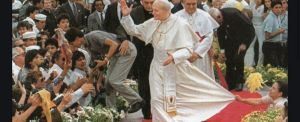
The question about eternal life
5. What must I do so that my life may have value, have meaning? This earnest question comes from the lips of the young man in the Gospel in the following form: "What must I do to inherit eternal life?". Is a person who puts the question in this form speaking a language still intelligible to the people of today? Are we not the generation whose horizon of existence is completely filled by the world and temporal progress? We think primarily in earthly categories. If we go beyond the limits of our planet, we do so in order to launch interplanetary flights, transmit signals to the other planets and send cosmic probes in their direction.
All this has become the content of our modern civilization. Science together with technology has discovered in an incomparable way man's possibilities with regard to matter, and they have also succeeded in dominating the interior world of his thoughts, capacities, tendencies and passions.
But at the same time it is clear that, when we place ourselves in the presence of Christ, when he becomes the confidant of the questionings of our youth, we cannot put the question differently from how that young man put it: "What must I do to inherit eternal life?". Any other question about the meaning and value of our life would be, in the presence of Christ, insufficient and unessential.
For Christ is not only the "good teacher" who shows the paths of life on earth. He is the witness to that definitive destiny which the human person has in God himself. He is the witness to man's immortality. The Gospel which he proclaimed with his lips is definitively sealed by the Cross and the Resurrection in the Paschal Mystery. "Christ being raised from the dead will never die again; death no longer has dominion over him". In his Resurrection Christ has also become the permanent "sign of contradiction" before all programmes incapable of leading man beyond the frontier of death. Indeed at this frontier they silence all man's questionings about the value and meaning of life. In the face of all these programmes, the various ways of looking at the world and the various ideologies, Christ constantly repeats: "I am the resurrection and the life".
And so, dear brothers and dear sisters, if you wish to talk to Christ and to accept all the truth of his testimony, you must on the one hand "love the world" - for God "so loved the world that he gave his only Son" - and at the same time you must acquire interior detachment with regard to all this rich and fascinating reality that makes up "the world". You must make up your mind to ask the question about eternal life. For, the form of this world is passing away ", and each of us is subject to this passing. Man is born with the prospect of the day of his death in the dimension of the visible world; at the same time, man, whose interior reason for existence is to go beyond himself, also bears within himself everything whereby he goes beyond the world.
Everything whereby man, in himself, goes beyond the world- though he is rooted in it-is explained by the image and likeness of God which is inscribed in humanity from the beginning. And everything whereby man goes beyond the world not only justifies the question about eternal life but in fact makes it indispensable. This is the question that people have long been asking themselves, not only in the sphere of Christianity but also outside it. You too must find the courage to ask it, like the young man in the Gospel. Christianity teaches us to understand temporal existence from the perspective of the Kingdom of God, from the perspective of eternal life. Without eternal life, temporal existence, however rich, however highly developed in all aspects, in the end brings man nothing other than the ineluctable necessity of death.
Now there is an opposition between youth and death. Death seems far distant from youth. And it is. But since youth means the plan for the whole of life-the plan drawn up in accordance with the criterion of meaning and value during youth too it is essential to ask the question about the end. Human experience left to itself says the same as Sacred Scripture: "It is appointed for men to die once". The inspired writer adds: "And after that comes judgment". And Christ says: "I am the resurrection and the life; he who believes in me, though he die, yet shall he live, and whoever lives and believes in me shall never die". So ask Christ, like the young man in the Gospel: "What must I do to inherit eternal life?".
[Pope John Paul II, Dilecti Amici]
Superficial religiosity, which does not engage with life
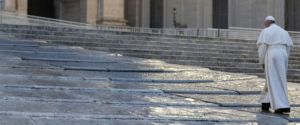
With his preaching on the Kingdom of God, Jesus opposes a religiosity that does not involve human life, that does not question the conscience and its responsibility in the face of good and evil. He also demonstrates this with the parable of the two sons, which is offered to us in the Gospel of Matthew (cf. 21:28-32). To the father’s invitation to go and work in the vineyard, the first son impulsively responds “no, I’m not going”, but then he repents and goes; instead the second son, who immediately replies “yes, yes dad”, does not actually do so; he doesn’t go. Obedience does not consist in saying “yes” or “no”, but always in taking action, in cultivating the vineyard, in bringing about the Kingdom of God, in doing good. With this simple example, Jesus wants to go beyond a religion understood only as an external and habitual practice, which does not affect people’s lives and attitudes, a superficial religiosity, merely “ritual”, in the ugly sense of the word.
The exponents of this “façade” of religiosity, of which Jesus disapproves, in that time were “the chief priests and the elders of the people” (Mt 21:23), who, according to the Lord’s admonition, will be preceded in the Kingdom of God by “tax collectors and prostitutes” (cf. v. 31). Jesus tells them: “the tax collectors, meaning the sinners, and the harlots go into the kingdom of God before you”. This affirmation must not lead us to think that those who do not follow God’s commandments, those who do not follow morality, saying, “In any case, those who go to Church are worse than us”, do well. No, this is not Jesus’ teaching. Jesus does not indicate publicans and prostitutes as models of life, but as “privileged by Grace”. And I would like to underscore this word, “grace”. Grace. Because conversion is always a grace. A grace that God offers to anyone who opens up and converts to him. Indeed, these people, listening to his preaching, repented and changed their lives. Let us think of Matthew, for example. Saint Matthew, who was a publican, a traitor to his homeland.
In today’s Gospel, the one who makes the best impression is the first brother, not because he said “no” to his father, but because after his “no” he converted to “yes”, he repented. God is patient with each of us: he does not tire, he does not desist after our “no”; he leaves us free even to distance ourselves from him and to make mistakes. Thinking about God’s patience is wonderful! How the Lord always waits for us; he is always beside us to help us; but he respects our freedom. And he anxiously awaits our “yes”, so as to welcome us anew in his fatherly arms and to fill us with his boundless mercy. Faith in God asks us to renew every day the choice of good over evil, the choice of the truth rather than lies, the choice of love for our neighbour over selfishness. Those who convert to this choice, after having experienced sin, will find the first places in the Kingdom of heaven, where there is greater joy for a single sinner who repents than for ninety-nine righteous people (cf. Lk 15:7).
But conversion, changing the heart, is a process, a process that purifies us from moral encrustations. And at times it is a painful process, because there is no path of holiness without some sacrifice and without a spiritual battle. Battling for good; battling so as not to fall into temptation; doing for our part what we can, to arrive at living in the peace and joy of the Beatitudes. Today’s Gospel passage calls into question the way of living a Christian life, which is not made up of dreams and beautiful aspirations, but of concrete commitments, in order to always open ourselves to God’s will and to love for our brothers and sisters. But this, even the smallest concrete commitment, cannot be made without grace. Conversion is a grace we must always ask for: “Lord, give me the grace to improve. Give me the grace to be a good Christian”.
May Mary Most Holy help us to be docile to the action of the Holy Spirit. He is the One who melts the hardness of hearts and disposes them to repentance, so we may obtain the life and salvation promised by Jesus.
[Pope Francis, Angelus, 27 September 2020]
Son of Man
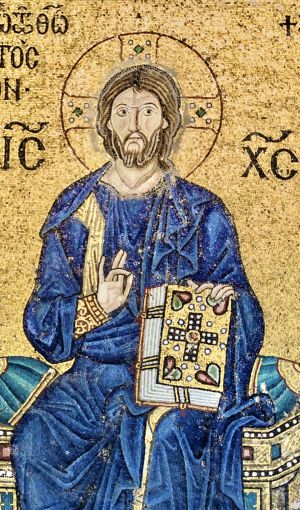
Creating abundance where there is none
(Lk 9:43b-45)
«Son of man» (v.44) is he who, having gone to the utmost human fullness, comes to reflect the divine condition - and radiates it, without narrow perspectives.
‘Son of man’ is the successful Son: the Person with a definitive step; Word made «brother», who in us aspires to the fullness spread throughout history.
It would seem not up to par; instead, it is indestructible weighing, inside each one who approaches such a ‘measure’ - encountering the divine markings that bring out who we are [and bring about rebirth].
In the Gospel passage it is the Messiah who becomes a servant (!) and «next of kin» [close relative]: the one who in Semitic culture was held to ransom and liberate his enslaved family members.
However, there is a sharp contrast between what people dream and hope for, and the opinion of the authorities, challenged by this atmosphere of humanization with too wide outlines.
Since time immemorial, in order to block the search for the You-for-you, the face-to-face with God [and to direct consciences], the leaders concerned had filled minds with things of the past, or all conformist, and people's lives with problems that stalled the way.
The slave of the ancient customary religion, allied with power, lived under condemnation because he was outside his Home, thus in a reality that stagnated, accentuating ballasts and emphasizing limitations and feelings of subservience.
By disturbing everyone’s life wave.
In this way, the dull soul submitted to the outer cloak, blocking spontaneous energy. Wrapping all proposals that came from Providence, and its own resources, with dead things.
«Son of Man» is not a "religious" or selective title, but a possibility for all those who adhere to the Lord’s life proposal, and reinterpret it in a creative way.
They transcend the firm, natural boundaries, making room for the Gift, receiving from God the fullness of being, in its new, unrepeatable tracks.
Feeling totally and undeservedly loved, they discover other facets, they change the way of being with themselves, and can grow, realize themselves, flourish, radiating the completeness they have received.
By emanating a different atmosphere, the person integrated in his or her even opposite sides, feels consciousnesses arise, creates projects, emits and attracts other energies; makes them activate.
Thus God wants to extend the sphere in which He "reigns" - relating to all humanity, a Church without visible boundaries.
In short, in the icon of the «Son of man» the evangelists want to indicate the triumph of the human over the inhuman, and the progressive disappearance of everything that blocks the communication of the vital wave.
The People that shines in a divine way is no longer entangled, indeed it brings to the maximum all its varied potential for love, for the outpouring of life.
«Son of man» - a possible reality - is anyone who achieves fullness, flowering of the ability to be, in the extension of relationships... in tune with the sphere of God the Creator, Lover of life.
He/she does it so in varied facets, and merges with Him - becoming One. By creating abundance.
«Son of man» is woman or man who behave on earth as God himself would do, who makes the divine and his strength present in history.
So they can afford to replace both gloomy seriousness and superficiality, with a wise ‘carefreeness’ that makes everything light.
«Son of Man» represents the maximum of the human, the Person par excellence, who becomes liberating instead of oppressive.
The consequences are unimaginable, because each of us in Christ and for the brothers no longer has dead, abstract, (or of others) paths to be redone.
[Saturday 25th wk. in O.T. September 26, 2026]
Son of Man
Creating abundance where there is none
(Lk 9:43b-45)
'Son of God' is Christ who manifests God in the human condition. 'Son of man' is Jesus manifesting man in the divine condition.
'Son of man' (v.44) is the one who, having gone to the utmost human fullness, comes to reflect the divine condition - and radiates it, without narrow perspectives.
In short, 'Son of Man' is the trustworthy, authentic person; even the 'little one' - without even a legacy of just and invariable ideas, or forces of the same level, and always performing.
"Son of Man" is here the successful Son: the Person with the definitive step. Word made "brother", who in us aspires to the fullness spread throughout history.
It would seem to fall short; instead, it is indestructible charature, within each one who approaches such 'measure' - encountering the divine marks that bring out what we are [and are born again].
In the Gospel passage, it is the Messiah who becomes a servant (!) and becomes the 'next of kin': the one who in Semitic culture was held to ransom and liberate his enslaved kin.
There is, however, a sharp contrast between what the people dream and hope for, and the opinion of the authorities, who are challenged by this atmosphere of humanisation with its overly broad contours.
Established and official teachers of the spirit were at ease in the narrow sphere: accentuating guilt, disfiguring people; making them needy, childish - instead of adult, secure, emancipated.
Even the religious institution trembled: the divine condition diffused in the lives of women and men made autonomous and able to stand on their own two feet would make any mediating structure superfluous.
Since time immemorial, in order to block the search for the You-for-you, the face-to-face with God [and to direct consciences], the leaders concerned had filled minds with things of the past, or all conformist, and people's lives with problems that stalled the way.
The slave of the customary ancient religion, allied with power, lived under condemnation, because it was outside its home. In a reality that stagnated, or advanced in a severely moralistic manner.
Such confusion stranded souls - even more so by accentuating ballasts, emphasising limitations, and feelings of subservience. Disturbing the life-wave of each one.
The logic of the old masters was unacceptable, both from the point of view of personal fulfilment and for living together.
In any sphere, the criterion of the self-loving big-wigs was in force.
Everything was in accordance with the principle that he who stands still is best controlled, stays where you put him, and cannot have passions; therefore he does not set anything in motion.
Under the enormous social conditioning, the dull soul was forced to submit to the outer cloak, which willingly blocked the spontaneous energy of souls, and of the world.
Even today, perhaps, there are still agencies of plagiarism that cloak all the proposals of Providence, and the very resources of women and men, or of charisma, with things already dead or abstract [mannered, external].
The true Son, on the other hand, conquers spaces of freedom, not so much from errors, as from egoism that annihilates communion, from self-love that refuses to listen, from standardisation that cancels uniqueness, from conformism that makes exceptionalism pale, from envy that separates and blocks the exchange of gifts, from competition, even spiritual competition that drugs us; from the sloth of those who believe they are not worth enough, which discourages and paralyses.
'Son of Man' is therefore not a 'religious' or selective title, but a possibility for all those who adhere to the Lord's proposal of life, and reinterpret it creatively.
They overcome the firm and proper natural boundaries, making room for the Gift; welcoming from God the fullness of being, in his new, unrepeatable tracks.
Feeling totally and undeservedly loved, they discover other facets, change the way they are with themselves, and can grow: they realise themselves, they flourish; they radiate the wholeness they have received.
Coming out of the poor or static idea we have of ourselves - a serious problem in many sensitive and dedicated souls - the relational personality can also begin to imagine.
And to dream, discovering that it can no longer give weight to those who want to condition its path as a person, in fullness of being, character, vocation.
He who activates the idea that he can do it, then transmits the power of the Spirit he has received and welcomed, and the universe around him blossoms.
Emanating a different atmosphere, the person integrated in his or her even opposite sides, feels consciousnesses arise, creates projects, emits and attracts other energies; makes them activate.
By relating interpersonally, God wants to extend the sphere in which he "reigns" - to all mankind.
Church without visible boundaries, which will begin with the 'Son of Man'. A figure not exclusive to Jesus.Son of David and Son of Man
This universalistic perspective emerges, inter alia, from the presentation Jesus made of himself not only as "Son of David", but as "Son of Man" (Mk 10:33). The title "Son of Man", in the language of the Jewish apocalyptic literature inspired by the vision of history in the Book of the Prophet Daniel (cf. 7:13-14), recalls the character who comes "with the clouds of heaven" (v. 13) and is an image that heralds an entirely new kingdom, a kingdom supported not by human powers, but by the true power that comes from God. Jesus uses this rich and complex expression and refers it to Himself to manifest the true character of His messianism, as a mission destined for the whole man and every man, overcoming all ethnic, national and religious particularism. And it is precisely in following Jesus, in allowing oneself to be drawn into his humanity and thus into communion with God, that one enters into this new kingdom, which the Church announces and anticipates, and which overcomes fragmentation and dispersion.
[Pope Benedict, Consistory 24 November 2012].
With the image of the Son of Man, the prophet Daniel already wanted to indicate an overturning of the criteria of human and divine authenticity: a man or a people, a leader, finally with a heart of flesh instead of a beast.
In the icon of the 'Son of Man', the evangelists wish to reveal and trigger the triumph of the human over the inhuman; the progressive disappearance of everything that blocks the communication of full existence, of totality of profound energy.
The divinely shining people are no longer entangled by fears, manipulations, or hysteria; on the contrary, they bring to the full all their varied potential of love, of outpouring of life.
The 'Son of Man' - a possible reality - is anyone who achieves completeness, the blossoming of the capacity to be, in the extension of relationships. With this, he enters into harmony with the sphere of God the Creator, the Lover of life.
It does so in its varied facets, and merges with Him - becoming One. Creating abundance; not a false identity.
"The 'Son of Man' is the man who behaves on earth as God himself would; in short, who makes the divine present and its power unfolded in history.
So he can afford to replace the gloomy seriousness of the pious and subservient being, or the superficiality of the sophisticated and disembodied, with the wise 'light-heartedness' that makes everything light [because it rhymes with naturalness].
'Son of Man' depicts the ultimate human, the Person par excellence - in its eminent Self, which becomes liberating instead of oppressive.
The consequences are unimaginable, because each one of us in Christ and for our brothers and sisters, no longer has dead, abstract, or other people's paths to tread.
To internalise and live the message:
How does the 'Son of Man' figure speak to you of your own personal thoughts and hopes, and what is the difference or contrast with the thoughts and hopes of the manipulators?
Prayer of the Son and sons, humanising

Jesus' prayer in the imminence of death - Lk
Dear Brothers and Sisters,
At our school of prayer last Wednesday I spoke of Jesus’ prayer on the Cross, taken from Psalm 22[21]: “My God, my God, why have you forsaken me?”. I would now like to continue to meditate on the prayer of Jesus on the Cross in the imminence of death. Today, I would like to reflect on the account we find in St Luke’s Gospel. The Evangelist has passed down to us three words spoken by Jesus on the Cross, two of which — the first and the third— are prayers explicitly addressed to the Father. The second, instead, consists of the promise made to the so-called “good thief”, crucified with him; indeed, in response to the thief’s entreaty, Jesus reassures him: “Truly, I say to you, today you will be with me in Paradise” (Lk 23:43).
Thus in Luke’s narrative the two prayers that the dying Jesus addresses to the Father and his openness to the supplication addressed to him by the repentant sinner are evocatively interwoven. Jesus calls on the Father and at the same time listens to the prayer of this man who is often called latro poenitens, “the repentant thief”.
Let us reflect on these three prayers of Jesus. He prays the first one immediately after being nailed to the Cross, while the soldiers are dividing his garments between them as a wretched reward for their service. In a certain sense the process of the Crucifixion ends with this action. St Luke writes: “When they came to the place which is called The Skull, there they crucified him, and the criminals, one on the right and one on the left. And Jesus said, ‘Father, forgive them; for they know not what they do’. And they cast lots and to divide his garments” (23:33-34).
The first prayer that Jesus addresses to the Father is a prayer of intercession; he asks for forgiveness for his executioners. By so doing, Jesus is doing in person what he had taught in the Sermon on the Mount when he said: “I say to you that hear, Love your enemies, do good to those who hate you” (Lk 6:27); and he had also promised to those who are able to forgive: “your reward will be great, and you will be sons of the Most High” (v. 35). Now, from the Cross he not only pardons his executioners but he addresses the Father directly, interceding for them.
Jesus’ attitude finds a moving “imitation” in the account of the stoning of St Stephen, the first martyr. Indeed Stephen, now nearing his end, “knelt down and cried with a loud voice, ‘Lord, do not hold this sin against them’. And when he had said this, he fell asleep” (Acts 7:60): these were his last words. The comparison between Jesus’ prayer for forgiveness and that of the protomartyr is significant. St Stephen turns to the Risen Lord and requests that his killing — an action described clearly by the words “this sin” — not be held against those who stoned him.
Jesus on the Cross addresses the Father and not only asks forgiveness for those who crucify him but also offers an interpretation of what is happening. According to what he says, in fact, the men who are crucifying him “know not what they do” (Lk 23:34). He therefore postulates ignorance, “not knowing”, as a reason for his request for the Father’s forgiveness, because it leaves the door open to conversion, as, moreover, happens in the words that the centurion was to speak at Jesus’ death: “Certainly this man was innocent” (v. 47), he was the Son of God. “It remains a source of comfort for all times and for all people that both in the case of those who genuinely did not know (his executioners) and in the case of those who did know (the people who condemned him), the Lord makes ignorance the motive for his plea for forgiveness: he sees it as a door that can open us to conversion” (Jesus of Nazareth, II, [San Francisco: Ignatius Press, 2011], p. 208).
The second word spoken by Jesus on the Cross recorded by St Luke is a word of hope, it is his answer to the prayer of one of the two men crucified with him. The good thief comes to his senses before Jesus and repents, he realizes he is facing the Son of God who makes the very Face of God visible, and begs him; “Jesus, remember me when you come in your kingly power” (v. 42). The Lord’s answer to this prayer goes far beyond the request: in fact he says: “Truly, I say to you, today you will be with me in Paradise” (v. 43). Jesus knows that he is entering into direct communion with the Father and reopening to man the way to God’s paradise. Thus, with this response, he gives the firm hope that God’s goodness can also touch us, even at the very last moment of life, and that sincere prayer, even after a wrong life, encounters the open arms of the good Father who awaits the return of his son.
However, let us consider the last words of Jesus dying. The Evangelists tells us: “it was now about the sixth hour, and there was darkness over the whole land until the ninth hour, while the sun’s light failed; and the curtain of the temple was torn in two. Then Jesus, crying with a loud voice, said, ‘Father, into your hands I commit my spirit!’. And having said this he breathed his last” (vv. 44-46).
Certain aspects of this narrative differ from the scene as described in Mark and in Matthew. The three hours of darkness in Mark are not described, whereas in Matthew they are linked with a series of different apocalyptic events such as the quaking of the earth, the opening of the tombs, the dead who are raised (cf. Mt 27:51-53). In Luke, the hours of darkness are caused by the eclipse of the sun, but the veil of the temple is torn at that moment. In this way Luke’s account presents two signs, in a certain way parallel, in the heavens and in the temple. The heavens lose their light, the earth sinks while in the temple, a place of God’s presence, the curtain that protects the sanctuary is rent in two. Jesus’ death is characterized explicitly as a cosmic and a liturgical event; in particular, it marks the beginning of a new form of worship, in a temple not built by men because it is the very Body of Jesus who died and rose which gathers peoples together and unites them in the sacrament of his Body and his Blood.
At this moment of suffering Jesus’ prayer, “Father into your hands I commit my spirit”, is a loud cry of supreme and total entrustment to God. This prayer expresses the full awareness that he had not been abandoned. The initial invocation — “Father” — recalls his first declaration as a 12-year-old boy. At that time he had stayed for three days in the Temple of Jerusalem, whose veil was now torn in two. And when his parents had told him of their anxiety, he had answered: “How is it that you sought me? Did you not know that I must be in my Father’s house?” (Lk 2:49).
From the beginning to the end, what fully determines Jesus’ feelings, words and actions, is his unique relationship with the Father. On the Cross he lives to the full, in love, this filial relationship he has with God which gives life to his prayer.
The words spoken by Jesus after his invocation, “Father”, borrow a sentence from Psalm 31[30]: “into your hand I commit my spirit” (Ps 31[30]:6). Yet these words are not a mere citation but rather express a firm decision: Jesus “delivers” himself to the Father in an act of total abandonment. These words are a prayer of “entrustment” total trust in God’s love. Jesus’ prayer as he faces death is dramatic as it is for every human being but, at the same time, it is imbued with that deep calmness that is born from trust in the Father and from the desire to commend oneself totally to him.
In Gethsemane, when he had begun his final struggle and his most intense prayer and was about to be “delivered into the hands of men” (Lk 9:44), his sweat had become “like great drops of blood falling down upon the ground” (Lk 22:44). Nevertheless his heart was fully obedient to the Father’s will, and because of this “an angel from heaven” came to strengthen him (cf. Lk 22:42-43). Now, in his last moments, Jesus turns to the Father, telling him into whose hands he really commits his whole life.
Before starting out on his journey towards Jerusalem, Jesus had insisted to his disciples: “Let these words sink into your ears; for the Son of man is to be delivered into the hands of men” (Lk 9:44).
Now that life is about to depart from him, he seals his last decision in prayer: Jesus let himself be delivered “into the hands of men”, but it is into the hands of the Father that he places his spirit; thus — as the Evangelist John affirms — all was finished, the supreme act of love was carried to the end, to the limit and beyond the limit.
Dear brothers and sisters, the words of Jesus on the Cross at the last moments of his earthly life offer us demanding instructions for our prayers, but they also open us to serene trust and firm hope. Jesus, who asks the Father to forgive those who are crucifying him, invites us to take the difficult step of also praying for those who wrong us, who have injured us, ever able to forgive, so that God’s light may illuminate their hearts; and he invites us to live in our prayers the same attitude of mercy and love with which God treats us; “forgive us our trespasses and forgive those who trespass against us”, we say every day in the Lord’s prayer.
At the same time, Jesus, who at the supreme moment of death entrusts himself totally to the hands of God the Father, communicates to us the certainty that, however harsh the trial, however difficult the problems, however acute the suffering may be, we shall never fall from God’s hands, those hands that created us, that sustain us and that accompany us on our way through life, because they are guided by an infinite and faithful love.
[Pope Benedict, General Audience 15 February 2012]
Son of Man
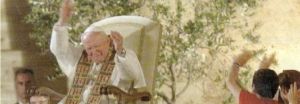
1. Jesus Christ, Son of Man and God: this is the culminating theme of our catechesis on the identity of the Messiah. It is the fundamental truth of Christian revelation and faith: the humanity and divinity of Christ on which we shall have to reflect more fully later. For now, we would like to complete our analysis of the messianic titles already present in some way in the Old Testament and see in what sense Jesus attributes them to himself.
As for the title "Son of Man", it is significant that Jesus used it frequently when speaking of himself, while it is the others who call him "Son of God", as we shall see in the next catechesis. Instead, he called himself "Son of Man", whereas no one else called him that, except the deacon Stephen before the stoning (Acts 7:56) and the author of the Apocalypse in two texts (Acts 1:13; 14:14).
2. The title "Son of Man" comes from the Old Testament from the Book of the Prophet Daniel. Here is the text describing a night vision of the prophet: "Looking again in the night visions, behold, there appeared in the clouds of heaven one like a son of man; he came and was presented to him, who gave him power and glory and a kingdom; all peoples, nations and languages served him; his power is an everlasting power, which never fades, and his kingdom is such that it will never be destroyed" (Dan 7:13-14).
And when the prophet asks for an explanation of this vision, he receives the following answer: "The saints of the Most High shall receive the kingdom and possess it for ever and ever . . . then the kingdom and the power and the greatness of all the kingdoms that are under heaven shall be given to the people of the saints of the Most High" (Dan 7:18, 27). The text of Daniel is about an individual person and the people. We note immediately that what refers to the person of the Son of Man is found in the words of the angel in the annunciation to Mary: "he will reign forever . . . and his kingdom will have no end" (Lk 1:33).
3. When Jesus calls himself 'Son of Man' he uses an expression from the canonical tradition of the Old Testament and also found in the Jewish apocrypha. It should be noted, however, that the expression "Son of Man" (ben-adam) had become in the Aramaic of Jesus' time an expression simply indicating "man" ("bar-enas"). Jesus, therefore, by calling himself "son of man", almost succeeded in hiding behind the veil of common meaning the messianic significance the word had in prophetic teaching. It is no coincidence, however, that if utterances about the "Son of Man" appear especially in the context of Christ's earthly life and passion, there is also no lack of them in reference to his eschatological elevation.
4. In the context of the earthly life of Jesus of Nazareth, we find texts such as: "The foxes have their dens and the birds of the air their nests, but the Son of Man has nowhere to lay his head" (Matthew 8: 20); or also: "The Son of Man has come, who eats and drinks, and they say, Behold, a glutton and a drunkard, a friend of publicans and sinners" (Matthew 11: 19). At other times the word of Jesus takes on a value more strongly indicative of his power. Thus when he says: 'The Son of Man is lord even of the Sabbath' (Mk 2:28). On the occasion of the healing of the paralytic lowered through an opening in the roof he states in an almost defiant tone: 'Now, so that you may know that the Son of Man has power on earth to forgive sins, I command you,' he said to the paralytic, 'get up, take up your bed and go home' (Mk 2:10-11). Elsewhere Jesus declares: "For as Jonah was a sign to those in Nineveh, so also will the Son of Man be to this generation" (Lk 11:30). On another occasion it is a vision shrouded in mystery: "A time will come when you will long to see even one of the days of the Son of Man, but you will not see him" (Lk 17:22).
5. Some theologians note an interesting parallelism between the prophecy of Ezekiel and the utterances of Jesus. The prophet writes: "(God) said to me: 'Son of man, I am sending you to the Israelites . . . who have turned against me . . Thou shalt say to them, 'Says the Lord God'" (Ez 2:3-4). "Son of man, you dwell among a race of rebels, who have eyes to see and do not see, have ears to hear and do not hear . . ." (Ez 12:2) "You, son of man . . . keep your eyes fixed on it (Jerusalem) which will be besieged . . . and you will prophesy against it" (Ez 4:1-7). "Son of man, prophesy a riddle telling a parable to the Israelites" (Ez 17:2).
Echoing the words of the prophet, Jesus teaches: "For the Son of Man came to seek and to save that which was lost" (Lk 19:10). "For the Son of Man did not come to be served, but to serve and to give his life as a ransom for many" (Mk 10:45; cf. also Mt 20:28). The "Son of Man" . . . "when he comes in the glory of the Father", will be ashamed of those who were ashamed of him and his words before men (cf. Mk 8:38).
6. The identity of the Son of Man appears in the dual aspect of representative of God, herald of the kingdom of God, prophet calling to conversion. On the other hand, he is the "representative" of men, whose earthly condition and sufferings he shares in order to redeem and save them according to the Father's plan. As he himself says in his conversation with Nicodemus: "As Moses lifted up the serpent in the wilderness, so must the Son of man be lifted up that whoever believes in him may have eternal life" (Jn 3:14-15).
It is a clear proclamation of the passion, which Jesus repeats: "And he began to teach them that the Son of Man must suffer greatly, and be reproved by the elders, the chief priests, and the scribes, and then be killed, and after three days rise again" (Mk 8:31). Three times in Mark's Gospel (cf. Mk 9:31; 10:33-34) and in each of them Jesus speaks of himself as the "Son of Man".
7. By the same appellation Jesus defines himself before the tribunal of Caiaphas, when to the question: "Are you the Christ, the blessed Son of God?" he replies: "I am! And you will see the Son of Man seated at the right hand of Power and coming with the clouds of heaven" (Mk 14:62). In these few words echoes Daniel's prophecy about the "Son of Man coming on the clouds of heaven" (Dan 7:13) and Psalm 110 that sees the Lord seated at the right hand of God (cf. Ps 110:1).
8. Repeatedly Jesus speaks of the elevation of the "Son of Man", but he does not hide from his listeners that it includes the humiliation of the cross. To the objections and incredulity of the people and disciples, who well understood the magic of his allusions and yet asked him: "How then do you say that the Son of Man must be elevated? Who is this Son of Man?" (Jn 12:34), Jesus asserts: "When you have lifted up the Son of Man, then you will know that I am and do nothing of myself, but as the Father has taught me" (Jn 8:28). Jesus states that his "elevation" by the cross will constitute his glorification. Shortly afterwards he will add: "The hour has come for the Son of Man to be glorified" (John 12: 23). It is significant that at Judas' departure from the Upper Room, Jesus says "now the Son of Man has been glorified, and God also has been glorified in him" (Jn 13:31).
9. This constitutes the content of life, passion, death and glory of which the prophet Daniel had offered a pale sketch. Jesus does not hesitate to also apply to himself the character of an eternal and everlasting kingdom that Daniel had assigned to the work of the Son of Man, when he proclaims to the world: "Then they will see the Son of Man coming in the clouds with great power and glory" (Mk 13:26; cf. Mt 24:30). It is in this eschatological perspective that the Church's work of evangelisation must take place. He warns: "You will not have finished going through the city of Israel before the Son of Man comes" (Mt 10:23). And he asks: "But will the Son of Man, when he comes, find faith on earth?" (Lk 18:8).
10. If, as the "Son of Man", Jesus realised by his life, passion, death and resurrection, the messianic plan outlined in the Old Testament, at the same time he assumes by that same name his place among men as a true man, as the son of a woman, Mary of Nazareth. Through this woman, his Mother, he, the 'Son of God', is at the same time the 'Son of man', a true man, as the Letter to the Hebrews attests: 'He became truly one of us, in all things like us except sin' (Heb 4:5; cf. Gaudium et Spes, 22).
[Pope John Paul II, General Audience 29 April 1987]
Where the sign of the Cross hurts
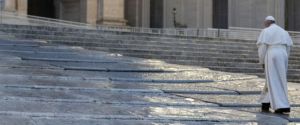
Making "the sign of the cross" distractedly and flaunting "the symbol of Christians" as if it were "the badge of a team" or "an ornament", perhaps with "precious stones, jewels and gold", has nothing to do with "the mystery" of Christ. So much so that Pope Francis suggested an examination of conscience precisely on the cross, to verify how each of us carries the only true "instrument of salvation" in our daily lives. Here are the lines of reflection that the Pontiff proposed in the Mass celebrated Tuesday morning, 4 April, at Santa Marta.
"It attracts attention," he immediately pointed out, referring to the passage from the evangelist John (8, 21-30), "that in this brief passage of the Gospel three times Jesus says to the doctors of the law, to the scribes, to some Pharisees: 'You will die in your sins'". He repeats this "three times". And "he says this," he added, "because they did not understand the mystery of Jesus, because their hearts were closed and they were not able to open a little, to try to understand that mystery that was the Lord". In fact, the Pope explained, 'to die in one's sin is an ugly thing: it means that everything ends there, in the filth of sin'.
But then "this dialogue - in which three times Jesus repeats 'you will die in your sins' - continues and, at the end, Jesus looks back at the history of salvation and reminds them of something: 'When you have raised up the son of man, then you will know that I am and that I do nothing of myself'". The Lord says precisely: "when you have lifted up the son of man".
With these words - said the Pontiff, referring to the passage from the book of Numbers (21, 4-9) - "Jesus brings to mind what happened in the desert and what we heard in the first reading". It is the moment when "the bored people, the people who cannot endure the journey, turn away from the Lord, spit on Moses and the Lord, and find those snakes that bite and cause death". Then "the Lord tells Moses to make a bronze serpent and raise it up, and the person who suffers a wound from the serpent, and who looks at the bronze one, will be healed".
"The serpent," the Pope continued, "is the symbol of the evil one, it is the symbol of the devil: it was the most cunning of animals in the earthly paradise. Because "the serpent is the one who is capable of seducing with lies", he is "the father of lies: this is the mystery". But then "must we look to the devil to save us? The serpent is the father of sin, the one who made mankind sin". In reality, "Jesus says: 'When I am lifted up on high, all will come to me'. Obviously this is the mystery of the cross".
"The bronze serpent healed," Francis said, "but the bronze serpent was a sign of two things: of the sin made by the serpent, of the serpent's seduction, of the serpent's cunning; and also it was a sign of the cross of Christ, it was a prophecy. And "for this reason the Lord says to them: 'When you have lifted up the son of man, then you will know that I am'". So we can say, said the Pope, that "Jesus 'became a serpent', Jesus 'became sin' and took upon himself the filth all of humanity, the filth all of sin. And he "became sin", he made himself lifted up so that all people could look upon him, people wounded by sin, us. This is the mystery of the cross and Paul says it: 'He became sin' and took on the appearance of the father of sin, the cunning serpent'.
"Whoever did not look upon the bronze serpent after being wounded by a serpent in the desert," the Pontiff explained, "died in sin, the sin of murmuring against God and against Moses". In the same way, 'whoever does not recognise in that uplifted man, like the serpent, the power of God who became sin in order to heal us, will die in his own sin'. Because 'salvation comes only from the cross, but from this cross that is God made flesh: there is no salvation in ideas, there is no salvation in good will, in the desire to be good'. In reality, the Pope insisted, "the only salvation is in Christ crucified, because only he, as the bronze serpent meant, was able to take all the poison of sin and healed us there".
"But what is the cross for us?" is the question posed by Francis. "Yes, it is the sign of Christians, it is the symbol of Christians, and we make the sign of the cross but we don't always do it well, sometimes we do it like this... because we don't have this faith to the cross," the Pope pointed out. The cross, then, he said, "for some people is a badge of belonging: 'Yes, I wear the cross to show that I am a Christian'". And 'it looks good', however, 'not only as a badge, as if it were a team, the badge of a team'; but, Francis said, 'as the memory of the one who became sin, who became the devil, the serpent, for us; he lowered himself to the point of total annihilation'.Moreover, it is true, 'others carry the cross as an ornament, they carry crosses with precious stones, to be seen'. But, the Pontiff pointed out, "God said to Moses: 'He who looks at the serpent will be healed'; Jesus says to his enemies: 'When you have lifted up the son of man, then you will know'". In essence, he explained, 'those who do not look upon the cross, thus, in faith, die in their sins, will not receive that salvation'.
"Today," the Pope relaunched, "the Church proposes to us a dialogue with this mystery of the cross, with this God who became sin, out of love for me". And "each of us can say: 'out of love for me'". So, he continued, it is appropriate to ask ourselves: 'How do I carry the cross: as a reminder? When I make the sign of the cross, am I aware of what I am doing? How do I carry the cross: only as a symbol of belonging to a religious group? How do I carry the cross: as an ornament, like a jewel with many golden precious stones?". Or "have I learnt to carry it on my shoulders, where it hurts?".
"Each one of us today," the Pontiff suggested at the conclusion of his meditation, "look at the crucifix, look at this God who became sin so that we might not die in our sins, and answer these questions that I have suggested to you.
[Pope Francis, St. Martha, in L'Osservatore Romano 4 April 2017]
Judging Question
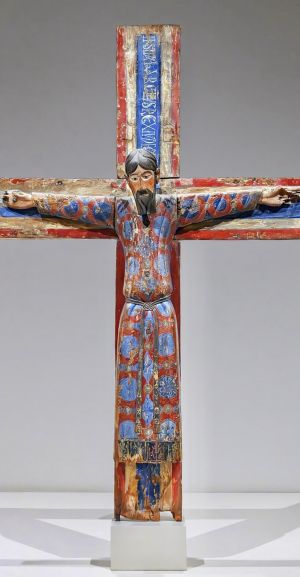
Where and which Messiah? In the dilemma, the solution
(Lk 9:18-22)
People of God are no longer in the closed of a womb that protects and guarantees the believer, and sometimes we feel incapable of fielding the Risen One in our limits.
Indeed, the dream of a person who solves problems from the outside (like a shortcut) is still ingrained.
Chimaera fuelled by the bewilderment and anguish we feel in the face of a world marked by contradictions - today even by the bitter consequences of the global crisis.
The wish of a Messiah is kept alive by our trembling... in the waiting for intervention of Someone able to be [instead] inside ourselves and things.
That is why God does not turn to a valiant captain, not to a powerful ruler, not to a hero, but to those who offer love. And each of us could be, though our works seem sloppy in themselves, or far inferior to desires.
But Christ himself pours into them.
He is the humble Son, yet he does not play in defense: authentic Liberator.
Divine Glory has an unexpected figure. The Eternal is not a controller, nor a promoter of models that defend order, or [old or fashionable] beliefs, nor fine manners.
The secluded place (v.18) is paraphrases of our risk of misunderstanding.
Even at that time everyone was waiting for the coming of the Anointed of the Lord, but each sect or school of thought in its own way.
Some awaited a sovereign, others a priest, or warrior commander; a judge, a prophet...
All "masters", clinging to some social privilege. No servant, intimate to ourselves: full understanding escaped.
Jesus explicitly imposes messianic silence (v.21) because he does not follow expectations, hopes, intentions by the norm - all external.
In fact, he replaces the perspective of «”the” Messiah» ["that" awaited Messiah] with «the Son of Man» (vv.20-22): the true and full development of divine Plan for humanity.
«"The" Christ» according to the common mentality was a predictable figure, hard, too normal, fixed over time - who had no respect for personal processes - and overflowing with claims.
«Son of Man» is a Person without exaggeration: more intimate, true and profound; without too much method, nor typologies. Person who for this reason does not cease to grow.
In Lk all the important events of the story of Jesus are inserted in a moment of prayer.
It was not easy even for Him to be in tune with the idea that divine Glory could manifest itself in a totally unfavorable situation - only here and there pulsating of light.
And what do you say (cf. v.20)? To the great riddle, only God-man Crucified [the Different, and without reputation] is Judgment, and the Answer that frees from insecurity.
With our inner Friend who embraces, nourishes us and acts like a magnet, we will give everything to the Present - the better part. Closeness of Infinity and our eternal side.
[Friday 25th wk. in O.T. September 25, 2026]
But what moves me even more strongly to proclaim the urgency of missionary evangelization is the fact that it is the primary service which the Church can render to every individual and to all humanity [Redemptoris Missio n.2]
Ma ciò che ancor più mi spinge a proclamare l'urgenza dell'evangelizzazione missionaria è che essa costituisce il primo servizio che la chiesa può rendere a ciascun uomo e all'intera umanità [Redemptoris Missio n.2]
Freedom and love coincide! On the contrary, obeying one’s selfishness leads to rivalry and conflict (Pope Benedict)
Libertà e amore coincidono! Al contrario, obbedire al proprio egoismo conduce a rivalità e conflitti (Papa Benedetto)
Are they not all spirits charged with a ministry, sent to serve those who are to inherit salvation? (Heb 1:14)
Non sono essi tutti spiriti incaricati di un ministero, inviati per servire coloro che devono ereditare la salvezza? (Eb 1,14)
The Church with its permanent contradiction: between the ideal and reality, the more annoying contradiction, the more the ideal is affirmed sublime, evangelical, sacred, divine, and the reality is often petty, narrow, defective, sometimes even selfish (Pope Paul VI)
La Chiesa con la sua permanente contraddizione: tra l’ideale e la realtà, tanto più fastidiosa contraddizione, quanto più l’ideale è affermato sublime, evangelico, sacro, divino, e la realtà si presenta spesso meschina, angusta, difettosa, alcune volte perfino egoista (Papa Paolo VI)
At first they say “yes” to God’s will, but their piety becomes routine and God no longer matters to them [Pope Benedict]
Essi, prima, dicono “sì” alla volontà di Dio. Ma la loro religiosità diventa routine, e Dio non li inquieta più [Papa Benedetto]
And «each of us can say: "for love to me"» (Pope Francis)
E «ognuno di noi può dire: “per amore a me”» (Papa Francesco)
We too, to reach a more conscious confession of Jesus Christ must follow, like Peter, a path made of attentive, caring listening (Pope John Paul II)
Anche noi per giungere a una più consapevole confessione di Gesù Cristo dobbiamo percorrere, come Pietro, un cammino fatto di ascolto attento, premuroso (Papa Giovanni Paolo II)
It is a word that must be witnessed to and proclaimed explicitly, because without a consistent witness it proves to be less comprehensible and credible [Pope Benedict]
E’ una Parola che deve essere testimoniata e proclamata esplicitamente, perché senza una testimonianza coerente essa risulta meno comprensibile e credibile [Papa Benedetto]
The “reading and meditation of the word of God root us more deeply in Christ and guide our ministry as servants of reconciliation, justice and peace” (second Synod for Africa, Propositio 46)
La lettura e la meditazione della Parola di Dio ci radicano più profondamente in Cristo e orientano il nostro ministero di servitori della riconciliazione, della giustizia e della pace (Secondo Sinodo per l’Africa, Propositio 46)
That 'always seeing the face of the Father' is the highest manifestation of the worship of God. It can be said to constitute that 'heavenly liturgy', performed on behalf of the whole universe [John Paul II]
Quel “vedere sempre la faccia del Padre” è la manifestazione più alta dell’adorazione di Dio. Si può dire che essa costituisce quella “liturgia celeste”, compiuta a nome di tutto l’universo [Giovanni Paolo II]








duevie.art
don Giuseppe Nespeca
Tel. 333-1329741
Disclaimer
Questo blog non rappresenta una testata giornalistica in quanto viene aggiornato senza alcuna periodicità. Non può pertanto considerarsi un prodotto editoriale ai sensi della legge N°62 del 07/03/2001.
Le immagini sono tratte da internet, ma se il loro uso violasse diritti d'autore, lo si comunichi all'autore del blog che provvederà alla loro pronta rimozione.
L'autore dichiara di non essere responsabile dei commenti lasciati nei post. Eventuali commenti dei lettori, lesivi dell'immagine o dell'onorabilità di persone terze, il cui contenuto fosse ritenuto non idoneo alla pubblicazione verranno insindacabilmente rimossi.