


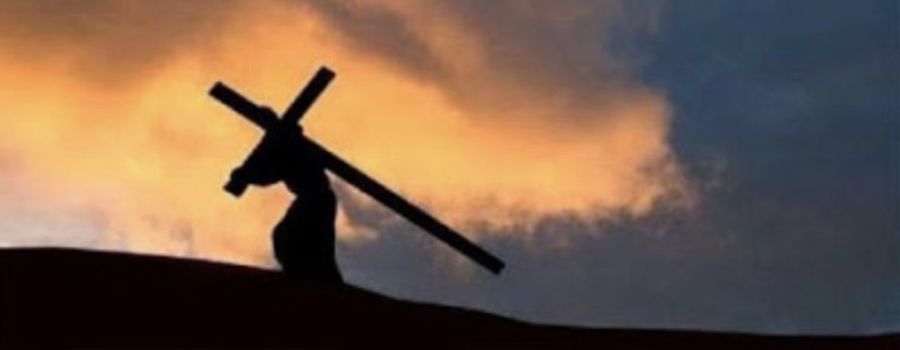
The Risk of Truth
(Mk 4:21-25)
That of Mk is a narrative and popular catechesis, reflecting the problems of a very primitive community of Faith - compared to those of the other Gospels.
Its manner of expression is correlative to such unsophisticated (only practical and ordinary) origins.
Identifying Lao Tse's thought, Master Ho-shang Kung confesses: 'Since I do not see the form and appearance of the Way, I do not know by what name it is fitting to call it' (commentary on the Tao Tê Ching xxv,7-8).
At the time, there was still a strong debate within the churches in Rome on essential issues: Who is God and how to honour Him? What is the right relationship with Tradition? And between doctrine and life? How to realise oneself and love?
To be free ... must one give up everything, or change one's mind? How to face persecution? Is there room for Dreams? Who guides us? What to do with spontaneous nature? How to deal with institutions and the distant? And so on.
Some of the faithful remained attached to the mummified mentality of the mighty Messiah, who was supposed to descend like lightning and stay to himself.
A glorious king, comparable to the emperor, who would ensure victories for his people. He solved every problem in a disruptive and immediate way.
Those who read the Scriptures with such a criterion - or even as a scarcely popular text (v.22), to be interpreted in small doses, mysterious, cerebral, moralistic; typical - had difficulty internalising the sense of the new Teaching. And to be well prepared for the real confrontation with the inevitable risks of the gospel truth.
The Message of Christ, on the other hand, opens one up to an uninterrupted apostolate; even a troubled one. And it must be proclaimed in the face of the world, otherwise the Spirit will not be unleashed within the disciple, nor will it work outside him.
The proclamation brings with it an awareness of having received much, and of having been introduced unconditionally into the Secret of God; hence, with the desire for all to share in it.
In Mk, the language of the parables and images that the Lord uses to make his teaching explicit convey the sense of an interpretation that is neither esoteric nor difficult to decipher of the things of the Kingdom of God - always placed within the normal elements of life.
By transmitting Christ (also in the new way that the Magisterium is teaching us, practical and broad) we open up the secrets of the Father (v.22) - no longer bound by chicanery, or reworked opinions on customs, or pious advice.
Certainly, those who keep up to date and remain attentive, advance. No one will be surprised that the unwilling or nostalgic who linger and remain entrenched in their positions end up extinguishing their influence and gradually disappearing from the scene (vv.24-25).
The "lamp" that comes and directs in the darkness of the evening is only the Word of God, which is not to be suffocated with custom.
In the darkness it must always be lit, that is, it cannot remain closed in a book (v.21).
It is a lamp that only illuminates when it is united with life - and with a key that is neither triumphalist nor fixed (v.21).
Otherwise, it remains ambivalent (vv.23-24). We must be very careful about the codes with which we interpret Scripture, and our own impulses or prejudices.
Ingrained ideas often deflect our understanding of the meaning of events, the emotions they arouse, and the very Person of the Son of God.
Even today, some willing readers of the Bible remain hampered by hasty and one-sided ways of understanding, or cerebral thoughts, cultivated within clubs of supposedly chosen ones called apart.
Sometimes we remain conditioned by grand narratives (all in all conformist); by roundabout, disembodied, more or less sought-after options - even ecclesial ones. Some in the form of dynastic privileges and banal fanaticism, which threaten life in Christ with serious errors.
The Mystery of the Kingdom is not a monopoly that some narrow and demarcated caste can afford to jealously guard.
It is, on the contrary, like a Light that transcends any chosen language, overcoming hierontocracies, circles and oligarchies that would claim to hijack it - and with it hold the living Jesus hostage as well.
"Man is the being-limit that has no limit" (Fratelli Tutti n.150). Our burning desire, the founding Eros that impassions our soul, cannot be normalised, subjected to clichés.
In the itinerancy of the homo viator, the Word-Logos and the Word-event of the divine already in us becomes Clarity, the horizon of Life. It comes to illustrate, support and motivate every personalistic anthropology of the threshold and the beyond.
In short, the Principle that breaks through and calls is like an impulse beyond measure.
"And he said to them: Be careful what you listen to. By the measure with which you measure it will be measured to you, and it will be added to you. For whoever has will be given to him, and whoever does not have even what he has will be taken away from him" (vv.24-25).Disproportionality proper to the Gospel:
The Gospel cannot lose its fragrance, because the Friend penetrates our condition of finitude to make himself a virtue of ever new search.
Motive and Engine of Growth - with the inevitable risk of truth, which has no limit.
To internalise and live the message:
What is your unconditioned but luminous and growing form of active dedication?








