Fourth Lent Sunday (year A)
(Jn 9:1-41)
John 9:8 Then the neighbours and those who had seen him before, since he was a beggar, said, 'Is this not the man who used to sit and beg?
John 9:9 Some said, 'He is the man,' while others said, 'No, he looks like him. ' But he said, 'I am the man.
John 9:10 They asked him, 'How then were your eyes opened?
John 9:11 He answered, 'The man called Jesus made mud, spread it on my eyes, and said to me, "Go to Siloam and wash." So I went and washed, and received my sight.
John 9:12 They said to him, 'Where is this man? He answered, "I do not know."
John 9:13 Now they brought to the Pharisees the one who had been blind.
John 9:41 Jesus answered them, "If you were blind, you would have no sin; but since you say, 'We see,' your sin remains."
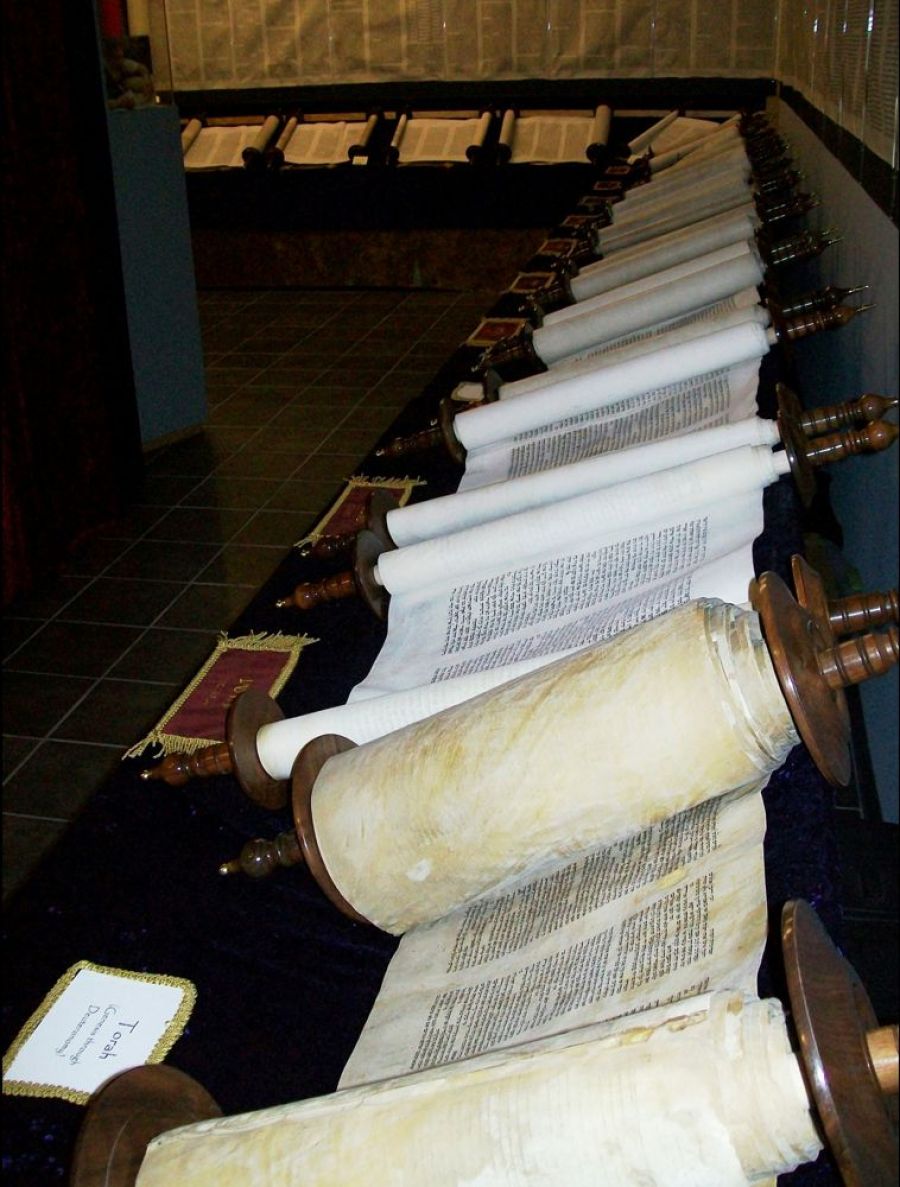
Verses 8-9, in presenting the main actors in this inquiry, the people and the blind man, question the identity of the healed blind man, who is described as a "beggar" and who "sat there". The fact that he was sitting speaks of a condition of life that made the man incapable of any autonomy, placing him on the margins of social and religious life. To accentuate this state of affairs, it is emphasised that his miserable life depended on the generosity of passers-by. But it is his blindness that isolates and immobilises him completely, preventing him from having any normal social relationships. In essence, what is described here is the spiritual state of Israel, blinded by a religiosity based on the letter of the Law, which made it incapable of any spiritual evolution towards God, reducing its relationship to a mere physical execution of the Torah. Israel, therefore, was spiritually broken down. This state of affairs sparks debate in the form of an investigation. The actors in this investigation are 'those who had seen him before'.
We are faced with an investigation set within a confused and uncertain framework, with a succession of conflicting and convulsive opinions: 'Some said, "It is he"; others said, "No, but he looks like him." And he said, "It is I!"' (v. 9). All the verbs are in the imperfect indicative to indicate the continuity of this questioning, of this investigation, which only the healed blind man is able, at least in part, to unravel.
Verse 10 poses the fundamental question: 'Then they asked him, "How then were your eyes opened?"'. This is still a superficial inquiry because it only asks how his healing took place. But here John actually establishes a systematic principle for interpreting signs: when faced with an extraordinary and portentous event, it is necessary to question and investigate how it came about, but without stopping at appearances, rather questioning them, transcending them to arrive at what they express. A second, more profound reading is therefore necessary because miracles, even before being an expression of the irruption of divine power among men, are signs that refer to what they signify in their appearances. Precisely for this reason, the blind man will detail what happened to him, so that, by reflecting on and investigating the sign, we may discover the light that illuminated him (v. 11).
Verses 11-12 report, on the one hand, the testimony of the healed blind man, who describes what happened to him, but without going further (v. 11); on the other hand, the first question of meaning appears: 'Where is this man? (v. 12), which will push the search and investigation of Jesus further, bringing the case to the religious authorities (v. 13).
The first answer the blind man gives to his interlocutors is a generic indication: 'The man called Jesus'. Significant here is the use of the term 'anthrōpos', which indicates a man in a generic, not well-defined sense, thus denoting an still imperfect knowledge of his healer. He certainly knows his name, but only by hearsay ("his name is Jesus"); he knows that through his rituals and commands, the meaning of which he does not understand, he has brought light to his eyes and heart; but he still lacks direct experience, which alone can provide him with full knowledge, bringing his journey of enlightenment to completion. But before reaching this point, he must still face many questions and overcome many obstacles; he must give further testimony, defend and proclaim his saviour himself, and, expelled from the synagogue, come to a necessary choice, that of abandoning his previous life. Only at this point will he meet him and proclaim him "Lord" (v. 38).
But what the healed blind man attested to his interlocutors (v. 11) is still completely insufficient to define who this Jesus really is. It is therefore necessary to find him, to know where he is: 'They said to him, "Where is this man?" He replied, "I do not know."' The name of Jesus is replaced by a pronoun ("this man"), which indicates that knowledge of Jesus is still superficial and therefore needs further investigation before arriving at the name, which in ancient culture indicates the very essence of the person. The outcome of this search, in fact, is ineffective: "I do not know," literally "I have not seen" (ouk oida) and therefore I do not know. It is therefore the absence of seeing, his blindness, that prevented him from grasping "where" his saviour is. Certainly, the healed blind man met Jesus, who healed him, but he had this experience of Jesus while he was still blind, before he had arrived at the pool of Siloam and washed himself with the living water. It was therefore a salvific encounter, yes, but one that required a whole journey to fully see his saviour. That is why he still 'does not know'.
It is therefore inevitable that the search continues, now among the religious authorities, those who should be the light that illuminates Israel. The blind man is taken to the Pharisees to be evaluated by them. The note at the end of verse 13 is significant: 'the man who had been blind', to emphasise, on the one hand, the change in his state of life: from blind to sighted; from unbeliever to believer; and, on the other hand, to indicate that the one on trial here is the one who was once blind, that is, a Jew who later converted to Christianity. In fact, the position taken by this former blind man in favour of Jesus, which becomes increasingly evident as the story progresses, and his final expulsion from the synagogue indicate the break between this former blind man and Judaism.
This, then, is the context in which the trial should be read, with the Pharisees in the role of preliminary investigators and the healed blind man first as a person informed of the facts and then as a defendant. Against this backdrop, the identity of Jesus gradually emerges, culminating in the expulsion of the blind man from the synagogue, an indispensable prerequisite for meeting Jesus and recognising his divinity.
Verse 41, concluding the story, reports Jesus' response to this Judaism that considered itself enlightened by the Torah: "If you were blind, you would have no sin; but since you say, 'We see,' your sin remains." The sentence, which is in fact an implicit accusation of presumption, triggers a confrontation between the man born blind, a metaphor for an open and welcoming Judaism that has reached full enlightenment, and this pedantic Judaism, which, convinced of being enlightened by the Torah, and on whose parameters even Jesus had been judged a sinner (v. 16), had closed itself off from any possibility of access to the Mystery. There is therefore no spiritual or cultural evolution for this type of Judaism. Because of its imperviousness to the manifestation of the Christ of God, this Judaism remains in its sin, which for John is unbelief, which in the final analysis is nothing other than the rejection of God.
Argentino Quintavalle, author of the books
- Apocalypse – exegetical commentary
- The Apostle Paul and the Judaizers – Law or Gospel?
Jesus Christ, True God and True Man in the Trinitarian Mystery
The Prophetic Discourse of Jesus (Matthew 24-25)
All Generations Will Call Me Blessed
Catholics and Protestants Compared – In Defence of the Faith
The Church and Israel According to St. Paul – Romans 9-11
(Available on Amazon)