


don Giuseppe Nespeca
Giuseppe Nespeca è architetto e sacerdote. Cultore della Sacra scrittura è autore della raccolta "Due Fuochi due Vie - Religione e Fede, Vangeli e Tao"; coautore del libro "Dialogo e Solstizio".
Carrying the weight of the day? It is never too late
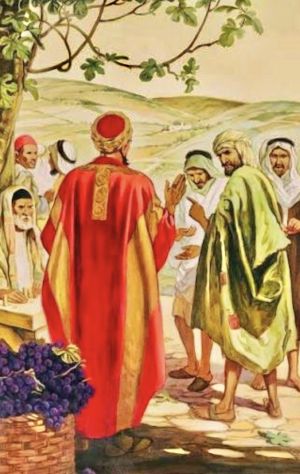
(Unique Coin and smart working: Love)
(Mt 20:1-16)
In the atrium of the Temple in Jerusalem, the climbing vine of the portal was a symbol of the gifts that people were called to present to God: mutual acceptance, understanding, sharing... for the happiness of all.
Obviously, entering at the beginning of the day (that is, of our existence) into this logic of love is better, than entering at the last hour.
Being in communion with God, being in his Vineyard and having had the grace not to lose even a moment of life without his Presence, is a «bearing the burden» or vice versa a pleasure?
Believers of the first hour feel deeply offended, because they identify the "advantage" with what they have always denied themselves.
They think the "enjoy life" in the same way as the pagans! The work is indeed... «endured» [v.12: notice the verb!].
Well, God has no wage workers: only sons; no subordinate. And none of us is negligible for "inefficiency".
That of the models is a blocking effect; tied to insignificant comparisons.
Not in deep synchrony with oneself [vv.6-7].
The Gospel of Mt originated from Syro-Palestinian communities, which were beginning to experience pagans and sinners flocking in large numbers and becoming a numerical majority.
The attitude of the outsiders who showed up at the gates of the communities was much freer than that of the embarrassed veterans.
The new mentality, dissolved from constraints, provoked jealousy among those who were accustomed to scrutinizing the lives of others - almost out of religious duty.
After all, that of beginners and ‘mestizos’ who wanted to start a way of love was but a reflection of the superabundant fluidity of the divine Gifts.
‘Gratis’: communicated without mistrust or exclusions; not on the basis of previous merits, but free of charge and by virtue of need alone.
Therefore, today’s passage remains a strong Call.
The importance of work induces the Master not to send his factor (!) whom he unfortunately knows he cannot fully trust.
He himself goes out repeatedly and does not want dirigistic interference, in personally calling the workers.
Because He is the Unique who understands: it is never too late!
Teaching is precisely for community leaders, who often do not take on the burden of bothering themselves from home in the continuous search for everyone, and adapting themselves to people and events.
The Father wants a Family (Vineyard) that presents to the world the sweet and sugary fruit of the Feast - the only really important thing, non-negotiable principle.
Thus, to the always morbids top of the class the Lord continues to do a very educational "spite".
From now on they must discover that He does not discriminate on the basis of external profitable percentages, nor other negative mental states.
He “pays” everyone unreservedly and with a unique single «currency»: his Person. No automatic pilot is enabled to disturb our breathing.
The soul counts, not the curriculum [CV] or performance.
[Wednesday 20th wk. in O.T. August 19, 2026]
Carrying the weight of the day?
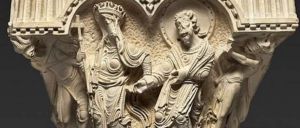
It's never too late (unique Coin and smart working: Love)
(Mt 20:1-16)
In the atrium of the temple in Jerusalem, the portal creeper was a symbol of the gifts that the people were called upon to present to God: mutual acceptance, understanding, sharing... for the happiness of all.
Obviously, entering at the beginning of the day (that is, of our existence) into this logic of love is better than entering at the last hour.
Instead: "Is your eye bad because I am good?" [v.19 Greek text].
But is being in communion with God, being in his Vineyard and having had the grace not to lose a single moment of life without his Presence a 'burden-bearing' or vice versa a pleasure?
But what a naive question... of course, the issues at stake are these and they are profound, but also others. So let us ask ourselves: in what we do, how much does external theatre count? So much?
The believers of the 'first hour' feel deeply offended, because underneath they identify 'pleasure' or 'advantage' with what they have always forcibly denied themselves. Perhaps out of a matter of social respectability, or out of a misunderstood sense of God; either way, artificially.
They think of 'enjoying life' in the same way as pagans! Work is indeed ... 'endured' [v.12: note the verb!].
Their unspoken sentiments are equally ungodly... but the first of the class remain more adept than others at exploiting the screen of long-certified membership to mask themselves behind the zeal of renunciations, works, sweats, procedures, prescriptions, performances, and better performances.
Well, God has no wage labourers: only children; no underlings.
None of us are negligible for 'inefficiency' - based on the old idea of proven belonging: the inhuman pace, the production volumes, the effort, the performance... the extra overtime...
That of patterns is a blocking effect; linked to meaningless comparisons, stressful, rushed (and overworked) life - all under external influence.
Not in deep synchrony with oneself [vv.6-7: ""Why do you stand here all day idle?" They say to him, "Because no one has taken us for a day. He says to them, 'You also go into the Vineyard'"].
The Father is only interested in personal Happiness and the Joy of Love: the only tasty Fruit; not the heap of external works, not the great volume of the many and many 'fruits' - often unfortunately inedible.
It is the outcome of the new, inverted world.
We are all equally protagonists and leaders, even if to some 'internal' regulars our contribution appears fragmentary, inefficient - and assesses us as not very 'involved' (perhaps in 'customs'); not at all 'regular' - with a grim and presumptuous eye.
The recent experience of smart working during the health crisis has brought out the specific weight of the 'late-comers': people who are less tied to production, less extroverted and less able to lead, but perhaps more thoughtful and profound, more respectful of the preciousness of their own work; less outward-looking or exhibitionist, more collaborative.
The unfavourable has become favourable!
The Gospel of Mt originated from Syro-Palestinian communities, which were beginning to experience pagans and sinners flocking in large numbers and becoming a numerical majority.
All this, to the great scandal of both Pharisaic and Judeo-Christian circles - who were now showing themselves to be opponents of the newcomers.
In short, the veterans were beginning to behave as if they were returning 'Pharisees', bound to the works of the law and the old ethnic-cultural baggage.
This is how the Master treats them - because they stubbornly refused to listen to the tide of people once far away, who were now bringing new things. And [they, without much practice of pious works] opened up to the veterans a path of Exodus, of Liberation from the convictions of the fathers.
The attitude of the outsiders and "intermarriers" who presented themselves at the fraternities' doors was much freer and fiercer than that of the community elders, Judaizers.
Their unencumbered mentality began to provoke jealousy among those who - almost out of religious duty - were used to scrutinising the lives of others with suspicion.
After all, that of the beginners and 'half-breeds' who wanted to begin a journey of love was but a reflection of the superabundant fluidity of the divine Gifts.
'Free' communicated without mistrust or exclusion: not on the basis of previous merits, but freely and by virtue of need alone.
We can experience live today the identical dynamics of confrontation, between new blood relatives on the basis of Faith and the customary ones [more concerned with their fixed places and 'laboriously' won positions of supremacy].
But thanks to the Word (v.15b) we now recognise the latter: by their judgement and manners. Nor do they ever want to let go of a finished past, or their 'new' sophisticated world of fashionable brain hypotheses.When the 'good' God unmasks them, exposing their prejudice, they remain with the slanted, evil eye of false paternalism.
But it is a malicious gaze only for intimidation purposes - for envy and 'lese majesty', not to educate us.
Thus they delude themselves not to be understood and continue to sterilise or pilot, ridiculing Love [also to get us out of the way - to avoid the danger of being overshadowed] by ineptitude, and by the very normal unfolding of life.
Therefore, today's passage remains, after so many centuries, a powerful reminder.
The importance of the work induces the Master not to send his factor (!) whom he unfortunately knows he cannot fully trust.
He himself repeatedly goes out and does not want dirigiste interference in calling the workers personally.
He is the only one who understands: it is never too late!
The teaching is precisely for community leaders, who often do not take on the burden of constantly searching for everyone from home, and adapting themselves to people and events.
Instead, the Father wants a Family (Vineyard) that presents the world with the sweet, sugary fruit of the Feast - the only truly important, non-negotiable principle.
Thus, to the ever morbid top of the class, the Lord continues to do a very educational 'spite'.
Already in life, they must discover that He does not discriminate on the basis of external profitable percentages, or others' negative mental states.
He "pays" everyone without reservation and with a single "currency": His Person. No autopilot is enabled to disturb our breathing.
The soul counts, not the CV or performance.
To internalise and live the message:
In what do you find God's Will incomprehensible, or rather the commercial, gloomy and square mentality (covered with duties, sadness, fatigue and pain) of his investigators?
All committed. Matthew, Paul, Mary: from last to first
Dear Brothers and Sisters,
You may remember that when I addressed the crowd in St Peter's Square on the day of my election it came naturally to me to introduce myself as a labourer in the vineyard of the Lord. Well, in today's Gospel (cf. Mt 20: 1-16), Jesus recounted the very same parable of the owner of the vineyard who at different hours of the day hires labourers to work in it. And in the evening he gives them all the same wages, one denarius, provoking protests from those who began work early. That denarius clearly represents eternal life, a gift that God reserves for all. Indeed those who are considered the "last", if they accept, become the "first", whereas the "first" can risk becoming the "last". The first message of this parable is inherent in the very fact that the landowner does not tolerate, as it were, unemployment: he wants everyone to be employed in his vineyard. Actually, being called is already the first reward: to be able to work in the Lord's vineyard, to put oneself at his service, to collaborate in his work, is in itself a priceless recompense that repays every effort. Yet only those who love the Lord and his Kingdom understand this: those who instead work only for the pay will never realize the value of this inestimable treasure.
It is St Matthew who recounts this parable, an apostle and an evangelist, whose liturgical feast day we are celebrating on this very day. I like to emphasize that Matthew lived this experience in the first person (cf. Mt 9: 9). Indeed, before Jesus called him he worked as a tax collector and was therefore seen as a public sinner, excluded from "the Lord's vineyard". But everything changed when Jesus passed by his table, looked at him and said to him: "Follow me". Matthew rose and followed him. From a publican he immediately became a disciple of Christ. From being "last" he found himself "first", thanks to God's logic, which - for our good fortune! - is different from the logic of the world. "My thoughts are not your thoughts", the Lord says, speaking through the mouth of Isaiah, "neither are your ways my ways" (Is 55: 8). St Paul, for whom we are celebrating a special Jubilee Year, also experienced the joy of feeling called by the Lord to work in his vineyard. And what a lot of work he accomplished! Yet, as he himself confessed, it was God's grace which worked in him, that grace which from persecutor of the Church transformed him into an Apostle to the Gentiles, to the point of saying: "For to me to live is Christ, and to die is gain" However he immediately added: "If it is to be life in the flesh, that means fruitful labour for me. Yet which I shall choose I cannot tell" (Phil 1: 21-22). Paul clearly understood that working for the Lord is already a reward on this earth.
The Virgin Mary, whom I had the joy of venerating in Lourdes a week ago, is the perfect branch of the Lord's vine. In her germinated the blessed fruit of divine love: Jesus, our Saviour. May she help us to respond constantly and joyously to the Lord's call and to find our happiness in toiling for the Kingdom of Heaven.
[Pope Benedict, Angelus 21 September 2008]
Beyond the limit of strict justice
6. Another parable makes us realise that it is never too late to enter the Church. God's invitation can be addressed to man up to the last moment of life. It is the well-known parable of the labourers in the vineyard: "The kingdom of heaven is like a householder who went out at dawn to hire labourers for his vineyard" (Mt 20:1). He went out again a few times at different times of the day, until the last hour. And to all was given a wage in which, beyond the limit of strict justice, the master wished to manifest all his generous love.
The moving episode, narrated by the evangelist Luke, about the 'good thief' crucified alongside Jesus on Golgotha comes to mind in this regard. To him, the invitation manifested itself as God's merciful initiative, as he was almost breathing: 'Jesus, remember me when you enter your kingdom'. He heard from the mouth of the Redeemer-Spouse, condemned to death on the cross: "Truly I say to you, today you will be with me in paradise" (Lk 23:42-43).
[Pope John Paul II, General Audience 18 September 1991]
Outgoing Church and "reward”
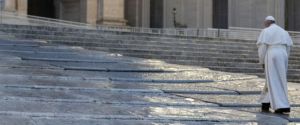
Today’s passage from the Gospel (cf. Mt 20:1-16) recounts the parable of the labourers called to put in a day’s work by the owner of the vineyard. Through this narrative, Jesus shows us the surprising way God acts, represented by two of the owner’s attitudes: the call and the recompense.
First of all, the call. Five times the owner of the vineyard goes out and calls people to work for him: at six, at nine, at twelve, at three and at five in the afternoon. The image of this owner, who goes out numerous times to look for day labourers for his vineyard, is touching. That owner represents God who calls everyone and calls always, at any hour. Even today, God acts this way: he continues to call anyone, at whatever hour, to invite them to work in his Kingdom. This is God’s way, which, in our turn, we are called to receive and to imitate. He does not stay shut in within his world, but “goes out”: God always goes out, in search of us; he is not closed up — God goes out. He continually seeks out people, because he does not want anyone to be excluded from his loving plan.
Our communities are also called to go out to the various types of “boundaries” that there might be, to offer everyone the word of salvation that Jesus came to bring. It means being open to horizons in life that offer hope to those stationed on the existential peripheries, who have not yet experienced, or have lost, the strength and the light that comes with meeting Christ. The Church needs to be like God: always going out; and when the Church does not go out, she becomes sick with the many evils we have in the Church. And why are these illnesses in the Church? Because she does not go out. It is true that when someone goes out there is the danger of getting into an accident. But better a Church that gets into accidents because she goes out to proclaim the Gospel, than a Church that is sick because she stays in. God always goes out because he is a Father, because he loves. The Church must do the same: always go out.
The owner’s second attitude, representing God’s, is his way of compensating the workers. How does God pay? The owner agrees to “one denarius” (v. 2) with the first workers he hired in the morning. Instead, to those he hired later, he says: “Whatever is right I will give you” (v. 4). At the end of the day, the owner of the vineyard orders that everyone be given the same pay, that is, one denarius. Those who had worked since morning are outraged and complain against the owner, but he insists: he wants to give the maximum pay to everyone, even to those who arrived last (vv. 8-15). God always pays the maximum amount: he does not pay halfway. He pays everything. Here we understand that Jesus is not speaking about work and fair wages — that is another problem — but about the Kingdom of God and the goodness of the heavenly Father who goes out continually to invite, and he pays everyone the maximum amount.
In fact, God behaves like this: he does not look at the time and at the results, but at the availability; he looks at the generosity with which we put ourselves at his service. His way of acting is more than just, in the sense that it goes beyond justice and is manifested in Grace. Everything is Grace. Our salvation is Grace. Our holiness is Grace. In giving us Grace, he bestows on us more than what we merit. And so, those who reason using human logic, that is, the logic of the merits acquired through one’s own greatness, from being first, find themselves last. “But, I have worked a lot, I have done so much in the Church, I have helped a lot and they pay me the same as this person who arrived last…”. Let us remember who was the first canonized saint in the Church: the Good Thief. He “stole” Paradise at the last minute of his life: this is Grace. This is what God is like, even with us. Instead, those who seek thinking of their own merits fail; those who humbly entrust themselves to the Father’s mercy, rather than being last — like the Good Thief — find themselves first (cf. v. 16).
May Mary Most Holy help us to feel every day the joy and wonder of being called by God to work for him, in his field which is the world, in his vineyard which is the Church. And to have as our only recompense his love, friendship with Jesus.
[Pope Francis, Angelus 20 September 2020]
Camel: absurd position and transit
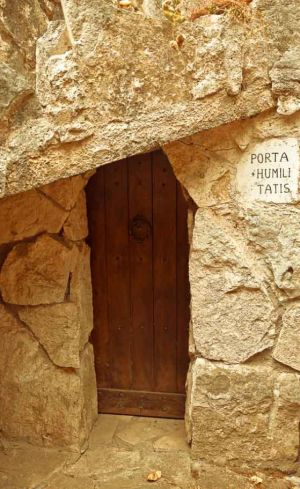
The friendship of those who count and their facilitations, or the inverted world
(Mt 19:23-30)
It is not easy to enter the logic of the Gift and place oneself in authentic following of the Lord, in pursuit of a non-shoddy Happiness.
But precisely the Gospels are Ways that distinguish individual fulfilment and destiny from both expectations and obvious designs and intentions.
Trivial expectations, common streets and thoughts in fact lock the meaning of existence into what is already represented.
In such a way, access of the rich to a community that lives Faith in Christ becomes problematic (vv.23-24).
Fertile strength of the weak surpasses the fabulous and comfortable results expected thanks to the support of the well-introduced.
Human impossibility and possibility of God (v.26): the Father transmits authentic and flourishing Life, while goods pull to the other side.
They normalize existence and make it stagnate: they give opposite orders.
So, faced with the rigid and "absurd" position of the Master, the apostles are frightened (v.25): why not take advantage of the help of wealthy people, who could make everything easier, expeditious and grandiose?
Detachment from certain banners is impossible with men (v.26). But the “area” in which God reigns is his Church, even not visible; a reality that is configured as a sort of inverted world (vv.28-30).
The Apostles themselves seem to remain tied to the mentality of return: «what will we have?» [v.27].
The idea of retribution was typical of archaic religious culture. Unfortunately, the lust for advantage was crushing Love, annihilating the gratuitousness of gestures, denying the meaning of the Covenant.
Thus, in his free proposal Jesus wants to introduce the support of an intimate and apparently unreasonable conviction, but that sharply flows from the sources of being.
Here emerges the founding Eros of the Call.
Not so much the character (placid and resigned) of the believer, but a superior personal Gift: that of a unique discernment for each one, linked to the profound nature.
To regenerate [«palingenesis» v.28] we must re-enter ours’ motivations with greater conviction.
According to St. Ignatius [Meditation of the two flags] the greed for things gives rise in us the vain honor of the world, and from it an immense pride is generated which severs any possibility of internalizing.
Primacy and search for glory cut off the fruitfulness of the Mystery, and attenuate the personal Discovery. They do not open up to the Extraordinary.
In fact, when God wants to realize a project, always flies over outside situations.
It is a problem of sense, of the roots of our choice, of vitality from below and «renewal of all things» [v.28].
A life of obligations or attachments blocks creativity, multiplies idols and artificial worries; it creates a dark room, where we do not grasp what belongs to us.
Away the background that covers our Uniqueness.
The meaning of personal apostolate is therefore inclined to the change and Awakening hoped for, qualitative: that of Hundred for one, strength of the weak.
Paradoxical broadening of perspective.
[Tuesday 20th wk. in O.T. August 18, 2026]
Camel: absurd position and transit
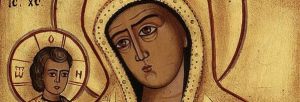
The friendship of those who count and their facilitation, or the world turned upside down
(Mt 19:23-30)
It is not easy to enter into the logic of the Gift and place oneself in authentic following of the Lord, in pursuit of a non-poor Happiness.
But precisely the Gospels are Ways that distinguish individual fulfilment and destiny from both expectations and obvious designs and intentions.
[Likewise natural wisdom, as e.g. reflected in the Tao Tê Ching].
Mundane expectations, common ways and thoughts indeed lock the meaning of existence into what is already represented:
"The Way that can be said, is not the eternal Way" [Tao Tê Ching, i].
Human impossibility and God's possibility (v.26): the Father transmits authentic and flourishing Life, while possessions pull on the other side - although they attract with hopes of fullness.
They normalise existence and make it stagnate.
We are accustomed to leaning on, counting on, leveraging riches... but they give opposite orders to the need for completeness of being, to the deep longing for rebirth. To the wait for the occasion, for the immediate, astonishing Gift, that will bring a significant stroke of wings.
In fact, all-encompassing Joy is not linked to the capacity to "purchase": it can only be "inherited" [gratuitously: vv.25-26.29-30].
This is the reason for the perplexity and debate between Jesus and the followers.
In short, the access of the rich into a community that lives the Faith in Christ becomes problematic (vv.23-24).
This is precisely in terms of the clarity of situations, and transparency of motives, as well as the flowering already on earth of the very Life of the Eternal [v.29 Greek text].
Here opulence distracts; it normalises the existence of even the most willing, it makes them stagnate. It gives precisely opposite orders.
Faced with the rigid and 'absurd' position of the Master, the Apostles are frightened (v.25): why not avail themselves of the help - even ambiguous - of wealthy people, who could make everything easier, more expeditious and grandiose?
Detachment from certain banners is impossible among men (v.26).
But the sphere in which God reigns is his Church, also not visible; a reality that is configured as a kind of inverted world (vv.28-30).
In fact, when God wants to realise a project, he always passes over mannerists, authorities, false (interested) friends, palaces of power and court palaces - even those within reach.
Even more than of moral credibility, it is a problem of meaning, of the roots of our choice, of vitality from below and "the renewal of all things" [v.28 Greek text]; in order to the hoped-for change and awakening.
Peter's question (v.27) highlights the discriminator of everything: the idea of exchange; retribution, typical of the archaic religious mentality.
In order to avoid conformist models ["palingenesis" v.28 Greek text] one must get out of them, and re-enter a different instinct - a mine of authentic benefit.
By introducing other content, certainly less obscure.
"What do I gain? What title do you give me? Will I get compensation for overtime?": pedestrian reciprocation is an expression of emptiness.
A mentality that drowns Love, because it annihilates the gratuitousness of gestures; it denies the sense of the Covenant.
Instead, the personal experience of the Mystery and the ability to correspond to the Call for the construction of a seed of an alternative society become the possibility of receiving the Hundred for One.
The sphere in which God reigns is his Church, even if not visible. A reality that is configured precisely as a kind of "kingdom" with inverted pyramids (vv.28-30).
In this way, the support of an intimate and apparently unreasonable conviction takes over, but one that gushes forth clearly from the springs of being.
Here is a knowledge that gushes forth from the personal soul and meets the Wisdom of every culture:
An ineffable instrument of growth is to make oneself socially insignificant.
Cultivate the concealment that guards what belongs to us.
Accepting the lack of material resources; shortage that establishes in the quality - instead of the exterior.
Here the existential 'emptiness' becomes an encounter with the vocational layers, with the pulsing of the primordial essence that characterises the Core and destiny.
Mouldable energetic expression, interspace of acute polyhedral listening (of fontal, and specific, cosmic resources of the intimate).
In his free proposal, Jesus wants to bring in the support of a reposed and apparently unreasonable conviction, but one that gushes forth clearly from the springs of being.
The founding Eros of the Calling emerges here.
Not so much the character (placid and resigned) of the believer, but a higher personal Gift: that of a discernment that is unrepeatable for each one, linked to deep nature.
To regenerate ["palingenesis" v.28] one must therefore return with greater conviction to one's own motives.
Even the wisdom of nature, of all times and latitudes, admits a clear detachment from the obvious opinions and formulas of worldly success.Primacy and glory-seeking cut off the fruitfulness of Mystery, and dampen personal Discovery. They do not open to the Extraordinary.
In fact, when God wants to realise a project, He always glosses over the surrounding situations.
It is a question of meaning, of the roots of our choice, of vitality from below and - as we said - "renewal of all things" [v.28].
A life of obligations or attachments blocks creativity, multiplies idols and artificial preoccupations; it creates a dark chamber where we do not grasp what belongs to us.
Away goes the backstage that covers our uniqueness.
The meaning of personal following is in order to the hoped-for, qualitative change and awakening: that of the One Hundred for One, strength of the weak.
Paradoxical widening of perspective.
"The saint postpones his person, and his person is premised; he apparates his person, and his person endures. Is it not because he is devoid of interest? For this he can realise his interest' [Tao Tê Ching, vii].
According to St Ignatius [Meditation of the Two Flags], the greed of things gives birth in us to the vain honour of the world, and from it an immense pride is generated, which cuts off all possibility of internalisation.
The fruitful strength of the weak overcomes the fabulous and comfortable results expected from the support of the well-connected.
And there remains the paradoxical widening of perspective of life in the Spirit.
To internalise and live the message:
Why do you not see the hundred per cent realised?
What do you find difficult to implement in the Church because of constraints and responsibilities granted to wealthy people?
Are you also a reason for defection for those who wish to worship God in the brethren instead of shortcuts and earthly interests?
Which rich man will be saved?
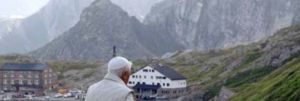
Jesus gives his disciples — and us too today — his teaching: “How hard it will be for those who have riches to enter the kingdom of God!” (v. 23). The disciples were dismayed at his words; and especially after Jesus added: “it is easier for a camel to go through the eye of a needle than for a rich man to enter the kingdom of God”. However, seeing the astonished, he said: “With men it is impossible, but not with God; for all things are possible with God” (cf. vv. 24-27).
St Clement of Alexandria commented: “Let [the parable] teach the prosperous that they are not to neglect their own salvation, as if they had been already foredoomed, nor, on the other hand, to cast wealth into the sea, or condemn it as a traitor and an enemy to life, but learn in what way and how to use wealth and obtain life” (Who is the Rich Man That Shall Be Saved, 27, 1-2).
The history of the Church is full of examples of rich people who used their possessions in an evangelical way, even attaining holiness. Let us only think of St Francis, St Elizabeth of Hungary or St Charles Borromeo. May the Virgin Mary, Seat of Wisdom, help us to accept Jesus’ invitation joyfully, in order to enter the fullness of life.
[Pope Benedict, Angelus 14 October 2012]
Everything is possible in the Spirit
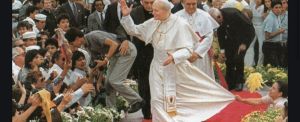
22. The conclusion of Jesus' conversation with the rich young man is very poignant: "When the young man heard this, he went away sorrowful, for he had many possessions" (Mt 19:22). Not only the rich man but the disciples themselves are taken aback by Jesus' call to discipleship, the demands of which transcend human aspirations and abilities: "When the disciples heard this, they were greatly astounded and said, "Then who can be saved?' " (Mt 19:25). But the Master refers them to God's power: "With men this is impossible, but with God all things are possible" (Mt 19:26).
25. Jesus' conversation with the rich young man continues, in a sense, in every period of history, including our own. The question: "Teacher, what good must I do to have eternal life?" arises in the heart of every individual, and it is Christ alone who is capable of giving the full and definitive answer. The Teacher who expounds God's commandments, who invites others to follow him and gives the grace for a new life, is always present and at work in our midst, as he himself promised: "Lo, I am with you always, to the close of the age" (Mt 28:20). Christ's relevance for people of all times is shown forth in his body, which is the Church. For this reason the Lord promised his disciples the Holy Spirit, who would "bring to their remembrance" and teach them to understand his commandments (cf. Jn 14:26), and who would be the principle and constant source of a new life in the world (cf. Jn 3:5-8; Rom 8:1-13).
[Pope John Paul II, Veritatis Splendor nn.22.25]
Everything and nothing
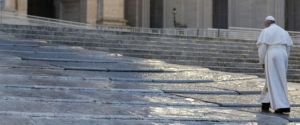
"Contento, Señor, contento!": the smiling face of a contemporary saint, Chilean Alberto Hurtado, who even in difficulties and suffering assures the Lord that he is "happy", contrasted with the "saddened" face of the evangelical "rich young man" in Pope Francis' meditation during the Mass celebrated at Santa Marta on Tuesday 28 February. These are the two ways of responding to the gift and proposal of life that God makes to man and that the Pontiff summed up with an expression: "Everything and nothing".
Francis' homily began with a consideration of the liturgy of these "three last days before Lent" in which the "relationship between God and riches" is presented. In Sunday's gospel, he recalled, "the Lord was clear: one cannot serve God and riches. You cannot serve two masters, two lords: either you serve God or you serve riches'. On Monday, however, "the story of the rich young man was proclaimed, who wanted to follow the Lord but in the end was so rich that he chose riches". A Gospel passage (Mark 10:17-27) emphasised Jesus' warning: "How difficult it is for a rich man to enter the kingdom of heaven. It is easier for a camel to go through the eye of a needle", and the disciples' reaction "somewhat frightened: "But who can be saved?"".
On Tuesday, the liturgy continued to propose the passage from Mark by examining the reaction of Peter (10:28-31), who says to Jesus: "All right, what about us?". It almost seems, the Pope commented, that Peter with his question - "Behold, we have left everything and followed you. What is our turn?" - was presenting "the bill to the Lord", as in a "business negotiation". In reality, the Pontiff explained, that was probably 'not Peter's intention', who evidently 'did not know what to say: "Yes, this one has left, but what about us?"'. In any case, "Jesus' answer is clear: 'I tell you, there is no one who has left everything without receiving everything'". There are no half-measures: 'Behold, we have left everything', 'You will receive everything'. Instead, there is "that overflowing measure with which God gives his gifts: 'You will receive everything. There is no one who has left home or brothers or sisters or mothers or fathers or children or fields for my sake and for the sake of the gospel, who does not already receive a hundred times as much now in this time in homes, brothers, sisters, mothers, fields, and eternal life in the time to come'. Everything'.
This is the answer, said the Pontiff: "The Lord does not know how to give less than everything. When he gives something, he gives himself, which is everything'.
An answer, however, where a word emerges that "makes us reflect". Jesus in fact affirms that one "receives already now in this time a hundred times in houses, brothers together with persecutions". So "everything and nothing". The Pope explained: "Everything on the cross, everything in persecutions, together with persecutions". Because it is a matter of "entering into another way of thinking, another way of acting". In fact "Jesus gives himself everything, because the fullness, the fullness of God is a fullness annihilated on the cross". Here then is the "gift of God: the fullness annihilated". And here then is also "the style of the Christian: to seek the fullness, to receive the annihilated fullness and to follow along that path". Certainly a commitment that "is not easy".
But the Pope, following his meditation, went further and asked himself: "What is the sign, what is the signal that I go ahead in this giving everything and receiving everything?". What is the sign, in short, that one is on the right path? The answer, he said, is found in the first reading of the day (Sirach 35: 1-15), where it is written: "Glorify the Lord with a glad eye. In every offering show thy countenance glad, with joy consecrate thy tithe. Give to the Most High according to the gift you have received from him and with a glad eye according to your will'. Therefore, "contented eyes, glad countenance, joy...". The Pontiff explained: "The sign that we are going on this road of everything and nothing, of fullness annihilated, is joy". It is no coincidence that "the rich young man turned dark in the face and went away saddened". He had not been "able to receive, to welcome this annihilated fullness". Instead, the Pope explained, 'the saints, Peter himself, welcomed it. And in the midst of trials, of difficulties they had a joyful face, a contented eye and a joyful heart. This is the sign'.
And it was at this point that the Pope resorted to an example taken from the life of the contemporary Church: "A little phrase from a saint, Saint Alberto Hurtado, Chilean, comes to mind," he said. He always worked, difficulties behind difficulties, behind difficulties.... He worked for the poor'. He is a saint who 'was persecuted' and had to face 'many sufferings'. But 'when he was right there, crushed on the cross' he would say: 'Happy, Señor, happy, Lord, happy''.May Saint Albert, the Pontiff concluded, "teach us to go on this road, give us the grace to go on this somewhat difficult road of everything and nothing, of the annihilated fullness of Jesus Christ and always say, especially in difficulties: 'Happy, Lord, happy'".
[Pope Francis, in L'Osservatore Romano 01.03.2017]
The Church desires to give thanks to the Most Holy Trinity for the "mystery of woman" and for every woman - for that which constitutes the eternal measure of her feminine dignity, for the "great works of God", which throughout human history have been accomplished in and through her (Mulieris Dignitatem n.31)
La Chiesa desidera ringraziare la Santissima Trinità per il «mistero della donna», e, per ogni donna - per ciò che costituisce l'eterna misura della sua dignità femminile, per le «grandi opere di Dio» che nella storia delle generazioni umane si sono compiute in lei e per mezzo di lei (Mulieris Dignitatem n.31)
Simon, a Pharisee and rich 'notable' of the city, holds a banquet in his house in honour of Jesus. Unexpectedly from the back of the room enters a guest who was neither invited nor expected […] (Pope Benedict)
Simone, fariseo e ricco “notabile” della città, tiene in casa sua un banchetto in onore di Gesù. Inaspettatamente dal fondo della sala entra un’ospite non invitata né prevista […] (Papa Benedetto)
God excludes no one […] God does not let himself be conditioned by our human prejudices (Pope Benedict)
Dio non esclude nessuno […] Dio non si lascia condizionare dai nostri pregiudizi (Papa Benedetto)
«The Russian mystics of the first centuries of the Church gave advice to their disciples, the young monks: in the moment of spiritual turmoil take refuge under the mantle of the holy Mother of God». Then «the West took this advice and made the first Marian antiphon “Sub tuum Praesidium”: under your cloak, in your custody, O Mother, we are sure there» (Pope Francis)
«I mistici russi dei primi secoli della Chiesa davano un consiglio ai loro discepoli, i giovani monaci: nel momento delle turbolenze spirituali rifugiatevi sotto il manto della santa Madre di Dio». Poi «l’occidente ha preso questo consiglio e ha fatto la prima antifona mariana “Sub tuum praesidium”: sotto il tuo mantello, sotto la tua custodia, o Madre, lì siamo sicuri» (Papa Francesco)
The Cross of Jesus is our one true hope! That is why the Church “exalts” the Holy Cross, and why we Christians bless ourselves with the sign of the cross. That is, we don’t exalt crosses, but the glorious Cross of Christ, the sign of God’s immense love, the sign of our salvation and path toward the Resurrection. This is our hope (Pope Francis)
La Croce di Gesù è la nostra unica vera speranza! Ecco perché la Chiesa “esalta” la santa Croce, ed ecco perché noi cristiani benediciamo con il segno della croce. Cioè, noi non esaltiamo le croci, ma la Croce gloriosa di Gesù, segno dell’amore immenso di Dio, segno della nostra salvezza e cammino verso la Risurrezione. E questa è la nostra speranza (Papa Francesco)
In the divine attitude justice is pervaded with mercy, whereas the human attitude is limited to justice. Jesus exhorts us to open ourselves with courage to the strength of forgiveness, because in life not everything can be resolved with justice. We know this (Pope Francis)
Nell’atteggiamento divino la giustizia è pervasa dalla misericordia, mentre l’atteggiamento umano si limita alla giustizia. Gesù ci esorta ad aprirci con coraggio alla forza del perdono, perché nella vita non tutto si risolve con la giustizia; lo sappiamo (Papa Francesco)
The basis of Christian construction is listening to and the fulfilment of the word of Christ (Pope John Paul II)
Alla base della costruzione cristiana c’è l’ascolto e il compimento della parola di Cristo (Papa Giovanni Paolo II)








duevie.art
don Giuseppe Nespeca
Tel. 333-1329741
Disclaimer
Questo blog non rappresenta una testata giornalistica in quanto viene aggiornato senza alcuna periodicità. Non può pertanto considerarsi un prodotto editoriale ai sensi della legge N°62 del 07/03/2001.
Le immagini sono tratte da internet, ma se il loro uso violasse diritti d'autore, lo si comunichi all'autore del blog che provvederà alla loro pronta rimozione.
L'autore dichiara di non essere responsabile dei commenti lasciati nei post. Eventuali commenti dei lettori, lesivi dell'immagine o dell'onorabilità di persone terze, il cui contenuto fosse ritenuto non idoneo alla pubblicazione verranno insindacabilmente rimossi.