


Teresa Girolami
Teresa Girolami è laureata in Materie letterarie e Teologia. Ha pubblicato vari testi, fra cui: "Pellegrinaggio del cuore" (Ed. Piemme); "I Fiammiferi di Maria - La Madre di Dio in prosa e poesia"; "Tenerezza Scalza - Natura di donna"; co-autrice di "Dialogo e Solstizio".
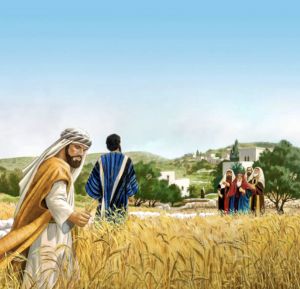
Pharisees ask Jesus why his disciples do what is not permitted by the Law on the Sabbath [eating, out of hunger, the ears of corn in the fields].
Jesus, who came to give full fulfilment to the Law, emphasises its foundation: do not demolish or transgress the Word, but observe it by loving.
Love is the true fulfilment of the Law of the Lord, which is perfect and refreshes the soul.
Francis understood this well by living and teaching his fraternity to do the same.
The Sources provide, through various pieces, precious examples of life. In the Letter to the Rulers of Peoples:
«I beseech you [...] with all the reverence of which I am capable, not to forget the Lord, absorbed as you are by the cares and cares of this world, and not to deviate from his commandments, for all who forget the Lord and deviate from his commandments are cursed and will be forgotten by him» (FF 211).
At the same time, the Poverello, with that balance and elasticity that distinguished him, emphasised:
«And whenever necessity arises, let all the brothers, wherever they may be, be allowed to take all the food that men can eat, just as the Lord says of David, who ate the loaves of the offering that were not allowed to be eaten except by priests [...] Similarly, in times of manifest necessity, let all the brothers provide for their necessities as the Lord will give them grace, since necessity has no law» (FF 33).
In support of what has been said, we quote a passage taken from the Perugina Legend.
Francis, faced with a friar of profound spirituality, perished and infirm, does something unusual for the mentality of the time.
"Francis said to himself:
«If this brother would eat some ripe grapes early in the morning, I think he would benefit from it».
One day he got up at dawn and secretly called that friar, led him to the vineyard near that church and, having chosen a vine full of beautiful, inviting grapes, sat down under it with his brother and began to eat the grapes, so that the sick man would not be ashamed to pick them himself.
While he was snacking, the friar praised the Lord God.
And as long as he lived, he often reminded his brothers, with devotion and weeping with tenderness, of the Holy Father's affectionate gesture towards him" (FF 1549)
Clare herself, in the Rule, addressed to the sisters, warns them:
«Let them always be solicitous to preserve reciprocally the unity of mutual charity, which is the bond of perfection» (FF 2810).
Love was the Rule of the brothers and the Poor Ladies of San Damiano: «[...] and so, carrying the yoke of mutual charity, with ease we shall fulfil the law of Christ. Amen». (FF 2918 - Letter to Ermentrude of Bruges).
«But if you had known what it means: 'Mercy I want, and not sacrifice' [Hos 6:6], you would not have condemned [people] without fault» (Mt 12:7)
Friday of the 15th wk. in O.T. (Mt 12,1-8)
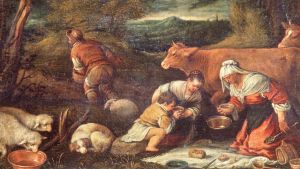
Francis and Clare. The Humble, not the learned: great hearts, modest dwellings
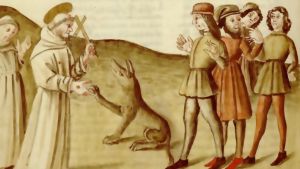
The Welcomings of Francis and Clare. Actively Taking Up the Cross
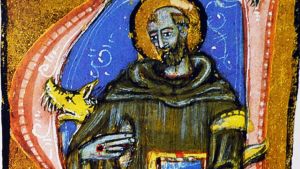
Francis and Clare: Littleness, and in the background. Personal Universality
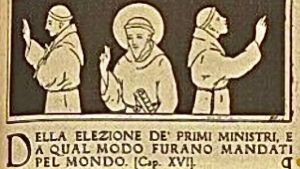
Free of charge, quite simply: Francis and Clare’s ‘the Kingdom Nearby’
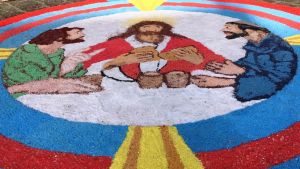

God excludes no one […] God does not let himself be conditioned by our human prejudices (Pope Benedict)
Dio non esclude nessuno […] Dio non si lascia condizionare dai nostri pregiudizi (Papa Benedetto)
«The Russian mystics of the first centuries of the Church gave advice to their disciples, the young monks: in the moment of spiritual turmoil take refuge under the mantle of the holy Mother of God». Then «the West took this advice and made the first Marian antiphon “Sub tuum Praesidium”: under your cloak, in your custody, O Mother, we are sure there» (Pope Francis)
«I mistici russi dei primi secoli della Chiesa davano un consiglio ai loro discepoli, i giovani monaci: nel momento delle turbolenze spirituali rifugiatevi sotto il manto della santa Madre di Dio». Poi «l’occidente ha preso questo consiglio e ha fatto la prima antifona mariana “Sub tuum praesidium”: sotto il tuo mantello, sotto la tua custodia, o Madre, lì siamo sicuri» (Papa Francesco)
The Cross of Jesus is our one true hope! That is why the Church “exalts” the Holy Cross, and why we Christians bless ourselves with the sign of the cross. That is, we don’t exalt crosses, but the glorious Cross of Christ, the sign of God’s immense love, the sign of our salvation and path toward the Resurrection. This is our hope (Pope Francis)
La Croce di Gesù è la nostra unica vera speranza! Ecco perché la Chiesa “esalta” la santa Croce, ed ecco perché noi cristiani benediciamo con il segno della croce. Cioè, noi non esaltiamo le croci, ma la Croce gloriosa di Gesù, segno dell’amore immenso di Dio, segno della nostra salvezza e cammino verso la Risurrezione. E questa è la nostra speranza (Papa Francesco)
In the divine attitude justice is pervaded with mercy, whereas the human attitude is limited to justice. Jesus exhorts us to open ourselves with courage to the strength of forgiveness, because in life not everything can be resolved with justice. We know this (Pope Francis)
Nell’atteggiamento divino la giustizia è pervasa dalla misericordia, mentre l’atteggiamento umano si limita alla giustizia. Gesù ci esorta ad aprirci con coraggio alla forza del perdono, perché nella vita non tutto si risolve con la giustizia; lo sappiamo (Papa Francesco)
The basis of Christian construction is listening to and the fulfilment of the word of Christ (Pope John Paul II)
Alla base della costruzione cristiana c’è l’ascolto e il compimento della parola di Cristo (Papa Giovanni Paolo II)
These divisions are seen in the relationships between individuals and groups, and also at the level of larger groups: nations against nations and blocs of opposing countries in a headlong quest for domination [Reconciliatio et Paenitentia n.2]
Queste divisioni si manifestano nei rapporti fra le persone e fra i gruppi, ma anche a livello delle più vaste collettività: nazioni contro nazioni, e blocchi di paesi contrapposti, in un'affannosa ricerca di egemonia [Reconciliatio et Paenitentia n.2]
Mary "Girl" [...] point of convergence and arrival of a complex of divine promises, mysteriously echoed in the very heart of history (Pope John Paul II)
Maria “Bambina” […] punto di convergenza e di arrivo di un complesso di promesse divine, echeggiate misteriosamente nel cuore stesso della storia (Papa Giovanni Paolo II)
Luke’s passage puts before the eyes a double slavery: that of man «with his hand paralyzed, slave of his illness», and that of the «Pharisees, scribes, slaves of their rigid, legalistic attitudes» (Pope Francis)








duevie.art
don Giuseppe Nespeca
Tel. 333-1329741
Disclaimer
Questo blog non rappresenta una testata giornalistica in quanto viene aggiornato senza alcuna periodicità. Non può pertanto considerarsi un prodotto editoriale ai sensi della legge N°62 del 07/03/2001.
Le immagini sono tratte da internet, ma se il loro uso violasse diritti d'autore, lo si comunichi all'autore del blog che provvederà alla loro pronta rimozione.
L'autore dichiara di non essere responsabile dei commenti lasciati nei post. Eventuali commenti dei lettori, lesivi dell'immagine o dell'onorabilità di persone terze, il cui contenuto fosse ritenuto non idoneo alla pubblicazione verranno insindacabilmente rimossi.