


don Giuseppe Nespeca
Giuseppe Nespeca è architetto e sacerdote. Cultore della Sacra scrittura è autore della raccolta "Due Fuochi due Vie - Religione e Fede, Vangeli e Tao"; coautore del libro "Dialogo e Solstizio".
Different Soul of Mary, in Visitation
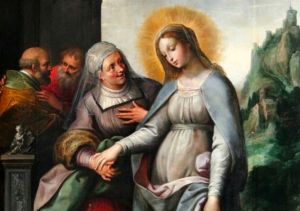
What to do? Gaudete in Domino
Immaculate Conception: Personalism made safe
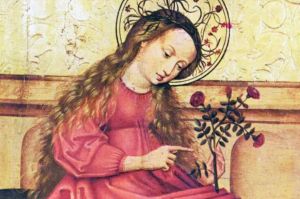
Advent: but what kind of Coming is it?
Jesus and Pilate: Truth about the King and the Man
Upheavals and things in place: between Faith and religion
Widow-people: without a Bride, and without even two pennies
Listen Israel: Love God and Neighbor
BRIEF REFLECTION ON 'ENVY' (by Francesco Giovannozzi, psychologist and psychotherapist)
Some days I was in a bar. There were some young people talking about their daily problems, when at a certain point the issue of envy came up.
The discussion on this topic was also taken up by the people who were there and someone joking or not (who knows) expressed: but how do you remove it?
I was reminded of old magical and superstitious practices from when I was a child. Or of all those times I have heard people say in the face of a failure or unfavourable situation: 'I must go and have envy removed'. And not only from simple people, but also from people with a certain degree of culture. As already argued in previous articles, even the man of science has his irrational side.
In the Treccani dictionary under envy we read: 'An unpleasant feeling for a good or quality of others that one would like for oneself, often accompanied by aversion and resentment for the one who possesses it instead'.
It is a feeling we all have and which we refuse to acknowledge because it is often something we are ashamed of. We often believe that this feeling has occult powers and therefore believe that pseudo-magical practices can free us. Nothing could be more illusory.
Melanie Klein wrote the book 'Envy and Gratitude' where she addresses this issue.
This author investigated in depth the first relationship the child has with the mother's breast and then with the mother when it manages to perceive her as a total object. A primary relationship that can also be difficult due to maternal causes: non-acceptance of the baby, difficulties in childbirth, or reluctance to breastfeed.
But there are also causes that can arise from the baby, and among these is envy, which prevents a good relationship with the breast.
The baby may feel a great deal of anger towards the breast, whether it is perceived as good, i.e. that it satisfies him, or as bad - because it does not satisfy his needs and generates envy because it possesses something he does not have.
And so the infant tries to harm him as he can, by putting his naughty bits in (spitting, urinating, biting, etc.).
In a person a strong presence of envy can damage his way of life, and his relations with others; not because of external causes, but because he cannot understand the good object.
He feels that he has ruined it and made it bad.
He cannot feel its good feelings, and this increases his envy and hatred.
In contrast, the child who is more able to feel love and gratitude for the gift he has received, experiences the good object more.
Consequently, gaining confidence in his own goodness, he will overcome envy and hatred more easily.
The person suffering from envy can hardly enjoy the joys of life, because the relationship with the mother and then with any other object of love is damaged.
Positive feelings encourage the child to keep the milk received as good.
Experiencing gratitude is the basis of pleasure, and later he will be able to establish satisfying relationships, because destructive desires are diminished: his anxieties will be less.
Envy does not make us live well, for the simple reason that it goes against life - and the outside world becomes our enemy.
Or it makes us live a 'breast' that is too idealised or too bad.
A person with a good capacity to love can love the 'object' while seeing its limitations.
One positive thing that envy can operate in us is the possibility of improving ourselves.
Often, for those who seek help from a professional, among the various issues that the person brings to analysis, this problem must be addressed.
If the analyst is well aware of these destructive parts, he will be able to lead the person in front of him to recognise the negative parts, and to mitigate them with love and positive feelings.
The well-adjusted person will bear his or her own feelings of guilt better, and will not need to see them on others. .
Very often it is difficult to bear ourselves.
Francesco Giovannozzi Psychologist - Psychotherapist.
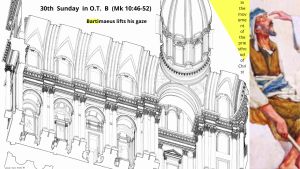
Barthymeus looks up from a middle life
The present-day mentality, more perhaps than that of people in the past, seems opposed to a God of mercy, and in fact tends to exclude from life and to remove from the human heart the very idea of mercy (Pope John Paul II)
La mentalità contemporanea, forse più di quella dell'uomo del passato, sembra opporsi al Dio di misericordia e tende altresì ad emarginare dalla vita e a distogliere dal cuore umano l'idea stessa della misericordia (Papa Giovanni Paolo II)
«Religion of appearance» or «road of humility»? (Pope Francis)
«Religione dell’apparire» o «strada dell’umiltà»? (Papa Francesco)
In the crucified Jesus a kind of transformation and concentration of the signs occurs: he himself is the “sign of God”, especially in the mystery of his Death and Resurrection (Pope John Paul II)
In Gesù crocifisso avviene come una trasformazione e concentrazione dei segni: è Lui stesso il "segno di Dio", soprattutto nel mistero della sua morte e resurrezione (Papa Giovanni Paolo II)
However, the king was not discouraged and sent his servants out to seek other guests to fill his banquet hall. Thus the aspect of the refusal of those initially invited caused the invitation to be extended to all [Pope Benedict]
Il re però non si scoraggia e invia i suoi servi a cercare altri commensali per riempire la sala del suo banchetto. Così il rifiuto dei primi ha come effetto l’estensione dell’invito a tutti [Papa Benedetto]
Faith in God opens before us the horizon of a sure hope, one which does not disappoint; it indicates a solid foundation on which to base one’s life without fear; it demands a faith-filled surrender into the hands of the Love which sustains the world (Pope Benedict)
La fede in Dio apre all’uomo l’orizzonte di una speranza certa che non delude; indica un solido fondamento sul quale poggiare, senza paura, la propria vita; richiede l’abbandono, pieno di fiducia, nelle mani dell’Amore che sostiene il mondo (Papa Benedetto)
The "new evangelization" faces this challenge. It must work to ensure that people recover the awareness that in Christ evil can be conquered with good (Pope John Paul II)
La “nuova evangelizzazione” affronta questa sfida. Essa deve impegnarsi perché tutti gli uomini recuperino la consapevolezza che in Cristo è possibile vincere il male con il bene (Papa Giovanni Paolo II)
Many saints experienced the night of faith and God’s silence — when we knock and God does not respond — and these saints were persevering (Pope Francis)
Tanti santi e sante hanno sperimentato la notte della fede e il silenzio di Dio – quando noi bussiamo e Dio non risponde – e questi santi sono stati perseveranti (Papa Francesco)
In some passages of Scripture it seems to be first and foremost Jesus’ prayer, his intimacy with the Father, that governs everything (Pope Francis)
In qualche pagina della Scrittura sembra essere anzitutto la preghiera di Gesù, la sua intimità con il Padre, a governare tutto (Papa Francesco)
It is necessary to know how to be silent, to create spaces of solitude or, better still, of meeting reserved for intimacy with the Lord. It is necessary to know how to contemplate. Today's man feels a great need not to limit himself to pure material concerns, and instead to supplement his technical culture with superior and detoxifying inputs from the world of the spirit [John Paul II]








duevie.art
don Giuseppe Nespeca
Tel. 333-1329741
Disclaimer
Questo blog non rappresenta una testata giornalistica in quanto viene aggiornato senza alcuna periodicità. Non può pertanto considerarsi un prodotto editoriale ai sensi della legge N°62 del 07/03/2001.
Le immagini sono tratte da internet, ma se il loro uso violasse diritti d'autore, lo si comunichi all'autore del blog che provvederà alla loro pronta rimozione.
L'autore dichiara di non essere responsabile dei commenti lasciati nei post. Eventuali commenti dei lettori, lesivi dell'immagine o dell'onorabilità di persone terze, il cui contenuto fosse ritenuto non idoneo alla pubblicazione verranno insindacabilmente rimossi.