Feb 18, 2026 Written by 

Decisive turning point

1. With the incarnation of the Word of God, the history of prayer knows a decisive turning point. In Jesus Christ, heaven and earth touch each other, God is reconciled with humanity, the dialogue between the creature and his Creator is fully restored. Jesus is the definitive proposal of the Father's love and, at the same time, man's full and irrevocable response to divine expectations. He, the Incarnate Word, is therefore the only Mediator who presents to God the Father every sincere prayer that rises from the human heart. The question, which the first disciples addressed to Jesus, thus also becomes our question: "Lord, teach us to pray!" (Lk 11:1). 

2. As to them, so also to us Jesus "teaches". He does so first of all by example. How can we fail to recall the touching prayer with which He addresses the Father already in the first moment of the incarnation? "Entering the world, he says: You wanted neither sacrifice nor offering, a body instead you have prepared for me . . . Then I said: Behold I come - for of me it is written in the scroll of the book - to do, O God, thy will" (Heb 10:5). Subsequently, there is no important moment in Christ's life that is not accompanied by prayer. At the beginning of his public mission, the Holy Spirit descends upon him while "having received baptism, he stood praying" (Lk 3:21 f). From the evangelist Mark, we know that when he started preaching in Galilee, Jesus "got up in the morning when it was still dark and went out of the house and withdrew to a deserted place and prayed" (Mk 1:35). Before the election of the apostles "he went up on the mountain to pray and spent the night in prayer" (Lk 6:12). Before the promise of the primacy to Peter, Jesus, according to Luke's account, "was in a secluded place praying" (Lk 9:18). Even at the moment of the transfiguration, when on the mountain his glory radiated before darkness fell on Calvary, Jesus prayed (cf. Lk 9:28-29). Particularly revealing is the prayer in which, during the Last Supper, Jesus poured out towards the Father his sentiments of love, praise, supplication, and trusting abandonment (cf. Jn 17). They are the same sentiments that resurface in the Garden of Gethsemane (cf. Mt 26:39. 42) and on the cross (cf. Lk 23:46), from the height of which He offers us the example of that last, touching invocation: "Father, forgive them, for they know not what they do" (Lk 23:34). 

3. Jesus also teaches us to pray with his word. To emphasise the "need to pray always, without tiring", He tells the parable of the unjust judge and the widow (cf. Lk 18:1-5). He then recommends: "Watch and pray, lest you fall into temptation. The spirit is ready, but the flesh is weak" (Mt 26:41). And he insists: "Ask, and it will be given to you; seek, and you will find; knock, and it will be opened to you; for whoever asks receives, and whoever seeks finds, and to him who knocks it will be opened" (Mt 7:7-8). 

To the disciples, desirous of concrete guidance, Jesus then teaches the sublime formula of the Our Father (Mt 6:9-13; Lk 11:2-4), which was to become the typical prayer of the Christian community down the centuries. Tertullian already described it as "breviarium totius evangelii", "a compendium of the whole Gospel" (De oratione, 1). In it Jesus delivers the essence of his message. Whoever consciously recites the Our Father "commits himself" to the Gospel: he cannot in fact fail to accept the consequences for his own life deriving from the Gospel message, of which the "Lord's Prayer" is the most authentic expression.

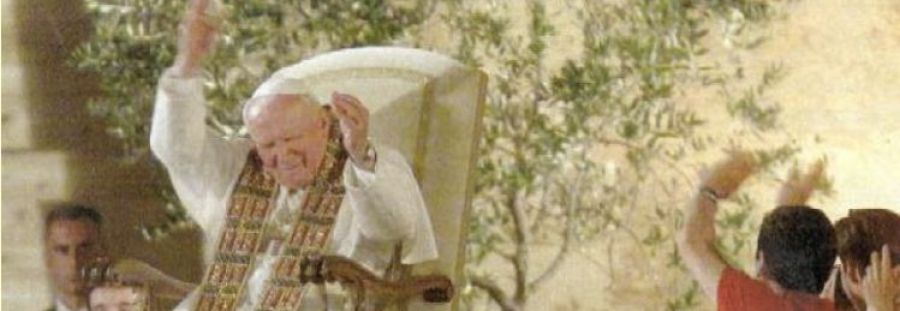
[Pope John Paul II, General Audience 23 September 1992]

1 Last modified on Wednesday, 18 February 2026 04:03
don Giuseppe Nespeca

Giuseppe Nespeca è architetto e sacerdote. Cultore della Sacra scrittura è autore della raccolta "Due Fuochi due Vie - Religione e Fede, Vangeli e Tao"; coautore del libro "Dialogo e Solstizio".

Email This email address is being protected from spambots. You need JavaScript enabled to view it.
You ought not, however, to be satisfied merely with knocking and seeking: to understand the things of God, what is absolutely necessary is oratio. For this reason, the Saviour told us not only: ‘Seek and you will find’, and ‘Knock and it shall be opened to you’, but also added, ‘Ask and you shall receive’ [Verbum Domini n.86; cit. Origen, Letter to Gregory]
Non ti devi però accontentare di bussare e di cercare: per comprendere le cose di Dio ti è assolutamente necessaria l’oratio. Proprio per esortarci ad essa il Salvatore ci ha detto non soltanto: “Cercate e troverete”, e “Bussate e vi sarà aperto”, ma ha aggiunto: “Chiedete e riceverete” [Verbum Domini n.86; cit. Origene, Lettera a Gregorio]
In the crucified Jesus, a kind of transformation and concentration of the signs occurs: he himself is the “sign of God” (John Paul II)
In Gesù crocifisso avviene come una trasformazione e concentrazione dei segni: è Lui stesso il "segno di Dio" (Giovanni Paolo II)
Only through Christ can we converse with God the Father as children, otherwise it is not possible, but in communion with the Son we can also say, as he did, “Abba”. In communion with Christ we can know God as our true Father. For this reason Christian prayer consists in looking constantly at Christ and in an ever new way, speaking to him, being with him in silence, listening to him, acting and suffering with him (Pope Benedict)
Solo in Cristo possiamo dialogare con Dio Padre come figli, altrimenti non è possibile, ma in comunione col Figlio possiamo anche dire noi come ha detto Lui: «Abbà». In comunione con Cristo possiamo conoscere Dio come Padre vero. Per questo la preghiera cristiana consiste nel guardare costantemente e in maniera sempre nuova a Cristo, parlare con Lui, stare in silenzio con Lui, ascoltarlo, agire e soffrire con Lui (Papa Benedetto)
In today’s Gospel passage, Jesus identifies himself not only with the king-shepherd, but also with the lost sheep, we can speak of a “double identity”: the king-shepherd, Jesus identifies also with the sheep: that is, with the least and most needy of his brothers and sisters […] And let us return home only with this phrase: “I was present there. Thank you!”. Or: “You forgot about me” (Pope Francis)
Nella pagina evangelica di oggi, Gesù si identifica non solo col re-pastore, ma anche con le pecore perdute. Potremmo parlare come di una “doppia identità”: il re-pastore, Gesù, si identifica anche con le pecore, cioè con i fratelli più piccoli e bisognosi […] E torniamo a casa soltanto con questa frase: “Io ero presente lì. Grazie!” oppure: “Ti sei scordato di me” (Papa Francesco)
Thus, in the figure of Matthew, the Gospels present to us a true and proper paradox: those who seem to be the farthest from holiness can even become a model of the acceptance of God's mercy and offer a glimpse of its marvellous effects in their own lives (Pope Benedict))
Nella figura di Matteo, dunque, i Vangeli ci propongono un vero e proprio paradosso: chi è apparentemente più lontano dalla santità può diventare persino un modello di accoglienza della misericordia di Dio e lasciarne intravedere i meravigliosi effetti nella propria esistenza (Papa Benedetto)
Man is involved in penance in his totality of body and spirit: the man who has a body in need of food and rest and the man who thinks, plans and prays; the man who appropriates and feeds on things and the man who makes a gift of them; the man who tends to the possession and enjoyment of goods and the man who feels the need for solidarity that binds him to all other men [CEI pastoral note]

Due Fuochi due Vie - Vol. 1 Due Fuochi due Vie - Vol. 2 Due Fuochi due Vie - Vol. 3 Due Fuochi due Vie - Vol. 4 Due Fuochi due Vie - Vol. 5 Dialogo e Solstizio I fiammiferi di Maria

duevie.art

don Giuseppe Nespeca

Tel. 333-1329741


Disclaimer

Questo blog non rappresenta una testata giornalistica in quanto viene aggiornato senza alcuna periodicità. Non può pertanto considerarsi un prodotto editoriale ai sensi della legge N°62 del 07/03/2001.
Le immagini sono tratte da internet, ma se il loro uso violasse diritti d'autore, lo si comunichi all'autore del blog che provvederà alla loro pronta rimozione.
L'autore dichiara di non essere responsabile dei commenti lasciati nei post. Eventuali commenti dei lettori, lesivi dell'immagine o dell'onorabilità di persone terze, il cui contenuto fosse ritenuto non idoneo alla pubblicazione verranno insindacabilmente rimossi.






