Feb 17, 2026 Written by 

He himself is the Sign

4. In fact, Jesus invites us to discern the words and deeds which bear witness to the imminent coming of the Father’s kingdom. Indeed, he indicates and concentrates all the signs in the enigmatic “sign of Jonah”. By doing so, he overturns the worldly logic aimed at seeking signs that would confirm the human desire for self-affirmation and power. As the Apostle Paul emphasizes: “Jews demand signs and Greeks seek wisdom, but we preach Christ crucified, a stumbling block to Jews and folly to Gentiles” (1 Cor 1:22-23).

As the first-born among many brethren (cf. Rom 8:29), Christ was the first to overcome in himself the diabolic “temptation” to use worldly means to achieve the coming of God’s kingdom. This happened from the time of the messianic testing in the desert to the sarcastic challenge flung at him as he hung upon the cross: “If you are the Son of God, come down from the cross” (Mt 27:40). In the crucified Jesus a kind of transformation and concentration of the signs occurs: he himself is the “sign of God”, especially in the mystery of his Death and Resurrection. To discern the signs of his presence in history, it is necessary to free oneself from every worldly pretense and to welcome the Spirit who “searches everything, even the depths of God” (1 Cor 2:10).

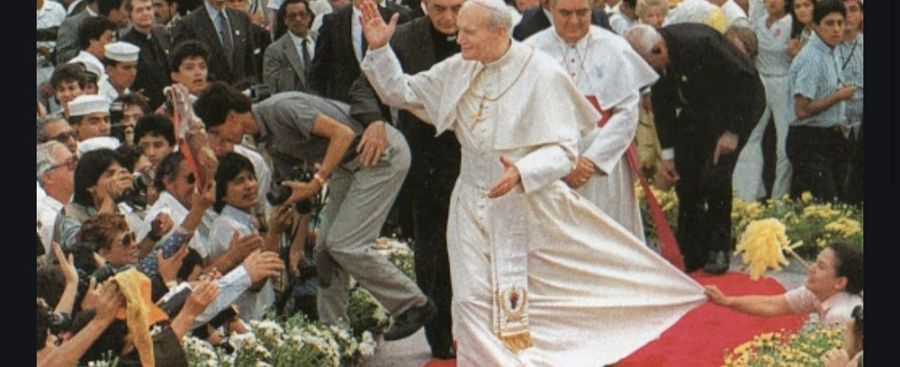
[Pope John Paul II, General Audience 23 September 1998]

184 Last modified on Tuesday, 17 February 2026 05:17
don Giuseppe Nespeca

Giuseppe Nespeca è architetto e sacerdote. Cultore della Sacra scrittura è autore della raccolta "Due Fuochi due Vie - Religione e Fede, Vangeli e Tao"; coautore del libro "Dialogo e Solstizio".

Email This email address is being protected from spambots. You need JavaScript enabled to view it.
From ancient times the liturgy of Easter day has begun with the words: Resurrexi et adhuc tecum sum – I arose, and am still with you; you have set your hand upon me. The liturgy sees these as the first words spoken by the Son to the Father after his resurrection, after his return from the night of death into the world of the living. The hand of the Father upheld him even on that night, and thus he could rise again (Pope Benedict)
Dai tempi più antichi la liturgia del giorno di Pasqua comincia con le parole: Resurrexi et adhuc tecum sum – sono risorto e sono sempre con te; tu hai posto su di me la tua mano. La liturgia vi vede la prima parola del Figlio rivolta al Padre dopo la risurrezione, dopo il ritorno dalla notte della morte nel mondo dei viventi. La mano del Padre lo ha sorretto anche in questa notte, e così Egli ha potuto rialzarsi, risorgere (Papa Benedetto)
The Church keeps watch. And the world keeps watch. The hour of Christ's victory over death is the greatest hour in history (John Paul II)
Veglia la Chiesa. E veglia il mondo. L’ora della vittoria di Cristo sulla morte è l’ora più grande della storia (Giovanni Paolo II)
Before the Cross of Jesus, we apprehend in a way that we can almost touch with our hands how much we are eternally loved; before the Cross we feel that we are “children” and not “things” or “objects” [Pope Francis, via Crucis at the Colosseum 2014]
Di fronte alla Croce di Gesù, vediamo quasi fino a toccare con le mani quanto siamo amati eternamente; di fronte alla Croce ci sentiamo “figli” e non “cose” o “oggetti” [Papa Francesco, via Crucis al Colosseo 2014]
The devotional and external purifications purify man ritually but leave him as he is replaced by a new bathing (Pope Benedict)
Al posto delle purificazioni cultuali ed esterne, che purificano l’uomo ritualmente, lasciandolo tuttavia così com’è, subentra il bagno nuovo (Papa Benedetto)
If, on the one hand, the liturgy of these days makes us offer a hymn of thanksgiving to the Lord, conqueror of death, at the same time it asks us to eliminate from our lives all that prevents us from conforming ourselves to him (John Paul II)
La liturgia di questi giorni, se da un lato ci fa elevare al Signore, vincitore della morte, un inno di ringraziamento, ci chiede, al tempo stesso, di eliminare dalla nostra vita tutto ciò che ci impedisce di conformarci a lui (Giovanni Paolo II)
The school of faith is not a triumphal march but a journey marked daily by suffering and love, trials and faithfulness. Peter, who promised absolute fidelity, knew the bitterness and humiliation of denial:  the arrogant man learns the costly lesson of humility (Pope Benedict)
La scuola della fede non è una marcia trionfale, ma un cammino cosparso di sofferenze e di amore, di prove e di fedeltà da rinnovare ogni giorno. Pietro che aveva promesso fedeltà assoluta, conosce l’amarezza e l’umiliazione del rinnegamento: lo spavaldo apprende a sue spese l’umiltà (Papa Benedetto)
This is the message that Christians are called to spread to the very ends of the earth. The Christian faith, as we know, is not born from the acceptance of a doctrine but from an encounter with a Person (Pope Benedict)
È questo il messaggio che i cristiani sono chiamati a diffondere sino agli estremi confini del mondo. La fede cristiana come sappiamo nasce non dall'accoglienza di una dottrina, ma dall'incontro con una Persona (Papa Benedetto)

Due Fuochi due Vie - Vol. 1 Due Fuochi due Vie - Vol. 2 Due Fuochi due Vie - Vol. 3 Due Fuochi due Vie - Vol. 4 Due Fuochi due Vie - Vol. 5 Dialogo e Solstizio I fiammiferi di Maria

duevie.art

don Giuseppe Nespeca

Tel. 333-1329741


Disclaimer

Questo blog non rappresenta una testata giornalistica in quanto viene aggiornato senza alcuna periodicità. Non può pertanto considerarsi un prodotto editoriale ai sensi della legge N°62 del 07/03/2001.
Le immagini sono tratte da internet, ma se il loro uso violasse diritti d'autore, lo si comunichi all'autore del blog che provvederà alla loro pronta rimozione.
L'autore dichiara di non essere responsabile dei commenti lasciati nei post. Eventuali commenti dei lettori, lesivi dell'immagine o dell'onorabilità di persone terze, il cui contenuto fosse ritenuto non idoneo alla pubblicazione verranno insindacabilmente rimossi.






