Dec 20, 2025 Written by 

Group icon, energy of trials

Dear Brothers and Sisters!

1. […] Church is celebrating the Feast of the Holy Family

As at the crib, in a glance of faith we embrace together the divine Child and the persons beside him: his most holy Mother and Joseph, his putative father. What light shines from this Christmas “group icon”! A light of mercy and salvation for the whole world, a light of truth for every person, for the human family and for individual families. How lovely it is for spouses to be reflected in the Virgin Mary and her husband Joseph! How comforting for parents, especially if they have a small baby! How enlightening for engaged couples, struggling with their plans for life! 

To gather round the Bethlehem grotto contemplating there the Holy Family, enables us to appreciate the gift of family intimacy in a special way, and spurs us to offer human warmth and concrete solidarity in those unfortunately numerous situations which, for various reasons, lack peace, harmony, in a word, lack “family”. 

2. The message that comes from the Holy Family is first of all a message of faith: the family of Nazareth is a home which truly centres on God. For Mary and Joseph, this choice of faith becomes concrete in their service to the Son of God entrusted to their care, but it is also expressed in their mutual love, rich in spiritual tenderness and fidelity. 

With their life, they teach that marriage is a covenant between man and woman, a covenant that involves reciprocal fidelity and rests upon their common trust in God. Such a noble, profound and definitive covenant, as to constitute for believers the sacrament of love of Christ and of the Church. The spouses’ fidelity stands like a solid rock on which the children’s trust rests

When parents and children together breathe this atmosphere of faith they have a ready energy that enables them to face even difficult trials, as the Holy Family’s experience shows. 

3. […] I commend to Mary “Queen of the family” all the world’s families, especial- ly those that are encountering serious difficulties, and I invoke her motherly protection upon them.


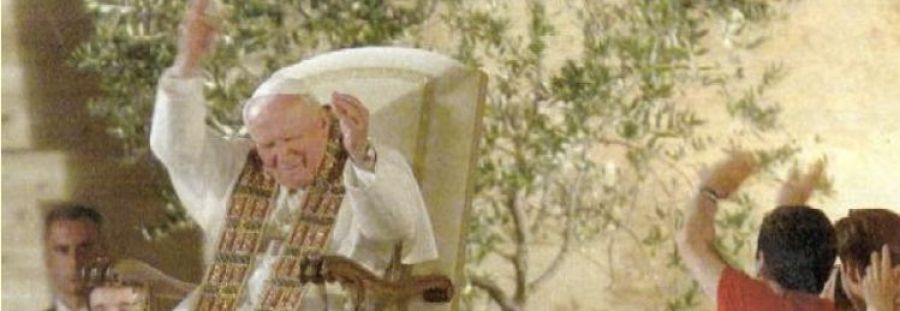
(Pope John Paul II, Angelus, 29 December 1996)

147 Last modified on Saturday, 20 December 2025 04:03
don Giuseppe Nespeca

Giuseppe Nespeca è architetto e sacerdote. Cultore della Sacra scrittura è autore della raccolta "Due Fuochi due Vie - Religione e Fede, Vangeli e Tao"; coautore del libro "Dialogo e Solstizio".

Email This email address is being protected from spambots. You need JavaScript enabled to view it.
You ought not, however, to be satisfied merely with knocking and seeking: to understand the things of God, what is absolutely necessary is oratio. For this reason, the Saviour told us not only: ‘Seek and you will find’, and ‘Knock and it shall be opened to you’, but also added, ‘Ask and you shall receive’ [Verbum Domini n.86; cit. Origen, Letter to Gregory]
Non ti devi però accontentare di bussare e di cercare: per comprendere le cose di Dio ti è assolutamente necessaria l’oratio. Proprio per esortarci ad essa il Salvatore ci ha detto non soltanto: “Cercate e troverete”, e “Bussate e vi sarà aperto”, ma ha aggiunto: “Chiedete e riceverete” [Verbum Domini n.86; cit. Origene, Lettera a Gregorio]
In the crucified Jesus, a kind of transformation and concentration of the signs occurs: he himself is the “sign of God” (John Paul II)
In Gesù crocifisso avviene come una trasformazione e concentrazione dei segni: è Lui stesso il "segno di Dio" (Giovanni Paolo II)
Only through Christ can we converse with God the Father as children, otherwise it is not possible, but in communion with the Son we can also say, as he did, “Abba”. In communion with Christ we can know God as our true Father. For this reason Christian prayer consists in looking constantly at Christ and in an ever new way, speaking to him, being with him in silence, listening to him, acting and suffering with him (Pope Benedict)
Solo in Cristo possiamo dialogare con Dio Padre come figli, altrimenti non è possibile, ma in comunione col Figlio possiamo anche dire noi come ha detto Lui: «Abbà». In comunione con Cristo possiamo conoscere Dio come Padre vero. Per questo la preghiera cristiana consiste nel guardare costantemente e in maniera sempre nuova a Cristo, parlare con Lui, stare in silenzio con Lui, ascoltarlo, agire e soffrire con Lui (Papa Benedetto)
In today’s Gospel passage, Jesus identifies himself not only with the king-shepherd, but also with the lost sheep, we can speak of a “double identity”: the king-shepherd, Jesus identifies also with the sheep: that is, with the least and most needy of his brothers and sisters […] And let us return home only with this phrase: “I was present there. Thank you!”. Or: “You forgot about me” (Pope Francis)
Nella pagina evangelica di oggi, Gesù si identifica non solo col re-pastore, ma anche con le pecore perdute. Potremmo parlare come di una “doppia identità”: il re-pastore, Gesù, si identifica anche con le pecore, cioè con i fratelli più piccoli e bisognosi […] E torniamo a casa soltanto con questa frase: “Io ero presente lì. Grazie!” oppure: “Ti sei scordato di me” (Papa Francesco)
Thus, in the figure of Matthew, the Gospels present to us a true and proper paradox: those who seem to be the farthest from holiness can even become a model of the acceptance of God's mercy and offer a glimpse of its marvellous effects in their own lives (Pope Benedict))
To love God is therefore a journeying with one's heart to God. A wonderful journey! When I was a boy, I was thrilled by the journeys described by Jules Verne ("Twenty Thousand Leagues Under The Sea", "From The Earth To The Moon", "Round The World In Eighty Days", etc). But the journeys of love for God are far more interesting. You read them in the lives of the Saints [Pope John Paul I]
Amare Dio è dunque un viaggiare col cuore verso Dio. Viaggio bellissimo. Ragazzo, mi estasiavo nei viaggi descritti da Giulio Verne (« Ventimila leghe sotto i mari », « Dalla terra alla luna », « Il giro del mondo in ottanta giorni », ecc.). Ma i viaggi dell'amore a Dio sono molto più interessanti. Li si legge nella vita dei Santi [Papa Giovanni Paolo I]

Due Fuochi due Vie - Vol. 1 Due Fuochi due Vie - Vol. 2 Due Fuochi due Vie - Vol. 3 Due Fuochi due Vie - Vol. 4 Due Fuochi due Vie - Vol. 5 Dialogo e Solstizio I fiammiferi di Maria

duevie.art

don Giuseppe Nespeca

Tel. 333-1329741


Disclaimer

Questo blog non rappresenta una testata giornalistica in quanto viene aggiornato senza alcuna periodicità. Non può pertanto considerarsi un prodotto editoriale ai sensi della legge N°62 del 07/03/2001.
Le immagini sono tratte da internet, ma se il loro uso violasse diritti d'autore, lo si comunichi all'autore del blog che provvederà alla loro pronta rimozione.
L'autore dichiara di non essere responsabile dei commenti lasciati nei post. Eventuali commenti dei lettori, lesivi dell'immagine o dell'onorabilità di persone terze, il cui contenuto fosse ritenuto non idoneo alla pubblicazione verranno insindacabilmente rimossi.






