Sep 27, 2026 Written by 

Pupils of Compassion

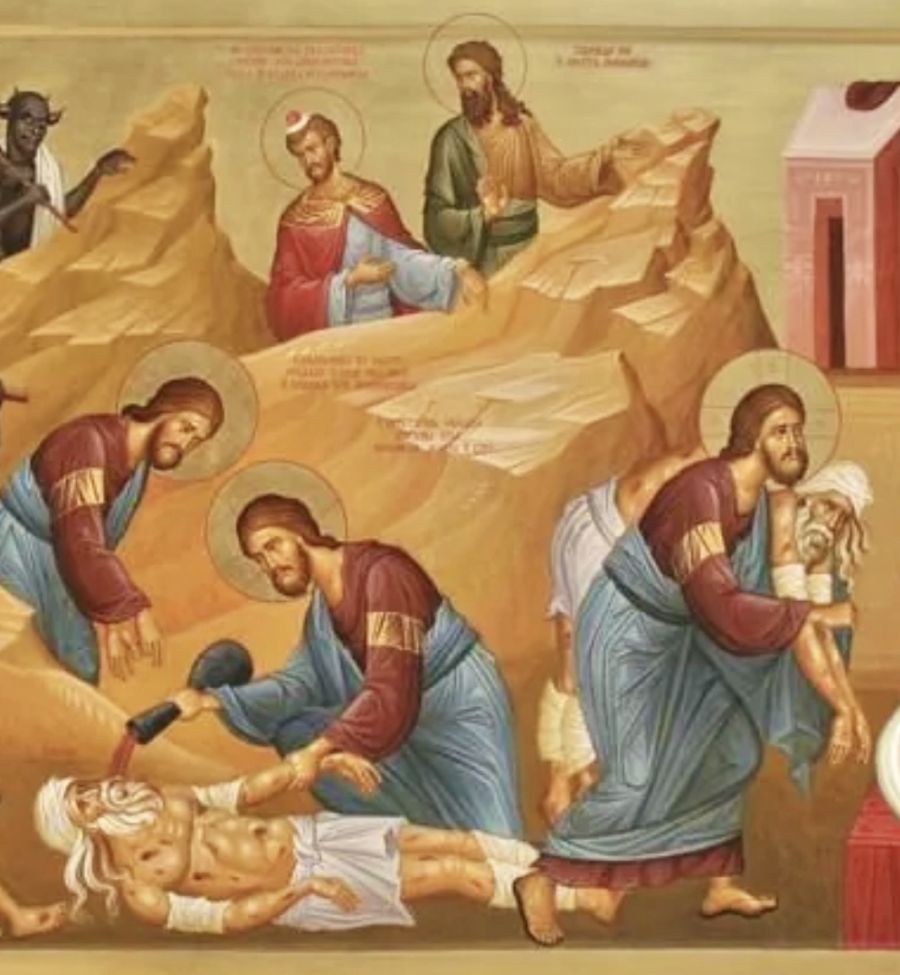
Jesus, to the one who asks: «And who is neighbour, to me?» (Lk 10:29) answers by telling a story.

When faced with someone lying on the ground, one should not pass by, but rather come to his aid, take care of him, because every person who is beaten is one's neighbour, whoever he may be.

The Poverello, who had received mercy from the Lord, had learned the lesson well enough to apply it "sine glossa", literally towards everyone, starting with the most needy and marginalised of his time.

The Poor Man's encounter with lepers constitutes a fundamental page in his growth in the Spirit.

It was a crossroads that profoundly modified him and changed the coordinates of his interior life.

For those unfortunate people he feels compassion and "passion", willing to help them in any way he can, because he is the Suffering Servant.

We read in his wonderful Testament

«The Lord gave me, friar Francis, to begin to do penance in this way: when I was in sin, it seemed to me too bitter to see lepers; and the Lord himself led me among them and I used Mercy with them.

And as I turned away from them, what seemed bitter to me was changed to sweetness of soul and body» (FF 110).

Thus "the Saint goes among the lepers and lives with them, to serve them in every need for the love of God. He washes their decaying bodies and heals their virulent sores [...].

For the sight of lepers, as he attests, was at first so unbearable to him, that as soon as he saw their shelter two miles away, he plugged his nose with his hands.

But here is what happened: at the time when he had already begun, by the Grace and virtue of the Most High, to have holy and wholesome thoughts, while he was still living in the world, one day a leper stood before him: he did violence to himself, approached him and kissed him.

From that moment he decided to despise himself more and more, until through the mercy of the Redeemer he obtained full victory" (FF 348).

And Francis healed many lepers:

"In the city of Fano, a young man named Bonomo, considered by all the doctors to be a leper and a paralytic, as soon as he was offered very devoutly by his parents to Blessed Francis, was freed from leprosy and paralysis and regained full health" (FF 564).

The care he lavished on lepers, as the Good Samaritan of the Gospel, was transformed, by the gift of the Lord, into power and efficacy in healing diseases of body and spirit.

He had visceral compassion for these souls abandoned to themselves and lived the Gospel of the derelict and marginalised to the letter, loving with extraordinary fondness the Lazarus of his time and beyond.


«Go, do likewise» (Lk 10:37)


Monday, 27th wk. in O.T.  (Lk 10,25-37)

69 Last modified on Sunday, 27 September 2026 02:54
Teresa Girolami

Teresa Girolami è laureata in Materie letterarie e Teologia. Ha pubblicato vari testi, fra cui: "Pellegrinaggio del cuore" (Ed. Piemme); "I Fiammiferi di Maria - La Madre di Dio in prosa e poesia"; "Tenerezza Scalza - Natura di donna"; co-autrice di "Dialogo e Solstizio".

Email This email address is being protected from spambots. You need JavaScript enabled to view it.
This can only take place on the basis of an intimate encounter with God, an encounter which has become a communion of will, even affecting my feelings (Pope Benedict)
Questo può realizzarsi solo a partire dall'intimo incontro con Dio, un incontro che è diventato comunione di volontà arrivando fino a toccare il sentimento (Papa Benedetto)
He is “the very stone which the builders rejected” (cf. Mt 21:42), because they judged him to be hostile to the law and a danger to public order [Pope Benedict]
Egli è “la pietra che i costruttori hanno scartato” (cfr Mt 21,42), perché l’hanno giudicato nemico della legge e pericoloso per l’ordine pubblico [Papa Benedetto]
"His" in a very literal sense: the One whom only the Son knows as Father, and by whom alone He is mutually known. We are now on the same ground, from which the prologue of the Gospel of John will later arise (Pope John Paul II)
“Suo” in senso quanto mai letterale: Colui che solo il Figlio conosce come Padre, e dal quale soltanto è reciprocamente conosciuto. Ci troviamo ormai sullo stesso terreno, dal quale più tardi sorgerà il prologo del Vangelo di Giovanni (Papa Giovanni Paolo II)
That 'always seeing the face of the Father' is the highest manifestation of the worship of God. It can be said to constitute that 'heavenly liturgy', performed on behalf of the whole universe [John Paul II]
Quel “vedere sempre la faccia del Padre” è la manifestazione più alta dell’adorazione di Dio. Si può dire che essa costituisce quella “liturgia celeste”, compiuta a nome di tutto l’universo [Giovanni Paolo II]
But what moves me even more strongly to proclaim the urgency of missionary evangelization is the fact that it is the primary service which the Church can render to every individual and to all humanity [Redemptoris Missio n.2]
Ma ciò che ancor più mi spinge a proclamare l'urgenza dell'evangelizzazione missionaria è che essa costituisce il primo servizio che la chiesa può rendere a ciascun uomo e all'intera umanità [Redemptoris Missio n.2]
Freedom and love coincide! On the contrary, obeying one’s selfishness leads to rivalry and conflict (Pope Benedict)
Libertà e amore coincidono! Al contrario, obbedire al proprio egoismo conduce a rivalità e conflitti (Papa Benedetto)
Are they not all spirits charged with a ministry, sent to serve those who are to inherit salvation? (Heb 1:14)
Non sono essi tutti spiriti incaricati di un ministero, inviati per servire coloro che devono ereditare la salvezza? (Eb 1,14)
The Church with its permanent contradiction: between the ideal and reality, the more annoying contradiction, the more the ideal is affirmed sublime, evangelical, sacred, divine, and the reality is often petty, narrow, defective, sometimes even selfish (Pope Paul VI)
La Chiesa con la sua permanente contraddizione: tra l’ideale e la realtà, tanto più fastidiosa contraddizione, quanto più l’ideale è affermato sublime, evangelico, sacro, divino, e la realtà si presenta spesso meschina, angusta, difettosa, alcune volte perfino egoista (Papa Paolo VI)
At first they say “yes” to God’s will, but their piety becomes routine and God no longer matters to them [Pope Benedict]
Essi, prima, dicono “sì” alla volontà di Dio. Ma la loro religiosità diventa routine, e Dio non li inquieta più [Papa Benedetto]
And «each of us can say: "for love to me"» (Pope Francis)
E «ognuno di noi può dire: “per amore a me”» (Papa Francesco)

Due Fuochi due Vie - Vol. 1 Due Fuochi due Vie - Vol. 2 Due Fuochi due Vie - Vol. 3 Due Fuochi due Vie - Vol. 4 Due Fuochi due Vie - Vol. 5 Dialogo e Solstizio I fiammiferi di Maria

duevie.art

don Giuseppe Nespeca

Tel. 333-1329741


Disclaimer

Questo blog non rappresenta una testata giornalistica in quanto viene aggiornato senza alcuna periodicità. Non può pertanto considerarsi un prodotto editoriale ai sensi della legge N°62 del 07/03/2001.
Le immagini sono tratte da internet, ma se il loro uso violasse diritti d'autore, lo si comunichi all'autore del blog che provvederà alla loro pronta rimozione.
L'autore dichiara di non essere responsabile dei commenti lasciati nei post. Eventuali commenti dei lettori, lesivi dell'immagine o dell'onorabilità di persone terze, il cui contenuto fosse ritenuto non idoneo alla pubblicazione verranno insindacabilmente rimossi.






