Sep 25, 2026 Written by 

Hymn of praise to the Father for littleness

The Gospel considered today is a hymn of praise to God the Father by Jesus, in the dimension of the weakness and vulnerability of the little ones.

He had experienced the disappointment of the "great ones", suspicious of his wonders.

Instead of asking the Father for help, as Son he praises him in his dark moments.

Looking at our Poor Man, all this is evident.

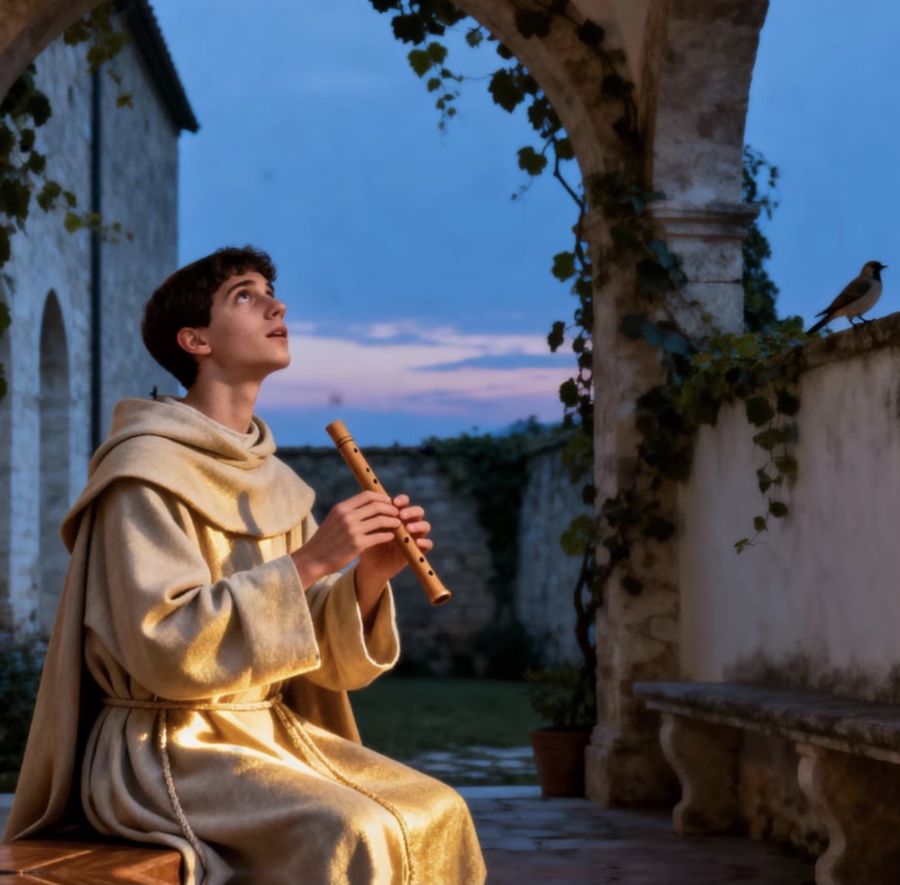
Short in stature, humble in spirit and a minor by profession, Francis of Assisi made littleness his existential and spiritual mark - and he taught his brothers the same.

To be humble and minimal in the following of the Lord was the essential trait of the friar - precisely minor - who wanted to live in communion at the Portiuncula.

Addressing the great and wise of this world, the Saint found resistance in making his proposal of poverty and essentiality of life understood.

They often replied to him:

"The poverty you seek, remain for ever with you, and your children, and your descendants after you" (cf. FF 1964).

In the Sources we find again that "Blessed Francis, hearing these words, marvelled in his heart and gave thanks to God, saying:

«Be blessed, O Lord God, who has kept these things hidden from the wise and prudent and revealed them to the little ones!

Yea, O Father, for thus it pleased thee!

O Lord, Father and master of my life, do not abandon me in their gathering, nor let me fall into that shame, but by your grace grant me to find what I seek, for I am your servant and the Son of your handmaid»" (FF 1965).

Furthermore, it must be remembered that "The servant of God, Francis, small in stature, humble of spirit and a minor by profession, while he lived here on earth, chose for himself and his brothers a small portion of the world [...] and they were certainly inspired by God who, in ancient times, called the place Porziuncola, the place that fell to those who did not want to possess anything on this earth [...].

There stood in this place a church dedicated to the Virgin Mother who, by her particular humility, deserved, after her Son, to be Sovereign of all Saints.

It was here that the Order of the Minors began, and their noble edifice rose wide and harmonious, as if resting on a solid foundation.

The Saint loved this place more than any other, and commanded the friars to venerate it with special devotion.

He wanted it always to be kept as a mirror of the Order in humility and highest poverty, reserving its ownership to others and keeping its use for himself and his own only" (FF 604).

So littleness was an eloquent sign of his being a child of God.

Precisely from such a position of hiddenness, in the difficult and obscure periods of his journey of faith, Francis raised to God the Father the praise for what he was doing:

«Most High, Almighty, good Lord,

To Thee be praise, glory and honour, and every blessing [...]

Praised be You, my Lord, with all Your creatures [...]» (FF 263).

Francis composed such a masterpiece in the cruellest and most suffering moment of his life, ill and in darkness.

Yet, he raised to God an authentic hymn of praise.

Like Jesus, who at the moment of loneliness and apparent defeat, of failure, raised his voice to the Father - to bless and praise him.

The blind alley and the darkness became a source of inspiration, and of a deeper relationship with the Lord; combined with that vulnerable littleness, entrusted to the Father for his Kingdom.


Saturday 26th wk. in O.T.  (Lk 10:17-24)

174 Last modified on Friday, 25 September 2026 04:09
Teresa Girolami

Teresa Girolami è laureata in Materie letterarie e Teologia. Ha pubblicato vari testi, fra cui: "Pellegrinaggio del cuore" (Ed. Piemme); "I Fiammiferi di Maria - La Madre di Dio in prosa e poesia"; "Tenerezza Scalza - Natura di donna"; co-autrice di "Dialogo e Solstizio".

Email This email address is being protected from spambots. You need JavaScript enabled to view it.
The Church, having before her eyes the picture of the generation to which we belong, shares the uneasiness of so many of the people of our time (Dives in Misericordia n.12)
Avendo davanti agli occhi l'immagine della generazione a cui apparteniamo, la Chiesa condivide l'inquietudine di tanti uomini contemporanei (Dives in Misericordia n.12)
Addressing this state of mind, the Church testifies to her hope, based on the conviction that evil, the mysterium iniquitatis, does not have the final word in human affairs (Pope John Paul II)
Di fronte a questi stati d'animo la Chiesa desidera testimoniare la sua speranza, basata sulla convinzione che il male, il mysterium iniquitatis, non ha l'ultima parola nelle vicende umane (Papa Giovanni Paolo II)
Jesus reminds us today that the expectation of the eternal beatitude does not relieve us of the duty to render the world more just and more liveable (Pope Francis)
Gesù oggi ci ricorda che l’attesa della beatitudine eterna non ci dispensa dall’impegno di rendere più giusto e più abitabile il mondo (Papa Francesco)
Those who open to Him will be blessed, because they will have a great reward: indeed, the Lord will make himself a servant to his servants — it is a beautiful reward — in the great banquet of his Kingdom He himself will serve them [Pope Francis]
E sarà beato chi gli aprirà, perché avrà una grande ricompensa: infatti il Signore stesso si farà servo dei suoi servi - è una bella ricompensa - nel grande banchetto del suo Regno passerà Lui stesso a servirli [Papa Francesco]
The fool in the Bible, the one who does not want to learn from the experience of visible things, that nothing lasts for ever but that all things pass away, youth and physical strength, amenities and important roles. Making one's life depend on such an ephemeral reality is therefore foolishness (Pope Benedict)
L’uomo stolto nella Bibbia è colui che non vuole rendersi conto, dall’esperienza delle cose visibili, che nulla dura per sempre, ma tutto passa: la giovinezza come la forza fisica, le comodità come i ruoli di potere. Far dipendere la propria vita da realtà così passeggere è, dunque, stoltezza (Papa Benedetto)
As sometimes happens in the Gospel, faced with the trap set by his enemies, Jesus, with his response, rises above the contingent controversy and goes far beyond the particular and mutually divergent positions (Pope John Paul II)
Come talora accade nel Vangelo, di fronte al tranello mossogli dai suoi nemici, Gesù, con la sua risposta, s’innalza al di sopra della polemica contingente e va ben oltre le posizioni particolari e tra loro divergenti (Papa Giovanni Paolo II)
And blasphemy, the sin against the Holy Spirit, is the one unforgivable sin — as Jesus said — because it comes from closing the heart to God’s mercy which acts in Jesus (Pope Francis)
The great thinker Romano Guardini wrote that the Lord “is always close, being at the root of our being. Yet we must experience our relationship with God between the poles of distance and closeness. By closeness we are strengthened, by distance we are put to the test” (Pope Benedict)
Il grande pensatore Romano Guardini scrive che il Signore “è sempre vicino, essendo alla radice del nostro essere. Tuttavia, dobbiamo sperimentare il nostro rapporto con Dio tra i poli della lontananza e della vicinanza. Dalla vicinanza siamo fortificati, dalla lontananza messi alla prova” (Papa Benedetto)

Due Fuochi due Vie - Vol. 1 Due Fuochi due Vie - Vol. 2 Due Fuochi due Vie - Vol. 3 Due Fuochi due Vie - Vol. 4 Due Fuochi due Vie - Vol. 5 Dialogo e Solstizio I fiammiferi di Maria

duevie.art

don Giuseppe Nespeca

Tel. 333-1329741


Disclaimer

Questo blog non rappresenta una testata giornalistica in quanto viene aggiornato senza alcuna periodicità. Non può pertanto considerarsi un prodotto editoriale ai sensi della legge N°62 del 07/03/2001.
Le immagini sono tratte da internet, ma se il loro uso violasse diritti d'autore, lo si comunichi all'autore del blog che provvederà alla loro pronta rimozione.
L'autore dichiara di non essere responsabile dei commenti lasciati nei post. Eventuali commenti dei lettori, lesivi dell'immagine o dell'onorabilità di persone terze, il cui contenuto fosse ritenuto non idoneo alla pubblicazione verranno insindacabilmente rimossi.






