Jun 26, 2026 Written by 

In the search, the Encounter

On the first day of the week, Jesus came to the disciples while they were gathered behind closed doors.

He entrusted them with the mission of proclaiming the Good News, 'breathing' on them so that they might receive the Holy Spirit.

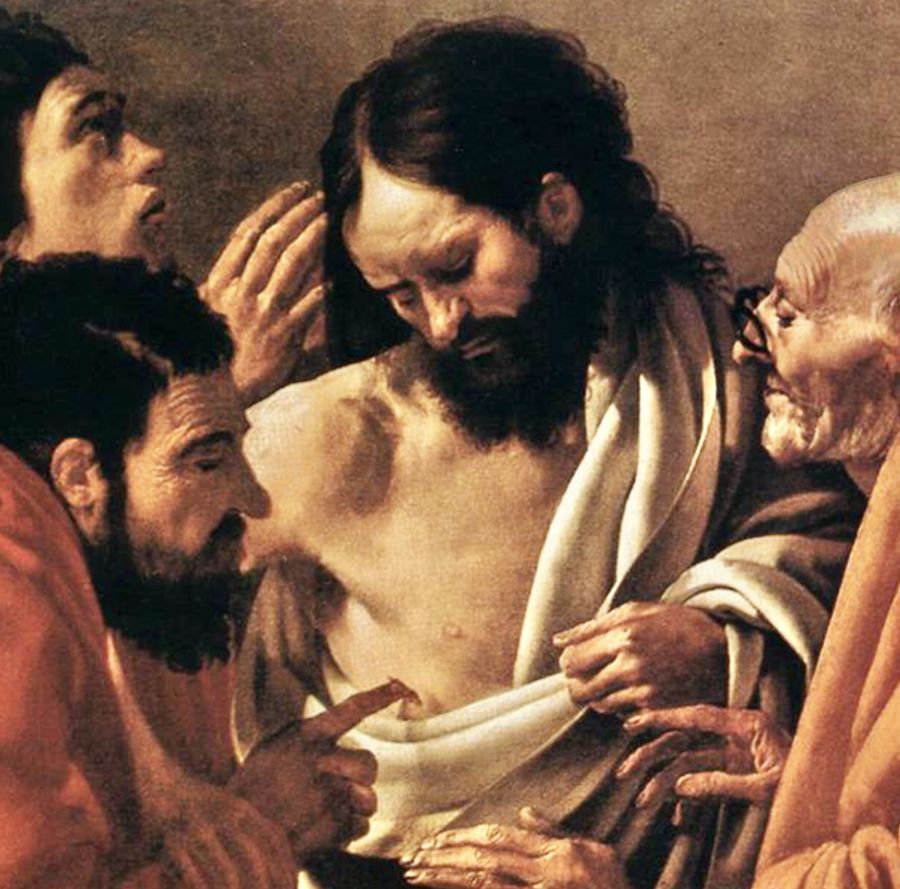
Thomas, who was absent, found it hard to believe and was rebuked by Jesus for demanding to see and touch, without accepting the testimony of the other disciples.

Yet Thomas sought a first-hand experience of the Risen One.


The Poor Man of Assisi and his brothers grew in faith through their active encounter with the Lord in the poverty they lived, in the solitude and prayer they experienced in their daily lives.

Faith in Jesus, who died on the cross as a criminal to assure us of eternal life, overflowed in the bare existence of Francis and his brothers.

It was certainly a divine gift, but also the fruit of a non-formal relationship that developed along the path they had taken.

It is worth remembering what the Sources attest:

"[Francis] taught them to praise God in all creatures; to honour priests with special veneration; to believe firmly and confess openly the truth of the faith [...]

They observed in everything the teachings of their holy father, and as soon as they saw a church or a cross from afar, they turned towards it, prostrated themselves humbly on the ground and prayed in the manner they had been taught" (FF 1069).

Chiara herself, in her Letter to Ermentrude of Bruges, regarding the life of Fede, suggests:

«Remain, therefore, my dearest, faithful until death to Him to whom you have bound yourself forever. And you will certainly be crowned by Him with the crown of life.

The time of toil here below is short, but the reward is eternal.

Do not be dazzled by the splendours of the world that pass like a shadow.

Do not be surprised by the empty images of this deceitful world; close your ears to the whispers of hell and strongly resist its temptations.

Bear adversity willingly, and do not let pride swell your heart in prosperous times; the former call you back to your faith, the latter demand it» (FF 2914).

The experience of God in their lives had been so strong, incisive and merciful that they could speak as no one had ever done before.


‘Thomas answered him and said, «The Lord of mine and the God of mine!»’ (Jn 20:28)


3 July, St Thomas the Apostle  (Jn 20:24-29)

203 Last modified on Friday, 26 June 2026 16:46
Teresa Girolami

Teresa Girolami è laureata in Materie letterarie e Teologia. Ha pubblicato vari testi, fra cui: "Pellegrinaggio del cuore" (Ed. Piemme); "I Fiammiferi di Maria - La Madre di Dio in prosa e poesia"; "Tenerezza Scalza - Natura di donna"; co-autrice di "Dialogo e Solstizio".

Email This email address is being protected from spambots. You need JavaScript enabled to view it.
This belonging to each other and to him is not some ideal, imaginary, symbolic relationship, but – I would almost want to say – a biological, life-transmitting state of belonging to Jesus Christ (Pope Benedict)
Questo appartenere l’uno all’altro e a Lui non è una qualsiasi relazione ideale, immaginaria, simbolica, ma – vorrei quasi dire – un appartenere a Gesù Cristo in senso biologico, pienamente vitale (Papa Benedetto)
Jesus invites us to discern the words and deeds which bear witness to the imminent coming of the Father’s kingdom. Indeed, he indicates and concentrates all the signs in the enigmatic “sign of Jonah”. By doing so, he overturns the worldly logic aimed at seeking signs that would confirm the human desire for self-affirmation and power (Pope John Paul II)
Gesù invita al discernimento in rapporto alle parole ed opere, che testimoniano l'imminente avvento del Regno del Padre. Anzi, Egli indirizza e concentra tutti i segni nell'enigmatico "segno di Giona". E con ciò rovescia la logica mondana tesa a cercare segni che confermino il desiderio di autoaffermazione e di potenza dell'uomo (Papa Giovanni Paolo II)
In reality, an abstract, distant god is more comfortable, one that doesn’t get himself involved in situations and who accepts a faith that is far from life, from problems, from society. Or we would even like to believe in a ‘special effects’ god (Pope Francis)
In realtà, è più comodo un dio astratto, distante, che non si immischia nelle situazioni e che accetta una fede lontana dalla vita, dai problemi, dalla società. Oppure ci piace credere a un dio “dagli effetti speciali” (Papa Francesco)
It is as though you were given a parcel with a gift inside and, rather than going to open the gift, you look only at the paper it is wrapped in: only appearances, the form, and not the core of the grace, of the gift that is given! (Pope Francis)
È come se a te regalassero un pacchetto con dentro un dono e tu, invece di andare a cercare il dono, guardi soltanto la carta nel quale è incartato: soltanto le apparenze, la forma, e non il nocciolo della grazia, del dono che viene dato! (Papa Francesco)
The Lord has our good at heart, that is, that every person should have life, and that especially the "least" of his children may have access to the banquet he has prepared for all (Pope Benedict)
Al Signore sta a cuore il nostro bene, cioè che ogni uomo abbia la vita, e che specialmente i suoi figli più "piccoli" possano accedere al banchetto che lui ha preparato per tutti (Papa Benedetto)
This Parable of the Sower is somewhat the ‘mother’ of all parables […] Such is the heart of God! Each one of us is ground on which the seed of the Word falls; no one is excluded! [Pope Francis]
Questa del seminatore è un po’ la “madre” di tutte le parabole […] Così è il cuore di Dio! Ognuno di noi è un terreno su cui cade il seme della Parola, nessuno è escluso [Papa Francesco]
Are we not perhaps all afraid in some way? If we let Christ enter fully into our lives, if we open ourselves totally to him, are we not afraid that He might take something away from us? Are we not perhaps afraid to give up something significant, something unique, something that makes life so beautiful? Do we not then risk ending up diminished and deprived of our freedom? (Pope Benedict)
Non abbiamo forse tutti in qualche modo paura - se lasciamo entrare Cristo totalmente dentro di noi, se ci apriamo totalmente a lui – paura che Egli possa portar via qualcosa della nostra vita? Non abbiamo forse paura di rinunciare a qualcosa di grande, di unico, che rende la vita così bella? Non rischiamo di trovarci poi nell’angustia e privati della libertà? (Papa Benedetto)

Due Fuochi due Vie - Vol. 1 Due Fuochi due Vie - Vol. 2 Due Fuochi due Vie - Vol. 3 Due Fuochi due Vie - Vol. 4 Due Fuochi due Vie - Vol. 5 Dialogo e Solstizio I fiammiferi di Maria

duevie.art

don Giuseppe Nespeca

Tel. 333-1329741


Disclaimer

Questo blog non rappresenta una testata giornalistica in quanto viene aggiornato senza alcuna periodicità. Non può pertanto considerarsi un prodotto editoriale ai sensi della legge N°62 del 07/03/2001.
Le immagini sono tratte da internet, ma se il loro uso violasse diritti d'autore, lo si comunichi all'autore del blog che provvederà alla loro pronta rimozione.
L'autore dichiara di non essere responsabile dei commenti lasciati nei post. Eventuali commenti dei lettori, lesivi dell'immagine o dell'onorabilità di persone terze, il cui contenuto fosse ritenuto non idoneo alla pubblicazione verranno insindacabilmente rimossi.






