Mar 21, 2026 Written by 

Gathering the sons, between abandonments and denial

Jesus is sold by Judas to the chief priests, abandoned by the disciples, and disowned by Peter.

In this context Christ celebrates Easter.

Previously the Son of God, already suffering the betrayal and abandonment of which many would be guilty, had wept over the City stoning the prophets sent to it.


One night Francis had a dream that almost recalled Jesus' lament over Jerusalem.

Christ had wept over the holy city, which was responsible for killing prophets (and stoning those sent to it) whose price would be a house left deserted.

The Unity betrayed and vilified would have generated squalor and abandonment: «Jerusalem Jerusalem, you who kill the prophets and stone those sent to you, how often have I wanted to gather your children together, as a hen gathers her chicks under her wings, and you did not want to [...]» (Mt 23:37).

The saint therefore "saw a little black hen, like a domesticated dove, with feet and feet covered with feathers.

She had a great many chicks, which, no matter how much they circled around her, could not all gather under her wings.

When she awoke, the man of God resumed his thoughts and personally explained the vision.

«The hen," he commented, "is me, small in stature and dark in complexion, and I must unite to the innocence of life a simplicity of a dove: a virtue, which the rarer it is in the world, the more swiftly it rises to heaven.

The chicks are the friars, grown in numbers and grace, whom the strength of Francis is unable to protect from the disturbance of men and the attacks of malignant tongues'» (FF 610).

This is why the Minim placed the Order under the protection of the Church, since for him following Christ meant walking in the footsteps of the Bride of the Lord.

The Poverello had special solicitude for his brothers, striving to keep them in the bond of unity, for which Christ became the sacrificial Lamb, sacrificed for the salvation of all the people.

Indeed, in the Letter to the Faithful, he expresses himself thus:

«The will of his Father was this, that his blessed and glorious Son, whom he gave us and was born for us, should offer himself, through his own blood, as a sacrifice and victim on the altar of the cross, not for himself, since through him all things were created, but in atonement for our sins, leaving us the example so that we might follow in his footsteps» (FF 184).

In love with Christ in everything, even in the infirmities that afflicted him, Francis wished to follow the Lord's poverty and example.

«So vivid was his love for the salvation of souls, and his thirst to win them to God, that, no longer having the strength to walk, he went about the country riding a donkey.

Often the brethren, with gentle insistence, invited him to restore his infirm and too weak body a little, with medical care, but he, who had his spirit continually turned to heaven, declined the invitation each time, since he only wished to be untied from his body to be with Christ» (FF 490).

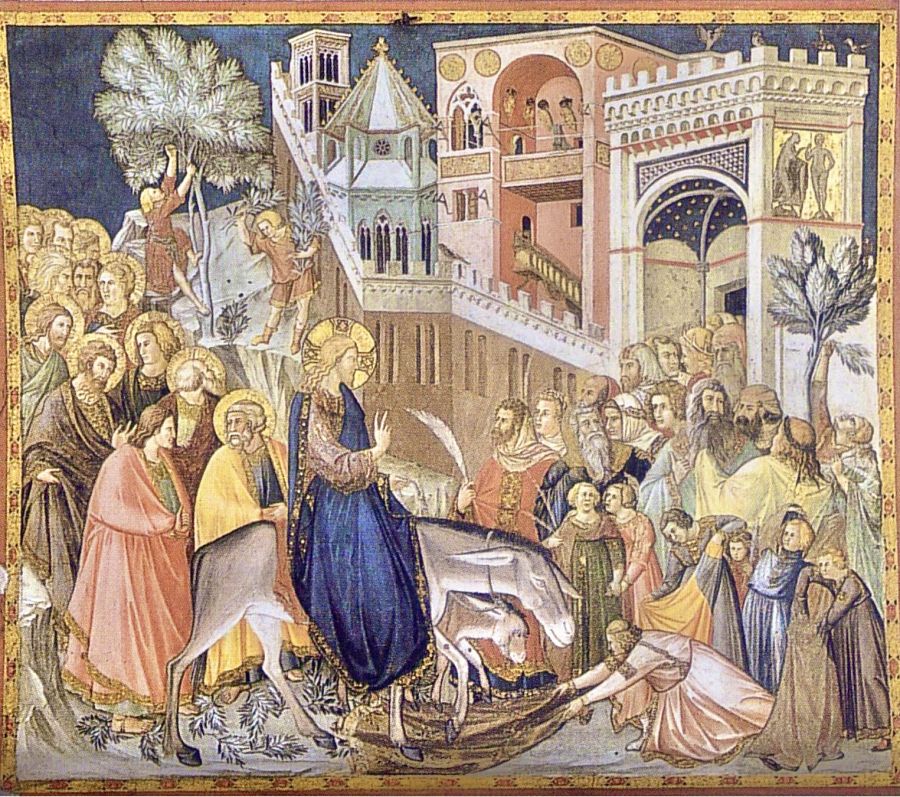
So he used his «brother donkey», borrowed for the journey to La Verna and his return through Borgo San Sepolcro, united in the meekness they shared.


«Take, eat; this, my body» (Mt 26:26c)


[Palm Sunday. Passion of the Lord]

174 Last modified on Saturday, 21 March 2026 05:33
Teresa Girolami

Teresa Girolami è laureata in Materie letterarie e Teologia. Ha pubblicato vari testi, fra cui: "Pellegrinaggio del cuore" (Ed. Piemme); "I Fiammiferi di Maria - La Madre di Dio in prosa e poesia"; "Tenerezza Scalza - Natura di donna"; co-autrice di "Dialogo e Solstizio".

Email This email address is being protected from spambots. You need JavaScript enabled to view it.
Romano Guardini wrote that the Lord “is always close, being at the root of our being. Yet we must experience our relationship with God between the poles of distance and closeness. By closeness we are strengthened, by distance we are put to the test” (Pope Benedict)
Romano Guardini scrive che il Signore “è sempre vicino, essendo alla radice del nostro essere. Tuttavia, dobbiamo sperimentare il nostro rapporto con Dio tra i poli della lontananza e della vicinanza. Dalla vicinanza siamo fortificati, dalla lontananza messi alla prova” (Papa Benedetto)
In recounting the "sign" of bread, the Evangelist emphasizes that Christ, before distributing the food, blessed it with a prayer of thanksgiving (cf. v. 11). The Greek term used is eucharistein and it refers directly to the Last Supper, though, in fact, John refers here not to the institution of the Eucharist but to the washing of the feet. The Eucharist is mentioned here in anticipation of the great symbol of the Bread of Life [Pope Benedict]
Narrando il “segno” dei pani, l’Evangelista sottolinea che Cristo, prima di distribuirli, li benedisse con una preghiera di ringraziamento (cfr v. 11). Il verbo è eucharistein, e rimanda direttamente al racconto dell’Ultima Cena, nel quale, in effetti, Giovanni non riferisce l’istituzione dell’Eucaristia, bensì la lavanda dei piedi. L’Eucaristia è qui come anticipata nel grande segno del pane della vita [Papa Benedetto]
First, the world of the Bible presents us with a new image of God. In surrounding cultures, the image of God and of the gods ultimately remained unclear and contradictory (Deus Caritas est n.9)
Vi è anzitutto la nuova immagine di Dio. Nelle culture che circondano il mondo della Bibbia, l'immagine di dio e degli dei rimane, alla fin fine, poco chiara e in sé contraddittoria (Deus Caritas est n.9)
God loves the world and will love it to the end. The Heart of the Son of God pierced on the Cross and opened is a profound and definitive witness to God’s love. Saint Bonaventure writes: “It was a divine decree that permitted one of the soldiers to open his sacred wide with a lance… The blood and water which poured out at that moment was the price of our salvation” (John Paul II)
Il mondo è amato da Dio e sarà amato fino alla fine. Il Cuore del Figlio di Dio trafitto sulla croce e aperto, testimonia in modo profondo e definitivo l’amore di Dio. Scriverà San Bonaventura: “Per divina disposizione è stato permesso che un soldato trafiggesse e aprisse quel sacro costato. Ne uscì sangue ed acqua, prezzo della nostra salvezza” (Giovanni Paolo II)
Thus, paradoxically, from a sign of condemnation, death and failure, the Cross becomes a sign of redemption, life and victory, through faith, the fruits of salvation can be gathered (Pope Benedict)
Così la Croce, paradossalmente, da segno di condanna, di morte, di fallimento, diventa segno di redenzione, di vita, di vittoria, in cui, con sguardo di fede, si possono scorgere i frutti della salvezza (Papa Benedetto)
[Nicodemus] felt the fascination of this Rabbi, so different from the others, but could not manage to rid himself of the conditioning of his environment that was hostile to Jesus, and stood irresolute on the threshold of faith (Pope Benedict)
[Nicodemo] avverte il fascino di questo Rabbì così diverso dagli altri, ma non riesce a sottrarsi ai condizionamenti dell’ambiente contrario a Gesù e resta titubante sulla soglia della fede (Papa Benedetto)
Those wounds that, in the beginning were an obstacle for Thomas’s faith, being a sign of Jesus’ apparent failure, those same wounds have become in his encounter with the Risen One, signs of a victorious love (Pope Benedict)

Due Fuochi due Vie - Vol. 1 Due Fuochi due Vie - Vol. 2 Due Fuochi due Vie - Vol. 3 Due Fuochi due Vie - Vol. 4 Due Fuochi due Vie - Vol. 5 Dialogo e Solstizio I fiammiferi di Maria

duevie.art

don Giuseppe Nespeca

Tel. 333-1329741


Disclaimer

Questo blog non rappresenta una testata giornalistica in quanto viene aggiornato senza alcuna periodicità. Non può pertanto considerarsi un prodotto editoriale ai sensi della legge N°62 del 07/03/2001.
Le immagini sono tratte da internet, ma se il loro uso violasse diritti d'autore, lo si comunichi all'autore del blog che provvederà alla loro pronta rimozione.
L'autore dichiara di non essere responsabile dei commenti lasciati nei post. Eventuali commenti dei lettori, lesivi dell'immagine o dell'onorabilità di persone terze, il cui contenuto fosse ritenuto non idoneo alla pubblicazione verranno insindacabilmente rimossi.






