Dec 29, 2025 Written by 

Star-Poverty. Gold Incense Myrrh

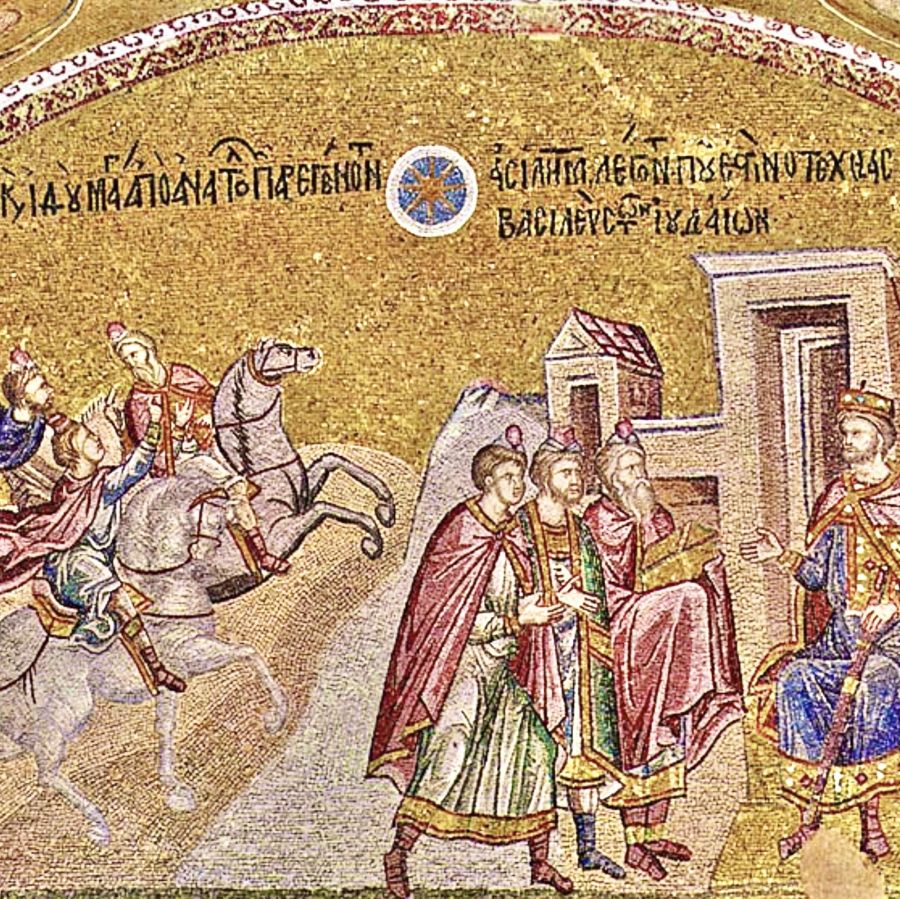
The Epiphany of the Lord offers evangelical expressions of extraordinary beauty. On the lips of the Magi we find a phrase that belongs to us, as worshippers of the Child of Bethlehem: "We saw his star appear and we came to adore him" (Mt 2:2).

In Francis of Assisi the breadth, the height and the depth of the Mystery of the Manifestation of the Son of God has singular connotations not to be overlooked.

We need only think of some passages from the Sources that record the extent of this.

"The Saint willingly stayed in the hermitage of Greccio, both because he saw it as rich in poverty and because from a secluded cell, built on the prominent rock, he could devote himself more freely to the contemplation of heavenly things.

It was precisely this place, where some time before he had celebrated the Christmas of the Child of Bethlehem, making himself a child with the Child" (FF 621).

Again: 'He could not think back without weeping how much penury the poor Virgin had found herself in [...].

Once, while he was sitting at lunch, a friar reminded him of the poverty of the Blessed Virgin and the destitution of Christ her Son. Immediately he got up from the table, burst into sobs of sorrow [...].

That is why he called poverty a royal virtue, because it shone with such splendour in the King and Queen" (FF 788).


The Star that guides Francis to the grotto to adore the Son of God is Poverty. This shines in the penury of Bethlehem and moves him to tears.

To the Child-God the Little One of Assisi offered the gold of his love for the poor, the fire of his continual contemplation of the Mystery and the myrrh of the many sufferings received in custody from the Gift of the Father, unrolled for us on earth.

His closeness to the people was such that he wore a very poor cassock, which resembled the rough tunic of the poor.

All his friar sons were also close to the people, and all this made him a Worshipper par excellence of the bare Deity, only clothed in flesh; a figure close to the needs of man.

"One day a poor man asked him for alms, and he, having nothing to hand, unbuttoned a flap of his cassock and gave it to the poor man.

Other times, for the same purpose, he even took off his trousers.

Such was the tender compassion he felt for the poor and such was the affection that drove him to follow in the footsteps of the poor Christ" (FF 677).

And of this making a gift of himself to the King in the poor he tried, with great care, to inform his brothers.

One episode attests to this:

"He was certainly good-hearted by nature, but he became doubly so through the charity that was given to him from on high [...] Whatever the need and whatever need he saw in others [...] he referred them to Christ.

Thus in all the poor he recognised the Son of the poor Madonna and bore naked in his heart the One whom she had carried naked in her arms' (FF 670).

She worshipped in her heart the Child who had become a Gift for humanity, and she sought His likeness in those who most closely displayed His features. So much so that once, meeting a poor man and observing his extreme nakedness, she said to the friar who accompanied her:

"I have chosen poverty for my wealth and my woman: but here it shines most brightly in this one.

Knowest thou not that it is known throughout the world that we are the poor for Christ's sake?

But this poor man convinces us that this is not so" (FF 671).


Following the star of the holy evangelical poverty of which Francis was in love, he came to the grotto of the Manifestation, where all are called to adore the Son of God.

He tasted Beauty made flesh by another road, far from the not so few 'Herods' sons of deception.

"The man of God stood before the manger, filled with pity, sprinkled with tears, overflowing with joy" (FF 1186).


«We saw his star rising and came to worship him» ( Mt 2:2)


Epiphany of the Lord  (Mt 2:1-12)

125 Last modified on Monday, 29 December 2025 05:16
Teresa Girolami

Teresa Girolami è laureata in Materie letterarie e Teologia. Ha pubblicato vari testi, fra cui: "Pellegrinaggio del cuore" (Ed. Piemme); "I Fiammiferi di Maria - La Madre di Dio in prosa e poesia"; "Tenerezza Scalza - Natura di donna"; co-autrice di "Dialogo e Solstizio".

Email This email address is being protected from spambots. You need JavaScript enabled to view it.
Christ compares himself to the sower and explains that the seed is the word (cf. Mk 4: 14); those who hear it, accept it and bear fruit (cf. Mk 4: 20) take part in the Kingdom of God, that is, they live under his lordship. They remain in the world, but are no longer of the world. They bear within them a seed of eternity a principle of transformation [Pope Benedict]
Cristo si paragona al seminatore e spiega che il seme è la Parola (cfr Mc 4,14): coloro che l’ascoltano, l’accolgono e portano frutto (cfr Mc 4,20) fanno parte del Regno di Dio, cioè vivono sotto la sua signoria; rimangono nel mondo, ma non sono più del mondo; portano in sé un germe di eternità, un principio di trasformazione [Papa Benedetto]
In one of his most celebrated sermons, Saint Bernard of Clairvaux “recreates”, as it were, the scene where God and humanity wait for Mary to say “yes”. Turning to her he begs: “[…] Arise, run, open up! Arise with faith, run with your devotion, open up with your consent!” [Pope Benedict]
San Bernardo di Chiaravalle, in uno dei suoi Sermoni più celebri, quasi «rappresenta» l’attesa da parte di Dio e dell’umanità del «sì» di Maria, rivolgendosi a lei con una supplica: «[…] Alzati, corri, apri! Alzati con la fede, affrettati con la tua offerta, apri con la tua adesione!» [Papa Benedetto]
«The "blasphemy" [in question] does not really consist in offending the Holy Spirit with words; it consists, instead, in the refusal to accept the salvation that God offers to man through the Holy Spirit, and which works by virtue of the sacrifice of the cross [It] does not allow man to get out of his self-imprisonment and to open himself to the divine sources of purification» (John Paul II, General Audience July 25, 1990)
«La “bestemmia” [di cui si tratta] non consiste propriamente nell’offendere con le parole lo Spirito Santo; consiste, invece, nel rifiuto di accettare la salvezza che Dio offre all’uomo mediante lo Spirito Santo, e che opera in virtù del sacrificio della croce [Esso] non permette all’uomo di uscire dalla sua autoprigionia e di aprirsi alle fonti divine della purificazione» (Giovanni Paolo II, Udienza Generale 25 luglio 1990)
Seen from the capital Jerusalem, that land is geographically peripheral and religiously impure because it was full of pagans, having mixed with those who did not belong to Israel. Great things were not expected from Galilee for the history of salvation. Instead, right from there — precisely from there — radiated that “light” on which we meditated in recent Sundays: the light of Christ. It radiated right from the periphery (Pope Francis)
Vista dalla capitale Gerusalemme, quella terra è geograficamente periferica e religiosamente impura perché era piena di pagani, per la mescolanza con quanti non appartenevano a Israele. Dalla Galilea non si attendevano certo grandi cose per la storia della salvezza. Invece proprio da lì - proprio da lì - si diffonde quella “luce” sulla quale abbiamo meditato nelle scorse domeniche: la luce di Cristo. Si diffonde proprio dalla periferia (Papa Francesco)
Christ and his intimates tried to strengthen the sense of sharing, returning to the profound spirit of what once the clan, the family, the community were - expressions of God's love that manifests itself...
Cristo e i suoi intimi tentavano di rafforzare il senso di condivisione, tornando allo spirito profondo di ciò che un tempo erano appunto il clan, la famiglia, la comunità - espressioni dell’amore di Dio che si manifesta…
The Church was built on the foundation of the Apostles as a community of faith, hope and charity. Through the Apostles, we come to Jesus himself (Pope Benedict)

Due Fuochi due Vie - Vol. 1 Due Fuochi due Vie - Vol. 2 Due Fuochi due Vie - Vol. 3 Due Fuochi due Vie - Vol. 4 Due Fuochi due Vie - Vol. 5 Dialogo e Solstizio I fiammiferi di Maria

duevie.art

don Giuseppe Nespeca

Tel. 333-1329741


Disclaimer

Questo blog non rappresenta una testata giornalistica in quanto viene aggiornato senza alcuna periodicità. Non può pertanto considerarsi un prodotto editoriale ai sensi della legge N°62 del 07/03/2001.
Le immagini sono tratte da internet, ma se il loro uso violasse diritti d'autore, lo si comunichi all'autore del blog che provvederà alla loro pronta rimozione.
L'autore dichiara di non essere responsabile dei commenti lasciati nei post. Eventuali commenti dei lettori, lesivi dell'immagine o dell'onorabilità di persone terze, il cui contenuto fosse ritenuto non idoneo alla pubblicazione verranno insindacabilmente rimossi.






