Oct 24, 2025 Written by 

Identikit of the Blessed ones in the Gospel. Like burning coals

In the Beatitudes Jesus proclaims God's love for every man, especially for the poor, the object of his predilection.

Francis looked upon the Beatitudes as the portrait of Christ who lived them to the full and followed them as a lover of Him.

He had great veneration not only for the Virgin Mary, but also for all the saints.

In fact, among his writings there is an antiphon recited every hour:

"Holy Virgin Mary, there is none like thee, born in the world, among women, daughter and handmaid of the Most High and Supreme King the heavenly Father, mother of our most holy Lord Jesus Christ, spouse of the Holy Spirit; pray for us with Saint Michael the Archangel and with all the powers of heaven and with all the saints, to thy most holy beloved Son, Lord and Master. Glory be to the Father. As it was." (FF 281).

The Sources underline that "the saints and their memory were for him like burning coals of fire, which revived in him the deifying fire" (FF 1167).

In the Admonitions of Francis:

"Blessed are the poor in spirit, for theirs is the kingdom of heaven.

There are many who persistently apply themselves to prayers and occupations, do many abstinences and corporal mortifications, but for a single word that seems an insult to their person, or for something that is taken away from them, scandalised, they quickly become irritated.

These are not poor in spirit, for he who is truly poor in spirit hates himself and loves those who strike them in the cheek" (FF 163).

"Blessed are the peacemakers, for they shall be called children of God.

"True peacemakers are those who in all the hardships they endure in this world, for the love of our Lord Jesus Christ, keep peace in soul and body" (FF 164).

And in the same Canticle of Brother Sun, when he was now very ill, he added the famous verse of forgiveness

"Be praised, my Lord/ for those who forgive for love of you/ and endure infirmity and tribulation./

Blessed are those who are in peace,/ for by you, Most High, they shall be crowned" (FF 1593).

Nevertheless, Clare of Assisi, in her wonderful Blessing to the sisters, turns her gaze to the whole assembly of saints in heaven and on earth:

"I pray to our Lord Jesus Christ through his mercy and through the Intercession of his most holy Mother Mary, of the blessed Archangel Michael and all the holy Angels of God, [of our blessed Father Francis] and of all the saints and holy women of God, that the same heavenly Father may bestow upon you and confirm this most holy blessing in heaven and on earth: on earth, multiplying you, by his Grace and virtues, among his servants in his Church militant; in heaven, exalting and glorifying you in his Church triumphant among his saints and holy ones" (FF 2855).

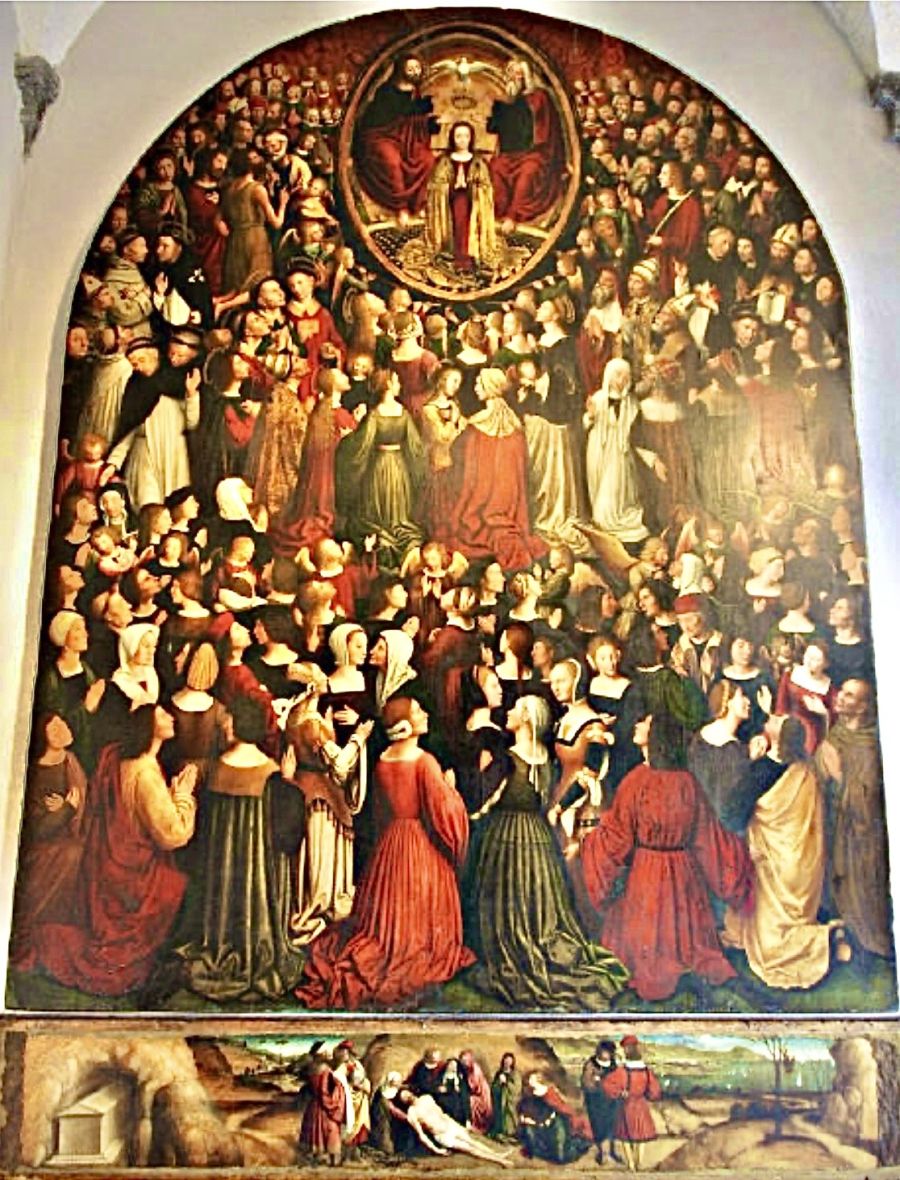
Clear beauty of a communion lived in the round with the saints who still walk on earth and with those who wave their palms before the throne of the Lamb in the heavenly Jerusalem.


«Blessed are the poor [because of Love], for theirs is the kingdom of heaven» (Mt 5:3)


All the Saints  (Mt 5:1-12a)

130 Last modified on Friday, 24 October 2025 04:29
Teresa Girolami

Teresa Girolami è laureata in Materie letterarie e Teologia. Ha pubblicato vari testi, fra cui: "Pellegrinaggio del cuore" (Ed. Piemme); "I Fiammiferi di Maria - La Madre di Dio in prosa e poesia"; "Tenerezza Scalza - Natura di donna"; co-autrice di "Dialogo e Solstizio".

Email This email address is being protected from spambots. You need JavaScript enabled to view it.
Gospels make their way, advance and free, making us understand the enormous difference between any creed and the proposal of Jesus. Even within us, the life of Faith embraces all our sides and admits many things. Thus we become more complete and emancipate ourselves, reversing positions.
I Vangeli si fanno largo, avanzano e liberano, facendo comprendere l’enorme differenza tra credo qualsiasi e proposta di Gesù. Anche dentro di noi, la vita di Fede abbraccia tutti i nostri lati e ammette tante cose. Così diventiamo più completi e ci emancipiamo, ribaltando posizioni
We cannot draw energy from a severe setting, contrary to the flowering of our precious uniqueness. New eyes are transmitted only by the one who is Friend. And Christ does it not when we are well placed or when we equip ourselves strongly - remaining in a managerial attitude - but in total listening
Non possiamo trarre energia da un’impostazione severa, contraria alla fioritura della nostra preziosa unicità. Gli occhi nuovi sono trasmessi solo da colui che è Amico. E Cristo lo fa non quando ci collochiamo bene o attrezziamo forte - permanendo in atteggiamento dirigista - bensì nell’ascolto totale
The Evangelists Matthew and Luke (cf. Mt 11:25-30 and Lk 10:21-22) have handed down to us a “jewel” of Jesus’ prayer that is often called the Cry of Exultation or the Cry of Messianic Exultation. It is a prayer of thanksgiving and praise [Pope Benedict]
Gli evangelisti Matteo e Luca (cfr Mt 11,25-30 e Lc 10,21-22) ci hanno tramandato un «gioiello» della preghiera di Gesù, che spesso viene chiamato Inno di giubilo o Inno di giubilo messianico. Si tratta di una preghiera di riconoscenza e di lode [Papa Benedetto]
The human race – every one of us – is the sheep lost in the desert which no longer knows the way. The Son of God will not let this happen; he cannot abandon humanity in so wretched a condition. He leaps to his feet and abandons the glory of heaven, in order to go in search of the sheep and pursue it, all the way to the Cross. He takes it upon his shoulders and carries our humanity (Pope Benedict)
L’umanità – noi tutti - è la pecora smarrita che, nel deserto, non trova più la strada. Il Figlio di Dio non tollera questo; Egli non può abbandonare l’umanità in una simile miserevole condizione. Balza in piedi, abbandona la gloria del cielo, per ritrovare la pecorella e inseguirla, fin sulla croce. La carica sulle sue spalle, porta la nostra umanità (Papa Benedetto)
"Too bad! What a pity!" “Sin! What a shame!” - it is said of a missed opportunity: it is the bending of the unicum that we are inside, which every day surrenders its exceptionality to the normalizing and prim outline of common opinion. Divine Appeal of every moment directed Mary's dreams and her innate knowledge - antechamber of her trust, elsewhere
“Peccato!” - si dice di una occasione persa: è la flessione dell’unicum che siamo dentro, che tutti i giorni cede la sua eccezionalità al contorno normalizzante e affettato dell’opinione comune. L’appello divino d’ogni istante orientava altrove i sogni di Maria e il suo sapere innato - anticamera della fiducia
It is a question of leaving behind the comfortable but misleading ways of the idols of this world: success at all costs; power to the detriment of the weak; the desire for wealth; pleasure at any price. And instead, preparing the way of the Lord: this does not take away our freedom (Pope Francis)
Si tratta di lasciare le strade, comode ma fuorvianti, degli idoli di questo mondo [...] E di aprire invece la strada al Signore che viene: Egli non toglie la nostra libertà (Papa Francesco)

Due Fuochi due Vie - Vol. 1 Due Fuochi due Vie - Vol. 2 Due Fuochi due Vie - Vol. 3 Due Fuochi due Vie - Vol. 4 Due Fuochi due Vie - Vol. 5 Dialogo e Solstizio I fiammiferi di Maria

duevie.art

don Giuseppe Nespeca

Tel. 333-1329741


Disclaimer

Questo blog non rappresenta una testata giornalistica in quanto viene aggiornato senza alcuna periodicità. Non può pertanto considerarsi un prodotto editoriale ai sensi della legge N°62 del 07/03/2001.
Le immagini sono tratte da internet, ma se il loro uso violasse diritti d'autore, lo si comunichi all'autore del blog che provvederà alla loro pronta rimozione.
L'autore dichiara di non essere responsabile dei commenti lasciati nei post. Eventuali commenti dei lettori, lesivi dell'immagine o dell'onorabilità di persone terze, il cui contenuto fosse ritenuto non idoneo alla pubblicazione verranno insindacabilmente rimossi.






