Oct 3, 2026 Written by 

Freeness, Generosity, Universality: not our tiny little church

In this Sunday’s Gospel, Jesus speaks to us about the response given to the invitation from God — who is represented by a king — to participate in a wedding banquet (cf. Mt 22:1-14). The invitation has three characteristics: freely offered, breadth and universality. Many people were invited, but something surprising happened: none of the intended guests came to take part in the feast, saying they had other things to do; indeed, some were even indifferent, impertinent, even annoyed. God is good to us, he freely offers us his friendship, he freely offers us his joy, his salvation; but so often we do not accept his gifts, we place our practical concerns, our interests first. And when the Lord is calling to us, it so often seems to annoy us. 

Some of the intended guests went so far as to abuse and kill the servants who delivered the invitation. But despite the lack of response from those called, God’s plan is never interrupted. In facing the rejection of the first invitees, He is not discouraged, He does not cancel the feast, but makes another invitation, expanding it beyond all reasonable limits, and sends his servants into the town squares and the byways to gather anyone they find. These, however, are ordinary, poor, neglected and marginalized people, good and bad alike — even bad people are invited — without distinction. And the hall is filled with “the excluded”. The Gospel, rejected by some, is unexpectedly welcomed in many other hearts.

The goodness of God has no bounds and does not discriminate against anyone. For this reason the banquet of the Lord’s gifts is universal, for everyone. Everyone is given the opportunity to respond to the invitation, to his call; no one has the right to feel privileged or to claim an exclusive right. All of this induces us to break the habit of conveniently placing ourselves at the centre, as did the High Priests and the Pharisees. One must not do this; we must open ourselves to the peripheries, also acknowledging that, at the margins too, even one who is cast aside and scorned by society is the object of God’s generosity. We are all called not to reduce the Kingdom of God to the confines of the “little church” — our “tiny little church” — but to enlarge the Church to the dimensions of the Kingdom of God. However, there is one condition: wedding attire must be worn, that is, charity toward God and neighbour must be shown.

[Pope Francis, Angelus, 12 October 2014]

69 Last modified on Saturday, 03 October 2026 03:44
don Giuseppe Nespeca

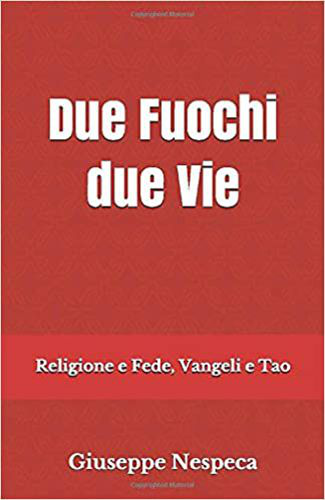
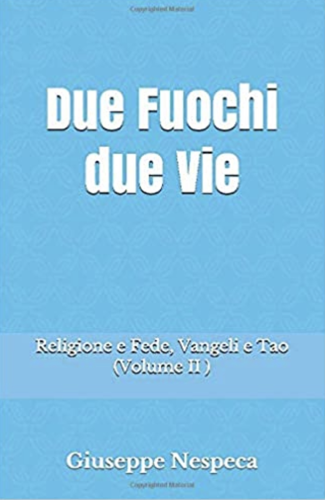
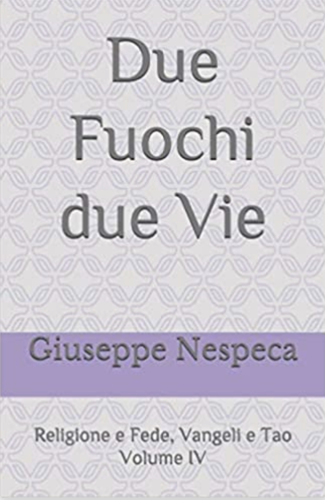
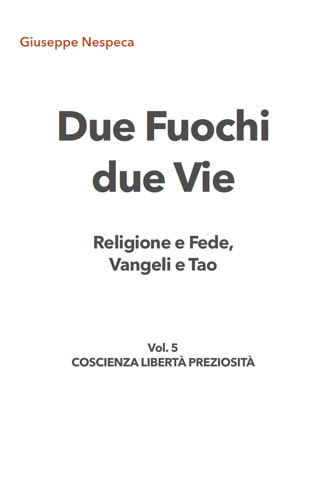
Giuseppe Nespeca è architetto e sacerdote. Cultore della Sacra scrittura è autore della raccolta "Due Fuochi due Vie - Religione e Fede, Vangeli e Tao"; coautore del libro "Dialogo e Solstizio".

Email This email address is being protected from spambots. You need JavaScript enabled to view it.
Man rightly fears falling victim to an oppression that will deprive him of his interior freedom, of the possibility of expressing the truth of which he is convinced, of the faith that he professes, of the ability to obey the voice of conscience that tells him the right path to follow [Dives in Misericordia, n.11]
L'uomo ha giustamente paura di restar vittima di una oppressione che lo privi della libertà interiore, della possibilità di esternare la verità di cui è convinto, della fede che professa, della facoltà di obbedire alla voce della coscienza che gli indica la retta via da seguire [Dives in Misericordia, n.11]
We find ourselves, so to speak, roped to Jesus Christ together with him on the ascent towards God's heights (Pope Benedict)
Ci troviamo, per così dire, in una cordata con Gesù Cristo – insieme con Lui nella salita verso le altezze di Dio (Papa Benedetto)
There are also serious, dangerous omissions and we have to recognize with healthy realism that in this way things are not all right, it is not all right when errors are made. However, we must also be certain at the same time that if, here and there, the Church is dying because of the sins of men and women, because of their non-belief, at the same time she is reborn (Pope Benedict)
Ci sono anche cadute gravi, pericolose, e dobbiamo riconoscere con sano realismo che così non va, non va dove si fanno cose sbagliate. Ma anche essere sicuri, allo stesso tempo, che se qua e là la Chiesa muore a causa dei peccati degli uomini, a causa della loro non credenza, nello stesso tempo, nasce di nuovo (Papa Benedetto)
The question makes apparent the concern, present in ancient Jewish tradition, over finding a unifying principle in the various formulations of God's will […] Emphasis is placed on the totality of this dedication to God, listing the three faculties that define man in his deep psychological structures: heart, soul and mind. The word mind, diánoia, contains the rational element (Pope Benedict)
La domanda lascia trasparire la preoccupazione, presente nell’antica tradizione giudaica, di trovare un principio unificatore delle varie formulazioni della volontà di Dio […] L’accento è posto sulla totalità di questa dedizione a Dio, elencando le tre facoltà che definiscono l’uomo nelle sue strutture psicologiche profonde: cuore, anima e mente. Il termine mente, diánoia, contiene l’elemento razionale (Papa Benedetto)
A “year” of grace: the period of Christ’s ministry, the time of the Church before his glorious return, an interval of our life (Pope Francis)
Un “anno” di grazia: il tempo del ministero di Cristo, il tempo della Chiesa prima del suo ritorno glorioso, il tempo della nostra vita (Papa Francesco)
The Church, having before her eyes the picture of the generation to which we belong, shares the uneasiness of so many of the people of our time (Dives in Misericordia n.12)
Avendo davanti agli occhi l'immagine della generazione a cui apparteniamo, la Chiesa condivide l'inquietudine di tanti uomini contemporanei (Dives in Misericordia n.12)
Nec quisquam sumit sibi honorem, sed qui vocatur a Deo, there is no one who assumes this dignity for himself, if he is not called by God (Heb 5:4) [Pope Paul VI]
Nec quisquam sumit sibi honorem, sed qui vocatur a Deo, non vi è alcuno che assuma da sé questa dignità, se non è chiamato da Dio (He 5,4) [Papa Paolo VI]

Due Fuochi due Vie - Vol. 1 Due Fuochi due Vie - Vol. 2 Due Fuochi due Vie - Vol. 3 Due Fuochi due Vie - Vol. 4 Due Fuochi due Vie - Vol. 5 Dialogo e Solstizio I fiammiferi di Maria

duevie.art

don Giuseppe Nespeca

Tel. 333-1329741


Disclaimer

Questo blog non rappresenta una testata giornalistica in quanto viene aggiornato senza alcuna periodicità. Non può pertanto considerarsi un prodotto editoriale ai sensi della legge N°62 del 07/03/2001.
Le immagini sono tratte da internet, ma se il loro uso violasse diritti d'autore, lo si comunichi all'autore del blog che provvederà alla loro pronta rimozione.
L'autore dichiara di non essere responsabile dei commenti lasciati nei post. Eventuali commenti dei lettori, lesivi dell'immagine o dell'onorabilità di persone terze, il cui contenuto fosse ritenuto non idoneo alla pubblicazione verranno insindacabilmente rimossi.