Jun 18, 2026 Written by 

Small Prayer

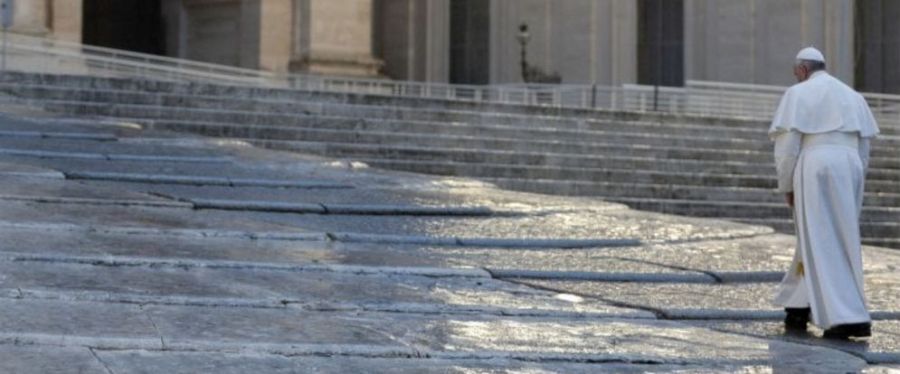
"Lord if thou wilt, thou canst". It is a simple prayer, "an act of trust" and at the same time "a real challenge", that which the leper addresses to Jesus to heal him. A plea that comes from the depths of his heart and that tells, at the same time, of the Lord's way of acting, under the banner of compassion, "of suffering with and for us", of "taking the suffering of the other person upon himself" to soothe and heal it in the name of the Father's love. Pope Francis, in his homily at the Mass at Casa Santa Marta [...] dwelt on the Gospel episode of the healing of the leper, and urged us to look to the compassion of Jesus, who came to give his life for us sinners.

The Pope emphasised the 'simple story' of the leper who asks Jesus for healing. In that 'if you want' there is the prayer that 'draws God's attention' and there is the solution. "It is a challenge," Francis said, "but it is also an act of trust. I know that He can and that is why I entrust myself to Him."

"But why," the Pontiff wondered, "did this man feel inside to make this prayer? Because he saw how Jesus acted. This man had seen the compassion of Jesus". "Compassion", not punishment, is a "refrain in the Gospel" that has the faces of the widow of Nain, the Good Samaritan, the father of the prodigal son: "Compassion involves, it comes from the heart and involves and leads you to do something. Compassion is to suffer with, to take the other's suffering upon yourself in order to resolve it, to heal it. And this was Jesus' mission. Jesus did not come to preach the law and then leave. Jesus came in compassion, that is, to suffer with and for us and to give his own life. So great is Jesus' love that compassion led him to the cross, to giving his life".

The Pope's invitation is to repeat "this little phrase": "He had compassion". Jesus,' Francis explained, 'is able to involve himself in the pain, in the problems of others because he came for this, not to wash his hands and give three, four sermons and leave', he is always with us. "Lord if you want you can heal me; if you want you can forgive me; if you want you can help me". Or if you want a bit longer: "Lord, I am a sinner, have mercy on me, have compassion on me". Simple prayer, which can be said many times a day. "Lord, I am a sinner, I ask you: have mercy on me". Many times a day, from the heart inwardly, without saying it out loud: "Lord if you want, you can. Have mercy on me'. Repeat this".

The leper, with his simple and miraculous prayer, was able to obtain healing through the compassion of Jesus, who loves us even in sin: "He is not ashamed of us. "O Father, I am a sinner, how shall I go about saying this...". Better! For He came precisely for us sinners, and the greater sinner you are, the closer the Lord is to you, for He came for you, the greatest sinner, for me, the greatest sinner, for all of us. We make a habit of repeating this prayer, always: 'Lord, if you will, you can. If you wish, you can', with the confidence that the Lord is close to us and his compassion will take upon himself our problems, our sins, our inner sicknesses, everything".

[Pope Francis, homily at St. Martha's; in L'Osservatore Romano, 17.01.20]

64 Last modified on Thursday, 18 June 2026 04:33
don Giuseppe Nespeca

Giuseppe Nespeca è architetto e sacerdote. Cultore della Sacra scrittura è autore della raccolta "Due Fuochi due Vie - Religione e Fede, Vangeli e Tao"; coautore del libro "Dialogo e Solstizio".

Email This email address is being protected from spambots. You need JavaScript enabled to view it.
The Lord has our good at heart, that is, that every person should have life, and that especially the "least" of his children may have access to the banquet he has prepared for all (Pope Benedict)
Al Signore sta a cuore il nostro bene, cioè che ogni uomo abbia la vita, e che specialmente i suoi figli più "piccoli" possano accedere al banchetto che lui ha preparato per tutti (Papa Benedetto)
This Parable of the Sower is somewhat the ‘mother’ of all parables […] Such is the heart of God! Each one of us is ground on which the seed of the Word falls; no one is excluded! [Pope Francis]
Questa del seminatore è un po’ la “madre” di tutte le parabole […] Così è il cuore di Dio! Ognuno di noi è un terreno su cui cade il seme della Parola, nessuno è escluso [Papa Francesco]
Are we not perhaps all afraid in some way? If we let Christ enter fully into our lives, if we open ourselves totally to him, are we not afraid that He might take something away from us? Are we not perhaps afraid to give up something significant, something unique, something that makes life so beautiful? Do we not then risk ending up diminished and deprived of our freedom? (Pope Benedict)
Non abbiamo forse tutti in qualche modo paura - se lasciamo entrare Cristo totalmente dentro di noi, se ci apriamo totalmente a lui – paura che Egli possa portar via qualcosa della nostra vita? Non abbiamo forse paura di rinunciare a qualcosa di grande, di unico, che rende la vita così bella? Non rischiamo di trovarci poi nell’angustia e privati della libertà? (Papa Benedetto)
«Is there an attitude for those who want to follow Jesus» so that «they do not end badly, that they do not end up eaten alive - as my mother used to say: "Eat raw" - by others»? (Pope Francis)
«Esiste un atteggiamento per quelli che vogliono seguire Gesù» in modo che «non finiscano male, che non finiscano mangiati vivi — come diceva mia mamma: “Mangiati crudi” — dagli altri»? (Papa Francesco)
For Christians, volunteer work is not merely an expression of good will. It is based on a personal experience of Christ (Pope Benedict)
Per i cristiani, il volontariato non è soltanto espressione di buona volontà. È basato sull’esperienza personale di Cristo (Papa Benedetto)
Christ reveals his identity of Messiah, Israel's bridegroom, who came for the betrothal with his people. Those who recognize and welcome him are celebrating. However, he will have to be rejected and killed precisely by his own; at that moment, during his Passion and death, the hour of mourning and fasting will come (Pope Benedict)
Cristo rivela la sua identità di Messia, Sposo d'Israele, venuto per le nozze con il suo popolo. Quelli che lo riconoscono e lo accolgono con fede sono in festa. Egli però dovrà essere rifiutato e ucciso proprio dai suoi: in quel momento, durante la sua passione e la sua morte, verrà l'ora del lutto e del digiuno (Papa Benedetto)
For the prodigious and instantaneous healing of the paralytic, the apostle St. Matthew is more sober than the other synoptics, St. Mark and St. Luke. These add broader details, including that of the opening of the roof in the environment where Jesus was, to lower the sick man with his lettuce, given the huge crowd that crowded at the entrance. Evident is the hope of the pitiful companions: they almost want to force Jesus to take care of the unexpected guest and to begin a dialogue with him (Pope Paul VI)

Due Fuochi due Vie - Vol. 1 Due Fuochi due Vie - Vol. 2 Due Fuochi due Vie - Vol. 3 Due Fuochi due Vie - Vol. 4 Due Fuochi due Vie - Vol. 5 Dialogo e Solstizio I fiammiferi di Maria

duevie.art

don Giuseppe Nespeca

Tel. 333-1329741


Disclaimer

Questo blog non rappresenta una testata giornalistica in quanto viene aggiornato senza alcuna periodicità. Non può pertanto considerarsi un prodotto editoriale ai sensi della legge N°62 del 07/03/2001.
Le immagini sono tratte da internet, ma se il loro uso violasse diritti d'autore, lo si comunichi all'autore del blog che provvederà alla loro pronta rimozione.
L'autore dichiara di non essere responsabile dei commenti lasciati nei post. Eventuali commenti dei lettori, lesivi dell'immagine o dell'onorabilità di persone terze, il cui contenuto fosse ritenuto non idoneo alla pubblicazione verranno insindacabilmente rimossi.






