The Poor Man of Assisi had understood, through divine revelation, that true wealth is Poverty embraced by the Son of God, who made himself poor for our sake, so that we might become rich in Him.
Indeed, the Giver of every good thing wished for Francis to grow in the riches of simplicity through love for the most high poverty.
We find in the Sources:
“The Saint, noting how poverty—which had been a close friend of the Son of God—was now being rejected by almost the whole world, wished to make it his bride, loving it with eternal love; and for its sake he not only left his father and mother but also generously distributed everything he possessed.
No one was as eager for gold as Francis was for poverty; no one was more eager for treasures than Francis was for this Gospel pearl.
Nothing offended his eye more than this: to see in the friars anything that was not entirely in harmony with poverty.
As for him, from the beginning of his religious life until his death, he possessed these riches: a habit, a cord and his undergarments, and with this he was content” (FF 1117).
“He often recalled, weeping, the poverty of Jesus Christ and of his Mother, and affirmed that this is the queen of virtues, because it is seen to shine so brilliantly, more than all the others, in the King of kings and in his Mother, the Queen (FF 1118). “He taught, having learnt it by revelation, that the first step in the holy life consists in putting into practice that word of the Gospel: ‘If you wish to be perfect, go, sell all that you have and give it to the poor’” (FF 1121).
«If you wish to be perfect, go, sell your possessions and give to the poor, and you will have treasure in heaven; and come, follow me» (Mt 19:21)
Our Lady of Poverty and the false fiefdom
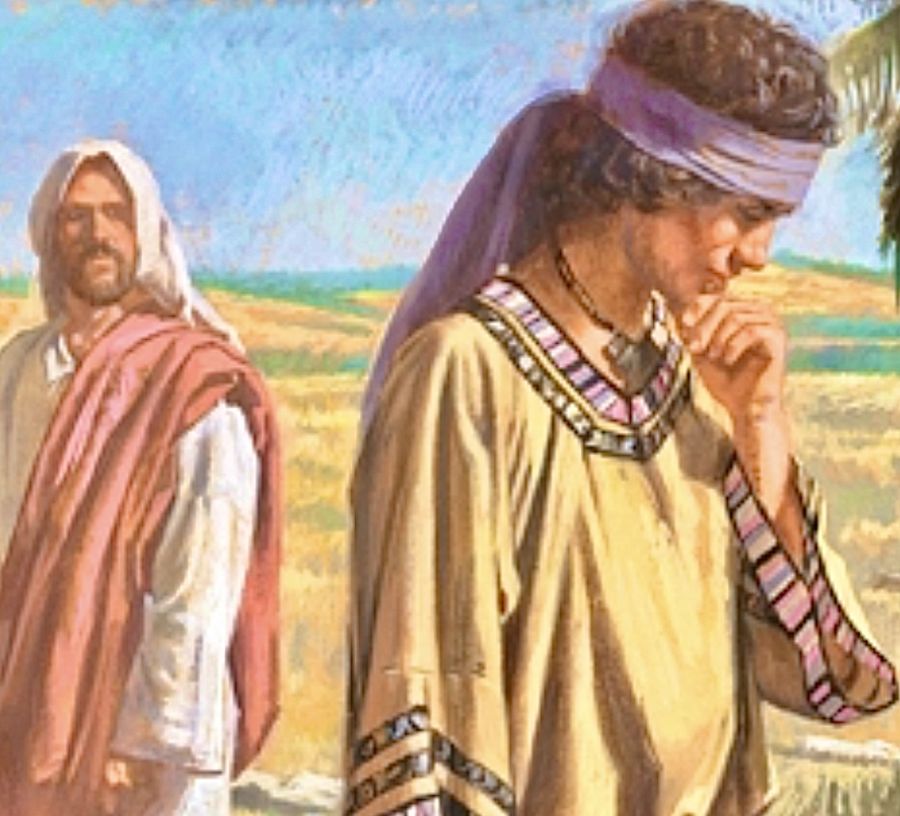
The passage from Matthew, which accompanies us in this Liturgy, highlights how Jesus responds to the rich young man who asks him what he must do to attain eternal life.
The Lord takes the man, who boasts of having always kept the commandments, by surprise, inviting him to sell all his possessions and give them to the poor.
Francis of Assisi was in love with Our Lady Poverty; he had married her and held her in high esteem, because she was chosen by the Son of God, who had nowhere to lay his head.
He was so deeply drawn to her in accordance with the Gospel that he felt sorrow whenever he encountered people poorer than himself.
The Sources recount:
“It happened to him, whilst on a journey, that he met a poor man. Seeing his nakedness, his heart was saddened and he said to his companion in a tone of lament:
«This man’s misery has brought great shame upon us; for we have chosen poverty as our only wealth: and yet here it shines more brightly in him than in us» (FF 1126).
And to Bernardo, a citizen of Assisi who later became his companion in following Christ, he advised him to renounce his possessions, which he regarded as a false fiefdom.
But to be certain, “when morning came, they entered a church and, after praying devoutly, opened the Gospel, ready to carry out the first piece of advice they found.
They opened the book, and Christ revealed his counsel with these words: «If you wish to be perfect, go, sell all that you possess and give it to the poor». They repeated the gesture, and the passage appeared: «Take nothing for the journey». A third time, and they read: «Whoever wishes to come after me must deny himself».
Without delay, Bernard carried out everything and did not omit even a single iota. Many others, in a short space of time, freed themselves from the most oppressive cares of the world and, under Francis’s guidance, returned to the infinite good in their true homeland. But it would take too long to recount how each one attained the reward of the divine call” (FF 601).
Clare herself had requested and obtained from Pope Gregory IX the Privilege of Poverty (17 September 1228) in writing.
This document guaranteed the Poor Sisters of St Damian the right to live without any worldly possessions, following in the footsteps of Him who, for our sake, became poor and the Way, the Truth and the Life.
In the same Rule, regarding those who wished to enter the Monastery to follow Christ, Clare says:
«And if she is suitable, let her be told the words of the Holy Gospel: that she should go and sell all her possessions and see to it that they are distributed to the poor. If she cannot do this, her good will is sufficient» (FF 2757).
And in her first letter to Blessed Agnes of Prague, her spiritual daughter, she writes:
«O blessed poverty! May you grant eternal riches to those who love and embrace you!
O holy poverty! To those who possess you and desire you, God promises the kingdom of heaven, and unfailingly offers eternal glory and a blessed life.
O pious poverty! The Lord Jesus Christ […] deigned to embrace you in preference to all else» (FF 2864).
«If you wish to be perfect, go, sell your possessions and give to the poor, and you will have treasure in heaven; then come, follow me» (Mt 19:21)
Monday, 20th wk. in Ordinary Time (Mt 19:16–22)