Mar 8, 2026 Written by 

Signs, and Faith

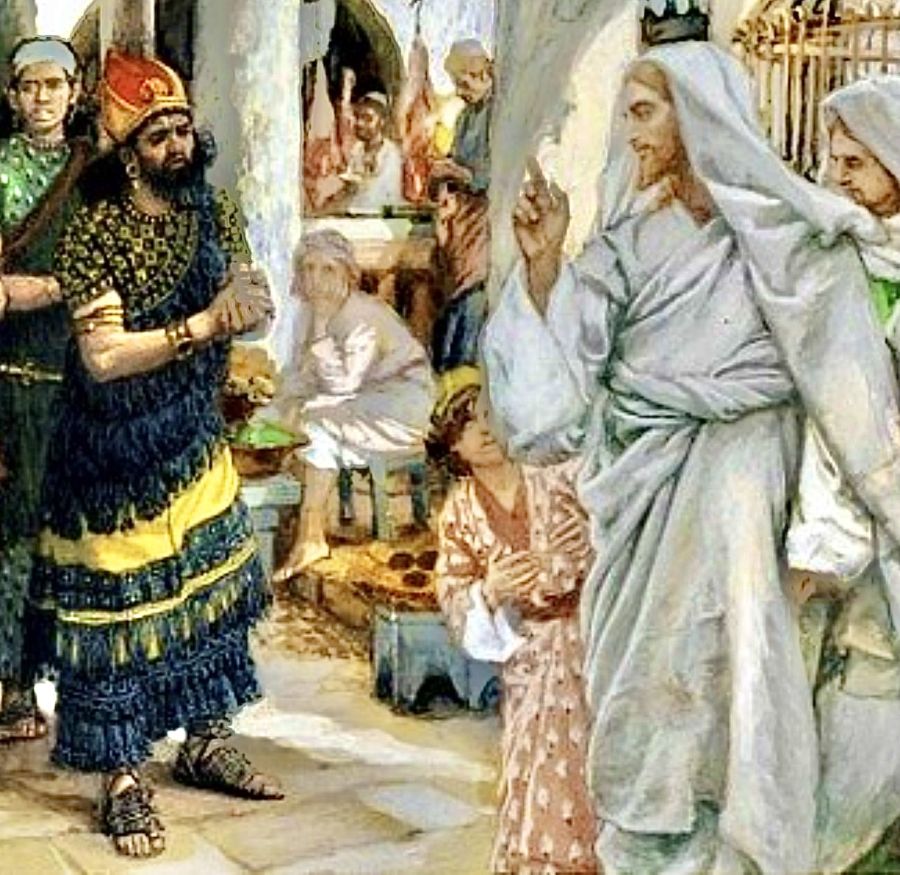
Jesus [who also attributes great value to signs and performs them to lead one to believe, revealing his glory] reproaches the king's official with immature faith, too attached to miracles.

Francis considered it the test of his witness, seeing in it the secret of knowing how to live human affairs - once one is 'instructed' by the Passion of the Son of God.

The Minim saw in the poor and sick the Christ who took on our infirmities and healed them.

An episode from the Sources, taken from the Major Legend, tells us:

"A pilgrim, debilitated by a very acute fever, which had previously struck him, was returning from overseas on board a ship [...].

Since he was not yet perfectly free of the fever, he felt tormented by a burning thirst.

Although, by now, there was no more water, he began to shout aloud:

"Go with confidence and fetch me a drink, for blessed Francis has filled my keg with water!".

A truly wonderful thing: they found the vessel they had previously left empty filled with water" (FF 1284).

One day the father said to a friar who had despised a poor and sick man:

"Shall I tell you how you have sinned against him, or rather against Christ?

Behold: when you see a poor man, you must consider him in whose name he comes, that is, Christ, who became man to take our poverty and infirmity. In the poverty and infirmity of this beggar we must lovingly discern the poverty and infirmity of our Lord Jesus Christ, which he bore in his body for the salvation of the human race' (FF 1645).

The Poverello also healed many people afflicted with fever and various ills,

but emphasised what he saw beyond the albeit important sign.

He always called his brothers to a solid, granitic faith.

He spoke to them of that, expressing it in a discipleship adhesion that went beyond the immediate and rested on union with Christ.

We well understand the prayer he uttered before the Crucifix of San Damiano, in which, addressing God, he said:

«dame fede dricta» [give me certain faith] (FF 276).

The Word ruminated and lived by the Poverello increased day by day our trust in the Lord, who has plans for us of Peace and not of misfortune.


Clare too, abandoned to Christ, healed a sister with the sign of the cross.

Not the signs, but the Sign changes the life, the history of every creature.

"Another of the sisters, named Amata, had been in bed suffering from dropsy for thirteen months and had a fever, a cough and sickness on one side.

On her Donna Chiara, moved by pity, resorted to that noble system of her medical art.

She marked her with the cross in the name of her Christ and immediately restored her to full health" (FF 3223).

This is the faith that sinks into the incarnate Word and transforms the path, rests on Christ who died and rose again for all, and is a sure beacon in the night.


«Unless you see signs and wonders, you do not believe» (Jn 4:48)


Monday 4th wk. in Lent  (Jn 4:43-54)

86 Last modified on Sunday, 08 March 2026 05:12
Teresa Girolami

Teresa Girolami è laureata in Materie letterarie e Teologia. Ha pubblicato vari testi, fra cui: "Pellegrinaggio del cuore" (Ed. Piemme); "I Fiammiferi di Maria - La Madre di Dio in prosa e poesia"; "Tenerezza Scalza - Natura di donna"; co-autrice di "Dialogo e Solstizio".

Email This email address is being protected from spambots. You need JavaScript enabled to view it.
It is known that faith is man's response to the word of divine revelation. The miracle takes place in organic connection with this revealing word of God. It is a "sign" of his presence and of his work, a particularly intense sign (John Paul II)
È noto che la fede è una risposta dell’uomo alla parola della rivelazione divina. Il miracolo avviene in legame organico con questa parola di Dio rivelante. È un “segno” della sua presenza e del suo operare, un segno, si può dire, particolarmente intenso (Giovanni Paolo II)
In the rite of Baptism, the presentation of the candle lit from the large Paschal candle, a symbol of the Risen Christ, is a sign that helps us to understand what happens in the Sacrament. When our lives are enlightened by the mystery of Christ, we experience the joy of being liberated from all that threatens the full realization (Pope Benedict)
Nel rito del Battesimo, la consegna della candela, accesa al grande cero pasquale simbolo di Cristo Risorto, è un segno che aiuta a cogliere ciò che avviene nel Sacramento. Quando la nostra vita si lascia illuminare dal mistero di Cristo, sperimenta la gioia di essere liberata da tutto ciò che ne minaccia la piena realizzazione (Papa Benedetto)
Doing a good deed almost instinctively gives rise to the desire to be esteemed and admired for the good action, in other words to gain a reward. And on the one hand this closes us in on ourselves and on the other, it brings us out of ourselves because we live oriented to what others think of us or admire in us (Pope Benedict)
Quando si compie qualcosa di buono, quasi istintivamente nasce il desiderio di essere stimati e ammirati per la buona azione, di avere cioè una soddisfazione. E questo, da una parte rinchiude in se stessi, dall’altra porta fuori da se stessi, perché si vive proiettati verso quello che gli altri pensano di noi e ammirano in noi (Papa Benedetto)
Since God has first loved us (cf. 1 Jn 4:10), love is now no longer a mere “command”; it is the response to the gift of love with which God draws near to us [Pope Benedict]
Siccome Dio ci ha amati per primo (cfr 1 Gv 4, 10), l'amore adesso non è più solo un « comandamento », ma è la risposta al dono dell'amore, col quale Dio ci viene incontro [Papa Benedetto]
Another aspect of Lenten spirituality is what we could describe as "combative" […] where the "weapons" of penance and the "battle" against evil are mentioned. Every day, but particularly in Lent, Christians must face a struggle […] (Pope Benedict)
Un altro aspetto della spiritualità quaresimale è quello che potremmo definire "agonistico" […] là dove si parla di "armi" della penitenza e di "combattimento" contro lo spirito del male. Ogni giorno, ma particolarmente in Quaresima, il cristiano deve affrontare una lotta […] (Papa Benedetto)
Jesus wants to help his listeners take the right approach to the prescriptions of the Commandments given to Moses, urging them to be open to God who teaches  us true freedom and responsibility through the Law. It is a matter of living it as an instrument of freedom (Pope Francis)
Gesù vuole aiutare i suoi ascoltatori ad avere un approccio giusto alle prescrizioni dei Comandamenti dati a Mosè, esortando ad essere disponibili a Dio che ci educa alla vera libertà e responsabilità mediante la Legge. Si tratta di viverla come uno strumento di libertà (Papa Francesco)
In the divine attitude justice is pervaded with mercy, whereas the human attitude is limited to justice. Jesus exhorts us to open ourselves with courage to the strength of forgiveness, because in life not everything can be resolved with justice. We know this (Pope Francis)

Due Fuochi due Vie - Vol. 1 Due Fuochi due Vie - Vol. 2 Due Fuochi due Vie - Vol. 3 Due Fuochi due Vie - Vol. 4 Due Fuochi due Vie - Vol. 5 Dialogo e Solstizio I fiammiferi di Maria

duevie.art

don Giuseppe Nespeca

Tel. 333-1329741


Disclaimer

Questo blog non rappresenta una testata giornalistica in quanto viene aggiornato senza alcuna periodicità. Non può pertanto considerarsi un prodotto editoriale ai sensi della legge N°62 del 07/03/2001.
Le immagini sono tratte da internet, ma se il loro uso violasse diritti d'autore, lo si comunichi all'autore del blog che provvederà alla loro pronta rimozione.
L'autore dichiara di non essere responsabile dei commenti lasciati nei post. Eventuali commenti dei lettori, lesivi dell'immagine o dell'onorabilità di persone terze, il cui contenuto fosse ritenuto non idoneo alla pubblicazione verranno insindacabilmente rimossi.






