


Teresa Girolami
Teresa Girolami è laureata in Materie letterarie e Teologia. Ha pubblicato vari testi, fra cui: "Pellegrinaggio del cuore" (Ed. Piemme); "I Fiammiferi di Maria - La Madre di Dio in prosa e poesia"; "Tenerezza Scalza - Natura di donna"; co-autrice di "Dialogo e Solstizio".
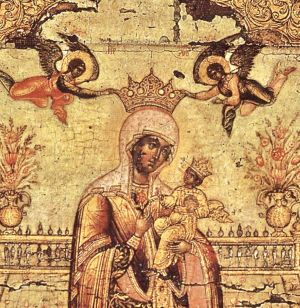
The Lucan Gospel highlights Mary's visit to her cousin Elizabeth and the dance of the two Little Ones carried by special women, embraced in different ways by Grace.
Mary, the Mother of Jesus, expresses herself in the song of praise of the Magnificat, which refers back to God the extraordinary benefits received.
From the very beginning of his calling, Francis had a special and profound veneration for the Virgin Mary, Mother of the Lord.
Of her he always contemplated the mysteries in the various seasons of his life.
The Sources provide wonderful pictures in this regard.
"He surrounded the Mother of Jesus with an unspeakable love, because she had made our brother the Lord of majesty.
To his honour he sang special praises, raised prayers, offered affections so many and such that human tongue could not express them.
But what fills one most with joy, he made her the Advocate of the Order and placed her children under her wings [...] so that they might find warmth and protection there to the end" (FF 786).
"In her, above all, after Christ, he placed his trust [...] In her honour he fasted with great devotion, from the feast of the apostles Peter and Paul until the feast of the Assumption [...]" (FF 1165).
And to his daughters, dwelling at St Damian, Francis in a composition dedicated to them, concludes by saying:
«Those who are aggravated by infirmity/ and the others who for their part are fatigued/ all of them be sustained in peace,/ for you will sell this toil dearly,/ and each one will be queen/ in heaven crowned with the Virgin Mary» (FF 263).
And Clare, when she began her journey of faith following Francis, was received by him and his friars at the altar of the Blessed Virgin at the Portiuncula. Moreover, that same Mother, at the moment of her passing, came to take her, appearing to her by her bed.
Mary was for Clare a model to follow throughout her life, so much so that in the Letter of Introduction to the Legend, in the Sources, we read:
"Let men therefore follow the new followers of the Incarnate Word: let the women imitate Clare, the imprint of the Mother of God, the new guide of women" (FF 3153).
Francis and Clare assumed Mary, the Mother of God, into their daily lives to be assumed by Christ into heavenly glory.
«My soul magnifies the Lord [...] for he has looked upon the lowliness of his servant. For behold, henceforth all generations shall call me blessed» (Lk 1:46, 48a)
Assumption of the Blessed Virgin Mary (Lk 1:39-56)
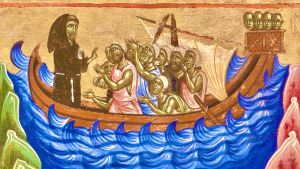
Longing to be concerned only with God: on the Mount and on the sea
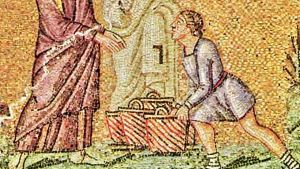
Treasure and Pearl of Francis and Clare. In the field of Our Lady of Poverty
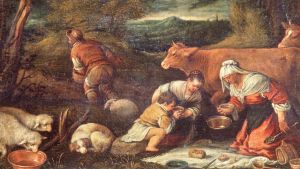
Francis and Clare. The Humble, not the learned: great hearts, modest dwellings
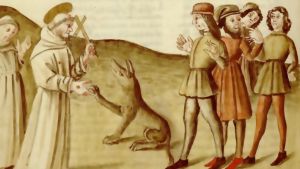
The Welcomings of Francis and Clare. Actively Taking Up the Cross
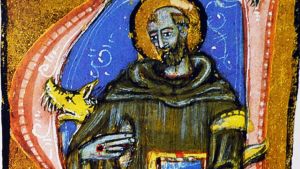
Francis and Clare: Littleness, and in the background. Personal Universality
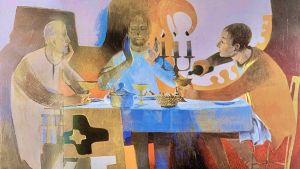
Emmaus. Seeing and Believing with Francis and Clare. On a Pilgrimage
The present-day mentality, more perhaps than that of people in the past, seems opposed to a God of mercy, and in fact tends to exclude from life and to remove from the human heart the very idea of mercy (Pope John Paul II)
La mentalità contemporanea, forse più di quella dell'uomo del passato, sembra opporsi al Dio di misericordia e tende altresì ad emarginare dalla vita e a distogliere dal cuore umano l'idea stessa della misericordia (Papa Giovanni Paolo II)
«Religion of appearance» or «road of humility»? (Pope Francis)
«Religione dell’apparire» o «strada dell’umiltà»? (Papa Francesco)
In the crucified Jesus a kind of transformation and concentration of the signs occurs: he himself is the “sign of God”, especially in the mystery of his Death and Resurrection (Pope John Paul II)
In Gesù crocifisso avviene come una trasformazione e concentrazione dei segni: è Lui stesso il "segno di Dio", soprattutto nel mistero della sua morte e resurrezione (Papa Giovanni Paolo II)
However, the king was not discouraged and sent his servants out to seek other guests to fill his banquet hall. Thus the aspect of the refusal of those initially invited caused the invitation to be extended to all [Pope Benedict]
Il re però non si scoraggia e invia i suoi servi a cercare altri commensali per riempire la sala del suo banchetto. Così il rifiuto dei primi ha come effetto l’estensione dell’invito a tutti [Papa Benedetto]
Faith in God opens before us the horizon of a sure hope, one which does not disappoint; it indicates a solid foundation on which to base one’s life without fear; it demands a faith-filled surrender into the hands of the Love which sustains the world (Pope Benedict)
La fede in Dio apre all’uomo l’orizzonte di una speranza certa che non delude; indica un solido fondamento sul quale poggiare, senza paura, la propria vita; richiede l’abbandono, pieno di fiducia, nelle mani dell’Amore che sostiene il mondo (Papa Benedetto)
The "new evangelization" faces this challenge. It must work to ensure that people recover the awareness that in Christ evil can be conquered with good (Pope John Paul II)
La “nuova evangelizzazione” affronta questa sfida. Essa deve impegnarsi perché tutti gli uomini recuperino la consapevolezza che in Cristo è possibile vincere il male con il bene (Papa Giovanni Paolo II)
Many saints experienced the night of faith and God’s silence — when we knock and God does not respond — and these saints were persevering (Pope Francis)
Tanti santi e sante hanno sperimentato la notte della fede e il silenzio di Dio – quando noi bussiamo e Dio non risponde – e questi santi sono stati perseveranti (Papa Francesco)
In some passages of Scripture it seems to be first and foremost Jesus’ prayer, his intimacy with the Father, that governs everything (Pope Francis)
In qualche pagina della Scrittura sembra essere anzitutto la preghiera di Gesù, la sua intimità con il Padre, a governare tutto (Papa Francesco)
It is necessary to know how to be silent, to create spaces of solitude or, better still, of meeting reserved for intimacy with the Lord. It is necessary to know how to contemplate. Today's man feels a great need not to limit himself to pure material concerns, and instead to supplement his technical culture with superior and detoxifying inputs from the world of the spirit [John Paul II]








duevie.art
don Giuseppe Nespeca
Tel. 333-1329741
Disclaimer
Questo blog non rappresenta una testata giornalistica in quanto viene aggiornato senza alcuna periodicità. Non può pertanto considerarsi un prodotto editoriale ai sensi della legge N°62 del 07/03/2001.
Le immagini sono tratte da internet, ma se il loro uso violasse diritti d'autore, lo si comunichi all'autore del blog che provvederà alla loro pronta rimozione.
L'autore dichiara di non essere responsabile dei commenti lasciati nei post. Eventuali commenti dei lettori, lesivi dell'immagine o dell'onorabilità di persone terze, il cui contenuto fosse ritenuto non idoneo alla pubblicazione verranno insindacabilmente rimossi.