


don Giuseppe Nespeca
Giuseppe Nespeca è architetto e sacerdote. Cultore della Sacra scrittura è autore della raccolta "Due Fuochi due Vie - Religione e Fede, Vangeli e Tao"; coautore del libro "Dialogo e Solstizio".
Conversion, forbidden things, the Doctor of Opposites
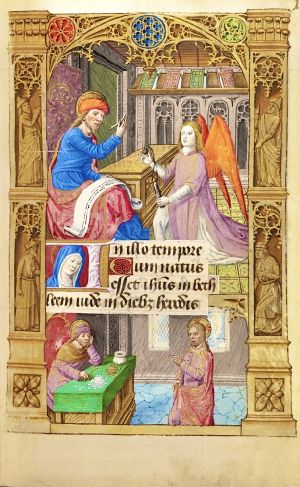
But can he participate in the ritual? Sitting and with his eye on the registers, only then rich - nay, 'sir'
(Mt 9:9-13)
Friction arose in some assemblies of believers, because some church members still considered profane to have contact or accept foreigners, not yet adapted to the mentality of customs.
Even the Judeo-Christians of Galilee and Syria to whom Mt addresses needed to learn to break the isolation of the norms of ancient purity. They did not have to stand aside.
The friction of opinions was particularly acute in the [typical third-generation] debate on the kind of eligible participation in meetings and at Breaking the Bread.
Prohibition must be replaced by friendship.
The Father is a friendly Presence. His life-saving initiative is for everyone, even for those who do not know how to do anything but look after their own gain.
The faithful in Christ share the holy Banquet with pagans and sinners, without first demanding a discipline of the arcane, nor practices that celebrate distances (such as ablutions that at the time were preceding the meal).
Matathiah means "man of God", "given by God"; precisely «Gift of God» [Matath-Yah].
In short, according to Jesus’ teaching, the only impurity is that of not giving space to those who ask because they have none.
The observant sects of Judaism treated tax collectors as unclean beings, to be kept at a distance.
The germ of alternative society of believers in Christ accepts them and seizes their resources, the good for the community.
The anxiety of contamination arose from a false, preconceived and exclusivist idea of what not only in Palestine but even in the Diaspora was identified (by total squint) with «the Will of Yahweh» - factor of separation among other peoples.
An illusion that had not stimulated an attitude of sympathy towards diverse reality, nor of friendliness towards others outside the circle consortia.
Lord wants to share with transgressors, not because of an ideological banality: it is the invitation to recognize oneself in another.
Not to submit ourselves to some form of humiliating paternalism, but because knowing oneself incomplete is a resource.
«And it happened that while He was lying at lunch in the House, behold, many tax collectors and sinners who had come to the feast with Jesus and his disciples» [v.10].
«Lying on the triclinia»: according to the way of celebrating solemn banquets, by free men - now all free ‘Sir’ ones. How wonderful, such a monstrance!
A living Body of Christ that smells of Sharing: authentic Worship!
This is, all empathic and regal, the beautiful awareness that opens wide and makes credible the content of the Announcement [vv.12-13].
Christ calls, welcomes and redeems also “the Matthew in us”, that is, the most worn-out side of our personality. He will even make it flourish: and it will become an indispensable and winning aspect of the future testimony.
Tao Tê Ching [XLV] says: «Great straightness is like sinuosity, great ability is like ineptitude, great eloquence is like stuttering».
Among the disciples, it is likely that there were quite a few members of the Palestinian resistance: guerrillas fighting against the Roman occupiers.
On the other hand, here Jesus calls a collaborator of the Romans who let himself be guided by the advantage.
As if to say: the new community of sons and brothers does not cultivate privileges, separations, oppressions, hatreds.
The Master always stood above the political clashes, ideological distinctions and external disputes of time.
In his Church there is a strong sign of discontinuity.
He does not invite the best or the worst to follow, but opposites - even of our own personality. He wants to dispose us «to conversion» (Lk 5:32): to make us change our point of view, mentality, principles, way of being.
In this adventure we are not called to forms of dissociation. We start from ourselves.
Thus Jesus inaugurates a new kind of relationships, even within us. A New Covenant, of fruitful differences.
It is not ‘perfection’ or narcissism that makes us love the Exodus.
To internalize and live the message:
What is your spiritual strength? How did it generate?
[St Matthew Ap. Ev. September 21]
Conversion, forbidden things, the Physician of opposites
But can he participate in the ritual? Sitting and with his eye on the ledgers, only then rich - indeed, 'lord'
(Mt 9:9-13)
"Jesus does not exclude anyone from his friendship. The good proclamation of the Gospel consists precisely in this: in the offer of God's grace to the sinner! In the figure of Matthew, therefore, the Gospels propose to us a real paradox: the one who is apparently furthest from holiness can even become a model of welcoming God's mercy and allowing us to glimpse its wonderful effects in his own existence" [Pope Benedict, General Audience 30 August 2006].
Friction arose in some assemblies of believers, because some church members still considered it profane to have contact with or accept foreigners, who had not yet adapted to the identity mentality of customs.
Even the Judeo-Christians from Galilee and Syria whom Matthew addressed needed to learn to break the isolation of ancient purity norms. They did not have to keep themselves apart.
The friction of opinions became particularly acute in the [typical third-generation] debate over the kind of permissible participation in meetings and the Breaking of Bread.
Conflict pitted against each other the group of converts from paganism (increasingly conspicuous) and the Judaizing group.
The latter did not like habitual contact with those far from their mentality, but rather distinction.
Both in the assemblies and in the quality of everyday fraternal life, unpleasant situations and doubts of conscience arose [about whether or not to welcome pagans who had converted to Jesus the Messiah, let alone share the table with the (supposedly) defiled].
Several church brethren were accustomed to still sacredly consider it profane to have any contiguity with anyone, or even to accept the judged defiled.
The devout conception of moral subdivisions led to the belief that it was necessary to keep the new at a distance, for not having adapted to the not-yet-demythologised mentality of Semitic traditions.
Thus the evangelist wants to describe how Jesus himself faced the same conflict: without any ritual or sacred attention, except to man.
Why? According to the Master's teachings, the relationship with the distant and different, and our own hardships or hidden abysses have something to tell us.
Mt intended to help the Judeo-Christian faithful to understand a discriminating opening: the leap from common religiosity - made up of absurd beliefs, separations and squeamish attitudes - to the Faith in progress.
A discriminating opening is the hope in life itself that comes, and calls for the surrender of artificial positions; hence the possibility of social and ritual insertion.
Such is the teaching, the story, the Person of Christ.
He guides us to existential entrustment, to global trust; to believing the story of the public sinner, who is each one, to be our own.
To proceed along such a Way, one starts precisely from the unexpressed energies of one's own primordial states, recognised, assumed, made personally fruitful; dilated in one's brothers, without distinction.
In fact, the Gospel passage emphasises that in its time the apostles (v.10) had by no means been called by the Lord to the same and rigorous practice of segregation, typical of ethno-purist beliefs, which was nevertheless in force around them.
Therefore, the believers of the 70s and 80s did not have to keep themselves apart: rather, they needed to learn how to break the isolation of the norms of social and cultic conformity.
The Father is Friendly Presence.
The glad tidings of Matthew are this: the life of Communion is not gratification, nor is it recognition.
The Eucharist is not a reward for merit, nor is it a discriminator in favour of sacred marginalisation - or adult casuistry.
God does not complicate our existence by burdening it with too many obligations and duties that weigh down our days and our whole lives; rather, He sweeps them away.
For this reason, the figure of the new Rabbi touched people's hearts, without borders.
Prohibition must be replaced by friendship. Intransigence supplanted by indulgence; harshness by condescension.
In such an adventure we are not called to forms of disassociation: we start with ourselves.
Thus one arrives without hysteria at micro-relationships and [without ideological charges] at the current - even devout - mentality.
No more false goals, superficial objectives, obsessions and useless reasoning, nor mechanical habits, ancient or modern; others' [never reworked in themselves].
With such an experience of inner excavation and identification, women and men of Faith must share life with anyone - even notorious transgressors like the son of Alphaeus; seeing themselves in them.
And by laying down the artifices: without first claiming any licence.
The faithful in Christ are called to share the breaking of bread with pagans and sinners.In this way, without first demanding a discipline of the arcane, and practices that celebrate distances, such as the ablutions that preceded the meal.
Matathiah in fact means 'man of God', 'given by God'; precisely 'Gift of God' (Matath-Yah) ['Gift' despite the anger of official authorities].
The observant sects of Judaism treated publicans as unclean beings, to be kept at a distance.
The seed of alternative society of believers in Christ accepted them and grasped their resources, the good for the community.
The anxiety of contamination stemmed from a false, preconceived and exclusivist idea of what not only in Palestine but even in the Diaspora was identified by total squinting with 'Yahweh's Will' - a factor of separation in the midst of other peoples.
Illusion that had not stimulated an attitude of sympathy towards the diverse reality, nor of friendliness towards the neighbour outside the 'circle'.
According to the direct warning of Jesus himself - even to one of the apostles - the only impurity that God does not tolerate is that of not giving space to those who ask for it because they have none.
Sometimes we are in fact like 'comari'; souls imprisoned in a world closed within fences that transfix our gaze [even on grand accounts and club records: tiny certainties]. And a devout life of small-mindedness.
The Lord wants full communion with the transgressors, not because of an ideological banality: it is the invitation to recognise, confess, agree, live together.
Thus allowing the soul forced into anguish to breathe.
Not to subject his intimates to some form of humiliating paternalism: knowing oneself to be incomplete and allowing oneself to be transformed from poor - or rich - into a lord, is a resource.
"And it came to pass that while He was reclining at table in the house, behold, many publicans and sinners who had come were reclining at table with Jesus and His disciples" (v.10 Greek text).
"They were reclining": according to the manner of celebrating solemn banquets, by free men - now all free.
How marvellous, such a monstrance!
A living Body of Christ that smells of Sharing: authentic Worship!
It is this all empathic and royal awareness that smoothes out, makes credible, the content of the Announcement (vv.12-13). Although it shocks the susceptibility of the official teachers.
From now on, the division between believers and non-believers will be far more humanising than between 'born again' and not, or pure and impure.
It is a different karat - the principle of a life of the saved, which unfolds and overflows beyond the club ropes.
Among the disciples, it is likely that there were quite a few members of the Palestinian resistance, who opposed the Roman occupiers.
By contrast, here Jesus calls a collaborator, and one who allowed himself to be led by advantage.
As if to say: the New Community of sons and brothers does not cultivate privileges, separation, oppression, hatred.
The Master always kept himself above the political shocks, ideological distinctions and corrupt disputes of his time.
In his Church there is a strong sign of discontinuity with religions: prohibition must be replaced by friendship.
The apostles themselves were not called to the same strict practice of segregation and division typical of ethno-purist beliefs, which prevailed around them [and was believed to reflect God's established order on earth].
Even today, the Lord does not invite the best or the worst to follow, but the opposites. A principle that also applies to the intimate life.
The recovery of opposing sides also of our personality, disposes us "to conversion" (Lk 5:32): not to rearrange the world of the Temple, but to make us change our point of view, mentality, principles, way of being.
Christ also calls, welcomes and redeems the publican in us, that is, the more rubricistic - or worn-out - side of our personality.
Even our unbearable or rightly hated character: the rigid one and the - equally our - rubricist one.
By reintegrating precisely the opposites, it will even make them flourish: they will become inclusive, indispensable, allied and intimately winning aspects of the future testimony, empowered with genuine love.
Being considered strong, capable of leading, observant, excellent, pristine, magnificent, performing, extraordinary, glorious... damages people.
It puts a mask on us, makes us one-sided; it takes away understanding. It floats the character we are sitting in, above reality.
For one's growth and blossoming, more important than always winning is to learn to accept, to yield to the point of capitulation; to make oneself considered wanting, inadequate.
Says the Tao Tê Ching [XLV]: 'Great uprightness is like sinuosity, great skill is like ineptitude, great eloquence is like stammering'.
The contrived norm (unfortunately, sometimes even unwise leadership) makes us live according to success and external glory, obtained through compartmentalisation.Jesus inaugurates a new kind of relationships, and 'covenants' of fruitful divergence - even within ourselves.
And He makes everything the Word alone 'Follow Me' (v.9) [not others].
The Master's Wisdom and the multifaceted art of Nature [exemplified in the crystalline wisdom of the Tao] lead all to be human.
It is not 'perfection' or narcissism that make us love Exodus.
To internalise and live the message:
What is your spiritual and human strength? How did you generate it?
Nothing more detestable and nothing more common? Jesus excludes no one from his friendship

Dear Brothers and Sisters,
Continuing the series of portraits of the Twelve Apostles that we began a few weeks ago, let us reflect today on Matthew. To tell the truth, it is almost impossible to paint a complete picture of him because the information we have of him is scarce and fragmentary. What we can do, however, is to outline not so much his biography as, rather, the profile of him that the Gospel conveys.
In the meantime, he always appears in the lists of the Twelve chosen by Jesus (cf. Mt 10: 3; Mk 3: 18; Lk 6: 15; Acts 1: 13).
His name in Hebrew means "gift of God". The first canonical Gospel, which goes under his name, presents him to us in the list of the Twelve, labelled very precisely: "the tax collector" (Mt 10: 3).
Thus, Matthew is identified with the man sitting at the tax office whom Jesus calls to follow him: "As Jesus passed on from there, he saw a man called Matthew sitting at the tax office; and he said to him, "Follow me'. And he rose and followed him" (Mt 9: 9). Mark (cf. 2: 13-17) and Luke (cf. 5: 27-30), also tell of the calling of the man sitting at the tax office, but they call him "Levi".
To imagine the scene described in Mt 9: 9, it suffices to recall Caravaggio's magnificent canvas, kept here in Rome at the Church of St Louis of the French.
A further biographical detail emerges from the Gospels: in the passage that immediately precedes the account of the call, a miracle that Jesus worked at Capernaum is mentioned (cf. Mt 9: 1-8; Mk 2: 1-12) and the proximity to the Sea of Galilee, that is, the Lake of Tiberias (cf. Mk 2: 13-14).
It is possible to deduce from this that Matthew exercised the function of tax collector at Capernaum, which was exactly located "by the sea" (Mt 4: 13), where Jesus was a permanent guest at Peter's house.
On the basis of these simple observations that result from the Gospel, we can advance a pair of thoughts.
The first is that Jesus welcomes into the group of his close friends a man who, according to the concepts in vogue in Israel at that time, was regarded as a public sinner.
Matthew, in fact, not only handled money deemed impure because of its provenance from people foreign to the People of God, but he also collaborated with an alien and despicably greedy authority whose tributes moreover, could be arbitrarily determined.
This is why the Gospels several times link "tax collectors and sinners" (Mt 9: 10; Lk 15: 1), as well as "tax collectors and prostitutes" (Mt 21: 31).
Furthermore, they see publicans as an example of miserliness (cf. Mt 5: 46: they only like those who like them), and mention one of them, Zacchaeus, as "a chief tax collector, and rich" (Lk 19: 2), whereas popular opinion associated them with "extortioners, the unjust, adulterers" (Lk 18: 11).
A first fact strikes one based on these references: Jesus does not exclude anyone from his friendship. Indeed, precisely while he is at table in the home of Matthew-Levi, in response to those who expressed shock at the fact that he associated with people who had so little to recommend them, he made the important statement: "Those who are well have no need of a physician, but those who are sick; I came not to call the righteous, but sinners" (Mk 2: 17).
The good news of the Gospel consists precisely in this: offering God's grace to the sinner!
Elsewhere, with the famous words of the Pharisee and the publican who went up to the Temple to pray, Jesus actually indicates an anonymous tax collector as an appreciated example of humble trust in divine mercy: while the Pharisee is boasting of his own moral perfection, the "tax collector... would not even lift up his eyes to heaven, but beat his breast, saying, "God, be merciful to me a sinner!'".
And Jesus comments: "I tell you, this man went down to his house justified rather than the other; for every one who exalts himself will be humbled, but he who humbles himself will be exalted" (Lk 18: 13-14).
Thus, in the figure of Matthew, the Gospels present to us a true and proper paradox: those who seem to be the farthest from holiness can even become a model of the acceptance of God's mercy and offer a glimpse of its marvellous effects in their own lives.
St John Chrysostom makes an important point in this regard: he notes that only in the account of certain calls is the work of those concerned mentioned. Peter, Andrew, James and John are called while they are fishing, while Matthew, while he is collecting tithes.
These are unimportant jobs, Chrysostom comments, "because there is nothing more despicable than the tax collector, and nothing more common than fishing" (In Matth. Hom.: PL 57, 363). Jesus' call, therefore, also reaches people of a low social class while they go about their ordinary work.
Another reflection prompted by the Gospel narrative is that Matthew responds instantly to Jesus' call: "he rose and followed him". The brevity of the sentence clearly highlights Matthew's readiness in responding to the call. For him it meant leaving everything, especially what guaranteed him a reliable source of income, even if it was often unfair and dishonourable. Evidently, Matthew understood that familiarity with Jesus did not permit him to pursue activities of which God disapproved.
The application to the present day is easy to see: it is not permissible today either to be attached to things that are incompatible with the following of Jesus, as is the case with riches dishonestly achieved.
Jesus once said, mincing no words: "If you would be perfect, go, sell what you possess and give to the poor, and you will have treasure in heaven; and come, follow me" (Mt 19: 21).
This is exactly what Matthew did: he rose and followed him! In this "he rose", it is legitimate to read detachment from a sinful situation and at the same time, a conscious attachment to a new, upright life in communion with Jesus.
Lastly, let us remember that the tradition of the ancient Church agrees in attributing to Matthew the paternity of the First Gospel. This had already begun with Bishop Papias of Hierapolis in Frisia, in about the year 130.
He writes: "Matthew set down the words (of the Lord) in the Hebrew tongue and everyone interpreted them as best he could" (in Eusebius of Cesarea, Hist. Eccl. III, 39, 16).
Eusebius, the historian, adds this piece of information: "When Matthew, who had first preached among the Jews, decided also to reach out to other peoples, he wrote down the Gospel he preached in his mother tongue; thus, he sought to put in writing, for those whom he was leaving, what they would be losing with his departure" (ibid., III, 24, 6).
The Gospel of Matthew written in Hebrew or Aramaic is no longer extant, but in the Greek Gospel that we possess we still continue to hear, in a certain way, the persuasive voice of the publican Matthew, who, having become an Apostle, continues to proclaim God's saving mercy to us. And let us listen to St Matthew's message, meditating upon it ever anew also to learn to stand up and follow Jesus with determination.
[Pope Benedict, General Audience 30 August 2006]
Do not be afraid! Open, open wide the doors for Christ!
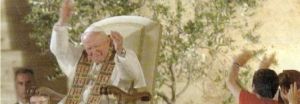
5. Brothers and sisters, do not be afraid to welcome Christ and accept his power. Help the Pope and all those who wish to serve Christ and with Christ's power to serve the human person and the whole of mankind. Do not be afraid. Open wide the doors for Christ. To his saving power open the boundaries of States, economic and political systems, the vast fields of culture, civilization and development. Do not be afraid. Christ knows "what is in man". He alone knows it.
So often today man does not know what is within him, in the depths of his mind and heart. So often he is uncertain about the meaning of his life on this earth. He is assailed by doubt, a doubt which turns into despair. We ask you therefore, we beg you with humility and trust, let Christ speak to man. He alone has words of life, yes, of eternal life.
[Pope John Paul II, homily at the beginning of his pontificate 22 October 1978]
Does Jesus not have the common sense to choose?
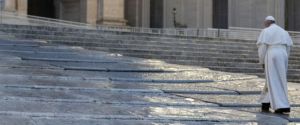
With his mercy Jesus also chooses apostles 'from the worst', from among sinners and the corrupt. But it is up to them to preserve "the memory of this mercy", remembering "from where one has been chosen", without getting head over heels or thinking of making a career as officials, pastoral planners and businessmen. It is the concrete testimony of Matthew's conversion that Pope Francis re-proposed while celebrating Mass at Santa Marta on Friday 21 September, on the feast day of the apostle and evangelist.
"In the Collect Prayer we prayed to the Lord and said that in his plan of mercy he chose Matthew, the publican, to constitute him an apostle," the Pontiff immediately recalled, who indicated as a key to reading "three words: plan of mercy, choose-choose, constitute".
"As he was leaving," Francis explained, referring precisely to the Gospel passage from Matthew (9:9-13), "Jesus saw a man called Matthew sitting at the tax booth, and he said to him, 'Follow me. And he got up and followed him. He was a publican, that is, a corrupt man, because for money he betrayed his country. A traitor to his people: the worst".
In fact, the Pope pointed out, some might object that 'Jesus has no common sense in choosing people': 'why did he choose out of so many others' this person 'from the worst, from nothing, from the most despised place'? Moreover, the Pontiff explained, in the same way the Lord "chose the Samaritan woman to go and announce that he was the messiah: a woman rejected by the people because she was not really a saint; and he chose many other sinners and made them apostles". And then, he added, 'in the life of the Church, so many Christians, so many saints who were chosen from the lowest'.
Francis recalled that 'this consciousness that we Christians should have - from where I was chosen, from where I was chosen to be a Christian - must remain throughout life, remain there and have the memory of our sins, the memory that the Lord had mercy on my sins and chose me to be a Christian, to be an apostle'.
So 'the Lord chooses'. The Collect prayer is clear: 'Lord, you chose the publican Matthew and made him an apostle': that is, he insisted, 'from the worst to the highest place'. In response to this call, the Pope noted, 'what did Matthew do? Did he dress up? Did he begin to say 'I am the prince of the apostles, with you', with the apostles? Am I in charge here? No! He worked all his life for the Gospel, how patiently he wrote the Gospel in Aramaic'. Matthew, the Pontiff explained, 'always had in mind where he was chosen from: from the lowest'.
The fact is, the Pope reiterated, that "when the apostle forgets his origins and begins to make a career, he distances himself from the Lord and becomes an official; who does a lot of good, perhaps, but is not an apostle". And so "he will be incapable of transmitting Jesus; he will be a fixer of pastoral plans, of many things; but in the end, a businessman, a businessman of the kingdom of God, because he has forgotten from where he was chosen".
For this reason, Francis said, it is important to have 'the memory, always, of our origins, of the place where the Lord has looked at me; that fascination of the Lord's gaze that called me to be a Christian, to be an apostle. This memory must accompany the life of the apostle and of every Christian".
"In fact, we are always used to looking at the sins of others: look at this, look at that, look at that other," the Pope continued. Instead, "Jesus told us: 'please do not look at the mote in other people's eyes; look at what you have in your heart'". But, the Pontiff insisted, "it is more fun to speak ill of others: it is a beautiful thing, it seems". So much so that "to speak ill of others" seems a bit "like honey candy, which is very good: you take one, it's good; you take two, it's good; three... you take half a kilo and your stomach hurts and you're sick".
Instead, Francis suggested, 'speak ill of yourself, accuse yourself, remembering your sins, remembering where the Lord has chosen you from. You were chosen, you were chosen. He took you by the hand and brought you here. When the Lord chose you, he did not do things by halves: he chose you for something great, always'.
'Being a Christian,' he said, 'is a great, beautiful thing. We are the ones who stray and want to stay in the middle, because that is very difficult; and to negotiate with the Lord' saying: 'Lord, no, only up to here'. But "the Lord is patient, the Lord can tolerate things: he is patient, he waits for us. But we lack generosity: he does not. He always takes you from the lowest to the highest. So he did with Matthew and he did with all of us and will continue to do".Referring to the apostle, the Pontiff explained how he had "felt something strong, so strong, to the point of leaving the love of his life on the table: money". Matthew "left the corruption of his heart to follow Jesus. Jesus' gaze, strong: "Follow me!". And he left", despite being "so attached" to money. "And surely - there was no telephone at that time - he must have sent someone to say to his friends, to those of the clique, of the group of publicans: 'come and have lunch with me, for I will make feast for the master'".
So, as the Gospel passage tells us, 'they were all at table, these: the worst of the worst in the society of that time. And Jesus with them. Jesus did not go to lunch with the righteous, with those who felt righteous, with the doctors of the law, at that time. Once, twice he also went with the latter, but at that moment he went with them, with that syndicate of publicans'.
And, Francis continued, 'the doctors of the law were scandalised. They called the disciples and said, 'how is it that your master does this, with these people? He becomes impure!": eating with an impure person infects you, you are no longer pure". Hearing this, it is Jesus himself who "says this third word: 'Go and learn what it means: 'mercy I want and not sacrifices'". For "God's mercy seeks all, forgives all. Only, he asks you to say: 'Yes, help me'. Only that".
"When the apostles went among sinners, think of Paul, in the community of Corinth, some were scandalised," the Pope explained. They said, "But why do you go to those people who are pagan people, they are sinful people, why do you go there?" Jesus' answer is clear: "Because it is not the healthy who need the doctor, but the sick: 'Mercy I want and not sacrifices'".
"Matthew chose! He always chooses Jesus," the Pontiff relaunched. The Lord chooses "through people, through situations or directly". Matthew is "constituted apostle: he who constitutes in the Church and gives the mission is Jesus. The Apostle Matthew and many others recalled their origins: sinners, corrupt. Why? Because of mercy. For the design of mercy".
Francis recognised that 'understanding the Lord's mercy is a mystery; but the greatest, most beautiful mystery is the heart of God. If you want to get right to the heart of God, take the path of mercy and allow yourself to be treated with mercy'. This is exactly the story of "Matthew, chosen from the money-changer's desk where taxes were paid. Chosen from below. Established in the highest place. Why? For mercy'. In this perspective, the Pope concluded, "let us learn what 'mercy I want, and not sacrifice' means".
[Pope Francis, at St. Martha's, Osservatore Romano, 22.09.2018]
Carrying the weight of the day? It is never too late
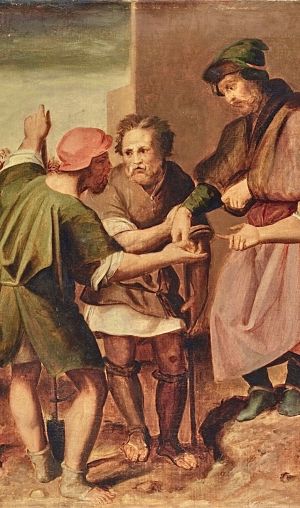
(Unique Coin and smart working: Love)
(Mt 20:1-16)
In the atrium of the Temple in Jerusalem, the climbing vine of the portal was a symbol of the gifts that people were called to present to God: mutual acceptance, understanding, sharing... for the happiness of all.
Obviously, entering at the beginning of the day (that is, of our existence) into this logic of love is better, than entering at the last hour.
Being in communion with God, being in his Vineyard and having had the grace not to lose even a moment of life without his Presence, is a «bearing the burden» or vice versa a pleasure?
Believers of the first hour feel deeply offended, because they identify the "advantage" with what they have always denied themselves.
They think the "enjoy life" in the same way as the pagans! The work is indeed... «endured» [v.12: notice the verb!].
Well, God has no wage workers: only sons; no subordinate. And none of us is negligible for "inefficiency".
That of the Models is a blocking effect; tied to insignificant comparisons.
Not in deep synchrony with oneself [vv.6-7].
The Gospel according to Mt originated from Syro-Palestinian communities, which were beginning to experience pagans and sinners flocking in large numbers and becoming a numerical majority.
The attitude of the newcomers who turned up at the gates of the communities was far more relaxed than the (stiff) demeanour of the embarrassed veterans.
The new mentality, dissolved from constraints, provoked jealousy among those who were accustomed to scrutinizing the lives of others - almost out of religious duty.
After all, the story of the beginners and ‘half-breeds’ who wished to embark on a journey of love was nothing more than reflection of that sublime, overflowing fluidity, of those magnanimous divine blessings.
‘Gratis’: given without conditions or exclusions; not on the basis of past merits.
A Gift free from any requirement for reciprocity – and based solely on need.
Therefore, today’s passage remains a strong Call.
The importance of work induces the Master not to send his factor (!) whom he unfortunately knows he cannot fully trust.
He himself goes out repeatedly and does not want dirigistic interference, in personally calling the workers.
Because He is the Unique who understands: it is never too late!
This teaching is precisely for community leaders, who often do not take on the burden of bothering themselves from home in the continuous search for everyone, and adapting themselves to people and events.
The Father wants a Family (Vineyard) that presents to the world the sweet and sugary fruit of the Feast - the only really important thing, non-negotiable principle.
Thus, to the always morbids top of the class the Lord continues to do a very educational "spite".
From now on they must discover that He does not discriminate on the basis of external profitable percentages, nor other negative mental states.
He “pays” everyone unreservedly and with a unique single «currency»: his Person. No automatic pilot is enabled to disturb our breathing.
The soul counts, not the curriculum [CV] or performance.
[25th Sunday in O.T. (year A) September 20, 2026]
Carrying the weight of the day?
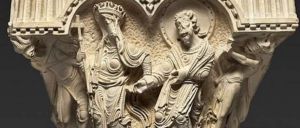
It's never too late (unique Coin and smart working: Love)
(Mt 20:1-16)
In the atrium of the temple in Jerusalem, the portal creeper was a symbol of the gifts that the people were called upon to present to God: mutual acceptance, understanding, sharing... for the happiness of all.
Obviously, entering at the beginning of the day (that is, of our existence) into this logic of love is better than entering at the last hour.
Instead: "Is your eye bad because I am good?" [v.19 Greek text].
But is being in communion with God, being in his Vineyard and having had the grace not to lose a single moment of life without his Presence a 'burden-bearing' or vice versa a pleasure?
But what a naive question... of course, the issues at stake are these and they are profound, but also others. So let us ask ourselves: in what we do, how much does external theatre count? So much?
The believers of the 'first hour' feel deeply offended, because underneath they identify 'pleasure' or 'advantage' with what they have always forcibly denied themselves. Perhaps out of a matter of social respectability, or out of a misunderstood sense of God; either way, artificially.
They think of 'enjoying life' in the same way as pagans! Work is indeed ... 'endured' [v.12: note the verb!].
Their unspoken sentiments are equally ungodly... but the first of the class remain more adept than others at exploiting the screen of long-certified membership to mask themselves behind the zeal of renunciations, works, sweats, procedures, prescriptions, performances, and better performances.
Well, God has no wage labourers: only children; no underlings.
None of us are negligible for 'inefficiency' - based on the old idea of proven belonging: the inhuman pace, the production volumes, the effort, the performance... the extra overtime...
That of patterns is a blocking effect; linked to meaningless comparisons, stressful, rushed (and overworked) life - all under external influence.
Not in deep synchrony with oneself [vv.6-7: ""Why do you stand here all day idle?" They say to him, "Because no one has taken us for a day. He says to them, 'You also go into the Vineyard'"].
The Father is only interested in personal Happiness and the Joy of Love: the only tasty Fruit; not the heap of external works, not the great volume of the many and many 'fruits' - often unfortunately inedible.
It is the outcome of the new, inverted world.
We are all equally protagonists and leaders, even if to some 'internal' regulars our contribution appears fragmentary, inefficient - and assesses us as not very 'involved' (perhaps in 'customs'); not at all 'regular' - with a grim and presumptuous eye.
The recent experience of smart working during the health crisis has brought out the specific weight of the 'late-comers': people who are less tied to production, less extroverted and less able to lead, but perhaps more thoughtful and profound, more respectful of the preciousness of their own work; less outward-looking or exhibitionist, more collaborative.
The unfavourable has become favourable!
The Gospel of Mt originated from Syro-Palestinian communities, which were beginning to experience pagans and sinners flocking in large numbers and becoming a numerical majority.
All this, to the great scandal of both Pharisaic and Judeo-Christian circles - who were now showing themselves to be opponents of the newcomers.
In short, the veterans were beginning to behave as if they were returning 'Pharisees', bound to the works of the law and the old ethnic-cultural baggage.
This is how the Master treats them - because they stubbornly refused to listen to the tide of people once far away, who were now bringing new things. And [they, without much practice of pious works] opened up to the veterans a path of Exodus, of Liberation from the convictions of the fathers.
The attitude of the outsiders and "intermarriers" who presented themselves at the fraternities' doors was much freer and fiercer than that of the community elders, Judaizers.
Their unencumbered mentality began to provoke jealousy among those who - almost out of religious duty - were used to scrutinising the lives of others with suspicion.
After all, that of the beginners and 'half-breeds' who wanted to begin a journey of love was but a reflection of the superabundant fluidity of the divine Gifts.
'Free' communicated without mistrust or exclusion: not on the basis of previous merits, but freely and by virtue of need alone.
We can experience live today the identical dynamics of confrontation, between new blood relatives on the basis of Faith and the customary ones [more concerned with their fixed places and 'laboriously' won positions of supremacy].
But thanks to the Word (v.15b) we now recognise the latter: by their judgement and manners. Nor do they ever want to let go of a finished past, or their 'new' sophisticated world of fashionable brain hypotheses.When the 'good' God unmasks them, exposing their prejudice, they remain with the slanted, evil eye of false paternalism.
But it is a malicious gaze only for intimidation purposes - for envy and 'lese majesty', not to educate us.
Thus they delude themselves not to be understood and continue to sterilise or pilot, ridiculing Love [also to get us out of the way - to avoid the danger of being overshadowed] by ineptitude, and by the very normal unfolding of life.
Therefore, today's passage remains, after so many centuries, a powerful reminder.
The importance of the work induces the Master not to send his factor (!) whom he unfortunately knows he cannot fully trust.
He himself repeatedly goes out and does not want dirigiste interference in calling the workers personally.
He is the only one who understands: it is never too late!
The teaching is precisely for community leaders, who often do not take on the burden of constantly searching for everyone from home, and adapting themselves to people and events.
Instead, the Father wants a Family (Vineyard) that presents the world with the sweet, sugary fruit of the Feast - the only truly important, non-negotiable principle.
Thus, to the ever morbid top of the class, the Lord continues to do a very educational 'spite'.
Already in life, they must discover that He does not discriminate on the basis of external profitable percentages, or others' negative mental states.
He "pays" everyone without reservation and with a single "currency": His Person. No autopilot is enabled to disturb our breathing.
The soul counts, not the CV or performance.
To internalise and live the message:
In what do you find God's Will incomprehensible, or rather the commercial, gloomy and square mentality (covered with duties, sadness, fatigue and pain) of his investigators?
Where to Find Happiness

Dear Brothers and Sisters,
You may remember that when I addressed the crowd in St Peter's Square on the day of my election it came naturally to me to introduce myself as a labourer in the vineyard of the Lord. Well, in today's Gospel (cf. Mt 20: 1-16), Jesus recounted the very same parable of the owner of the vineyard who at different hours of the day hires labourers to work in it. And in the evening he gives them all the same wages, one denarius, provoking protests from those who began work early. That denarius clearly represents eternal life, a gift that God reserves for all. Indeed those who are considered the "last", if they accept, become the "first", whereas the "first" can risk becoming the "last". The first message of this parable is inherent in the very fact that the landowner does not tolerate, as it were, unemployment: he wants everyone to be employed in his vineyard. Actually, being called is already the first reward: to be able to work in the Lord's vineyard, to put oneself at his service, to collaborate in his work, is in itself a priceless recompense that repays every effort. Yet only those who love the Lord and his Kingdom understand this: those who instead work only for the pay will never realize the value of this inestimable treasure.
[…] I like to emphasize that Matthew lived this experience in the first person (cf. Mt 9: 9). Indeed, before Jesus called him he worked as a tax collector and was therefore seen as a public sinner, excluded from "the Lord's vineyard". But everything changed when Jesus passed by his table, looked at him and said to him: "Follow me". Matthew rose and followed him. From a publican he immediately became a disciple of Christ. From being "last" he found himself "first", thanks to God's logic, which - for our good fortune! - is different from the logic of the world. "My thoughts are not your thoughts", the Lord says, speaking through the mouth of Isaiah, "neither are your ways my ways" (Is 55: 8). St Paul, for whom we are celebrating a special Jubilee Year, also experienced the joy of feeling called by the Lord to work in his vineyard. And what a lot of work he accomplished! Yet, as he himself confessed, it was God's grace which worked in him, that grace which from persecutor of the Church transformed him into an Apostle to the Gentiles, to the point of saying: "For to me to live is Christ, and to die is gain" However he immediately added: "If it is to be life in the flesh, that means fruitful labour for me. Yet which I shall choose I cannot tell" (Phil 1: 21-22). Paul clearly understood that working for the Lord is already a reward on this earth.
The Virgin Mary […] is the perfect branch of the Lord's vine. In her germinated the blessed fruit of divine love: Jesus, our Saviour. May she help us to respond constantly and joyously to the Lord's call and to find our happiness in toiling for the Kingdom of Heaven.
[Pope Benedict, Angelus, 21 September 2008]
Beyond the bounds of strict justice
6. Another parable helps us to understand that it is never too late to join the Church. God’s invitation can be extended to a person right up until the very last moment of their life. It is the well-known parable of the labourers in the vineyard: “The kingdom of heaven is like a landowner who went out at daybreak to hire labourers for his vineyard” (Mt 20:1). He then went out several more times at various hours of the day, right up to the last hour. And all were given a wage in which, going beyond the bounds of strict justice, the landowner wished to show all his generous love.
In this regard, one is reminded of the moving episode, recounted by the evangelist Luke, concerning the ‘good thief’ crucified alongside Jesus on Golgotha. To him, the invitation appeared as a merciful act on God’s part, as he said, almost with his last breath: ‘Jesus, remember me when you come into your kingdom’. He heard from the lips of the Redeemer-Bridegroom, condemned to death on the cross: ‘Truly, I say to you, today you will be with me in paradise’ (Lk 23:42–43).
[Pope John Paul II, General Audience, 18 September 1991]
A Leap Forward
In today’s Gospel reading (cf Mt 20:1-16) there is the parable of the day labourers in the vineyard, which Jesus recounts in order to explain two aspects of the Kingdom of God: the first is that God wants to call everyone to work for his Kingdom; the second is that, in the end, he wants to give everyone the same reward, that is, salvation, eternal life.
The owner of the vineyard who represents God, goes out at dawn and hires a group of workers, agreeing with them on the day’s wages. It was a fair wage. Then he goes out again [several times] later in the day — he goes out five times on that day — until the late afternoon to hire other unemployed labourers whom he sees. At the end of the day, the landowner orders that a denarius be paid to everyone, even to those who had only worked for a few hours. Naturally, the labourers who were hired first complain because they see that they are paid as much as those who worked for fewer hours. The landowner however, reminds them about what had been agreed; if he then wants to be generous with the others, they should not be envious.
In reality, this “injustice” of the owner serves to provoke in those listening to the parable a qualitative leap because here Jesus does not want to speak about the issue of work or of a fair wage, but about the Kingdom of God! And this is the message: there are no unemployed people in the Kingdom of God. Everyone is called to do their part; and there will be a reward from divine justice for everyone in the end — not from human [justice], luckily! —, but the salvation that Jesus Christ acquired for us with his death and Resurrection, a salvation which is not deserved, but donated — salvation is free — thus, “the last will be the first and the first last” (Mt 20:16).
With this parable, Jesus wants to open our hearts to the logic of the Father’s love which is free and generous. It is about allowing oneself to be astonished and fascinated by the “thoughts” and the “ways” of God which, as the Prophet Isaiah recalls, are not our thoughts and not our ways (cf Is 55:8). Human thoughts are often marked by selfishness and personal advantages, and our narrow and contorted paths are not comparable to the wide and straight streets of the Lord. He uses mercy — do not forget this: He uses mercy —, he forgives broadly, is filled with generosity and kindness which he pours forth on each of us. He opens for everyone the boundless territory of his love and his grace, which alone can give the human heart the fullness of joy.
Jesus wants to make us contemplate the gaze of that landowner: the gaze with which he looks upon each of the labourers searching for work and calls them to go to his vineyard. It is a gaze which is filled with attention, kindness. It is a gaze which calls, invites one to get up and begin a journey because he wants life for each of us; he wants a full, committed life, safe from emptiness and inertia. God excludes no one and wants each of us to achieve his or her fullness. This is the love of our God, of our God who is Father.
May Mary Most Holy help us welcome into our lives the logic of love which frees us from the presumption of deserving God’s reward and from the critical judgement of others.
[Pope Francis, Angelus, 24 September 2017]
The Gospel of Matthew written in Hebrew or Aramaic is no longer extant, but in the Greek Gospel that we possess we still continue to hear, in a certain way, the persuasive voice of the publican Matthew, who, having become an Apostle, continues to proclaim God's saving mercy to us. And let us listen to St Matthew's message, meditating upon it ever anew also to learn to stand up and follow Jesus with determination (Pope Benedict)
Non abbiamo più il Vangelo scritto da Matteo in ebraico o in aramaico, ma nel Vangelo greco che abbiamo continuiamo a udire ancora, in qualche modo, la voce persuasiva del pubblicano Matteo che, diventato Apostolo, séguita ad annunciarci la salvatrice misericordia di Dio e ascoltiamo questo messaggio di san Matteo, meditiamolo sempre di nuovo per imparare anche noi ad alzarci e a seguire Gesù con decisione (Papa Benedetto)
That denarius clearly represents eternal life, a gift that God reserves for all. Indeed those who are considered the "last", if they accept, become the "first", whereas the "first" can risk becoming the "last" [Pope Benedict]
Quel denaro rappresenta la vita eterna, dono che Dio riserva a tutti. Anzi, proprio quelli che sono considerati "ultimi", se lo accettano, diventano "primi", mentre i "primi" possono rischiare di finire "ultimi" [Papa Benedetto]
The sower is Jesus. With this image, we can see that he presents himself as one who does not impose himself, but rather offers himself. He does not attract us by conquering us, but by donating himself: he casts seeds. With patience and generosity, he spreads his Word, which is not a cage or a trap, but a seed which can bear fruit (Pope Francis)
Il seminatore è Gesù. Notiamo che, con questa immagine, Egli si presenta come uno che non si impone, ma si propone; non ci attira conquistandoci, ma donandosi: butta il seme. Egli sparge con pazienza e generosità la sua Parola, che non è una gabbia o una trappola, ma un seme che può portare frutto (Papa Francesco)
The Church desires to give thanks to the Most Holy Trinity for the "mystery of woman" and for every woman - for that which constitutes the eternal measure of her feminine dignity, for the "great works of God", which throughout human history have been accomplished in and through her (Mulieris Dignitatem n.31)
La Chiesa desidera ringraziare la Santissima Trinità per il «mistero della donna», e, per ogni donna - per ciò che costituisce l'eterna misura della sua dignità femminile, per le «grandi opere di Dio» che nella storia delle generazioni umane si sono compiute in lei e per mezzo di lei (Mulieris Dignitatem n.31)
Simon, a Pharisee and rich 'notable' of the city, holds a banquet in his house in honour of Jesus. Unexpectedly from the back of the room enters a guest who was neither invited nor expected […] (Pope Benedict)
Simone, fariseo e ricco “notabile” della città, tiene in casa sua un banchetto in onore di Gesù. Inaspettatamente dal fondo della sala entra un’ospite non invitata né prevista […] (Papa Benedetto)
God excludes no one […] God does not let himself be conditioned by our human prejudices (Pope Benedict)
The “reading and meditation of the word of God root us more deeply in Christ and guide our ministry as servants of reconciliation, justice and peace” (second Synod for Africa, Propositio 46)
La lettura e la meditazione della Parola di Dio ci radicano più profondamente in Cristo e orientano il nostro ministero di servitori della riconciliazione, della giustizia e della pace (Secondo Sinodo per l’Africa, Propositio 46)
duevie.art
don Giuseppe Nespeca
Tel. 333-1329741
Disclaimer
Questo blog non rappresenta una testata giornalistica in quanto viene aggiornato senza alcuna periodicità. Non può pertanto considerarsi un prodotto editoriale ai sensi della legge N°62 del 07/03/2001.
Le immagini sono tratte da internet, ma se il loro uso violasse diritti d'autore, lo si comunichi all'autore del blog che provvederà alla loro pronta rimozione.
L'autore dichiara di non essere responsabile dei commenti lasciati nei post. Eventuali commenti dei lettori, lesivi dell'immagine o dell'onorabilità di persone terze, il cui contenuto fosse ritenuto non idoneo alla pubblicazione verranno insindacabilmente rimossi.