


don Giuseppe Nespeca
Giuseppe Nespeca è architetto e sacerdote. Cultore della Sacra scrittura è autore della raccolta "Due Fuochi due Vie - Religione e Fede, Vangeli e Tao"; coautore del libro "Dialogo e Solstizio".
26th Sunday in O.T.
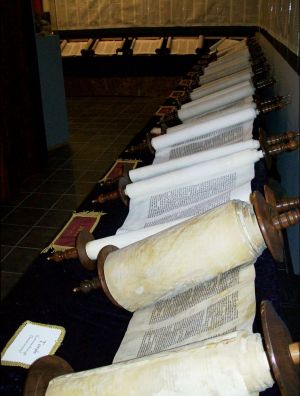
26th Sunday in Ordinary Time (year A)
(Mt 21:28–32)
28“What do you think? A man had two sons. He went to the first and said, ‘Son, go and work in the vineyard today.’ 29He replied, ‘I don’t feel like it.’ But then he had a change of heart and went. 30He went to the second and said the same thing. He replied, ‘I will, sir.’ But he did not go. 31Which of the two did the will of his father?’ They replied, ‘The first.’ And Jesus said to them, ‘Truly I tell you: tax collectors and prostitutes are entering the Kingdom of God ahead of you. 32For John came to you, showing you the way of righteousness, and you did not believe him; but the tax collectors and prostitutes did believe him. You, on the other hand, saw these things, yet you did not even repent enough to believe him.
------- -------------------------------------
The figure of the father is a nuisance; he represents duty, the norm, an obligation; he casts a shadow over you. Deep down, you would like to be like your father; you would like to be your own father. There is something in man called original sin which prevents him from accepting this principle; he wants to take control of his own origin, to be his own master – which means killing the father; it means denying the fact that he has an origin, a beginning, and refusing to accept that he is a beginning. We want to be the beginning of ourselves; therefore, the father bothers us, and we see him as one who makes demands, so we rebel.
The parable seeks to tear down that wall of self-righteousness and division which split Jewish society into the righteous and the sinners, and which led the former to feel they were already saved—and therefore in no need of salvation; an attitude which makes it impossible to be open to Jesus’ offer of salvation. The story, in fact, centres on two sons who have a single father and are therefore both placed on an equal footing. These two sons will be distinguished from one another not by their shared relationship to their father, but by the different responses they give him.
The father says to one son: ‘Son’; he calls him son – it is a vocative. Our fundamental vocation is to be called sons, that is, to accept that He is our father. If I do not accept being a son, I do not accept myself, I do not accept Him, I do not accept being a brother. So this word is important: Son! It is as a son that I exist! What I am is my being a son. I have received everything. If I do not accept being a son, I want to get my hands on everything and I destroy everything.
The offer of salvation is the same for all sons, but the response differs; and it is precisely here that the parable exposes religious hypocrisy. The first son gives a clear refusal, but then, having repented, he accepts his father’s invitation and goes into the vineyard. The initial negative attitude (refusal), passing through a process of conversion (‘he repented’), which involves re-examining one’s choices, one’s certainties and one’s life, is transformed into an existential openness to God, who is welcomed into one’s life (‘he went there [to the vineyard]’).
The first son emphatically proclaims his acceptance. “Yes, sir” (egō, kyrie). The construction of the sentence that Matthew uses in Greek is significant: egō kyrie kai ouk apēlthen, “Yes, sir, and I did not go” (v. 30). We might have expected Matthew to say: “Yes, sir, BUT I did not go”, as the CEI translation renders it. The difference may seem trivial, but it is not. The ‘but’, in fact, creates a contrast between words and deeds: the words are positive, but then there was a change in his decision; there might have been something that prevented him from keeping his promise, which might in some way have justified him. However, the ‘but’ is not there. In its place, Matthew uses the conjunction ‘kai’ (‘and’), which expresses continuity between that ‘Yes, Lord’ and his failure to go. In other words, that immediate and ready acceptance of his father’s request conceals a lie, a refusal; not because he did not do it in the end, but because he never intended to do it in the first place.
In the figure of the first son, we see the attitude of the religious authorities. Their much-vaunted zeal, their ostentatious devotion, in reality serves only to mask emptiness. What is the point of spouting fine words if one’s life then goes in the opposite direction? It is in terms of action, therefore, that the true believer is measured, and only in this way does his worship acquire true meaning.
The second son, Jesus explains, represents the tax collectors and prostitutes (v. 31) – that is, two categories of people considered impure, cut off from salvation and, for this reason, ostracised by both civil and religious society. Well, this second son is now pitted against the first, who considered himself holy and God’s favourite, and to whom salvation was due. However, for Jesus, what makes the difference is not one’s social status, but the acceptance of his offer of salvation.
The parable, therefore, denounces hypocritical and deceitful behaviour, since it makes salvation depend on appearances rather than on what one actually is, as though God could be bought with a few prayers or sacrifices.
‘They will go before you into the kingdom of God.’ Jesus is not speaking of precedence; the verb does not mean that they take your place whilst you are left behind. The expression indicates exclusion: those whom you believe to be excluded from the kingdom of God have entered, whilst you have been left outside. Indeed, whilst the tax collectors and prostitutes had placed their faith in the word of the Baptist and had been converted, you, on the contrary, had opposed his ministry, just as you continued to do with Jesus. It is implied that those who did not accept the Baptist do not accept Jesus as the Messiah either. In this way, they opposed God’s plan, cutting themselves off from the path to salvation and closing the way to the Kingdom of Heaven.
Why do tax collectors and prostitutes ‘go ahead’ into the Kingdom of God? Because they know they are in the wrong. Knowing one is in the wrong is the dignity of man. The person who admits to having erred displays the greatest dignity, which is to acknowledge one’s fault. One who does not acknowledge one’s error is either dishonest or foolish. A person moves forward only if they acknowledge their past mistakes; in this way, their past is redeemed. Then they can say: Kyrie eleison! Those who feel they are righteous, on the other hand, will never ask for mercy. What do they have to ask forgiveness for?
Argentino Quintavalle, author of the books
- Revelation – an exegetical commentary
- The Apostle Paul and the Judaizers – Law or Gospel?
Jesus Christ, True God and True Man in the Mystery of the Trinity
The Prophetic Discourse of Jesus (Matthew 24–25)
All Generations Will Call Me Blessed
Catholics and Protestants Compared – In Defence of the Faith
The Church and Israel According to St Paul – Romans 9–11
(Available on Amazon)

26th Sunday in O.T.

26th Sunday in Ordinary Time (year A) [27 September 2026]
First Reading from the Book of the Prophet Ezekiel (18:25–28)
To understand Ezekiel’s prophecy, we must recall the dramatic context in which he speaks. In 597 BC, many inhabitants of Jerusalem were deported to Babylon by Nebuchadnezzar’s army. Jerusalem had been devastated, the Temple desecrated, and the population decimated. The exiles found themselves far from the Promised Land and from everything that had given meaning to their lives. Faced with such a tragedy, the question arose spontaneously: ‘What have we done to God to deserve all this?’. At that time, it was widely believed that there was a direct correlation between a person’s behaviour and what happened to them: the righteous are rewarded and the sinner punished. For this reason, the exiles repeated a proverb: ‘The fathers have eaten sour grapes, and the children’s teeth are set on edge’ (Ezekiel 18:2). In other words: we are paying for the sins of our fathers and of previous generations.
Ezekiel breaks with this mindset. God says through the prophet: ‘You shall no longer repeat this proverb in Israel.’ No one is condemned to live under the burden of others’ sins. Every person is called to answer for their own choices. And here a great new truth emerges: the past does not definitively determine the future. If the wicked turn away from their ways, practise righteousness and justice, repent and return to God, they may live. ‘If the wicked turn away from all the sins they have committed, […] they shall live’ (cf. Ezekiel 18:21). It is an extraordinarily relevant message: no one is a prisoner of their own past, but it is always possible to start afresh, and this frees people from the belief that they are condemned to pay for the sins of others and restores to them the possibility of hope. No past is so burdensome as to prevent a fresh start. Even in times of trial, God opens up a new path before us. Hope springs precisely from the certainty that God’s mercy always leaves open the possibility of a fresh start. Conversion, from a biblical perspective, is precisely a change of direction, a ‘returning’ to God. Ezekiel also reminds us that true conversion does not consist merely of words or religious practices: it is manifested concretely in the practice of law and justice, that is, in the way we treat others.
Responsorial Psalm (24/25)
The words ‘way’, ‘road’, ‘path’ and the verb ‘guide me’ recur several times in the Psalm: ‘Lord, make me know your ways; teach me your paths. Guide me in your truth and instruct me, for you are the God of my salvation… The Lord shows sinners the way; he guides the poor in righteousness and teaches the humble his way’. The theme of the journey is characteristic of penitential psalms. God’s Law—that is, his commandments—is like a sort of ‘highway code’. The speaker is a sinner who recognises that he has gone astray, that he has taken the wrong path, and asks God to bring him back onto the right path. It is no coincidence that, in the Bible, to ‘convert’ literally means ‘to turn back’, ‘to turn round’. And it is never too late to turn back. In the first reading, Ezekiel reminded us that a future is always possible: no one is definitively condemned by their past. That is why we can still pray: ‘Lord, teach me your ways’. What is asked of us? First and foremost, not perfection, but humility: ‘The Lord teaches the humble his way’. The Hebrew word anawim, translated as ‘the humble’ or ‘the poor’, refers to those who recognise that they are poor, fragile, without resources and in need of God. They are the ‘poor in spirit’, those who are able to pray simply: ‘Lord, have mercy on me’. Their plea is already a call for conversion: ‘Lord, teach me your way’. And the ‘I’ speaking in the Psalm is not merely an individual, but the entire people. Psalm 24/25 was probably used in penitential celebrations in the Temple in Jerusalem, which is why there is a constant interplay between ‘I’ and ‘we’ in biblical prayer. The Psalm speaks in the first person, but at the end it says: ‘Deliver Israel, O God, from all its troubles’. The ‘I’ therefore encompasses the ‘we’. The biblical person possesses a strong sense of solidarity across generations: the God of Abraham, Isaac and Jacob is the God of their descendants; the Covenant with Noah, Abraham and Moses concerns not only the individual, but the whole people. Today, however, our society often tends to place the individual, their freedom and their personal rights at the centre, sometimes at the expense of the communal dimension. The Bible has taken a different path: it has progressively discovered the importance of the individual without ever separating them from the community. This is one of the great riches of biblical revelation: the individual is not lost within the community, nor is the community forgotten in favour of the individual. We are personally responsible, yet at the same time we stand in deep solidarity with one another. For this reason, in the Psalm, that humble and trusting sinner is at once each one of us and the entire community of believers. Finally, there is a particularly beautiful detail: the Psalm continually plays on the theme of memory and forgetfulness: ‘Remember, Lord, your mercy… Do not remember the sins of my youth… Do not forget me’. It is almost a prayer that God might have a ‘selective memory’: that he might forget our sins and remember his mercy instead!
It is a bold prayer, yet also one of profound humility. Bold, because it springs from trust in the Covenant; humble, because it acknowledges one’s own sin and frailty. Man asks God: ‘Do not remember what I have been; remember instead who You are: merciful, faithful, slow to anger and great in love.’ After all, even in the Old Testament, Israel had discovered something surprising: God is not merely the Judge, but a Father full of tenderness and mercy. And so the prayer of the Psalm can also become our own: “Lord, when I have gone astray, teach me your way. When I have fallen, show me that I can return. When I recognise my own poverty and fragility, guide me. Do not remember my sins: remember your mercy. And grant that my ‘I’ may never forget the ‘we’ of the community of your children”.
Second Reading from the Letter of Saint Paul to the Philippians (2:1–11)
On Palm Sunday, every year we hear above all the second part of this text, the part that contemplates the mystery of Christ: ‘Though he was in the form of God, he did not regard equality with God as something to be grasped’. Today, however, let us focus on the first part, in which Paul explains to us how to live ‘in Christ’. Paul uses this expression at the beginning and end of the passage: ‘If, then, there is any consolation in Christ…’ and then: ‘Have in you the same mindset as Christ Jesus’. Between these two statements, he lists the attitudes that must characterise the Christian life: comfort, love, fellowship, tenderness, compassion. It is no coincidence that these are the very same attributes with which God is described in the Old Testament. Being ‘in Christ’ is therefore not merely a figure of speech. From the moment of Baptism, we belong to Christ; we are incorporated into Him and become members of His Body. This new identity transcends all our differences: cultural, social, economic and physical. We now have a common name: Christians. It is like what happens in a large family: when we meet, before any other differences, we recognise that we belong to the same family. It is this profound sense of belonging that should characterise the Christian community. Paul says: ‘Have the same mindset, the same love, one spirit and one purpose’. It is as if he were telling us: honour the family to which you belong; honour the name you bear. Then comes a surprising expression: ‘Consider others better than yourselves’. This does not mean belittling oneself or thinking one is inferior. The Gospel does not ask us to rank people as superior or inferior. The Kingdom of God does not operate according to the logic of competition and comparison. The point is quite another: to learn to look at others with a positive gaze, almost with an attitude of admiration, seeking to see not what they possess, but what they are. The differences we see – physical, cultural, social, economic – belong above all to the dimension of ‘having’. Paul, on the other hand, leads us into the dimension of ‘being’: ‘ ‘As many of you as were baptised into Christ have clothed yourselves with Christ’ (Gal 3:27). When I meet another baptised person, therefore, I must not stop at what is apparent. I must remember that they are a member of the Body of Christ, a temple of the Holy Spirit, and that they have a personal vocation, different from my own, yet necessary to God’s plan. Everyone possesses a gift that no one else can replace. Because of the mission God has entrusted to them, the other person may be ‘better’ than me, in the sense that they possess what I do not possess and can accomplish what I cannot. For this reason, they also need my esteem, my encouragement and my trust. The important thing is not to determine who is worth more, but to know what mission God entrusts to each individual and to the community as a whole. Every person is called to contribute to the building of the Kingdom according to the gift received from the Spirit. Finally, there is a great truth contained in this text: the Kingdom of God is already present, but it has yet to be fulfilled in our lives. In Christ, indeed, God’s plan to reunite humanity has already begun and, through Baptism, we have been incorporated into this reality. But what is already true in Christ must also gradually become true in our daily lives. Our being ‘in Christ’ cannot remain merely an inner reality or a simple religious formula: it must tangibly transform the way we view, welcome and treat others, both Christians and non-Christians. And here we understand the profound link between the two parts of the text. First, Paul tells us how those who are ‘in Christ’ should live; then he shows us how Christ himself lived: not seeking his own advantage, but humbling himself, becoming a servant and giving himself even to the point of death on the cross. For this reason, the Christological hymn is not merely a beautiful contemplation of Jesus: it is the concrete measure of our lives. ‘Let this mind be in you which was also in Christ Jesus’. To be Christian, therefore, means allowing the very movement of Christ to enter our lives: not asserting ourselves against others, but giving of ourselves; not seeking to be superior, but serving; not focusing on what the other possesses, but recognising who they are before God. It is in this way that what Christ has already accomplished becomes, day by day, a reality lived out in the Church and in the world.
From the Gospel according to Matthew (21:28–32)
‘Which of the two did the will of his father?’ This question from Jesus seems simple, almost too simple. Once again we find ourselves in the vineyard, as we did last Sunday. A father asks his two sons to go and work in the vineyard. The first replies ‘no’, but then changes his mind and goes; the second replies straight away: ‘Yes, sir’, but then does not go. Jesus asks the chief priests and the elders: ‘Which of the two did the will of his father?’ Clearly, he does not wish to test them with a simple riddle: he wants to open their eyes. The answer is obvious: the first. And it is precisely then that Jesus applies the parable to his listeners: you are like the second son. You say ‘yes’ to God; you are religious people, you know the Law, you await the Messiah and pray for his coming; yet when God sends him to you, you do not recognise him and you do not accept his word. It was the Father’s will that his people—and above all his religious authorities—should welcome his Envoy, the Messiah, Jesus. Herein lies the tragedy that will lead to the Passion: precisely those who seemed best prepared to welcome the Messiah will be the ones who refuse to recognise him. Jesus then utters a very strong statement: ‘Tax collectors and prostitutes will enter the Kingdom of God before you.’ He is not praising them because they are sinners. Their sin is certainly no cause for merit. Rather, they are like the younger son: they began by saying ‘no’, but then changed their ways. What happened? They believed the preaching of John the Baptist. John had called everyone to repentance: ‘Bear fruit worthy of repentance.’ The tax collectors and prostitutes, precisely because they recognised their own poverty and sinfulness, were able to listen. The religious authorities, on the other hand, refused to believe John and later Jesus. Matthew probably links this parable to the events that had just taken place in Jerusalem. At the beginning of chapter 21, Jesus had entered the city and the crowd had welcomed him as the Messiah, shouting: ‘Hosanna to the Son of David! Blessed is he who comes in the name of the Lord!’ (Ps 117/118:26). But this enthusiasm was not shared by the chief priests and the elders. When Jesus was teaching in the Temple, they asked him: ‘By what authority are you doing these things? Who gave you this authority?’ In reality, the problem was precisely this: in their eyes, Jesus did not possess the necessary authority to speak in God’s name. Jesus, as is often the case, does not answer directly. He asks them: ‘Where did John’s baptism come from: from heaven or from men?’ They do not dare to reply, because any answer would have put them in a difficult position: to acknowledge John would have meant acknowledging his testimony about Jesus as well.
That is why Jesus tells the parable of the two sons. It is almost a final appeal for their conversion. Jesus does not wish to exclude anyone: he desires the salvation of all. If he speaks harshly, it is because time is now running out: we are on the eve of the Passion. But what had John the Baptist said? He had denounced precisely that religious self-assurance which prevents conversion: ‘Do not say amongst yourselves: “We have Abraham as our father.”’ It is not enough to belong to the chosen people, to know the Law or to hold a religious position. One must bear the fruits of conversion. Perhaps this was the real problem with the authorities: a certain certainty that they already possessed the truth about God, to the point where they were no longer capable of allowing themselves to be challenged by his word.
The tax collectors and the prostitutes, on the other hand, precisely because they recognised themselves as sinners and the poor before God, had more open ears and hearts. The problem, therefore, is not simply being a sinner or being religious. The problem is becoming so certain of one’s own convictions that one is no longer able to hear God when He speaks in a way that differs from what we expect. The parable thus presents us with a much deeper question. It is not enough to say ‘yes’ to God with our lips. Faith is recognised in our lives. It is not enough to know the Father’s will: we must carry it out. And the question that Jesus puts to the religious leaders becomes, today, a question for each of us: Have I truly entered the Father’s vineyard? Does my ‘yes’ to God find expression in my everyday life? Am I still capable of hearing a word that calls me to change? Or do I think I already know everything about God and leave no room for conversion?
The parable of the two sons goes even deeper than that of the labourers of the last hour. There, Jesus questioned the way we judge God’s mercy towards others; here, he questions our very piety. Ultimately, Jesus is not merely asking us: ‘Do you say “yes” to God?’, but: ‘Are you doing the Father’s will?’ Because in the Lord’s vineyard, it is not only what we say that counts, but the concrete response of our lives.
+Giovanni D’Ercole
Two Sons: «No» and «Me!». Reversed Moral, sidelined stars
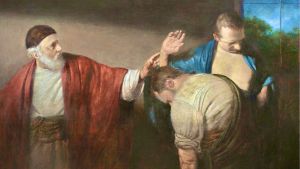
25th Sunday in O.T.
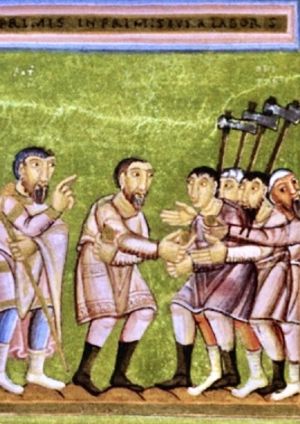
25th Sunday in Ordinary Time (year A) [20 September 2026]
First Reading from the Book of the Prophet Isaiah (55:6–9)
‘Seek the Lord, for he is to be found.’ Isaiah’s message does not mean: ‘Hurry, for God might withdraw.’ On the contrary: God is always near and always allows himself to be found. It is we, in our freedom, who turn away from him, and sometimes we even lose the desire to seek him.
Isaiah speaks to a discouraged people, exiled to Babylon and convinced that God has abandoned them. The prophet urges them to reject this idea: God’s silence does not mean His absence, and God is not far away, inaccessible or incapable of forgiving. On the contrary, He is ‘abundant in forgiveness’. The fundamental theme is therefore that of return: when we think of God as a harsh, vengeful or indifferent judge, we turn away from Him. When, on the other hand, we turn back to Him, we discover His true face: a tender, merciful God, ready to forgive. This revelation runs throughout the Bible. Hosea presents God as the One who sets aside His anger because His heart is full of compassion. Jeremiah speaks of thoughts of peace, capable of bestowing a future and hope. In the Gospel, Jesus reminds us that God causes the sun to rise on the good and the bad and sends rain on the righteous and the unrighteous. Even Jonah rebukes God because his compassion towards Israel’s enemies is ‘tender and merciful’. God is the ‘Wholly Other’ and the ‘Wholly Near’. Isaiah declares: ‘My thoughts are not your thoughts, nor are my ways your ways.’ God is infinitely different from us, but it is precisely this difference that reveals something extraordinary: God loves and forgives without keeping score. We are often accustomed to the logic of give and take: we think that the good should be rewarded and the wicked punished; we tally up our merits and ask ourselves whether we are worthy of forgiveness. God, on the other hand, does not ask us to ‘earn’ his love. His forgiveness is grace; it is freely given. The real question, therefore, is not whether God is willing to forgive us, but whether we are willing to accept his forgiveness. As the text from Chronicles says: ‘If my people […] turn from their wicked ways, I will hear them, I will forgive their sin and heal them.’ It is not God who attaches a condition to his love: it is we who must open ourselves up in order to receive it. Finally, ‘my thoughts are not your thoughts’ also calls us to humility and tolerance. Since God infinitely transcends our understanding, no one can claim to possess the full truth about him. Speaking of God therefore requires humility and a willingness to listen. In short, God does not turn away from us: it is we who turn away from Him. And when we return, we do not find a stern God who holds us to account for our mistakes, but a Father who is ever near, tender, merciful and rich in forgiveness. His love cannot be bought or earned: it is received freely.
Responsorial Psalm (144/145)
‘The Lord is good to all.’ Psalm 144/145 harmonises perfectly with the message of the prophet Isaiah: God is full of mercy, rich in forgiveness, and continually invites humanity to return to Him. The psalm is the response of one who has rediscovered faith: ‘I will bless you every day; I will praise your name for ever.’ It is an ‘alphabetical’ psalm: from beginning to end, from A to Z, the whole of life is steeped in God’s covenant, His tenderness and His greatness. The psalm proclaims: ‘Great is the Lord and worthy of all praise; His greatness is without end.’ Isaiah expresses the same idea by saying that God’s thoughts and ways are infinitely superior to our own. But God’s greatness is not that of human power, wealth or success. God’s true greatness lies in his love and, above all, in his capacity to forgive. The same principle applies to human beings: true greatness does not lie in dominating others, but in knowing how to love. This is natural, for we are created in God’s image. A justice different from our own The psalm states: ‘The Lord is good to all; his compassion extends to all his creatures.’ God’s forgiveness is not reserved for a select few: it is offered to everyone, even to the sinner who returns to him. Our idea of justice leads us to think that those who have sinned greatly should receive a greater punishment. God, however, invites us to change our perspective: God’s justice is not that of the scales, but that of love. This is also shown in the parable of the labourers of the last hour: everyone receives the same wage, regardless of the number of hours worked. Jesus thus teaches us that God’s love does not operate according to our calculations of merit, seniority or reward. His generosity takes nothing away from anyone. God is close to everyone. The psalm concludes: ‘ The Lord is close to all who call upon him, to all who call upon him in sincerity’. God’s goodness is for everyone. His greatness is his love; his justice is mercy; and his forgiveness is not measured by our merits. And when we discover this logic, we are called not only to accept his forgiveness, but also to rejoice in the good he bestows upon others, without envy or judgement.
Second Reading from the Letter of Saint Paul the Apostle to the Philippians
‘For me, to live is Christ.’ The Letter to the Philippians is particularly moving because it combines Paul’s great passion for Christ and for his mission with his human and fraternal affection for the people he encountered. Paul writes whilst in prison and facing the threat of death. Yet he affirms with great serenity: ‘Christ will be glorified in my body, whether I live or die’, that is, in his person and in his life. If he is set free, he will be able to continue proclaiming the Gospel; if, on the other hand, he dies, even his martyrdom will become a testimony to faith in the Resurrection. For Paul, therefore, whatever happens can become an opportunity to make Christ known. Even his imprisonment has helped to encourage other Christians to proclaim the Word. ‘For me, to live is Christ’ When Paul says: ‘For me, to live is Christ and to die is gain’, he expresses the very heart of his existence: Christ is his reason for living. To live means to belong to Christ and to serve him; to die means to enter fully into communion with him. Paul does indeed long to depart so that he may be with Christ, yet he does not wish to shirk the mission entrusted to him. He is torn between two desires: on the one hand, he longs to be with Christ once and for all; on the other, he knows that his presence can be of service to others. Ultimately, what matters to him is not his own interest, but the good of the communities and the spread of the Gospel. The only thing that matters is the Gospel. Paul thus leaves us with a very important question: what do we live for? For him, the answer is clear: to live means to belong to Christ and to place one’s life at the service of the Gospel. He regards his own life as a gift to be spent on others. This is why he concludes by exhorting the Philippians: ‘Conduct yourselves, then, in a manner worthy of the Gospel of Christ’. It is not simply a matter of being morally upright people. It means taking the Gospel seriously and making it visible through one’s life, one’s words and one’s service. To live for Christ means transforming one’s whole life into a testimony to God’s love.
From the Gospel according to Matthew (20:1–16a)
Let us set aside our bookkeeper’s logic. This is the logic presented to us in the parable of the labourers in the vineyard. By our standards, it seems unfair: those who have worked all day receive the same pay as those who arrived at the last hour, but Jesus makes it clear straight away that he is not speaking of a normal business, but of the ‘Kingdom of Heaven’. And in the Kingdom of God, different criteria apply from our own: ‘My thoughts are not your thoughts,’ says the Lord. The central point of the parable is what it reveals about God: ‘I am good’. God’s goodness does not keep score, does not measure merits, and does not determine how much love each person has ‘earned’. In the Kingdom of God, there is no tally of merits. We, on the other hand, are often tempted to keep track of everything: sacrifices, sufferings, prayers, good works. We think that all this gives us ‘rights’ before God. Jesus invites us to completely change this mindset.
‘Are you envious because I am good?’ The workers hired at the first hour protest: ‘You treat them just like us!’, whilst thinking: ‘We deserve more.’ But love does not operate according to the logic of merit. Love cannot be bought or earned: it is received as a gift. God’s justice does not consist in distributing according to our calculations, but in loving each of his children fully and without measure. The same logic runs through the whole of the Bible: God forgives the people of Nineveh even though they are pagans; Jesus welcomes tax collectors and sinners; the father in the parable joyfully welcomes the prodigal son. And on the cross, the good thief, at the very last moment, turns to Jesus and receives the promise of Paradise. Who can call themselves a ‘worker of the first hour’? In reality, the parable should console us. Who amongst us can truly consider themselves a worker of the first hour? We are all, in some way, workers of the last hour. We all live by God’s mercy and free grace. The problem arises when we look at others with envy and think that God is too good to them. That is when our eyes become evil. The lesson, therefore, is an invitation to abandon the mindset of comparison, merit and calculation, and to enter into the logic of grace. In short, God does not love us according to our merits: he loves us freely, fully and without measure. True conversion consists in abandoning our ‘accountant’s logic’ and learning to see through God’s eyes. We must not ask ourselves who deserves more, but rejoice because God is good to everyone. ‘My thoughts are not your thoughts, and my ways are not your ways’ (Isaiah). God’s justice is, ultimately, the justice of love and mercy.
+Giovanni D’Ercole
How to rebuild the Temple?
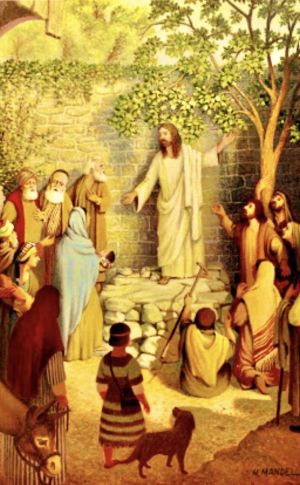
The Lord wants new people, who Listen
[Lk 8:19-21]
In the life of those who are challenged by the relationship of Faith, to become blood relatives of the Father (according to the Spirit) is fundamental Perceive [in profound sense of Listening - not so much materially ‘seeing’].
It is not worth the «staying outside», or wanting to ‘speak’ directly, to ‘convince’ the Lord (vv.19-21).
It is necessary to intuit and grasp: a path to encounter one’s own intimate layers of being, the truth of inclinations, and of life.
It is decisive to welcome a satiating Word, which becomes language and culture, which has creative power: given to the ears and discovered inside. Captured in personal history and reality, and transmitted again.
To depart from this founding Core and Eros means detaching from oneself, dispersing oneself in rivulets that do not belong to us, failing into the void [’emptiness’ not understood as a deep energetic state, which prepares new developments].
Paradoxically, both our Freedom and the Salvation of the world are the result of an Obedience - but not external, or others.
It is rather tuning in to the part of the Logos within us that is blooming; really "perfect". No conditioning model.
No a priori correction, nor forcing according to prejudice: rather, an eternal Metamorphosis - accompanied by the Verbum Domini, which mysteriously guides Exodus into Exodus.
No culturally configured expectation would lead to full communion with the great divine spark and fullness in each and every one.
Realisation of the Kingdom and every day - even outside of time.
Getting to know Christ intimately requires more than simply looking at him and being moved by sympathy, cultural ties, or religious emotion.
It is the Listening that connects and establishes intimate constraints which do not extinguish - a friendship of engaging harmony with the Master.
Around Jesus the Word of God creates a new Family, with bonds of spiritual kinship closer than what the clan attachment offered.
The Lord wants other people, born precisely from Perception-forebonding.
The union is no longer reserved and exclusive; it becomes accessible to anyone and in any condition - even if he/her were "blind" outside, unable to see what is at hand.
Each one is Church, the Father's House, and thus can realize God's Dream of living with men and walking beside them.
He dwells among us and in us. In his Word, without more ‘distances’.
In this way, all our actions must aim for this purpose: to form the Temple of God, his lineage, the Body of the living Christ.
To achieve this complete goal, essential means is to host the Vocation that transforms us, a much more permanent, sensitive and energetic foundation of any feeling, connection, or emotion.
Indispensable is not an (initial) experience of enthusiasm, but the custody of the Call that interprets life and becomes mentality, dynamism inside that leads [and flows into suburban paths].
There is yet other Temple to be built.
[Tuesday 25th wk. in O.T. September 22, 2026]
How can the Temple be rebuilt?
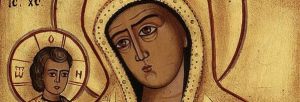
The Lord wants new people, who Listen
(Lk 8:19-21)
In the life of one who is challenged by the relationship of Faith, in order to become consanguineous with the Father according to the Spirit, it is essential to Perceive [in the profound sense of Listening - not so much to 'see' directly].
Nor is it worth 'standing outside', or wanting to 'speak' directly, to 'convince' the Lord (vv.19-21).
It is necessary to intuit and grasp: a path to encounter one's own deep layers of being, the truth of inclinations, and of life (vv.20-21).
It is decisive to welcome a satiating Word, which becomes language and culture, which has creative power: given to the ears and discovered within. Captured in personal history and reality, and transmitted again.
To turn away from such a founding Word and Eros is to detach oneself from oneself, to disperse into rivulets that do not belong to us, to plunge into emptiness ['emptiness' not understood as a deep energetic state, which prepares new developments].
Paradoxically, both our Freedom and the Salvation of the world are the result of Obedience - but not external, or others'.
Rather, it is tuning in to the part of the Logos within us that is blossoming; truly 'perfect'. No conditioning models.
No a priori correction, no forcing according to prejudice: rather, an eternal Metamorphosis - accompanied by the Word, mysteriously leading from Exodus to Exodus.
No culturally configured expectation would lead to full communion with the great divine spark and fullness in each and all.
Realisation of the Kingdom and every day - even outside of time.
To know Christ up close, it is not enough to look at him and get caught up in sympathy or religious emotion.
It is the Listening that connects and establishes intimate bonds, which are not extinguished - of engaging attunement with the Master.
Around Jesus, the Word of God creates a new family, with bonds of spiritual kinship closer than what the clan bond offered.
The Lord wants other people, born precisely from Perception-presence.
The union is no longer reserved and exclusive; it becomes accessible to anyone and in whatever condition they find themselves - even if they are outwardly "blind", unable to see what is at hand.
Everyone is Church, the Father's House, and thus can realise God's Dream of dwelling with men and walking beside them.
He dwells among us and in us. In his Word, with no more 'distance'.
In this way, all our actions must tend towards this goal: to form the Temple of God, his household, the Body of the living Christ.
To reach this accomplished goal, an essential means is to host the Vocation that transforms us, a much deeper foundation than any bond or emotion.
Indispensable is not an (initial) experience of enthusiasm, but rather the hosting of the Call that interprets life and becomes mentality, dynamism within that guides and flows into peripheral paths.
In ancient Israel, the basis of social coexistence was the large family. Clans and communities were a guarantee of protection of both particular hearths and people.
That bond of real solidarity ensured possession of the land - which gave a sense of freedom - and was the vehicle of cultural transmission, of the way of feeling as a people, and of spirituality itself.
Defending the coexistence that guaranteed global identity was the same as defending the First Covenant.
But in Palestine at the time of Jesus, the life of the clan and the life of the community - broader - were declining.
Excessive taxes to be paid to collaborating governments and the Temple, the inevitable rise of the classes who had to sell themselves as slaves for debt, perhaps the more individualistic mentality of the Hellenistic world, imperial threats, and the obligation to welcome, forage, and harbour Roman troops [who often took advantage of even the weakest members of the clan], accentuated the problems of survival.
In addition to this, the severity of purity regulations was a further factor of marginalisation, alongside the growing idea - typical of religions - that there was a link between a heavenly curse and a condition of misery.
The material and protective concerns of the individual family accentuated the detachment from collective moments.
Jesus wanted to widen the narrow limits of the small brotherhood of the hearth again, and extend them to the great household of the Kingdom of God.
A comparison with the parallel passages of the episode shows that Jesus had problems with his natural relatives.
They tended to reabsorb him within the parameters of tradition, for fear of retaliation and because they considered him extremist (perhaps unbalanced).
The Risen One broadens the idea of family and challenges the constraints that distance us from our identity-character, and mission-whether it is the impediments placed by his own, by Peter, by the disciples, by powerful people, or leaders of the official religion.As mentioned above, at a time of political subjugation and rigid legalistic religious ideology, the core values of clan and community were weakening due to the situation of social and economic collapse.
The situation of extrinsic control - social and conscience slavery - prevented people from uniting and sharing, forcing them to confine themselves to individual, exclusive dynastic problems.
[Situation of Jesus' time, and yet not entirely foreign to us, even from the point of view of certain 'charisms' configured in too much detail, and the realities already established on the ground].
For the new Kingdom to manifest itself, it was necessary for the idea of coexistence to go beyond the narrow limits of the individual and the tiny household - also from a cultural point of view.
There was a need for a stimulus that opened up community life - understood according to the spirit of the Beatitudes, for a conviviality of differences; even in real, even raw cohabitation.
Even today in the time of global crisis, the goal is an existence no longer disfigured by retreats, nor undermined by immediate needs, disembodied fantasies, or ingrained patterns.
The need arises urgently for a new idea of the universal family, one that goes beyond the fate of habitual micro-relationships [i.e. the group, the movement or even the denomination].
The world we are preparing will no longer make free participation, indulgent and concrete exchange, and overtaking domestication so difficult.
A new idea of universal kinship, fostering exchange and overcoming.
There is another Temple to build.
To internalise and live the message:
Do your family and your church group favour the enlightened listening to the Gospel and 'doing the Word', or do they only give you ready-made and packaged pills?
Do they help you or do they close you off from openness to the confrontation of ideas, to the realisation of yourself, of those far away, and to the abundance of resources in being, yours or those of others?
Mother and siblings

16. It is providential that the Second Synod for Africa took place soon after the one dedicated to the word of God in the life and mission of the Church. That Synod recalled the pressing duty of each disciple to understand Christ who calls us by his word. Through this word, we, the faithful, learn to listen to Christ and to let ourselves be guided by the Holy Spirit, who reveals to us the meaning of all things (cf. Jn 16:13). In fact, the “reading and meditation of the word of God root us more deeply in Christ and guide our ministry as servants of reconciliation, justice and peace”.[19] As that Synod reminded us, “to become his brothers and his sisters, one must be like ‘those who hear the word of God and put it into practice’ (Lk 8:21). Authentic hearing is obeying and acting. It means making justice and love blossom in life. It is offering, in life and in society, a witness like the call of the prophets, which continuously united the word of God and life, faith and rectitude, worship and social commitment.”[20] Listening to and meditating upon the word of God means letting it penetrate and shape our lives so as to reconcile us with God, allowing God to lead us towards reconciliation with our neighbour: a necessary path for building a community of individuals and peoples. On our faces and in our lives, may the word of God truly take flesh!
[Pope Benedict, Africae munus]
Mary throughout her life
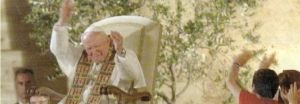
The Church has consistently recognised Mary as holy and immune from any sin or moral imperfection. The Council of Trent expresses this conviction by stating that no one "can avoid, in his whole life, every sin, even venial, except by virtue of a special privilege, as the Church holds with regard to the Blessed Virgin" (DS 1573). The possibility of sin does not even spare the Christian transformed and renewed by grace. This in fact does not preserve from all sin for life, unless, as the Tridentine Council states, a special privilege ensures such immunity from sin. This is what happened in Mary.
The Tridentine Council did not wish to define this privilege, it did, however, state that the Church strongly affirms it: 'Tenet', that is, it firmly believes it. This is a choice that, far from relegating this truth among pious beliefs or devotional opinions, confirms its character as solid doctrine, well present in the faith of the People of God. Moreover, this conviction is based on the grace attributed to Mary by the angel at the Annunciation. Calling her "full of grace", kecharitoméne, the angel recognises in her the woman endowed with a permanent perfection and fullness of holiness, without a shadow of guilt, or moral or spiritual imperfection.
Some early Church Fathers, not yet convinced of her perfect holiness, attributed moral imperfections or defects to Mary. Some recent authors have also adopted this position. But the Gospel texts cited to justify these views in no way allow the attribution of a sin, or even a moral imperfection, to the Mother of the Redeemer.
Jesus' reply to his mother at the age of 12: "Why did you seek me? Did you not know that I must be about my Father's business?" (Lk 2:49), has sometimes been interpreted as a veiled rebuke. Instead, a careful reading of the episode makes it clear that Jesus did not rebuke his mother and Joseph for looking for him, since they were responsible for watching over him.
Meeting Jesus after a painful search, Mary merely asks him the "why" of his behaviour: "Son, why have you done this to us?" (Lk 2:48). And Jesus answers with another "why", refraining from any reproach and referring to the mystery of his own divine filiation.
Not even the words spoken at Cana: "What have I to do with you, O woman? My hour has not yet come' (John 2:4), can be interpreted as a reproach. Faced with the probable discomfort that the lack of wine would have caused the couple, Mary turned to Jesus with simplicity, entrusting him with the problem. Jesus, although aware that he is the Messiah bound to obey only the Father's will, accedes to his Mother's implicit request. Above all, he responds to the Virgin's faith and thus begins the miracles, manifesting his glory.
Some have then interpreted in a negative sense the declaration made by Jesus when, at the beginning of his public life, Mary and relatives ask to see him. Referring to Jesus' reply to those who told him: "Your mother and your brothers are outside and wish to see you", the evangelist Luke offers us the key to understanding the story, which must be understood starting from Mary's intimate dispositions, quite different from those of the "brothers" (cf. Jn 7:5 ). Jesus replied: "My mother and my brothers are those who hear the Word of God and put it into practice" ( Lk 8, 21 ). In the story of the Annunciation, Luke showed how Mary was the model of listening to the Word of God and of generous docility. Interpreted from this perspective, the episode offers a great eulogy of Mary, who fulfilled the divine plan perfectly in her own life. Jesus' words, while opposing the brothers' attempt, extol Mary's faithfulness to God's will and the greatness of her motherhood, which she experienced not only physically but also spiritually.
In weaving this indirect praise, Jesus uses a particular method: he highlights the nobility of Mary's behaviour, in the light of more general statements, and better shows the Virgin's solidarity and closeness to humanity on the difficult path to holiness.
Lastly, the words: "Blessed rather are those who hear the word of God and keep it!" ( Lk 11, 28 ), pronounced by Jesus in response to the woman who declared his Mother blessed, far from casting doubt on Mary's personal perfection, emphasise her faithful fulfilment of the Word of God: this is how the Church has understood them, inserting this expression in the liturgical celebrations in honour of Mary.The Gospel text, in fact, suggests that with this statement Jesus wished to reveal precisely in intimate union with God, and in perfect adherence to the divine Word, the highest motive for his Mother's beatitude.
The special privilege granted by God to the 'all holy one' leads us to admire the wonders worked by grace in her life. It also reminds us that Mary was always and wholly the Lord's, and that no imperfection broke the perfect harmony between her and God.
Her earthly life, therefore, is characterised by the constant and sublime development of faith, hope and charity. For this reason, Mary is for believers the luminous sign of divine mercy and the sure guide to the lofty heights of evangelical perfection and holiness.
[Pope John Paul II, General Audience 19 June 1996]
New Family
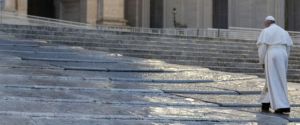
The Word of God is not "a comic book" to be read, but a teaching to be listened to with the heart and put into practice in daily life. A commitment accessible to all, because although "we have made it a little difficult", the Christian life is "simple, simple": in fact, "listening to the word of God and putting it into practice" are the only two "conditions" set by Jesus for those who want to follow him.
This is in synthesis, for Pope Francis, the meaning of the readings proposed by the liturgy [...]. Celebrating Mass at Santa Marta, the Pontiff dwelt in particular on the Gospel passage [...] which tells of Jesus' mother and brothers who are unable "to approach him because of the crowd". Starting from the observation that he spent most of his time 'on the road, with the people', the bishop of Rome noted how among the many who followed him there were people who felt 'in him a new authority, a new way of speaking', they felt 'the power of salvation' he offered. "It was the Holy Spirit," he commented, "who touched their hearts because of this".
But, the Pope noted, mixed in among the crowd were also people who followed Jesus with ulterior motives. Some 'out of convenience', others perhaps out of a 'desire to be more good'. A bit 'like us', he said, bringing the speech up to date, who 'many times we go to Jesus because we need something and then we forget him there, alone'. A story that repeats itself, since even then Jesus sometimes rebuked those who followed him. This is what happens, for example, after the multiplication of the loaves, when he says to the people: 'You come to me not to hear the word of God, but because the other day I gave you something to eat'; or with the ten lepers, of whom only one returned to thank him, while 'the other nine were happy with their health and forgot about Jesus'.
Despite everything, the Pope said, "Jesus continued to speak to the people" and to love them, to the point of calling "that immense crowd 'my mother and my brothers'". Jesus' family members are therefore "those who listen to the word of God" and "put it into practice". This,' he noted, 'is the Christian life: nothing more. Simple, uncomplicated. Perhaps we have made it a little difficult, with so many explanations that no one understands, but the Christian life is like this: listening to the word of God and practising it. That is why we prayed in the psalm: 'Guide me Lord on the path of your commands', of your word, of your commandments, to practise'.
Hence the invitation to "listen to the word, truly, in the Bible, in the Gospel", meditating on the Scriptures in order to put their contents into practice in daily life. But, the Pontiff clarified, if we scrutinise the Gospel superficially, then "this is not listening to the word of God: this is reading the word of God, as one might read a comic strip". While listening to the word of God "is reading" and asking oneself: "But what is this saying to my heart? What is God saying to me with this word?". Only in this way does "our life change". And this happens 'every time we open the Gospel and read a passage and ask ourselves: "With this God is speaking to me, is he saying something to me? And if he says something, what does he say to me?"'.
This means "listening to the word of God, hearing it with our ears and listening to it with our heart, opening our heart to the word of God". In contrast, "Jesus' enemies listened to Jesus' word but were close to him to try to find fault, to make him slip" and make him lose "authority. But never did they ask themselves: 'What does God say for me in this word?'".
Moreover, the Pontiff added, "God does not speak only to everyone, but he speaks to each one of us. The Gospel was written for each one of us. And when I take the Bible, take the Gospel and read, I must ask myself what the Lord is saying to me". After all, 'this is what Jesus says his true kinsmen, his true brothers, do: listen to the word of God from the heart. And then, he says, 'they put it into practice'".
Of course, Francis acknowledged, 'it is easier to live quietly without worrying about the demands of God's word'. But 'the Father has also done this work for us'. Indeed, the commandments are precisely 'a way of putting into practice' the word of the Lord. And the same applies to the beatitudes. In that passage from Matthew's Gospel, the Pope observed, "there are all the things that we must do, to put God's word into practice". Finally, 'there are the works of mercy', also mentioned in Matthew's Gospel, in chapter 25. In short, these are examples "of what Jesus wants when he asks us to 'put into practice' the word".
In conclusion, the Pontiff summed up his reflection by recalling that 'many people followed Jesus': some 'for the novelty', others 'because they needed to hear a good word'; but in reality there were not many who then actually put 'the word of God into practice'. Yet 'the Lord did his work, because he is merciful and forgives all, he calls everyone back, he waits for everyone, because he is patient'.
Even today, the Pope emphasised, 'many people go to church to hear the word of God, but perhaps they do not understand the preacher when he preaches a little difficult, or do not want to understand. Because this too is true: our heart many times does not want to understand'. But Jesus continues to welcome everyone, "even those who go to hear the word of God and then betray him", like Judas who calls him "friend". The Lord, Francis reiterated, "always sows his word" and in return "asks only for an open heart to hear it and good will to put it into practice. For this reason then, let today's prayer be that of the psalm: "Guide me Lord on the path of your commands", that is, on the path of your word, and that I may learn with your guidance to put it into practice".
[Pope Francis, homily s. Martha, 23 September 2014; https://messadelpapa.com/omelia-del-21-novembre-2018-vangelo-e-parola-del-giorno/]
Jesus formed a new family, no longer based on natural ties, but on faith in him, on his love which welcomes us and unites us to each other, in the Holy Spirit. All those who welcome Jesus’ word are children of God and brothers and sisters among themselves. Welcoming the word of Jesus makes us brothers and sisters, makes us Jesus’ family. Speaking ill of others, destroying others’ reputations, makes us the devil’s family.
Jesus’ response was not a lack of respect for his mother and his brethren. Rather, for Mary it is the greatest recognition, precisely because she herself is the perfect disciple who completely obeyed God’s will.
[Pope Francis, Angelus 10 June 2018]
Bearing the burden of the day? A Single Currency, smart working
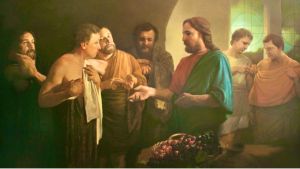
The Gospel of Matthew written in Hebrew or Aramaic is no longer extant, but in the Greek Gospel that we possess we still continue to hear, in a certain way, the persuasive voice of the publican Matthew, who, having become an Apostle, continues to proclaim God's saving mercy to us. And let us listen to St Matthew's message, meditating upon it ever anew also to learn to stand up and follow Jesus with determination (Pope Benedict)
Non abbiamo più il Vangelo scritto da Matteo in ebraico o in aramaico, ma nel Vangelo greco che abbiamo continuiamo a udire ancora, in qualche modo, la voce persuasiva del pubblicano Matteo che, diventato Apostolo, séguita ad annunciarci la salvatrice misericordia di Dio e ascoltiamo questo messaggio di san Matteo, meditiamolo sempre di nuovo per imparare anche noi ad alzarci e a seguire Gesù con decisione (Papa Benedetto)
That denarius clearly represents eternal life, a gift that God reserves for all. Indeed those who are considered the "last", if they accept, become the "first", whereas the "first" can risk becoming the "last" [Pope Benedict]
Quel denaro rappresenta la vita eterna, dono che Dio riserva a tutti. Anzi, proprio quelli che sono considerati "ultimi", se lo accettano, diventano "primi", mentre i "primi" possono rischiare di finire "ultimi" [Papa Benedetto]
The sower is Jesus. With this image, we can see that he presents himself as one who does not impose himself, but rather offers himself. He does not attract us by conquering us, but by donating himself: he casts seeds. With patience and generosity, he spreads his Word, which is not a cage or a trap, but a seed which can bear fruit (Pope Francis)
Il seminatore è Gesù. Notiamo che, con questa immagine, Egli si presenta come uno che non si impone, ma si propone; non ci attira conquistandoci, ma donandosi: butta il seme. Egli sparge con pazienza e generosità la sua Parola, che non è una gabbia o una trappola, ma un seme che può portare frutto (Papa Francesco)
The Church desires to give thanks to the Most Holy Trinity for the "mystery of woman" and for every woman - for that which constitutes the eternal measure of her feminine dignity, for the "great works of God", which throughout human history have been accomplished in and through her (Mulieris Dignitatem n.31)
La Chiesa desidera ringraziare la Santissima Trinità per il «mistero della donna», e, per ogni donna - per ciò che costituisce l'eterna misura della sua dignità femminile, per le «grandi opere di Dio» che nella storia delle generazioni umane si sono compiute in lei e per mezzo di lei (Mulieris Dignitatem n.31)
Simon, a Pharisee and rich 'notable' of the city, holds a banquet in his house in honour of Jesus. Unexpectedly from the back of the room enters a guest who was neither invited nor expected […] (Pope Benedict)
Simone, fariseo e ricco “notabile” della città, tiene in casa sua un banchetto in onore di Gesù. Inaspettatamente dal fondo della sala entra un’ospite non invitata né prevista […] (Papa Benedetto)
God excludes no one […] God does not let himself be conditioned by our human prejudices (Pope Benedict)
The “reading and meditation of the word of God root us more deeply in Christ and guide our ministry as servants of reconciliation, justice and peace” (second Synod for Africa, Propositio 46)
La lettura e la meditazione della Parola di Dio ci radicano più profondamente in Cristo e orientano il nostro ministero di servitori della riconciliazione, della giustizia e della pace (Secondo Sinodo per l’Africa, Propositio 46)
duevie.art
don Giuseppe Nespeca
Tel. 333-1329741
Disclaimer
Questo blog non rappresenta una testata giornalistica in quanto viene aggiornato senza alcuna periodicità. Non può pertanto considerarsi un prodotto editoriale ai sensi della legge N°62 del 07/03/2001.
Le immagini sono tratte da internet, ma se il loro uso violasse diritti d'autore, lo si comunichi all'autore del blog che provvederà alla loro pronta rimozione.
L'autore dichiara di non essere responsabile dei commenti lasciati nei post. Eventuali commenti dei lettori, lesivi dell'immagine o dell'onorabilità di persone terze, il cui contenuto fosse ritenuto non idoneo alla pubblicazione verranno insindacabilmente rimossi.