


don Giuseppe Nespeca
Giuseppe Nespeca è architetto e sacerdote. Cultore della Sacra scrittura è autore della raccolta "Due Fuochi due Vie - Religione e Fede, Vangeli e Tao"; coautore del libro "Dialogo e Solstizio".
Epiphany: more adventure is needed

Christmas: Easter. Breathing for me

COMPLEXITIES OF EXISTENCE (by Francesco Giovannozzi, psychologist and psychotherapist)

The complexities of existence.
Life is not always easy and the complexities of existence have always existed; they accompany us along the path of our daily lives.
In times gone by, it was often the family doctor who listened to them and associated them as related to the health of his patients and gave them advice.
When, on the other hand, the difficulties were of an ethical nature, people turned to the priest who, through accompaniment and confession, gave suggestions on how to redeem themselves.
Later, with the discovery of psychology in its various forms, people became concerned with human problems. The figure of the psychologist in the broad sense or the psychiatrist joined the previous figures. As far as the field of the psychiatrist is concerned more specifically, the problems are not visible illnesses.
People who are afflicted by life complications are not patients in the usual sense. They can be normal, productive people - as normal as one can be in our community.
Generally, these daily contrarieties may concern interpersonal relationships, the way one works, performance issues... but also the issue of living honestly, in line with one's principles and personal beliefs. Then there are the contrarieties of practical life, which can often accentuate the others.
A lot also depends on our typical behaviours with which we defend ourselves or construct our way of life, and which were formed at an early period - unconsciously imitating people who had meaning in our lives (the so-called character, very succinctly).
Jung argues that the child's unconscious depends on the parental unconscious.
Almost always in my long professional practice I encountered this construct, and I had to struggle to make people understand that it was the parents who triggered the behaviour.
Often when I encountered parents who did not want to accept certain responsibilities, the latter would resort to excuses that did not hold up in any way.
In relationships between individuals, the most annoying issue concerns how we experience our affections.
There are aggressive people who seek people to dominate. There are those who exploit the other (the unwary); and so on.
In love relationships, one has to pay attention to how each one stands towards the other. Let us give some examples.
A woman who suffers because of her spouse who hinders her every development (or vice versa) must understand or be helped to understand that she has somehow sought this situation, and that it is only by finding confidence in her own possibilities and ability to manage herself that she will find relief from her pains.
Otherwise, i.e. if he does not discover his own potential, not even by separating will he solve his problems - because he will unconsciously seek the same kind of spouse.
Only people who are able to respect each other's needs and interests are capable of adult love. We often confuse our own desire with that of the other.
How many times in counselling with couples have I encountered this.
In job difficulties we often find people who move from one job to another because they are not satisfied with the lack of recognition. It may be, for example, an individual with grandiose ideas about his or her aptitudes who has to seek admiration in the work environment .
Then there are people who do creative work and feel that they do not produce as they would like. Here we are often faced with an unachievable perfectionism. Often such individuals are unable to admit that they have limits, and are confronted with their real capabilities.
It then happens that many people turn to an analyst because although they do not have a form of depression, they are not happy with themselves.
In his Psychoanalysis of Contemporary Society, Erich Fromm argues that consumerism leads us to an 'alienation from self'. By 'alienation' he means that which in principle belongs to man and then becomes foreign to him - eventually dominating us.
We must be as others want us to be.
Advertising and fashion itself also consciously influence us, and in this way if we do not conform we can feel backward.
We often get into conflict between our beliefs and the need to 'please' people.
Of course we do not have to be isolationists, but even here a proper balance 'saves' us, since repudiating certain fundamental tenets of our way of being does a lot of damage.
May the coming Christmas enlighten us, show us the way. Not infrequently, here too, we match current population trends, and often forget its true meaning.
Francesco Giovannozzi Psychologist-psychotherapist
Different Soul of Mary, in Visitation
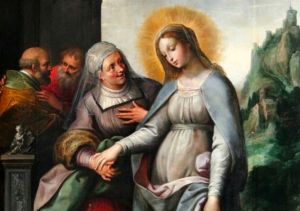
What to do? Gaudete in Domino
Immaculate Conception: Personalism made safe
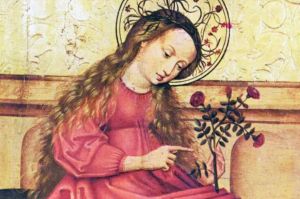
Advent: but what kind of Coming is it?
Jesus and Pilate: Truth about the King and the Man

Upheavals and things in place: between Faith and religion
Widow-people: without a Bride, and without even two pennies
And «each of us can say: "for love to me"» (Pope Francis)
E «ognuno di noi può dire: “per amore a me”» (Papa Francesco)
We too, to reach a more conscious confession of Jesus Christ must follow, like Peter, a path made of attentive, caring listening (Pope John Paul II)
Anche noi per giungere a una più consapevole confessione di Gesù Cristo dobbiamo percorrere, come Pietro, un cammino fatto di ascolto attento, premuroso (Papa Giovanni Paolo II)
It is a word that must be witnessed to and proclaimed explicitly, because without a consistent witness it proves to be less comprehensible and credible [Pope Benedict]
E’ una Parola che deve essere testimoniata e proclamata esplicitamente, perché senza una testimonianza coerente essa risulta meno comprensibile e credibile [Papa Benedetto]
The “reading and meditation of the word of God root us more deeply in Christ and guide our ministry as servants of reconciliation, justice and peace” (second Synod for Africa, Propositio 46)
La lettura e la meditazione della Parola di Dio ci radicano più profondamente in Cristo e orientano il nostro ministero di servitori della riconciliazione, della giustizia e della pace (Secondo Sinodo per l’Africa, Propositio 46)
The Gospel of Matthew written in Hebrew or Aramaic is no longer extant, but in the Greek Gospel that we possess we still continue to hear, in a certain way, the persuasive voice of the publican Matthew, who, having become an Apostle, continues to proclaim God's saving mercy to us. And let us listen to St Matthew's message, meditating upon it ever anew also to learn to stand up and follow Jesus with determination (Pope Benedict)
Non abbiamo più il Vangelo scritto da Matteo in ebraico o in aramaico, ma nel Vangelo greco che abbiamo continuiamo a udire ancora, in qualche modo, la voce persuasiva del pubblicano Matteo che, diventato Apostolo, séguita ad annunciarci la salvatrice misericordia di Dio e ascoltiamo questo messaggio di san Matteo, meditiamolo sempre di nuovo per imparare anche noi ad alzarci e a seguire Gesù con decisione (Papa Benedetto)
That denarius clearly represents eternal life, a gift that God reserves for all. Indeed those who are considered the "last", if they accept, become the "first", whereas the "first" can risk becoming the "last" [Pope Benedict]
Quel denaro rappresenta la vita eterna, dono che Dio riserva a tutti. Anzi, proprio quelli che sono considerati "ultimi", se lo accettano, diventano "primi", mentre i "primi" possono rischiare di finire "ultimi" [Papa Benedetto]
The sower is Jesus. With this image, we can see that he presents himself as one who does not impose himself, but rather offers himself. He does not attract us by conquering us, but by donating himself: he casts seeds. With patience and generosity, he spreads his Word, which is not a cage or a trap, but a seed which can bear fruit (Pope Francis)
Il seminatore è Gesù. Notiamo che, con questa immagine, Egli si presenta come uno che non si impone, ma si propone; non ci attira conquistandoci, ma donandosi: butta il seme. Egli sparge con pazienza e generosità la sua Parola, che non è una gabbia o una trappola, ma un seme che può portare frutto (Papa Francesco)
The Church desires to give thanks to the Most Holy Trinity for the "mystery of woman" and for every woman - for that which constitutes the eternal measure of her feminine dignity, for the "great works of God", which throughout human history have been accomplished in and through her (Mulieris Dignitatem n.31)








duevie.art
don Giuseppe Nespeca
Tel. 333-1329741
Disclaimer
Questo blog non rappresenta una testata giornalistica in quanto viene aggiornato senza alcuna periodicità. Non può pertanto considerarsi un prodotto editoriale ai sensi della legge N°62 del 07/03/2001.
Le immagini sono tratte da internet, ma se il loro uso violasse diritti d'autore, lo si comunichi all'autore del blog che provvederà alla loro pronta rimozione.
L'autore dichiara di non essere responsabile dei commenti lasciati nei post. Eventuali commenti dei lettori, lesivi dell'immagine o dell'onorabilità di persone terze, il cui contenuto fosse ritenuto non idoneo alla pubblicazione verranno insindacabilmente rimossi.