


don Giuseppe Nespeca
Giuseppe Nespeca è architetto e sacerdote. Cultore della Sacra scrittura è autore della raccolta "Due Fuochi due Vie - Religione e Fede, Vangeli e Tao"; coautore del libro "Dialogo e Solstizio".
The risk of rigging the virtuous practice: inadmissible double face
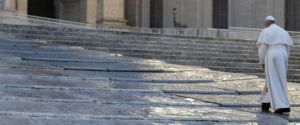
But what kind of penance and fasting does the Lord want from man? The risk, in fact, is of 'rigging' a virtuous practice, of being 'inconsistent'. And it is not just a question of "food choices", but of lifestyles for which one must have the "humility" and "consistency" to recognise and correct one's sins.
This is in short the reflection that, at the beginning of the Lenten journey, the Pontiff proposed to the faithful during the Mass celebrated at Santa Marta on the morning of Friday 16 February.
Key word of the meditation, suggested by the liturgy of the day, was "fasting": "Fasting before God, fasting that is adoration, fasting in earnest", because "fasting is one of the tasks to be done in Lent". But not in the sense of those who say: 'I only eat the Lenten dishes'. In fact, Francis commented, 'those dishes make a banquet! It is not changing dishes or making fish one way, the other, tastier'. Otherwise, one does nothing but 'continue the carnival'.
It is the word of God, he emphasised, that admonishes that 'our fasting be true. True in earnest'. And, he added, 'if you cannot do total fasting, the kind that makes one feel hungry to the bone', at least 'do a humble but true fast'.
In the first reading (Isaiah 58:1-9), in this regard, "the prophet points out many inconsistencies in the practice of virtue". And precisely "this is one of the inconsistencies". Isaiah's list is detailed: 'You say that you seek me, you speak to me. But it is not true', and 'on the day of your fasting you mind your own business': that is, while 'fasting is a little stripping', you are concerned with 'making money'. And again: 'Angariate all your workers': in other words, the Pope explained, while one says: 'I thank you Lord that I can fast', one despises the workers who 'must fast because they have no food'. The prophet's accusation is direct: "Behold, you fast amid quarrels and altercations and striking with unjust fists.
This is an inadmissible double face. The Pontiff explained: "If you want to do penance, do it in peace. But you cannot on the one hand speak with God and on the other speak with the devil, invite both to fast; this is an inconsistency". And, always following the indications of Scripture - "Do not fast any longer as you do today, so that your noise may be heard on high" - Francis warned against incoherent exhibitionism. It is the attitude of those who, for example, always remind us: 'we are Catholics, we practise; I belong to that association, we always fast, we do penance'. He ideally asked them: "But, do you fast consistently or do you do penance inconsistently as the Lord says, with noise, so that everyone sees it, and says, 'What a righteous person, what a righteous man, what a righteous woman'?" This, indeed, "is a trick; it is rigging virtue. It is rigging the commandment'. And it is, he added, a "temptation" that we have all felt at times, "to make up instead of being serious about virtue, about what the Lord asks of us".
On the contrary, the Lord "advises penitents, those who fast, to put on make-up, but seriously: 'Fast, but put on make-up so that people do not see that you are doing penance. Smile, be happy". Faced with so many who "are hungry and cannot smile", this is the suggestion to the believer: "You seek hunger to help others, but always with a smile, because you are a child of God and the Lord loves you so much and has revealed these things to you. But without inconsistency'.
At this point, the Pontiff's reflection went even deeper, prompted by the question: "what fast does the Lord want?". The answer comes again from Scripture, where first of all we read: 'Fold your head like a reed'. That is: to humble oneself. And to those who ask: "How do I humble myself?", the Pope replied: "But think of your sins. Each one of us has many. And 'be ashamed', because even if the world does not know them, God knows them well. This, then, 'is the fast the Lord wants: truth, consistency'.
There is then an addition: "Undo the unrighteous chains" and "remove the bond of the yoke". The examination of conscience, in this case, focuses on the relationship with others. To make himself better understood, the Pope gave a very practical example: "I think of so many maids who earn their bread with their work" and who are often "humiliated, despised". Here his reflection left room for personal recollection: "Never have I been able to forget a time when I went to a friend's house as a child. I saw my mother slap the maid. Eighty-one years old... I have not forgotten that'. Hence a series of questions ideally addressed to those who have servants: 'How do you treat them? As people or as slaves? Do you pay them fairly, do you give them holidays? Is it a person or is it an animal that helps you in your home?". A request for consistency that also applies to religious, "in our homes, in our institutions: how do I behave with the maid I have at home, with the maids I have at home?" Here the Pontiff added another personal experience, recalling a "very cultured" gentleman who, however, "exploited the maids". and who, when confronted with the consideration that this was "a grave sin" against people who are "the image of God", objected: "No, Father, we must distinguish: these are inferior people".
We must therefore 'remove the bond of the yoke, loosen the iniquitous chains, set the oppressed free, break every yoke'. And, commenting on the prophet who admonishes: "share your bread with the hungry, bring in the wretched, the homeless", the Pope contextualised: "Today we discuss whether or not we give shelter to those who come to ask for it..."
And the indications continue: "Clothe one you see naked", but "without neglecting your relatives". This is real fasting, the kind that involves everyday life. "We need to do penance, we need to feel some hunger, we need to pray more," Francis said; but if "we do a lot of penance" and do not live fasting in this way, "the sprout that will be born from there" will be "pride", that of one who says: "I thank you, Lord, because I can fast like a saint". And this, he added, "is the ugly trick", not what Jesus himself suggests "so that others do not see that I fast" (cf. Matthew, 6:16-18).
The question to ask, the Pontiff concluded, is: "How do I behave with others? Does my fasting come to help others?". Because if this does not happen, that fast "is fake, it is incoherent and leads you down the path of a double life". One must, therefore, "humbly ask for the grace of consistency."
[Pope Francis, s. Marta, in L'Osservatore Romano 17/02/2018]
From «Master» to «Lord», and the symptoms
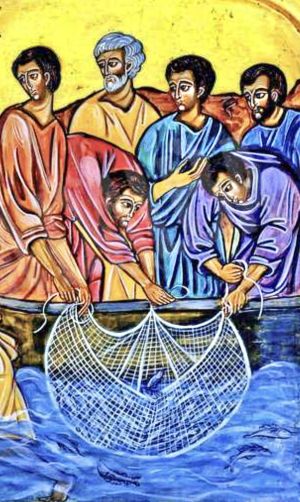
‘Fishing’ to life. Weekday Attraction and attention
(Lk 5:1-11)
The episode of the Call of the disciples in Lk indicates the attraction of the Jesus Word - which acts in us, as a sort of eminent Self.
In the relationship of Faith, friendship and spousal trust become more decisive than what the common mentality and normal beliefs suggest to the lower self.
Therefore, those who lead the Church must move away from the "shore" that they know, and have the obligation to lead «into the depths» (v.4) even of the waves.
In the Semitic culture the sea is a symbol of chaos, death, the demonic, the forces contrary to life. It is the context in which one drowns.
The Mission is «to bring out alive» (v.10) men overwhelmed by putrid sewage, submerged by impetuous waves; dragged to the bottom, to abysmal depths, by the violence of inhuman forces.
The Greek verb does not indicate «to fish» but rather «to capture alive», «take to keep alive», therefore «bring to life»: recover to the light, to the breath; being lifted up from polluted and suffocating depths.
Carrying on the work of the Master means helping people involved in deadly contexts, overwhelmed by eddies and waves that drag them down, so that they can dive into a water that is no longer cloudy, but healthy.
Work that is configured in the plural synergy of the ‘churches’, because none of them can be complete on its own (v.7).
Despite the uncertainties and the perhaps unsuitable hour, believing that the Word of Christ can accomplish the impossible is worth more than skill and opinion.
Ready or not, that Logos will make happen what it says.
Here is the manifestation of the strength and action of the Faith, not of common logic - when the Appeal of God becomes decisive in the choices.
A Call that bursts into chaos, with an humanizing charge and total novelty: it allows another ‘power’ to enter the world; discreet, but which does what says.
Here the solution of problems does not deny the human capacity, but rather tries to make it speak - in the discomforts of all, in listening to the symptoms, in giving him full voice: they are spies who already know in themselves what is wrong (v.8).
Thus involved, we will understand why the Lord does not disdain the extravagances of the transgressors.
If even for us every day seems the same, by inserting this non-conformist Novelty of Light into frustrations and fatigue, we will breathe and make any work clear, marked and fruitful.
We will understand the vocation of Jesus, who teaches in every place and to each one - making inexplicable recoveries.
From «Master» (v.5) to «Lord» (v.8): the inner Friend becomes a presence, an intimate relationship, a system of recognition and self-esteem; support not external, and trampoline.
Principle and Engine of Peace, fullness of being, recklessness and following (vv. 10-11) - therefore Announcement, imagination, incisiveness and conciliation.
Without effort, we will be able to slip away the opinions conditioning ‘nature’ and the Call itself.
To internalize and live the message:
What was the impulse that pressed you, and gave you fruit?
What has been your experience of expanded perspectives on the world, and inexplicable recovery?
Do you believe that all this can also happen in the time of the global crisis?
[Thursday 22th wk. in O.T. September 3, 2026]
From «Master» to «Lord»
«Fishing», bringing to life. Attraction and attention (weekdays)
(Lk 5:1-11)
The episode of the Calling of the disciples in Lk indicates the attraction of the Word of Jesus - acting in us, as a kind of eminent Self.
The Call is manifested in a place and on a weekday, not within a sacred precinct, nor on a fixed date (of official and public rite).
The Message of Christ is not the same as the exclusive Message of the usual synagogue teachers, who addressed an audience of chosen people.
The Lord is for everywhere, and wherever there are unselected people - who wish to hear Him.
Then it is the Church leader himself who is called upon: first to set an example of trust. If so, all others will follow.
The boat is a symbol of the community, from which proclamation and attention to the Word is to be expected.
Strength that becomes an event - despite the fact that the Lord seems to ask for useless and senseless gestures.
In the relationship of Faith, Friendship and spousal trust become more decisive than what the common mentality and normal convictions suggest to the lower self [with the addition of meetings, assemblies, advice, plans, schemes, slavishness to the chain of command, conformist obedience alien to our quintessence; and propaganda, paper, notices].
In order to make the leap and give a blow of wings to reality and the dull man, better than organising and planning is the surrender to the Word, which vibrates in unison with the soul.
The experience of the recovery of others, of closeness - proximity to the divine condition in Jesus, in the power of his Word - makes us understand who we are, and meet ourselves in truth (v.8).
Here, problem-solving does not deny the human bearing, but attempts to make it speak, in the discomforts of all, in listening to their symptoms, in giving them full voice - for they are spies who already know in themselves what is wrong (v.8).
It is the inner fruit of the mission experience: a new and clearer self-awareness, now without removals, which restores naturalness, and in turn opens up new channels of communication.
Respect for common sense, and common opinions, conformist judgments, mechanisms, more logical intentions... does not have the spring of regeneration. This is true even in times of global crisis.
The new birth takes place in transforming that which is obscure or unfinished into that which makes us perceive and know ourselves and the intimate life of the Eternal, helping our brothers, living in symbiosis with the troubles of the people.
Therefore he who leads the Church must depart from the "shore" that he knows, and has the obligation to lead into the "depths" [v.4 Greek text] even of the waves.
In Semitic culture, the sea is a symbol of chaos, of death, of the demonic, of forces contrary to life. It is the context in which one drowns.
The fish are well in the water, and are not happy about being pulled out. But in the water, men are not so comfortable, especially when the sea is dark and rough.
The Mission is "to bring out alive" [v.10 Greek text] men overwhelmed by putrid sewage, submerged by raging waves, dragged to the bottom (to abysmal depths) by the violence of inhuman forces.
The Greek verb does not indicate a 'catching' but a 'catching alive', the 'catching to keep alive', hence 'to bring to life': to recover to light, to breath; to be thrust beyond the polluted abysses that suffocate the destitute awaiting compassion.
To be lifted out of the gloomy context of inner and outer impediments that bridle existence and dampen development.
To be guided where life neither attenuates nor drowns: grasped and raised to freedom and fulfilment; emancipated, placed in a pure, qualitatively relational sphere, animated by a spirit of integral well-being.
Carrying on the Master's work means helping people to exist intensely; recovering people caught up in deadly contexts, swept away by eddies and waves that drag down - so that they can dive into water that is no longer murky but healthy.
Alongside adherence to the Calling that corresponds to our deepest essence, it is this activity of recovery that enables us to overcome the sense of inadequacy, producing a superabundance of freedom and virtue.
A work that is configured in the plural synergy of the churches, because none of them can make itself complete on its own (v.7).
The common goal of mission for the benefit of mankind makes the particular denominations overcome any distinction or division, any conflict between fraternities of faith.
Despite the uncertainties and the perhaps unsuitable hour, believing that the Word of Christ can achieve the impossible is worth more than skill and opinion.
Ready or not, on time or off the right time (and perhaps already unfulfilled by failure: v.5) that Logos remains the hinge of communion between different realities - and will make what it claims happen.Here, in fact, is the manifestation of the power and action of Faith going forward, with its different bearing with respect to common logic - when surrendering to God's Call becomes decisive in the choices, and launching oneself.
A call that bursts into chaos, with a humanising charge, of total novelty: it allows another power to enter the world, one that is discreet but finally realises what it says.
It does not belong to the sphere of programmes or subsequent 'remedies'! We will then understand why the Lord does not disdain the extravagances of the transgressors.
If, for us too, every day seems the same, by inserting this Newness of non-conformist Light into our frustrations and fatigue, we will give breath and make any work sharp, marked and fruitful.
We will understand the Vocation of Jesus, who teaches everywhere and to everyone - making inexplicable recoveries.
He continues to address not only 'his' audience of the elect, predestined to the sacred; seemingly all of a piece, undaunted and chosen. But who at times brood to only draw back and elevate themselves.
Let us therefore let slip the opinions conditioning our nature and vocation, by false sirens: it was quite another impulse that pressed us on, broadening our outlook on the world - and bore fruit.
Without effort, we will be able to slip away the opinions conditioning our nature and Calling itself.
On Thy Word, and the symptoms
(Mt 5:5)
The common man rejoices in his achievements, the religious man in his merits, but the person of Faith in his redeemed weakness.
It is precisely when we perceive ourselves to be insufficient that the experience of gratuitousness is an unparalleled source of Happiness.
If we face defeat, the gaze of Faith recovers humiliation into an opportunity for flourishing and better Wealth.
A spirituality that grew far from the balance of the Word of God relied on active virtues and personal voluntarism.
The Father's Dream, on the other hand, is that of the harmonious development of his children, creatures insufficient by nature, not by fault.
We do not have to annihilate ourselves in order to continually overstretch our limits, destroying the load-bearing lines of our personality - with the effort of continually crossing fences.
Sometimes we are unable to understand situations, sometimes we are unable to understand the ends and means to achieve a good result.
Often, even when we do understand what to do, we just can't bring ourselves to impose discipline; and here we all are (not hardened geniuses).
St Thomas said: 'Bonum ex integra causa, malum ex quocumque defectu'. Each creature needs help - we are not omnipotent in the good.
Understanding and implementing all correlations and evaluative balances is beyond our reach: escaping from chasms and uncertainties is pure Gift.
To "draw men up to life" [Lk 5:10: "to catch alive", Greek text] - people submerged by choking waves in poisonous waters - towards light and breath: it reveals God's Project and liberating Action on the whole of humanity.
In order to approach one's own being and that of others with a baptismal outlook, it is therefore appropriate to overlook the sorrow and mysticism of suffering, which in the past has supplanted the sense of acceptance of self, neighbour and events, contained in the Word.
Jacopone da Todi could express himself in a paradoxical way in the lauda 'O Segnor, per cortesia, manname la malsania' [Lord, please send me the sickness].
In his poem, the rigorist lists dozens of common infirmities, and (in spite of this) does not consider them sufficient atonement for our foolish ungratefulness - as if we were the ones who had to console the Eternal at least with a little sugar:
"My lord, it is not vengeance/ all the punishment I have committed:/ for you created me in your beloved/ and I have died to you in villainy".
Terms such as our ingratitude, penance, mortification... are unknown to the Gospels; on the contrary, they formed the fabric of religiosity that still stuns some practising crowds.
Unfortunately, we are talking about the most widespread platform of popular spirituality.
We priests often hear people of prayer ask why they have been punished with a particular thud in life that others do not suffer in such a way.
The Pharisees would remark (just like that): "Blessed is the Just Judge!". As if to say: 'imprudent and sinful have had their due punishment.
"Leave them to their fate, meanwhile let them purify themselves. Not only is it good for them, let us also avoid defiling ourselves!".
Only with Jesus is all this over.
Faced with the defilements, He never emphasised God's will, nor did He say: 'It is your cross...'.
He did not even imagine that someone in a future time might come to put in His mouth the pious advice to 'offer' one's humiliations to Heaven (incredible digression!).
It is the Creator Himself who in the events and in the help of our brothers and sisters offers Himself to us in order to give meaning to our growth, even on difficult terrain; even in moments of discouragement, indifference, failure.
The Father's design is not to crystallise heroes who are indifferent to trauma; die-hards who perfect themselves by exercising resilience.
All in difficulty, arriving at a sterilised - and discouraging - holiness that detaches these 'phenomena' from the earthly family to which we are united in flesh and blood.
The Project of redemption is that we become Sons through a gratuitous practice of Love similar to His; a unique one that discards nothing of our being, but rather recovers and expands it.
There is no religiosity or tactic comparable to the Incarnation; so that it comes to the aid of and transmits life-giving breath - near and familiar - to those who are submerged by waves of death.
With the burden of her extraordinary experience, Annalena Tonelli designated the marginalised and disadvantaged with the eccentric epithet of 'murdered Mozarts'.
Here, the solution to the problems does not deny the human being, but attempts to make him speak; in everyone's imbalances, in listening to their symptoms, in giving them full voice - because they are spies who already know in themselves what is wrong (v.8).
Only on the Word of Jesus will we make inexplicable recoveries - experiencing ourselves authentically.
And we will make the future blossom, "pulling up" those rinds (and the sides we have not given space to) that hide Pearls.
From "Master" (v.5) to "Lord" (v.8): the inner Friend becomes presence, intimate relationship, system of recognition and self-esteem; non-external support, and springboard.
Principle and Engine of Peace, fullness of being, recklessness and following (vv.10-11) - hence Announcement, imagination, incisiveness and conciliation.
As emphasised by Pope Benedict (Angelus 10 February 2013):
"We observe that, before this sign, Simon addresses Jesus calling him "Master" (v. 5), while afterwards he calls him "Lord" (v. 7). This is the pedagogy of God's call, which looks not so much at the qualities of the chosen ones, but at their faith, like that of Simon who says: "On your word I will cast the nets" (v. 5)".
"Dear brothers and sisters, may this Word of God also rekindle in us and in our Christian communities the courage, confidence and impetus to proclaim and bear witness to the Gospel. Let failures and difficulties not lead to discouragement: it is up to us to cast our nets in faith, the Lord will do the rest".
To internalise and live the message:
What opinions conditioning your nature and vocation have you yet to let slip away?
What was the impulse that pressed you on instead, and bore fruit?
What has been your experience of enlarged perspectives on the world, and inexplicable recovery?
Do you believe that this can happen even in times of global crisis?
Calling and pedagogy: from qualities to Faith

Dear Brothers and Sisters,
In today’s liturgy, the Gospel according to Luke presents the story of the call of the first disciples, with an original version that differs from that of the other two Synoptic Gospels, Matthew and Mark (cf. Mt 4: 18-22; Mk 1:16-20) . The call, in fact, was preceded by the teaching of Jesus to the crowd and a miraculous catch of fish, carried out by the will of the Lord (Lk 5:1-6). In fact, while the crowd rushes to the shore of Lake Gennesaret to hear Jesus, he sees Simon discouraged because he has caught nothing all night. First Jesus asks to get into Simon’s boat in order to preach to the people standing a short distance from the shore; then, having finished preaching, he commands Simon to go out into the deep with his friends and cast their nets (cf. v. 5). Simon obeys, and they catch an incredible amount of fish. In this way, the evangelist shows how the first disciples followed Jesus, trusting him, relying on his Word, all the while accompanied by miraculous signs. We note that, before this sign, Simon addresses Jesus, calling him “Master” (v. 5), while afterwards he addresses him as “Lord” (v. 7). This is the pedagogy of God’s call, which does not consider the quality of those who are chosen so much as their faith, like that of Simon that says: “At your word, I will let down the nets” (v. 5).
The image of the fish refers to the Church’s mission. St Augustine says in this regard, “Twice the disciples went out to fish at the Lord’s command: once before the Passion and the other time after the Resurrection. In the two scenes of fishing, the entire Church is depicted: the Church as it is now and as it will be after the resurrection of the dead. Now it gathers together a multitude, impossible to number, comprising the good and the bad; after the resurrection, it will include only the good” (Homily 248.1). The experience of Peter, certainly unique, is nonetheless representative of the call of every apostle of the Gospel, who must never be discouraged in proclaiming Christ to all men, even to the ends of the world. However, today’s text is a reflection on the vocation to the priesthood and the consecrated life. It is the work of God. The human person is not the author of his own vocation but responds to the divine call. Human weakness should not be afraid if God calls. It is necessary to have confidence in his strength, which acts in our poverty; we must rely more and more on the power of his mercy, which transforms and renews.
Dear brothers and sisters, may this Word of God revive in us and in our Christian communities courage, confidence and enthusiasm in proclaiming and witnessing to the Gospel. Do not let failures and difficulties lead to discouragement: it is our task to cast our nets in faith — the Lord will do the rest. We must trust, too, in the intercession of the Virgin Mary, the Queen of Apostles. Well aware of her own smallness, she answered the Lord’s call with total confidence: “Here I am”. With her maternal help, let us renew our willingness to follow Jesus, Master and Lord.
[Pope Benedict, Angelus 10 February 2013]
United to the saving power of Christ: signs of fruitfulness
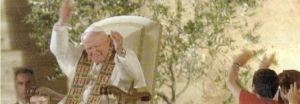
6. The miraculous peaches are for the apostles and the church the "signs" of the fruitfulness of their mission if they remain deeply united to the saving power of Christ (cf. Lk 5:4-10; Jn 21:3-6). In fact, Luke includes in the narrative the fact of Simon Peter throwing himself at Jesus' knees exclaiming: "Lord, depart from me, for I am a sinner" (Lk 5:8), and Jesus' reply: "Fear not: from now on you shall be a fisher of men" (Lk 5:10). John in turn follows the narration of the fishing after the resurrection with Christ's command to Peter. "Shepherd my lambs, feed my sheep" (cf. Jn 21:15-17). It is a significant juxtaposition.
7. It can therefore be said that Christ's miracles, the manifestation of the divine omnipotence with regard to creation, which is revealed in his messianic power over men and things, are at the same time the "signs" through which the divine work of salvation is revealed, the salvific economy that with Christ is introduced and definitively implemented in human history and is thus inscribed in this visible world, which is also always a divine work. The people who - as well as the apostles on the lake - seeing the "miracles" of Christ ask themselves: "Who is . . . this one, to whom even the wind and the sea obey?" (Mk 4:41), through these "signs" are prepared to receive the salvation offered to man by God in his Son.
This is the essential purpose of all the miracles and signs performed by Christ in the eyes of his contemporaries, and of those miracles that throughout history will be performed by his apostles and disciples in reference to the saving power of his name: "In the name of Jesus Christ, the Nazarene, walk!" (Acts 3:6).
[Pope John Paul II, General Audience 2 December 1987]
Close Presence
Gospel tells us — in St Luke’s narrative — of the call of Jesus’ first disciples (5:1-11). The event takes place in the context of everyday life: there are several fishermen on the shore of the lake of Galilee, who, after working all night and catching nothing, are washing and arranging their nets. Jesus gets into one of the boats, that of Simon, called Peter, whom he asks to put out a little from the shore, and he starts to preach the Word of God to the crowd of people who had gathered. When he is finished speaking, he tells them to put out into the deep and cast the nets. Simon had previously met Jesus and felt the prodigious power of his word. Therefore, he responds: “Master, we toiled all night and took nothing! But at your word I will let down the nets” (v. 5). And this faith of his did not disappoint: indeed, the nets filled with so many fish that they nearly broke (cf. v. 6). Facing this extraordinary event, the fishermen are greatly astonished. Simon Peter throws himself at Jesus’ feet, saying: “Depart from me, for I am a sinful man, O Lord” (v. 8). That prodigious sign convinces him that Jesus is not only a formidable master whose word is true and powerful, but he is the Lord, he is the manifestation of God. For Peter this close presence brings about a strong sense of his own pettiness and unworthiness. From a human point of view, he thinks that there should be distance between the sinner and the Holy One. In truth, his very condition as a sinner requires that the Lord not distance Himself from him, in the same way that a doctor cannot distance himself from those who are sick.
Jesus’ response to Simon Peter is reassuring and decisive: “Do not be afraid; henceforth you will be catching men” (v. 10). Once again the fisherman of Galilee, placing his trust in this word, leaves everything and follows the one who has become his Lord and Master. Simon’s workmates, James and John, do the same. This is the logic that guides Jesus’ mission and the mission of the Church: go in search, “fish” for men and women, not to proselytize, but to restore full dignity and freedom to all, through the forgiveness of sins. This is the essential point of Christianity: to spread the free and regenerative love of God, with a welcoming and merciful attitude toward everyone, so that each person can encounter God’s tenderness and have the fullness of life. Here, in a particular way, I think of confessors: they are the first who must give the Father’s mercy, following Jesus’ example, as did the two holy Brothers, Fr Leopold and Padre Pio.
Today’s Gospel challenges us: do we know how to truly trust in the Word of the Lord? Or do we let ourselves become discouraged by our failures? In this Holy Year of Mercy we are called to comfort those who feel they are sinners, unworthy before the Lord, defeated by their mistakes, by speaking to them the very words of Jesus: “Do not be afraid. The Father’s mercy is greater than your sins! It is greater, do not be afraid!”. May the Virgin Mary help us to ever better understand that being disciples means placing our feet in the footsteps left by the Master: they are the footprints of divine grace that restore life for all.
[Pope Francis, Angelus 7 February 2016]
Leaving the place of worship
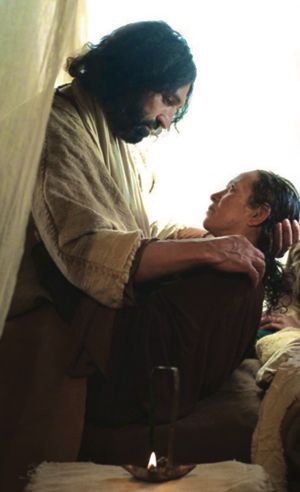
Power of the Word
(Lk 4:38-44)
«To the other cities, too, I must proclaim the good news of the Kingdom of God, for I was sent for this» (Lk 4:43).
Leaving the place of worship, authentic disciples put themselves at the service of life, recovering people.
They want to put them back on their feet not out of almsgiving paternalism, but with dignity and respecting their inclinations; thus they become eager to transmit joy to others.
It is the new experience that we are called to offer also to women and men of cultural backgrounds and mentality different from ours.
Peter’s mother-in-law is probably the emblem of a community coordinator - of the House of Peter [perhaps drawn from an ancient heritage of customs] - who, thanks to the decisive Meeting, experienced healing and full rebirth, even at the service of others.
In Semitic culture, at sunset and with the rise of the first star in the sky, a new day is born: here there is a new Creation.
Marginalised humanity is regenerated - first forced only to lower itself, inert - and resumes raising its head, and doing well.
All those considered impure, unworthy and inadequate, who did not know who to resort to and at the mercy of public benevolence, are now touched by God.
He does not stop in the face of the hopes of redemption of the weightlesses.
A touch, that of the Lord and of those in the Church (or outside) who brings it - that absorbs the supposed unworthiness and shortcomings.
A caress that makes feel welcomed and adequate, and reintegrates into social coexistence even people considered repellent.
In the course of a first approach to the Way in the Spirit it may happen that the Son of God [who resembles God] is confused with «the» Christ (v.41) expected: «that» Messiah that everyone knew; glorious avenger, who would bring victory, health, immediate opulence.
The leader who would skillfully put things right with peremptory acts of force - and subdued the peoples, suddenly guaranteeing to the elect lineage an easy golden age at the expense of others.
Not bad: it would be one to be held without doubt (v.42). In the Master, instead, insistence on the Proclamation task prevails, without which stereotyped ideas become fixed, humiliating the life.
God cares for everyone, even those who are far away and unrelated to the Home interests - He is not someone that we can be taken possession of.
Personally caring for the brothers is tiring; and constantly moving beyond the borders of one’s own partnership or environment, too.
But this reveals the wonderful presence of the Friend: situations are created, and everyone discovers unexpressed Pearls that recreate the existence of the world.
Instead, when we think and stop at the results at hand, and do not keep alive the sense of Evangelization, reality becomes swampy; the Spirit is not unleashe - we choose the limit, and everything is dragged into indolence.
One would be satisfied (flattering) with great normalized and confined gestures: lights, exaltations, reassuring formulas... but there would no longer be a new grain that could be born every day.
To internalize and live the message:
Do you feel eclipsed in the Announcement and in the itinerance, or vice versa enhanced?
What gives you strength and puts you back on your feet, or seduces, bewitches, and blocks you?
[Wednesday 22th wk. in O.T. September 2, 2026]
Coming out of the place of worship: the Power of the Word
(Female Creativity)
(Lk 4:38-44)
"The essential thing is to listen to what is rising from within. Our actions are often nothing more than imitation, hypothetical duty or misrepresentation of what a human being should be. But the only true certainty that touches our lives and our actions can only come from the springs that gush deep within ourselves. One is at home under heaven one is at home anywhere on this earth if one carries everything within oneself. I have often felt, and still feel, like a ship that has taken on board a precious cargo: the ropes are cut and now the ship goes, free to sail everywhere".
(Etty Hillesum, Diary)
"To the other cities also I must proclaim the good news of the Kingdom of God, for I was sent for this" (Lk 4:43).
Having left the place of worship, authentic disciples put themselves at the service of life, recovering people.
They put them back on their feet not out of paternalism of charity, but with dignity and respecting their inclinations; thus they become eager to transmit joy to others.
This is the new experience that we are called to offer also to women and men of a different cultural background and mentality from our own.
Peter's mother-in-law is probably emblematic of a community co-ordinator - of the House of Peter [perhaps drawn from an ancient heritage] - who, thanks to the decisive encounter, experienced healing and full rebirth, even to the service of others.
In the Semitic culture, at sunset and with the rising of the first star in the sky, a new day is born: here is a new Creation.
The marginalised humanity - previously forced only to lower itself, inert - is regenerated and starts to raise its head again and do good.
All those considered impure, unworthy and inadequate, who knew no recourse and at the mercy of public benevolence, are now touched by God.
He does not stop at the hopes for redemption of the weightless.
A touch, that of the Lord and of those in the Church (or outside) who bear it - that absorbs presumed unworthiness and shortcomings.
A caress that makes one feel welcome and adequate, and reintegrates into social coexistence even those considered repulsive.
In the course of an initial approach to the Way in the Spirit it may happen that one confuses the Son of God [he who resembles God] with "the" Christ (v.41) expected: "that" Messiah whom everyone knew; the glorious avenger, who would bring victory, health, immediate opulence.
The leader who would skilfully set things right with peremptory acts of force - and subdue the peoples, abruptly granting the chosen race an easy golden age at the expense of others.
Not bad: he would be one to be held back without fail (v.42). Instead, the Master's insistence on the Mission of Announcement prevails, without which stereotypical ideas become fixed, humbling life.
God cares for everyone, even those who are distant and unconnected with Household interests - he is not someone one can take possession of.
Taking care of one's brothers personally is tiring; constantly moving beyond the borders of one's own sodality or environment, too.
But this reveals the wonderful presence of the Friend: situations are created, and everyone discovers unexpressed Pearls that recreate the existence of the world.
When, on the other hand, we think and stop at the results at hand, and do not keep the sense of Evangelisation alive, reality becomes swampy; the Spirit is not unleashed - the limit is chosen, and everything is dragged into indolence.
We would be content (flattering) with great normalised and confined gestures: lights, exaltations, reassuring formulas... but there would no longer be a new grain to be born each day.
To internalise and live the message:
Do you feel eclipsed in the proclamation and itinerancy, or vice versa empowered?
What gives you strength and puts you back on your feet, or seduces, bewitches, and blocks you?
The liberated mother-in-law and her (female) journey
A final note on Matthew's brushstroke on the story of Peter's mother-in-law, a 'woman' who rediscovers her unexpressed capacities through contact with the person of the Lord.
An icon of a mental model that is still narrow, that stifles the youth of being and doing.
Ancient figure, of a tradition (of inherited religiosity) that holds back the intimate resources of the people [in Hebrew Israèl is female].
A world of restraints that make one uncomfortable, because of stifled, compressed energies - before Christ disappeared. To the point of not realising they are still inside.
I imagine precisely that such an old woman who literally 'resurrects' can be reinterpreted with spiritual fruit, for the journey of us all.
The Lord frees; he heals "inflammations". He gives greater joy of life.
He imparts an elixir of youth - especially when we feel held as dependents or slaves, without space.
Stuck and rendered dumb by the transmitted culture or situation, not only of health."Now he rose from the synagogue and entered the house of Simon. Now Simon's mother-in-law was oppressed with a great fever, and they prayed to him for her, and bowing down over her he threatened the fever and left her. Now rising on the instant he served them" (vv.38-39).
There are revealing symptoms of discomfort: e.g. a life - even a spiritual one - that does not fit... because it denies abilities, constrains them, keeps them in a corner, does not allow them to be used.
To the point of no longer knowing what they are.
Here come symptoms that lie us down: anxious, mortifying, and feelings of constriction and dependence.
One would perhaps like to do something different, but then there are fears, tightness in the chest that close the horizon and make one tense, (even at that time) uncomfortable, stressed, blocked.
In the soul of the ancient people, talents disregarded, denied, unused had become hardships.
Now in Christ Present, the return to a fluid life, as well as care for oneself and others, becomes easy, even with minimal gestures.
Capacities that had made intimate appeal, surface, dilate even in favour of others.
Relieved, the 'mother-in-law' breathes and overcomes ageing.
Before, sadness perhaps appeared, because the desire for a new birth was stifled by the many chores to be done or other cravings (fevers) that plant us there and do not restart feelings.
We know, however, that life restarts the moment someone helps to heal the sharp actions ["hand" constricted: Mt 8:15; Mk 1:31] and widen our gaze towards what is conversely blossoming in us.
By shifting perception from what nags us (torments and hinders) to what arises more spontaneously and is finally and unexpectedly valued, the blocks of tender, fresh energy disappear.
Then the garb of the ancient role is laid aside and we no longer give up expressing ourselves.
Also - for us - without closing ourselves off in the usual environment and way of doing things, which intimately do not belong to us.
Whoever gives the other a proper space draws on the virtues of our inner, evergreen primordial states - and opens up those of all.
All for a growth that does not only correspond to a precipitous elevation, but rather to a better grounding in the being of people.
By hibernating the burden of duties or models that do not correspond to us, life is renewed.
We realise that we are as if inhabited by divine Gold that wants to surface and express itself with breadth, instead of remaining tense and controlled.
This is the healing action of Jesus, all at everyone's doorstep.
Power of the Word and healing creativity of Jesus, in the feminine
(Lk 4:38-39)
In the communities of pagan extraction in Lk, one wondered: do the "Beatitudes" and "Alas for you" of the "plain"... create exclusions (cf. Lk 6:17, 20-26)?
Or do they correspond to the hopes and deep feelings of the human heart, of every place and time (e.g. Lk 7.9.13.28-29)?
Those far from religious Judaism possessed a keen intuition for the novelties of the Spirit, and discovered the experience of Faith from other positions [not installed, less tied to conformist concatenations; perhaps uncomfortable].
Those who possessed the freshness of substantive intuition saw clearly. They proposed healthy jolts of outspoken Trust, wedded to the Newness of God.
Unlike those from habitual or markedly ethnic religiosity (even of Israel) the newcomers sensed that it was not necessary to explicitly ask for Christ's intervention - as was the case with the ancient gods, according to customary thinking.
It was enough to communicate face-to-face with the Lord, in a sense of secure friendship (Mt 8:2-7) - not to urge Him to perform miracles: a fundamental acquisition, in order to be able to activate a new course even today, and finally emerge from the idea of a well-chiselled, organic culture.
It is the Risen One who authentically does the opportune good... and all the rest: as in Jesus - strengthened by the intimate experience of the Father in the Spirit - all we need is Faith, that is to say, nuptial and fertile confidence in the Word, effective (Lk 4:39) and inventive.
There is no need for any additions to this secret, in order to be born again.
God is immediate Action already in his Voice that "threatens" evil (v.39): he does not like to be "prayed to and reprimanded" - as if he were any kind of sovereign, who delights in forcing his subjects into deference [with a view to a consequent paternalism of relationships].
The relationship between the common man-woman and the Father in Christ is sober and instantaneous, without any mediating means: the work of Grace is in no way conditioned by acknowledgements and formulas, or 'internal' titles, veteran rank; nor targeted bowing, prior 'bribes', or rigmarole.
Starting from his simple experience, the centurion of the parallel passage in Mt (8:5-17) understands the "distant" value of the Word and the calamitous effect of true Faith [which does not claim "contacts" or material and local elements: Mt 8:8-9].It is not like magic: the intimate sensitivity of the direct personal relationship communicates to the eye of the soul a Vision of new genesis. Not doctrine, discipline, morals, ritual appointments (Lk 4:38) and so on.
It is a strongly existential picture; engaging not for a selfish result: it is for the promotion of life, everywhere. This corresponds to the deepest yearning of our hearts.
In fact, another great novelty of the new Rabbi's proposal - which was spreading - was the acceptance of women as we would say today "deaconesses" [v.39 Greek verb] of the Church [here in the figure of the "House of Simon": v.38].
This was what had been happening since the middle of the first century (cf. Rom 16:1) and still has much to teach us. With God, one cannot get used to (multi)secular formalities emptied of life.
But religious traditions resisted the onslaught of the Faith-Love experience: even in the mid-1980s, even the communities of Lk did not feel free to gather those in need of care until the evening had come (v.40).
According to the parallel passage in Mk 1.21.29-34 [source of the passage in Mt and Lk] it was in fact the Sabbath day (v.38) - and after leaving the synagogue. The same impediment and delay is described in the Magdalene's episode at the tomb on Easter morning.
The cultural heritage and sacred religious conformity remained a great burden for the experience of the personal Saviour Christ, and the complete discovery of the power of full Life contained in the new total and creative proposal of Happiness "on a plain place" [cf. Lk 6:17] for "a great crowd of his disciples and a great multitude of the people from all Judea and Jerusalem": the observant centre.
The Tao writes (xxviii):
"He who knows that he is male, and keeps himself female, is the strength of the world; being the strength of the world, virtue never separates itself from him, and he returns to being a child. He who knows himself to be white, and keeps himself dark, is the model of the world; being the model of the world, virtue never departs from him; and he returns to infinity. He who knows himself to be glorious, and maintains himself in ignominy, is the valley of the world; being the valley of the world, virtue always abides in him; and he returns to being crude [genuine, not artificial]. When that which is crude is cut off, then they make instruments of it; when the holy man uses it, then he makes them the first among ministers. For this the great government does no harm'.
Master Wang Pi comments thus:
"That of the male is here the category of those who precede, that of the female is the category of those who follow. He who knows that he is first in the world must put himself last: that is why the saint postpones his person and his person is premised. A gorge among the mountains does not seek out creatures, but these of themselves turn to it. The child does not avail itself of wisdom, but adapts itself to the wisdom of spontaneity'.
In the apocryphal Gospel of Thomas we read in Nos. 22-23:
"Jesus saw little ones taking milk.
And he said to his disciples:
"These little sucklings resemble those
Who are entering the Kingdom.
They asked him:
"If we are like those babies, will we enter the Kingdom?"
Jesus answered them:
"When you make two things one and make
The inner equal to the outer and the outer equal to the inner
And the superior equal to the inferior,
When you reduce the male and the female to one being
So that the male is not only male
And the female does not remain only female,
When you consider two eyes as a unit of eye
But one hand as a unit of hand
And one foot as a unit of foot,
A vital function in place of a vital function
Then you will find the entrance to the Kingdom'".
"Jesus said:
"I will choose you one from a thousand and two from ten thousand.
And these shall be found to be one individual'".
Women and the primacy of God

The Gospel [passage] we have just listened to begins with a very nice, beautiful episode but is also full of meaning. The Lord went to the house of Simon Peter and Andrew and found Peter's mother-in-law sick with a fever. He took her by the hand and raised her, the fever left her, and she served them.
Jesus' entire mission is symbolically portrayed in this episode. Jesus, coming from the Father, visited peoples' homes on our earth and found a humanity that was sick, sick with fever, the fever of ideologies, idolatry, forgetfulness of God. The Lord gives us his hand, lifts us up and heals us.
And he does so in all ages; he takes us by the hand with his Word, thereby dispelling the fog of ideologies and forms of idolatry. He takes us by the hand in the sacraments, he heals us from the fever of our passions and sins through absolution in the Sacrament of Reconciliation. He gives us the possibility to raise ourselves, to stand before God and before men and women. And precisely with this content of the Sunday liturgy, the Lord comes to meet us, he takes us by the hand, raises us and heals us ever anew with the gift of his words, the gift of himself.
But the second part of this episode is also important. This woman who has just been healed, the Gospel says, begins to serve them. She sets to work immediately to be available to others, and thus becomes a representative of so many good women, mothers, grandmothers, women in various professions, who are available, who get up and serve and are the soul of the family, the soul of the parish.
And here, on looking at the painting above the altar, we see that they do not only perform external services; St Anne is introducing her great daughter, Our Lady, to the Sacred Scriptures, to the hope of Israel, for which she was precisely to be the place of its fulfilment.
Moreover, women were the first messengers of the word of God in the Gospel, they were true evangelists. And it seems to me that this Gospel, with this apparently very modest episode, is offering us in this very Church of St Anne an opportunity to say a heartfelt "thank you" to all the women who care for the parish, the women who serve in all its dimensions, who help us to know the Word of God ever anew, not only with our minds but also with our hearts.
Let us return to the Gospel: Jesus slept at Peter's house, but he rose before dawn while it was still dark and went out to find a deserted place to pray. And here the true centre of the mystery of Jesus appears.
Jesus was conversing with the Father and raised his human spirit in communion with the Person of the Son, so that the humanity of the Son, united to him, might speak in the Trinitarian dialogue with the Father; and thus, he also made true prayer possible for us. In the liturgy Jesus prays with us, we pray with Jesus, and so we enter into real contact with God, we enter into the mystery of eternal love of the Most Holy Trinity.
Jesus speaks to the Father: this is the source and centre of all Jesus' activities; we see his preaching, his cures, his miracles and lastly the Passion, and they spring from this centre of his being with the Father.
And in this way this Gospel teaches us that the centre of our faith and our lives is indeed the primacy of God. Whenever God is not there, the human being is no longer respected either. Only if God's splendour shines on the human face, is the human image of God protected by a dignity which subsequently no one must violate.
The primacy of God. Let us see how the first three requests in the "Our Father" refer precisely to this primacy of God: that God's Name be sanctified, that respect for the divine mystery be alive and enliven the whole of our lives; that "may God's Kingdom come" and "may [his] will be done" are two sides of the same coin; where God's will is done Heaven already exists, a little bit of Heaven also begins on earth, and where God's will is done the Kingdom of God is present.
Since the Kingdom of God is not a series of things, the Kingdom of God is the presence of God, the person's union with God. It is to this destination that Jesus wants to guide us.
The centre of his proclamation is the Kingdom of God, that is, God as the source and centre of our lives, and he tells us: God alone is the redemption of man. And we can see in the history of the last century that in the States where God was abolished, not only was the economy destroyed, but above all the souls.
Moral destruction and the destruction of human dignity are fundamental forms of destruction, and renewal can only come from God's return, that is, from recognition of God's centrality.
A Bishop from the Congo on an ad limina visit in these days said to me: Europeans generously give us many things for development, but there is a hesitation in helping us in pastoral ministry; it seems as though they considered pastoral ministry useless, that only technological and material development were important. But the contrary is true, he said; where the Word of God does not exist, development fails to function and has no positive results. Only if God's Word is put first, only if man is reconciled with God, can material things also go smoothly.
The continuation of the Gospel itself powerfully confirms this. The Apostles said to Jesus: come back, everyone is looking for you. And he said no, I must go on to the next towns that I may proclaim God and cast out demons, the forces of evil; for that is why I came.
Jesus came - the Greek text says, "I came out from the Father" - not to bring us the comforts of life but to bring the fundamental condition of our dignity, to bring us the proclamation of God, the presence of God, and thus to overcome the forces of evil. He indicated this priority with great clarity: I did not come to heal - I also do this, but as a sign -, I came to reconcile you with God. God is our Creator, God has given us life, our dignity: and it is above all to him that we must turn.
[Pope Benedict, St Anne 5 February 2006]
Evangelising
2. Paul VI's apostolic exhortation Evangelii Nuntiandi reminds us that the first evangeliser is Christ himself.
Let us look in the light of today's liturgical pericope at what a day (and night) of Christ's evangelising activity looks like.
We find ourselves in Capernaum.
Christ leaves the synagogue and, together with James and John, goes to the house of Simon and Andrew. There he heals Simon's mother-in-law (Peter), so that she can immediately get up and serve them.
After the setting of the sun, "all the sick and the possessed are brought to Christ. The whole city was gathered before the gate" (Mk 1:32-33). Jesus does not speak, but performs the healing: "He healed many who were afflicted with various diseases and cast out many demons". At the same time, a significant remark: "he did not allow the demons to speak, because they knew him" (Mk 1:34).
Perhaps all this went on until late in the evening.
Early in the morning Jesus is already in prayer.
Simon comes with his companions, to tell him: "Everyone is looking for you" (Mk 1:37).
But Jesus replies: "Let us go elsewhere to the neighbouring villages so that I may preach there also; for this is why I have come" (Mk 1:38).
We read later: "And he went throughout all Galilee, preaching in their synagogues and casting out demons" (Mk 1:39).
3. In summary, based on that day, spent in Capernaum, it can be said that the evangelisation conducted by Christ himself consists of teaching about the kingdom of God and serving the suffering.
Jesus performed signs, and all of these formed the whole of a Sign. In this Sign, the sons and daughters of the people, who had come to know the image of the Messiah, described by the prophets and especially by Isaiah, can discover without difficulty that "the kingdom of God is at hand": he is the one who "has taken upon himself our sufferings, he has borne our sorrows" (Is 53:4).
Jesus does not only preach the Gospel as they all did after him, e.g. the wonderful Paul, whose words we meditated on just now. Jesus is the Gospel!
A great chapter in his messianic service is addressed to all categories of human suffering: spiritual and physical.
7. We read in today's Gospel that early in the morning Jesus persevered in prayer and Simon Peter came to him and said: "Everyone is looking for you".
As the distant successor of this Peter in the Roman See, I wish to repeat these words to Christ in the midst of your parish community: Lord, all seek you!
In these words you find confirmation, dear brothers and sisters, that you do "everything for the sake of the Gospel, in order to become sharers in it".
So be it!
[Pope John Paul II, homily 7 February 1982]
«Religion of appearance» or «road of humility»? (Pope Francis)
«Religione dell’apparire» o «strada dell’umiltà»? (Papa Francesco)
In the crucified Jesus a kind of transformation and concentration of the signs occurs: he himself is the “sign of God”, especially in the mystery of his Death and Resurrection (Pope John Paul II)
In Gesù crocifisso avviene come una trasformazione e concentrazione dei segni: è Lui stesso il "segno di Dio", soprattutto nel mistero della sua morte e resurrezione (Papa Giovanni Paolo II)
However, the king was not discouraged and sent his servants out to seek other guests to fill his banquet hall. Thus the aspect of the refusal of those initially invited caused the invitation to be extended to all [Pope Benedict]
Il re però non si scoraggia e invia i suoi servi a cercare altri commensali per riempire la sala del suo banchetto. Così il rifiuto dei primi ha come effetto l’estensione dell’invito a tutti [Papa Benedetto]
Faith in God opens before us the horizon of a sure hope, one which does not disappoint; it indicates a solid foundation on which to base one’s life without fear; it demands a faith-filled surrender into the hands of the Love which sustains the world (Pope Benedict)
La fede in Dio apre all’uomo l’orizzonte di una speranza certa che non delude; indica un solido fondamento sul quale poggiare, senza paura, la propria vita; richiede l’abbandono, pieno di fiducia, nelle mani dell’Amore che sostiene il mondo (Papa Benedetto)
The "new evangelization" faces this challenge. It must work to ensure that people recover the awareness that in Christ evil can be conquered with good (Pope John Paul II)
La “nuova evangelizzazione” affronta questa sfida. Essa deve impegnarsi perché tutti gli uomini recuperino la consapevolezza che in Cristo è possibile vincere il male con il bene (Papa Giovanni Paolo II)
Many saints experienced the night of faith and God’s silence — when we knock and God does not respond — and these saints were persevering (Pope Francis)
Tanti santi e sante hanno sperimentato la notte della fede e il silenzio di Dio – quando noi bussiamo e Dio non risponde – e questi santi sono stati perseveranti (Papa Francesco)
In some passages of Scripture it seems to be first and foremost Jesus’ prayer, his intimacy with the Father, that governs everything (Pope Francis)
In qualche pagina della Scrittura sembra essere anzitutto la preghiera di Gesù, la sua intimità con il Padre, a governare tutto (Papa Francesco)
It is necessary to know how to be silent, to create spaces of solitude or, better still, of meeting reserved for intimacy with the Lord. It is necessary to know how to contemplate. Today's man feels a great need not to limit himself to pure material concerns, and instead to supplement his technical culture with superior and detoxifying inputs from the world of the spirit [John Paul II]
Occorre saper fare silenzio, creare spazi di solitudine o, meglio, di incontro riservato ad un’intimità col Signore. Occorre saper contemplare. L’uomo d’oggi sente molto il bisogno di non limitarsi alle pure preoccupazioni materiali, e di integrare invece la propria cultura tecnica con superiori e disintossicanti apporti provenienti dal mondo dello spirito [Giovanni Paolo II]
This can only take place on the basis of an intimate encounter with God, an encounter which has become a communion of will, even affecting my feelings (Pope Benedict)








duevie.art
don Giuseppe Nespeca
Tel. 333-1329741
Disclaimer
Questo blog non rappresenta una testata giornalistica in quanto viene aggiornato senza alcuna periodicità. Non può pertanto considerarsi un prodotto editoriale ai sensi della legge N°62 del 07/03/2001.
Le immagini sono tratte da internet, ma se il loro uso violasse diritti d'autore, lo si comunichi all'autore del blog che provvederà alla loro pronta rimozione.
L'autore dichiara di non essere responsabile dei commenti lasciati nei post. Eventuali commenti dei lettori, lesivi dell'immagine o dell'onorabilità di persone terze, il cui contenuto fosse ritenuto non idoneo alla pubblicazione verranno insindacabilmente rimossi.