Aug 26, 2026 Written by 

From «Master» to «Lord», and the symptoms

‘Fishing’ to life. Weekday Attraction and attention

(Lk 5:1-11)


The episode of the Call of the disciples in Lk indicates the attraction of the Jesus Word - which acts in us, as a sort of eminent Self.

In the relationship of Faith, friendship and spousal trust become more decisive than what the common mentality and normal beliefs suggest to the lower self.

Therefore, those who lead the Church must move away from the "shore" that they know, and have the obligation to lead «into the depths» (v.4) even of the waves.

In the Semitic culture the sea is a symbol of chaos, death, the demonic, the forces contrary to life. It is the context in which one drowns.

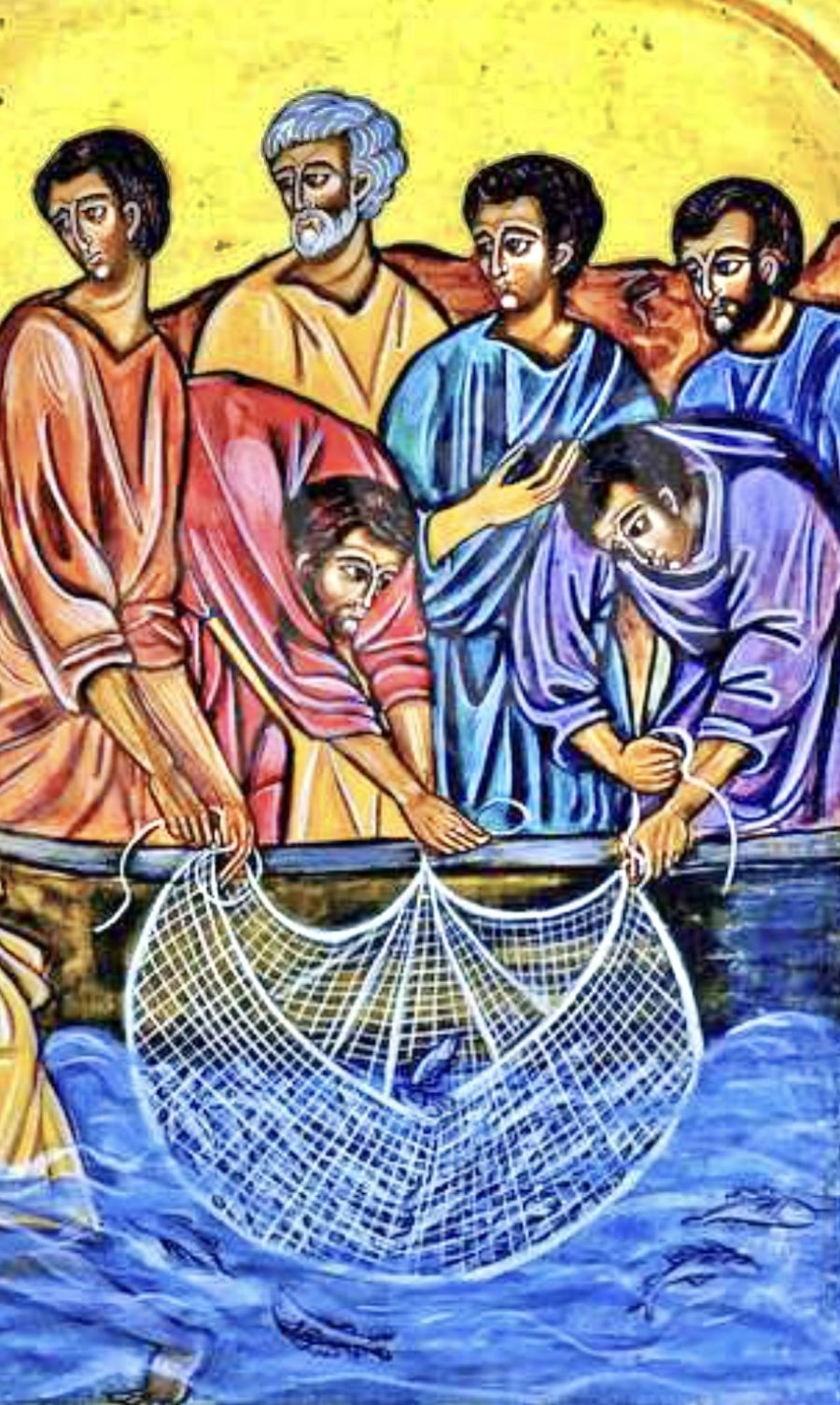
The Mission is «to bring out alive» (v.10) men overwhelmed by putrid sewage, submerged by impetuous waves; dragged to the bottom, to abysmal depths, by the violence of inhuman forces.

The Greek verb does not indicate «to fish» but rather «to capture alive», «take to keep alive», therefore «bring to life»: recover to the light, to the breath; being lifted up from polluted and suffocating depths.


Carrying on the work of the Master means helping people involved in deadly contexts, overwhelmed by eddies and waves that drag them down, so that they can dive into a water that is no longer cloudy, but healthy.

Work that is configured in the plural synergy of the ‘churches’, because none of them can be complete on its own (v.7).

Despite the uncertainties and the perhaps unsuitable hour, believing that the Word of Christ can accomplish the impossible is worth more than skill and opinion.

Ready or not, that Logos will make happen what it says.

Here is the manifestation of the strength and action of the Faith, not of common logic - when the Appeal of God becomes decisive in the choices.

A Call that bursts into chaos, with an humanizing charge and total novelty: it allows another ‘power’ to enter the world; discreet, but which does what says.


Here the solution of problems does not deny the human capacity, but rather tries to make it speak - in the discomforts of all, in listening to the symptoms, in giving him full voice: they are spies who already know in themselves what is wrong (v.8).

Thus involved, we will understand why the Lord does not disdain the extravagances of the transgressors.


If even for us every day seems the same, by inserting this non-conformist Novelty of Light into frustrations and fatigue, we will breathe and make any work clear, marked and fruitful.

We will understand the vocation of Jesus, who teaches in every place and to each one - making inexplicable recoveries.

From «Master» (v.5) to «Lord» (v.8): the inner Friend becomes a presence, an intimate relationship, a system of recognition and self-esteem; support not external, and trampoline.

Principle and Engine of Peace, fullness of being, recklessness and following (vv. 10-11) - therefore Announcement, imagination, incisiveness and conciliation.

Without effort, we will be able to slip away the opinions conditioning ‘nature’ and the Call itself.


To internalize and live the message:


What was the impulse that pressed you, and gave you fruit?

What has been your experience of expanded perspectives on the world, and inexplicable recovery?

Do you believe that all this can also happen in the time of the global crisis?


[Thursday 22th wk. in O.T.  September 3, 2026]

341 Last modified on Thursday, 03 September 2026 12:03
don Giuseppe Nespeca

Giuseppe Nespeca è architetto e sacerdote. Cultore della Sacra scrittura è autore della raccolta "Due Fuochi due Vie - Religione e Fede, Vangeli e Tao"; coautore del libro "Dialogo e Solstizio".

The question makes apparent the concern, present in ancient Jewish tradition, over finding a unifying principle in the various formulations of God's will […] Emphasis is placed on the totality of this dedication to God, listing the three faculties that define man in his deep psychological structures: heart, soul and mind. The word mind, diánoia, contains the rational element (Pope Benedict)
La domanda lascia trasparire la preoccupazione, presente nell’antica tradizione giudaica, di trovare un principio unificatore delle varie formulazioni della volontà di Dio […] L’accento è posto sulla totalità di questa dedizione a Dio, elencando le tre facoltà che definiscono l’uomo nelle sue strutture psicologiche profonde: cuore, anima e mente. Il termine mente, diánoia, contiene l’elemento razionale (Papa Benedetto)
A “year” of grace: the period of Christ’s ministry, the time of the Church before his glorious return, an interval of our life (Pope Francis)
Un “anno” di grazia: il tempo del ministero di Cristo, il tempo della Chiesa prima del suo ritorno glorioso, il tempo della nostra vita (Papa Francesco)
The Church, having before her eyes the picture of the generation to which we belong, shares the uneasiness of so many of the people of our time (Dives in Misericordia n.12)
Avendo davanti agli occhi l'immagine della generazione a cui apparteniamo, la Chiesa condivide l'inquietudine di tanti uomini contemporanei (Dives in Misericordia n.12)
Addressing this state of mind, the Church testifies to her hope, based on the conviction that evil, the mysterium iniquitatis, does not have the final word in human affairs (Pope John Paul II)
Di fronte a questi stati d'animo la Chiesa desidera testimoniare la sua speranza, basata sulla convinzione che il male, il mysterium iniquitatis, non ha l'ultima parola nelle vicende umane (Papa Giovanni Paolo II)
Jesus reminds us today that the expectation of the eternal beatitude does not relieve us of the duty to render the world more just and more liveable (Pope Francis)
Gesù oggi ci ricorda che l’attesa della beatitudine eterna non ci dispensa dall’impegno di rendere più giusto e più abitabile il mondo (Papa Francesco)
Those who open to Him will be blessed, because they will have a great reward: indeed, the Lord will make himself a servant to his servants — it is a beautiful reward — in the great banquet of his Kingdom He himself will serve them [Pope Francis]
E sarà beato chi gli aprirà, perché avrà una grande ricompensa: infatti il Signore stesso si farà servo dei suoi servi - è una bella ricompensa - nel grande banchetto del suo Regno passerà Lui stesso a servirli [Papa Francesco]
The fool in the Bible, the one who does not want to learn from the experience of visible things, that nothing lasts for ever but that all things pass away, youth and physical strength, amenities and important roles. Making one's life depend on such an ephemeral reality is therefore foolishness (Pope Benedict)
L’uomo stolto nella Bibbia è colui che non vuole rendersi conto, dall’esperienza delle cose visibili, che nulla dura per sempre, ma tutto passa: la giovinezza come la forza fisica, le comodità come i ruoli di potere. Far dipendere la propria vita da realtà così passeggere è, dunque, stoltezza (Papa Benedetto)
As sometimes happens in the Gospel, faced with the trap set by his enemies, Jesus, with his response, rises above the contingent controversy and goes far beyond the particular and mutually divergent positions (Pope John Paul II)

Due Fuochi due Vie - Vol. 1 Due Fuochi due Vie - Vol. 2 Due Fuochi due Vie - Vol. 3 Due Fuochi due Vie - Vol. 4 Due Fuochi due Vie - Vol. 5 Dialogo e Solstizio I fiammiferi di Maria

duevie.art

don Giuseppe Nespeca

Tel. 333-1329741


Disclaimer

Questo blog non rappresenta una testata giornalistica in quanto viene aggiornato senza alcuna periodicità. Non può pertanto considerarsi un prodotto editoriale ai sensi della legge N°62 del 07/03/2001.
Le immagini sono tratte da internet, ma se il loro uso violasse diritti d'autore, lo si comunichi all'autore del blog che provvederà alla loro pronta rimozione.
L'autore dichiara di non essere responsabile dei commenti lasciati nei post. Eventuali commenti dei lettori, lesivi dell'immagine o dell'onorabilità di persone terze, il cui contenuto fosse ritenuto non idoneo alla pubblicazione verranno insindacabilmente rimossi.