Aug 8, 2026 Written by 

Eucharist, Faith: Signs of universal gathering

Crumbs and 'nose', integral parts

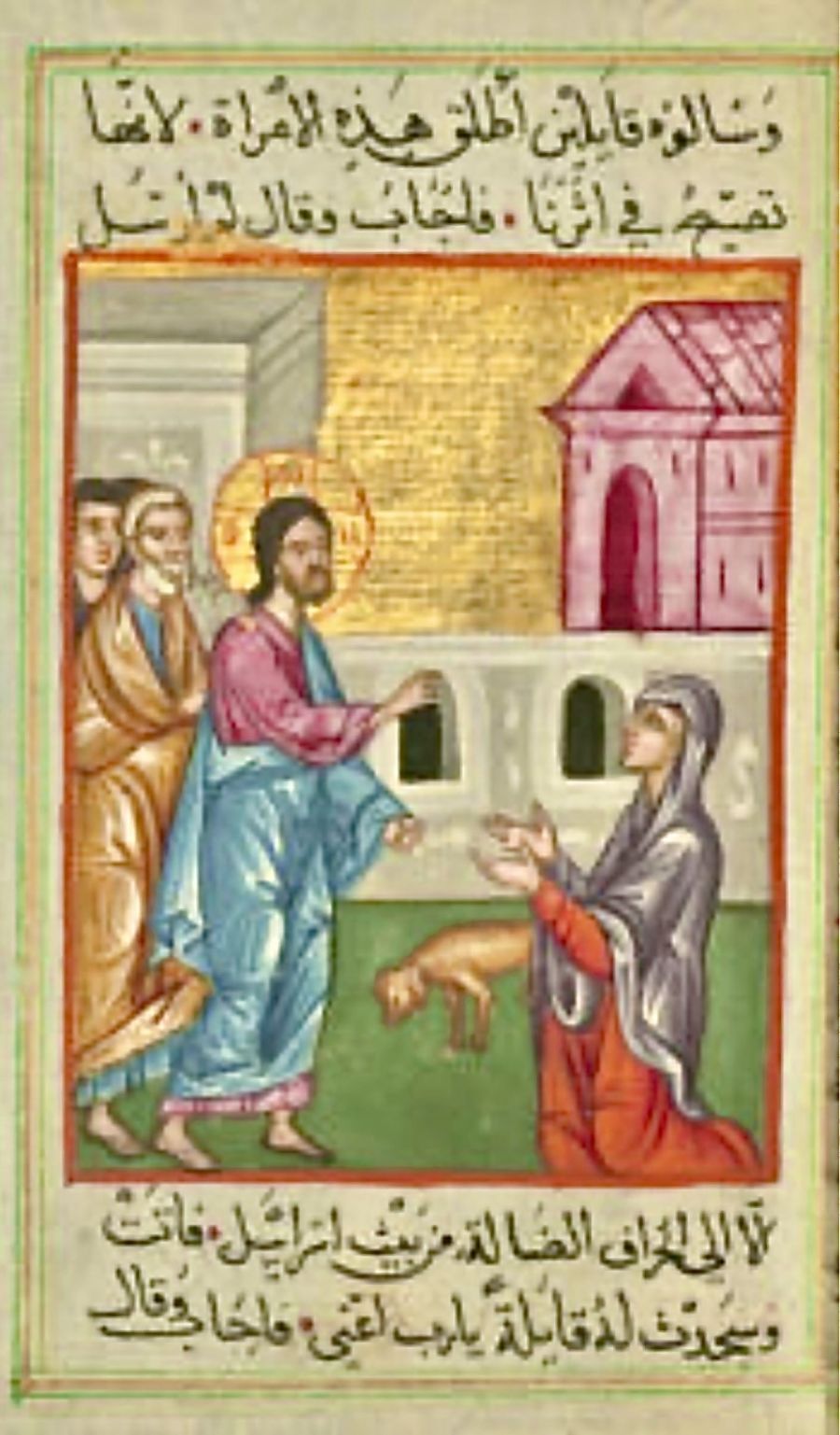
(Mt 15:21-28)


Religious law prevented dealing with foreign people and other ethnicities, borders, or culture.

At the beginning, Jesus [that is: He in the first communities, his Mystical Body] seems not to want to occupy himself with it (v.26).

But after helping the crowds and his own intimates to emancipate themselves from the prison of purity norms (vv.10-20), the young Rabbi himself had emerged from the conformist ways of experiencing God.

He makes an Exodus even from national and race territories that at that time were seizing the vital sap of the souls - thus flying over the "sacred" preconceptions.

To make us grow in Faith, Christ promotes the most varied existence. In this way, outside the standard myopia, He can find astounding adherences.

Faith: New Principle, which does not alienate us from ourselves. And crumbles any illusion of exclusivity.


The singular initiatives of the Son are born on the basis of the all-personal experience of the divine, of a Father who bestows unconditionally.

Provident, and unequal from the stingy God of ancient religions: sovereign all discordant from creatures, alien, predatory, and incomprehensibly addicted to habit.

With an unusual stunt, the young Rabbi tries to open the Judaizing mentality, overcoming borders.

Even the dialogue with a woman not of his people was a "novelty" alien to the mentality of the time’s crowds. Initiative foreign even to the conceptions of the first two generations of believers; marked by a creed still blocked and mixed with idols.

But there was a whole people of strangers [the mestizo «Woman» and her spiritual ‘offspring’] who felt they had no future... and this called into question the many aprioriisms of the time.

In short, even the church of Mt had not fully grasped the meaning of the «bread of the sons» - all available, for it to be “recognized”.


Because of rivalry, ancient peoples used to call foreigners with the contemptuous nickname of «dog»: synonymous with impudence, meanness and ignoble baseness.

The Lord's very harsh phrase (v.26) reflects a comparison coming from poor areas and from family life, where once there were plenty of pets and youth.

There was also a difference between ‘children’ generated by listening to the Word of God and those who adjusted themselves “by scent”. But although no one denied sustenance to the «sons» to give it to the «dogs» around them - the latter had at least the right of crumbs fallen on the ground.

For differents and far - even bad-considered - it is not a problem to resort to Jesus in an instinctive way; indeed, even today they would be satisfied with the shatters.

[Unfortunately, not infrequently strangers and difforms are hungrier of the real Manna from Heaven].


Christian community should not lack the nourishment of the body and the food of wisdom for everyone (Mt 14:20-21).

Faith has no nationality, and it is the only immediate language and relationship valid for communication between God and woman and man.

Christ is a sapiential feeds for a free circulation; not a sign to be hindered and kept closed.

To break the Bread is to participate our existence at root; what we have and are. Metre of what we proclaim, believe and practice.


[20th Sunday in O.T. (year A), August 16, 2026]

248 Last modified on Sunday, 16 August 2026 12:00
don Giuseppe Nespeca

Giuseppe Nespeca è architetto e sacerdote. Cultore della Sacra scrittura è autore della raccolta "Due Fuochi due Vie - Religione e Fede, Vangeli e Tao"; coautore del libro "Dialogo e Solstizio".

These divisions are seen in the relationships between individuals and groups, and also at the level of larger groups: nations against nations and blocs of opposing countries in a headlong quest for domination [Reconciliatio et Paenitentia n.2]
Queste divisioni si manifestano nei rapporti fra le persone e fra i gruppi, ma anche a livello delle più vaste collettività: nazioni contro nazioni, e blocchi di paesi contrapposti, in un'affannosa ricerca di egemonia [Reconciliatio et Paenitentia n.2]
Mary "Girl" [...] point of convergence and arrival of a complex of divine promises, mysteriously echoed in the very heart of history (Pope John Paul II)
Maria “Bambina” […] punto di convergenza e di arrivo di un complesso di promesse divine, echeggiate misteriosamente nel cuore stesso della storia (Papa Giovanni Paolo II)
Luke’s passage puts before the eyes a double slavery: that of man «with his hand paralyzed, slave of his illness», and that of the «Pharisees, scribes, slaves of their rigid, legalistic attitudes» (Pope Francis)
Il racconto di Luca mette davanti agli occhi una duplice schiavitù: quella dell’uomo «con la mano paralizzata, schiavo della sua malattia», e quella «dei farisei, degli scribi, schiavi dei loro atteggiamenti rigidi, legalistici» (Papa Francesco)
Origen says “we should practise this symphony” (Commentary on the Gospel according to Matthew, 14,1), in other words this harmony within the Christian community [Pope Benedict]
Dice Origene che “dobbiamo esercitarci in questa sinfonia” (Commento al Vangelo di Matteo 14, 1), cioè in questa concordia all’interno della comunità cristiana [Papa Benedetto]
Thus in communion with Christ, in a faith that creates charity, the entire Law is fulfilled. We become just by entering into communion with Christ who is Love (Pope Benedict)
Così nella comunione con Cristo, nella fede che crea la carità, tutta la Legge è realizzata. Diventiamo giusti entrando in comunione con Cristo che è l'amore (Papa Benedetto)
«Francis was reproaching his brethren too harsh towards themselves, and who came to exhaustion by means of vigils, fasts, prayers and corporal penances» [FS 1470]
«Francesco muoveva rimproveri ai suoi fratelli troppo duri verso se stessi, e che arrivavano allo sfinimento a forza di veglie, digiuni, orazioni e penitenze corporali» [FF 1470]
From a human point of view, he thinks that there should be distance between the sinner and the Holy One. In truth, his very condition as a sinner requires that the Lord not distance Himself from him, in the same way that a doctor cannot distance himself from those who are sick (Pope Francis)
Da un punto di vista umano, pensa che ci debba essere distanza tra il peccatore e il Santo. In verità, proprio la sua condizione di peccatore richiede che il Signore non si allontani da lui, allo stesso modo in cui un medico non può allontanarsi da chi è malato (Papa Francesco)
The life of the Church in the Third Millennium will certainly not be lacking in new and surprising manifestations of "the feminine genius" (Pope John Paul II)
The basis of Christian construction is listening to and the fulfilment of the word of Christ (Pope John Paul II)
Alla base della costruzione cristiana c’è l’ascolto e il compimento della parola di Cristo (Papa Giovanni Paolo II)

Due Fuochi due Vie - Vol. 1 Due Fuochi due Vie - Vol. 2 Due Fuochi due Vie - Vol. 3 Due Fuochi due Vie - Vol. 4 Due Fuochi due Vie - Vol. 5 Dialogo e Solstizio I fiammiferi di Maria

duevie.art

don Giuseppe Nespeca

Tel. 333-1329741


Disclaimer

Questo blog non rappresenta una testata giornalistica in quanto viene aggiornato senza alcuna periodicità. Non può pertanto considerarsi un prodotto editoriale ai sensi della legge N°62 del 07/03/2001.
Le immagini sono tratte da internet, ma se il loro uso violasse diritti d'autore, lo si comunichi all'autore del blog che provvederà alla loro pronta rimozione.
L'autore dichiara di non essere responsabile dei commenti lasciati nei post. Eventuali commenti dei lettori, lesivi dell'immagine o dell'onorabilità di persone terze, il cui contenuto fosse ritenuto non idoneo alla pubblicazione verranno insindacabilmente rimossi.






