Jul 28, 2026 Written by 

Faith: Crumbs and "nose", integral parts. Signs of universal gathering

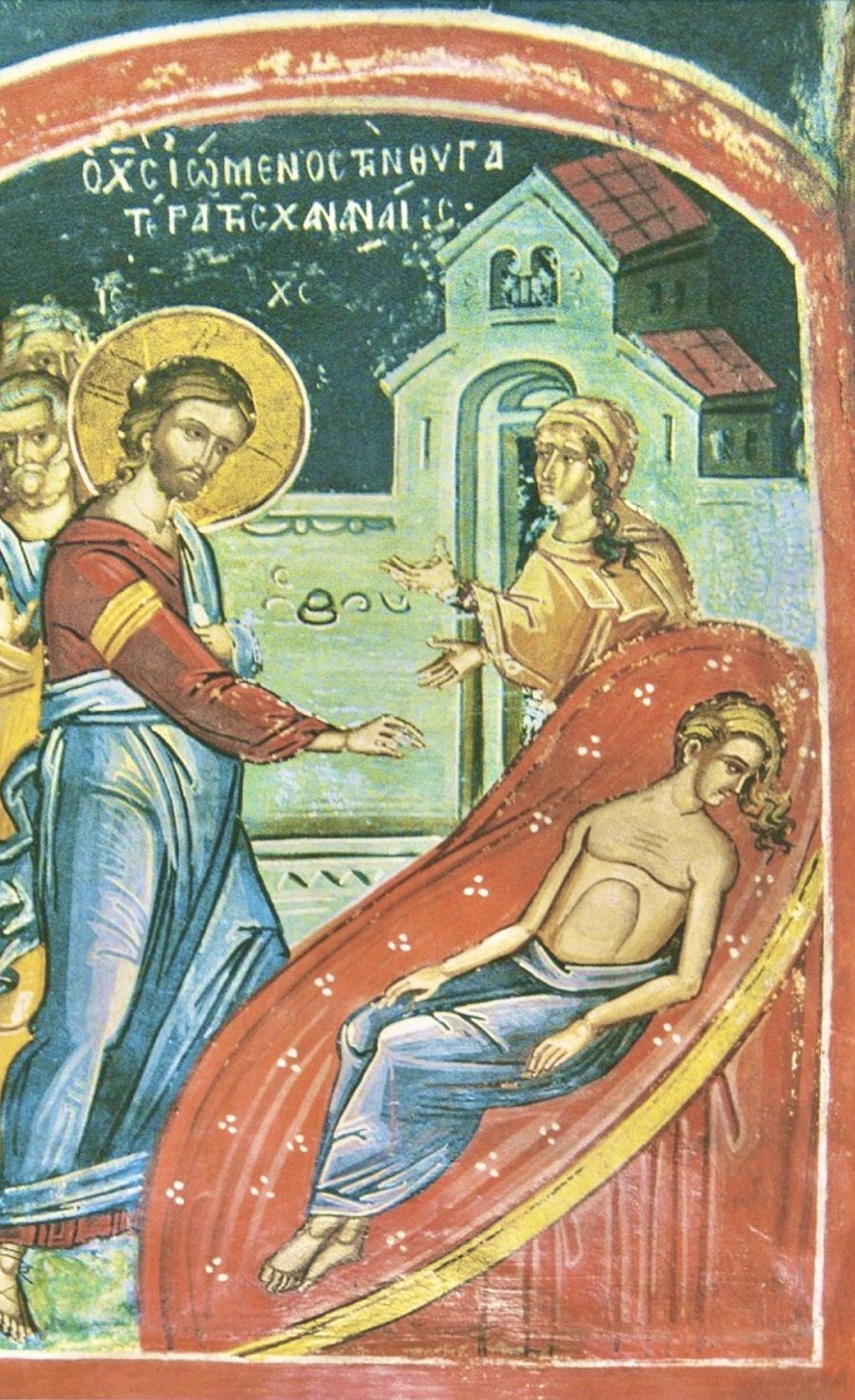
(Mt 15:21-28)


Religious law prevented dealing with foreign people and other ethnicities, borders, or culture.

At the beginning, Jesus [that is: He in the first communities, his Mystical Body] seems not to want to occupy himself with it (v.26).

But after helping the crowds and his own intimates to emancipate themselves from the prison of purity norms (vv.10-20), the young Rabbi himself had emerged from the conformist ways of experiencing God.

He makes an Exodus even from national and race territories that at that time were seizing the vital sap of the souls - thus flying over the "sacred" preconceptions.

To make us grow in Faith, Christ promotes the most varied existence. In this way, outside the standard myopia, He can find astounding adherences.

Faith: New Principle, which does not alienate us from ourselves. And crumbles any illusion of exclusivity.


The singular initiatives of the Son are born on the basis of the all-personal experience of the divine, of a Father who bestows unconditionally.

Provident, and unequal from the stingy God of ancient religions: sovereign all discordant from creatures, alien, predatory, and incomprehensibly addicted to habit.

With an unusual stunt, the young Rabbi tries to open the Judaizing mentality, overcoming borders.

Even the dialogue with a woman not of his people was a "novelty" alien to the mentality of the time’s crowds. Initiative foreign even to the conceptions of the first two generations of believers; marked by a creed still blocked and mixed with idols.

But there was a whole people of strangers [the mestizo «Woman» and her spiritual ‘offspring’] who felt they had no future... and this called into question the many aprioriisms of the time.

In short, even the church of Mt had not fully grasped the meaning of the «bread of the sons» - all available, for it to be “recognized”.


Because of rivalry, ancient peoples used to call foreigners with the contemptuous nickname of «dog»: synonymous with impudence, meanness and ignoble baseness.

The Lord's very harsh phrase (v.26) reflects a comparison coming from poor areas and from family life, where once there were plenty of pets and youth.

There was also a difference between ‘children’ generated by listening to the Word of God and those who adjusted themselves “by scent”. But although no one denied sustenance to the «sons» to give it to the «dogs» around them - the latter had at least the right of crumbs fallen on the ground.

For differents and far - even bad-considered - it is not a problem to resort to Jesus in an instinctive way; indeed, even today they would be satisfied with the shatters.

[Unfortunately, not infrequently strangers and difforms are hungrier of the real Manna from Heaven].


Christian community should not lack the nourishment of the body and the food of wisdom for everyone (Mt 14:20-21).

Faith has no nationality, and it is the only immediate language and relationship valid for communication between God and woman and man.

Christ is a sapiential feeds for a free circulation; not a sign to be hindered and kept closed.

To break the Bread is to participate our existence at root; what we have and are. Metre of what we proclaim, believe and practice.


[Wednesday 18th wk. in O.T.  August 5, 2026]

260 Last modified on Wednesday, 05 August 2026 11:59
don Giuseppe Nespeca

Giuseppe Nespeca è architetto e sacerdote. Cultore della Sacra scrittura è autore della raccolta "Due Fuochi due Vie - Religione e Fede, Vangeli e Tao"; coautore del libro "Dialogo e Solstizio".

We see this great figure, this force in the Passion, in resistance to the powerful. We wonder: what gave birth to this life, to this interiority so strong, so upright, so consistent, spent so totally for God in preparing the way for Jesus? The answer is simple: it was born from the relationship with God (Pope Benedict)
Noi vediamo questa grande figura, questa forza nella passione, nella resistenza contro i potenti. Domandiamo: da dove nasce questa vita, questa interiorità così forte, così retta, così coerente, spesa in modo così totale per Dio e preparare la strada a Gesù? La risposta è semplice: dal rapporto con Dio (Papa Benedetto)
The lamp is a symbol of the faith that illuminates our life, while the oil is a symbol of the charity that nourishes the light of faith, making it fruitful and credible (Pope Francis)
La lampada è il simbolo della fede che illumina la nostra vita, mentre l’olio è il simbolo della carità che alimenta, rende feconda e credibile la luce della fede (Papa Francesco)
Jesus wants our existence to be laborious, that we never lower our guard, so as to welcome with gratitude and wonder each new day given to us by God. Every morning is a blank page on which a Christian begins to write with good works (Pope Francis)
Gesù vuole che la nostra esistenza sia laboriosa, che non abbassiamo mai la guardia, per accogliere con gratitudine e stupore ogni nuovo giorno donatoci da Dio. Ogni mattina è una pagina bianca che il cristiano comincia a scrivere con le opere di bene (Papa Francesco)
And this is the problem: when the People put down roots in the land and are the depository of the Law, they are tempted to place their security and joy in something that is no longer the Word of God (Pope Benedict)
Ed ecco il problema: quando il popolo si stabilisce nella terra, ed è depositario della Legge, è tentato di riporre la sua sicurezza e la sua gioia in qualcosa che non è più la Parola del Signore (Papa Benedetto)
Despite the scarcity of information about him, St Bartholomew stands before us to tell us that attachment to Jesus can also be lived and witnessed to without performing sensational deeds. Jesus himself, to whom each one of us is called to dedicate his or her own life and death, is and remains extraordinary (Pope Benedict)
La figura di san Bartolomeo, pur nella scarsità delle informazioni che lo riguardano, resta comunque davanti a noi per dirci che l'adesione a Gesù può essere vissuta e testimoniata anche senza il compimento di opere sensazionali. Straordinario è e resta Gesù stesso, a cui ciascuno di noi è chiamato a consacrare la propria vita e la propria morte (Papa Benedetto)
Faith is more than just empirical or historical facts; it is an ability to grasp the mystery of Christ’s person in all its depth [Pope Benedict]
La fede va al di là dei semplici dati empirici o storici, ed è capace di cogliere il mistero della persona di Cristo nella sua profondità [Papa Benedetto]
More than 600 precepts are mentioned in the Law of Moses. How should the great commandment be distinguished among these? (Pope Francis)
Nella Legge di Mosè sono menzionati oltre seicento precetti. Come distinguere, tra tutti questi, il grande comandamento? (Papa Francesco)
The invitation has three characteristics: freely offered, breadth and universality. Many people were invited, but something surprising happened: none of the intended guests came to take part in the feast, saying they had other things to do; indeed, some were even indifferent, impertinent, even annoyed (Pope Francis)

Due Fuochi due Vie - Vol. 1 Due Fuochi due Vie - Vol. 2 Due Fuochi due Vie - Vol. 3 Due Fuochi due Vie - Vol. 4 Due Fuochi due Vie - Vol. 5 Dialogo e Solstizio I fiammiferi di Maria

duevie.art

don Giuseppe Nespeca

Tel. 333-1329741


Disclaimer

Questo blog non rappresenta una testata giornalistica in quanto viene aggiornato senza alcuna periodicità. Non può pertanto considerarsi un prodotto editoriale ai sensi della legge N°62 del 07/03/2001.
Le immagini sono tratte da internet, ma se il loro uso violasse diritti d'autore, lo si comunichi all'autore del blog che provvederà alla loro pronta rimozione.
L'autore dichiara di non essere responsabile dei commenti lasciati nei post. Eventuali commenti dei lettori, lesivi dell'immagine o dell'onorabilità di persone terze, il cui contenuto fosse ritenuto non idoneo alla pubblicazione verranno insindacabilmente rimossi.






