Jun 10, 2026 Written by 

‘Cross-inside’ in Prayer: gaze no longer positioned outside

Sons’ Prayer: performance or Listening?

Mt 6:7-15 (v.13)


«When you pray, do not babble like the pagans, for they think they will be heard because of their wordiness» (Mt 6:7; cf. Lk 11:1).

The God of religions was named with an overabundance of high-sounding honorific epithets, as if he craved ever more numerous ranks of incensers.

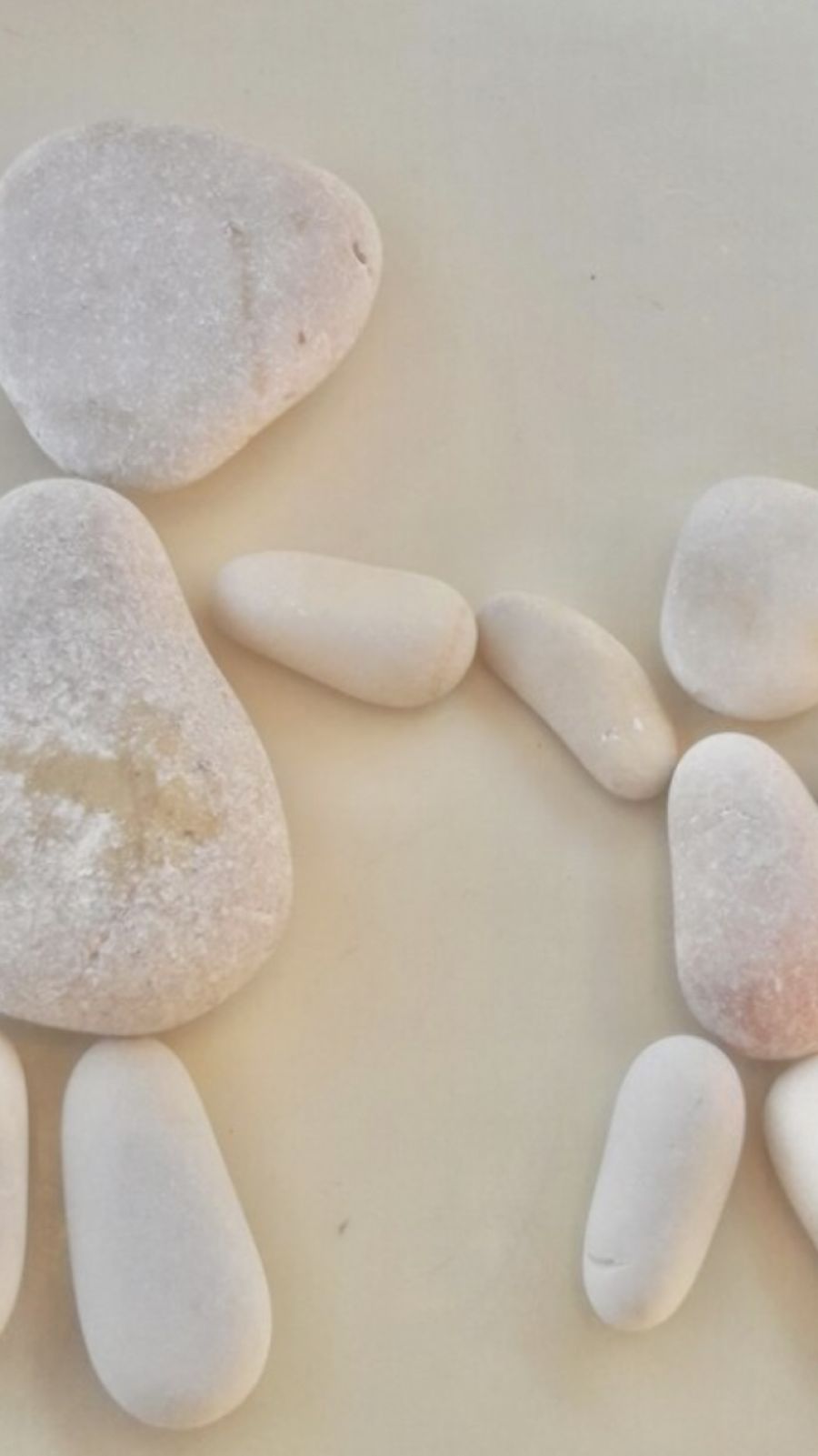
The «Father» is not accompanied by prestigious titles. A child does not address the parent as a very high, eternal and omnipotent, but the a reliable family Person who transmits life to him.

And the son does not imagine that he has to offer external cries and acknowledgments: the Father looks at needs, not merits.


«Et ne nos inducas in tentationem»: ancient Prayer of the sons.


«Do not induce us [Lead us not into]» is (in the Latin and Greek sense: «until the end») an ancient Symbol of the ‘reborn in Christ’, in the experience of real life.

In religions there are clearly opposed demons and angels: disordered and dark powers, contrary to the bright and "right" ones.

But by dint of relegating the former, the worst continually resurface, until they win the game and spread.

In the lives of the saints we see these great women and men strangely always under temptation - because they disdain evil, therefore they do not know it.

Gradually, however, the little constant naggings becomes overwhelming crowds.


The persons of Faith do not act according to pre-established and superficial models, not even religious ones; they are aware that they are not heroes or paradigm phenomena.

That is why they rely on. They let intimate problems go by: understood its strength!

This is the meaning of the formula of the Our Father, in its original sense: «and lead us not into [the end of] temptation [trial] (because we know our weakness)».

If, on the other hand, our 'counterpart' becomes a protagonist, a one-sided pivot, a constant afterthought, and a block, we are done for.


Pain, failures, sadness, frustrations, weaknesses, a thousand anxieties, too many falls, accustom us to experience transgressions as part of ourselves: Condition to be evaluated, not "guilt" to be cut horizontally.

In the process of true salvific transmutation, that signal speaks of us: within a deviation or the eccentricity there is a secret or a knowledge to be found, for a ‘new personal birth’.

Looking at the discomforts and oppositions, we realize that these critical sides of being become like a malleable magma, which approaches our healing more quickly. As if through a permanent, radical conversion… because it involves and belongs to us; not in peripheral mode, but basically, of Seed and Nature.

Absorbed patterns and beliefs do not allow us to understand that the passionate life is composed of opposing states, of competitive energies - which must not be disguised in order to be considered decent people.


Perceiving and integrating such depths, we lay down the idea and atmosphere of impending danger, devoid of further opportunity; only for death.

We become mature, without dissociation or hysterical states resulting from contrived identifications, nor disesteem for an important part of us.

In short, straits and "crosses" have something to tell us.

They shake the soul to the root, sweep away the absorbed masks, ignite the person, and save the life.

In this way, inconveniences and anxieties help us. They hide capabilities and possibilities that we do not yet see.

In the virtue of the shaky yet unique exceptionality for each person, here is the true journey opening up.

Path of the Father and of the heart, Way that wants to guide us to alternative trajectories, new dimensions of existence.


The difference of the Faith, compared to ancient religiosity [in the sense of the ‘Cross-inside’]?

It is in the consciousness that only the sick heal, only the incomplete grow.

Only the halting women and men regain expression, evolve. And falling, they snap forward.


[Thursday 11th wk. in O.T.  June 18, 2026]

263 Last modified on Thursday, 18 June 2026 12:08
don Giuseppe Nespeca

Giuseppe Nespeca è architetto e sacerdote. Cultore della Sacra scrittura è autore della raccolta "Due Fuochi due Vie - Religione e Fede, Vangeli e Tao"; coautore del libro "Dialogo e Solstizio".

This Parable of the Sower is somewhat the ‘mother’ of all parables […] Such is the heart of God! Each one of us is ground on which the seed of the Word falls; no one is excluded! [Pope Francis]
Questa del seminatore è un po’ la “madre” di tutte le parabole […] Così è il cuore di Dio! Ognuno di noi è un terreno su cui cade il seme della Parola, nessuno è escluso [Papa Francesco]
Are we not perhaps all afraid in some way? If we let Christ enter fully into our lives, if we open ourselves totally to him, are we not afraid that He might take something away from us? Are we not perhaps afraid to give up something significant, something unique, something that makes life so beautiful? Do we not then risk ending up diminished and deprived of our freedom? (Pope Benedict)
Non abbiamo forse tutti in qualche modo paura - se lasciamo entrare Cristo totalmente dentro di noi, se ci apriamo totalmente a lui – paura che Egli possa portar via qualcosa della nostra vita? Non abbiamo forse paura di rinunciare a qualcosa di grande, di unico, che rende la vita così bella? Non rischiamo di trovarci poi nell’angustia e privati della libertà? (Papa Benedetto)
«Is there an attitude for those who want to follow Jesus» so that «they do not end badly, that they do not end up eaten alive - as my mother used to say: "Eat raw" - by others»? (Pope Francis)
«Esiste un atteggiamento per quelli che vogliono seguire Gesù» in modo che «non finiscano male, che non finiscano mangiati vivi — come diceva mia mamma: “Mangiati crudi” — dagli altri»? (Papa Francesco)
For Christians, volunteer work is not merely an expression of good will. It is based on a personal experience of Christ (Pope Benedict)
Per i cristiani, il volontariato non è soltanto espressione di buona volontà. È basato sull’esperienza personale di Cristo (Papa Benedetto)
Christ reveals his identity of Messiah, Israel's bridegroom, who came for the betrothal with his people. Those who recognize and welcome him are celebrating. However, he will have to be rejected and killed precisely by his own; at that moment, during his Passion and death, the hour of mourning and fasting will come (Pope Benedict)
Cristo rivela la sua identità di Messia, Sposo d'Israele, venuto per le nozze con il suo popolo. Quelli che lo riconoscono e lo accolgono con fede sono in festa. Egli però dovrà essere rifiutato e ucciso proprio dai suoi: in quel momento, durante la sua passione e la sua morte, verrà l'ora del lutto e del digiuno (Papa Benedetto)
For the prodigious and instantaneous healing of the paralytic, the apostle St. Matthew is more sober than the other synoptics, St. Mark and St. Luke. These add broader details, including that of the opening of the roof in the environment where Jesus was, to lower the sick man with his lettuce, given the huge crowd that crowded at the entrance. Evident is the hope of the pitiful companions: they almost want to force Jesus to take care of the unexpected guest and to begin a dialogue with him (Pope Paul VI)
As the cross can be reduced to being an ornament, “to carry the cross” can become just a manner of speaking (John Paul II)
Come la croce può ridursi ad oggetto ornamentale, così "portare la croce" può diventare un modo di dire (Giovanni Paolo II)

Due Fuochi due Vie - Vol. 1 Due Fuochi due Vie - Vol. 2 Due Fuochi due Vie - Vol. 3 Due Fuochi due Vie - Vol. 4 Due Fuochi due Vie - Vol. 5 Dialogo e Solstizio I fiammiferi di Maria

duevie.art

don Giuseppe Nespeca

Tel. 333-1329741


Disclaimer

Questo blog non rappresenta una testata giornalistica in quanto viene aggiornato senza alcuna periodicità. Non può pertanto considerarsi un prodotto editoriale ai sensi della legge N°62 del 07/03/2001.
Le immagini sono tratte da internet, ma se il loro uso violasse diritti d'autore, lo si comunichi all'autore del blog che provvederà alla loro pronta rimozione.
L'autore dichiara di non essere responsabile dei commenti lasciati nei post. Eventuali commenti dei lettori, lesivi dell'immagine o dell'onorabilità di persone terze, il cui contenuto fosse ritenuto non idoneo alla pubblicazione verranno insindacabilmente rimossi.






