May 27, 2026 Written by 

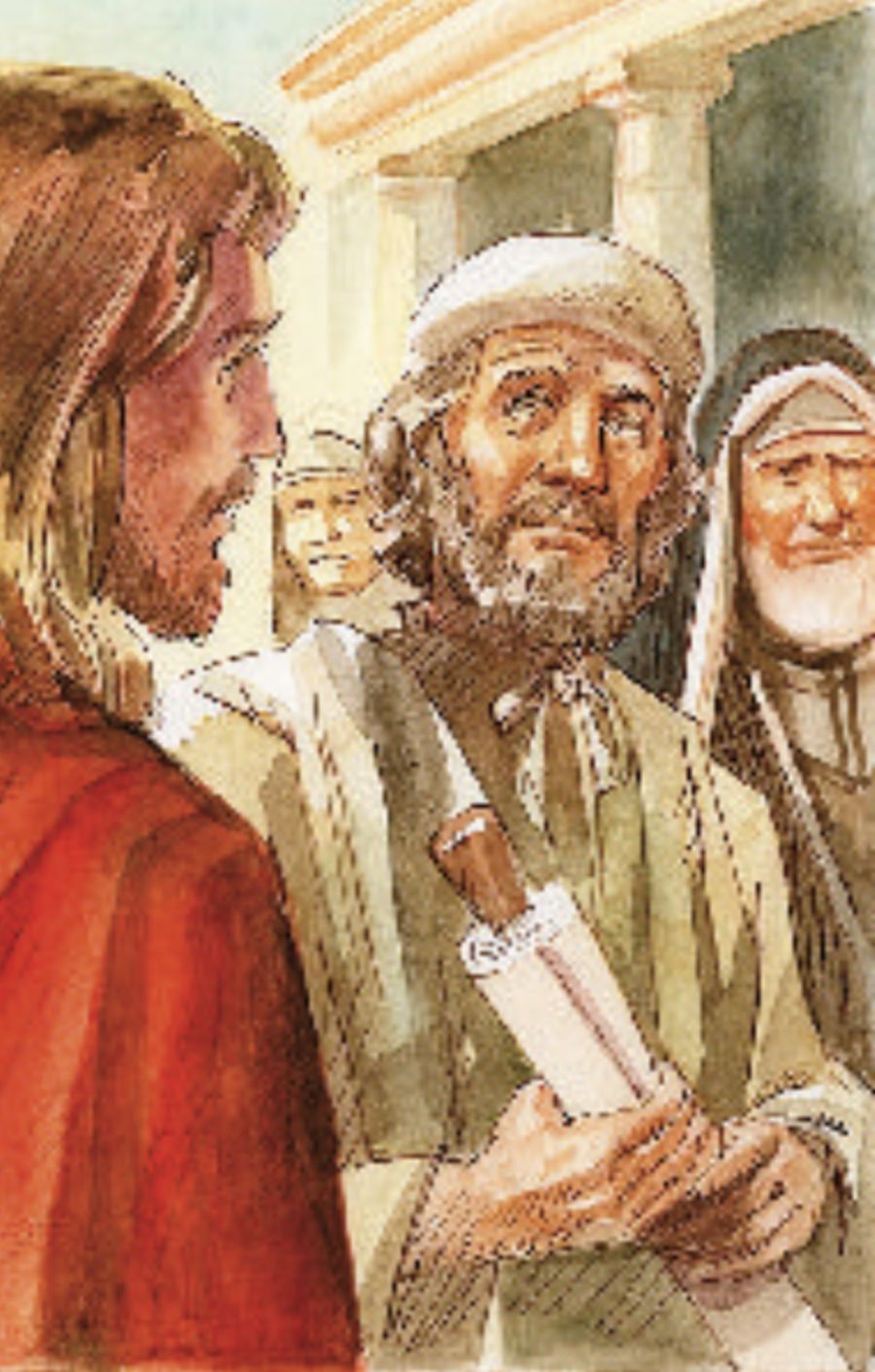
The Great Commandment: only deep Quality compels

No forced surrender

(Mk 12:28b-34)


That of the ‘Great commandment’ was the most familiar catechism rule, even to infants.

Jesus is questioned only to retort: and why do you not keep the one commandment that even God fulfils - the Sabbath rest?

The only disposition in which the Father recognizes himself is Love, not some particular precept - because only profound Quality obliges.

The spiritual proposal of the Master makes the narrative of God's people and the practice of the Prophets its own: all heart, feet, hands - and intelligence.

Complete Love for God envelops the creature in every decision [heart], every moment and aspect of its concrete «life», all its resources [strength].

Mt 22:37 does not explicitly mention this last aspect, perhaps to emphasize that the Father does not absorb energies in any way, but transmits them.

And Jesus adds to the nuances of authentic understanding with God enumerated in the First Testament an unexpected side to those who think of love as a feeling only emotional.

The Lord suggests study, discernment and understanding of our perceptions (v.30) - the mental and deep intelligence aspect that complements Dt 6.

At first glance, it appears to be a secondary facet or even a frill for the qualitative leap from a common religious sense to the wisely and personally configured existence of Faith.

The exact opposite is true: we are children of a Father who does not supplant us, nor absorb our forces or potential, depersonalising us; not even from the mental point of view.

Practicality alone makes us fragile, not very aware; and when we are not convinced, we will not be reliable either, always at the mercy of changing situations and the conformist, fashionable, other people’s opinion.

Jesus does not speak of love for God in terms of intimacy and feeling, but of a totally involving affinity, made less oscillating precisely by the development of our sapiential measure on issues.

Here is a decisive appointment, of the Love in the round.

It would be unnatural to recognise a Lord of Heaven who does not come to meet us and instead towers over us with an objective of his own, which is extrinsic to us and makes us marginal.


Loving «How [and Because] yourself»: it is a new Genesis in the spirit of Giving.

The paradox suggested by Jesus is that we love for the care to meet - and because we love ourselves - by expanding the I into the You.

God’s «great command» affects real life and concerns not only the quality of relationship with the world and neighbour, but the reflexive global with oneself. 

We should not be afraid of other doctrines and disciplines, neglecting the challenges even intellectual ones that call into question beliefs, works, one’s worldview, language, style, and thought itself.

All added values.

Needless to complain, if the ecclesial realities that do not update or deepen, and remain in the inherited commonplaces [or vogues] slowly decay, then disappear.

Therefore to the ancient notes of true love, the Son of God adds the ‘quality of mind’: we are not gullible, clueless, one-sided.

Our outstretched hands are the result of free and conscious choice. No forced surrender.

«Faith that does not become culture is a faith that is not fully accepted, not entirely thought out, not faithfully lived» [John Paul II].


To internalize and live the message:


What is Great for you? Do you document and update yourself in order to better correspond to God’s Call?


[Thursday 9th wk. in O.T.  June 4, 2026]

243 Last modified on Thursday, 04 June 2026 12:00
don Giuseppe Nespeca

Giuseppe Nespeca è architetto e sacerdote. Cultore della Sacra scrittura è autore della raccolta "Due Fuochi due Vie - Religione e Fede, Vangeli e Tao"; coautore del libro "Dialogo e Solstizio".

In the heart of every man there is the desire for a house [...] My friends, this brings about a question: “How do we build this house?” (Pope Benedict)
Nel cuore di ogni uomo c'è il desiderio di una casa [...] Amici miei, una domanda si impone: "Come costruire questa casa?" (Papa Benedetto)
Every time we open ourselves to God's call, we prepare, like John, the way of the Lord among men (John Paul II)
Tutte le volte che ci apriamo alla chiamata di Dio, prepariamo, come Giovanni, la via del Signore tra gli uomini (Giovanni Paolo II)
Christian beatitude, as a synonym for holiness, is not separated from a component of suffering or at least of difficulty [...] But the kingdom of heaven is for the nonconformists (John Paul II)
La beatitudine cristiana, come sinonimo di santità, non è disgiunta da una componente di sofferenza o almeno di difficoltà […] Ma il regno dei cieli è per gli anticonformisti (Giovanni Paolo II)
Paolo VI stated that the world today is suffering above all from a lack of brotherhood: “Human society is sorely ill. The cause is not so much the depletion of natural resources, nor their monopolistic control by a privileged few; it is rather the weakening of brotherly ties between individuals and nations” (Pope Benedict)
Paolo VI affermava che il mondo soffre oggi soprattutto di una mancanza di fraternità: «Il mondo è malato. Il suo male risiede meno nella dilapidazione delle risorse o nel loro accaparramento da parte di alcuni, che nella mancanza di fraternità tra gli uomini e tra i popoli» (Papa Benedetto)
Our commitment does not consist exclusively of activities or programmes of promotion and assistance; what the Holy Spirit mobilizes is not an unruly activism, but above all an attentiveness that considers the other in a certain sense as one with ourselves (Pope Francis)
Il nostro impegno non consiste esclusivamente in azioni o in programmi di promozione e assistenza; quello che lo Spirito mette in moto non è un eccesso di attivismo, ma prima di tutto un’attenzione rivolta all’altro considerandolo come un’unica cosa con se stesso (Papa Francesco)
The drama of prayer is fully revealed to us in the Word who became flesh and dwells among us. To seek to understand his prayer through what his witnesses proclaim to us in the Gospel is to approach the holy Lord Jesus as Moses approached the burning bush: first to contemplate him in prayer, then to hear how he teaches us to pray, in order to know how he hears our prayer (Catechism of the Catholic Church n.2598)
L’evento della preghiera ci viene pienamente rivelato nel Verbo che si è fatto carne e dimora in mezzo a noi. Cercare di comprendere la sua preghiera, attraverso ciò che i suoi testimoni ci dicono di essa nel Vangelo, è avvicinarci al santo Signore Gesù come al roveto ardente: dapprima contemplarlo mentre prega, poi ascoltare come ci insegna a pregare, infine conoscere come egli esaudisce la nostra preghiera (Catechismo della Chiesa Cattolica n.2598)
“Love is an excellent thing”, we read in the book the Imitation of Christ. “It makes every difficulty easy, and bears all wrongs with equanimity…. Love tends upward; it will not be held down by anything low… love is born of God and cannot rest except in God” (III, V, 3) [Pope Benedict]
«Grande cosa è l’amore – leggiamo nel libro dell’Imitazione di Cristo –, un bene che rende leggera ogni cosa pesante e sopporta tranquillamente ogni cosa difficile [Papa Benedetto]

Due Fuochi due Vie - Vol. 1 Due Fuochi due Vie - Vol. 2 Due Fuochi due Vie - Vol. 3 Due Fuochi due Vie - Vol. 4 Due Fuochi due Vie - Vol. 5 Dialogo e Solstizio I fiammiferi di Maria

duevie.art

don Giuseppe Nespeca

Tel. 333-1329741


Disclaimer

Questo blog non rappresenta una testata giornalistica in quanto viene aggiornato senza alcuna periodicità. Non può pertanto considerarsi un prodotto editoriale ai sensi della legge N°62 del 07/03/2001.
Le immagini sono tratte da internet, ma se il loro uso violasse diritti d'autore, lo si comunichi all'autore del blog che provvederà alla loro pronta rimozione.
L'autore dichiara di non essere responsabile dei commenti lasciati nei post. Eventuali commenti dei lettori, lesivi dell'immagine o dell'onorabilità di persone terze, il cui contenuto fosse ritenuto non idoneo alla pubblicazione verranno insindacabilmente rimossi.






