May 19, 2026 Written by 

The front row, or the anti-ambition

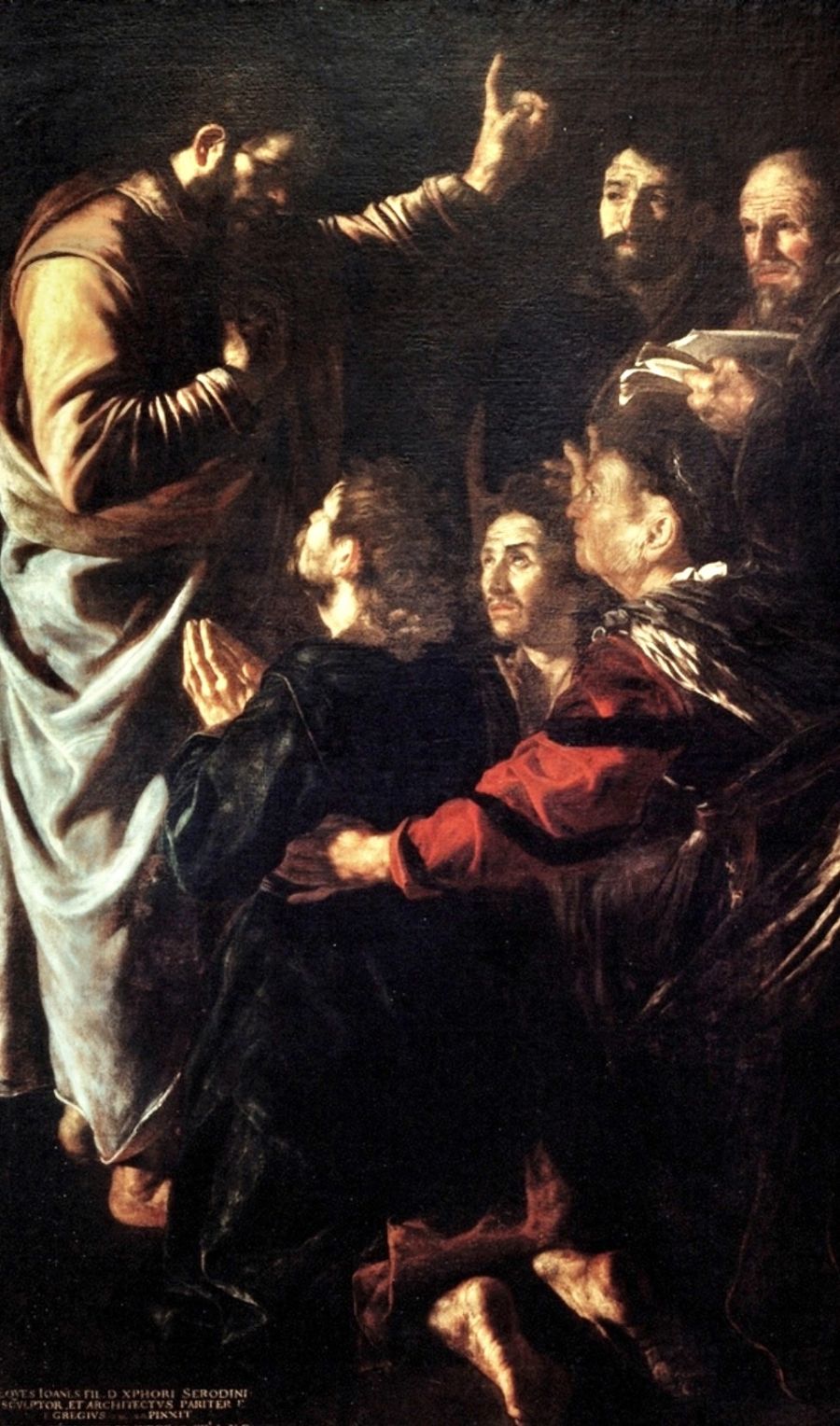
Choice of the Chalice

(Mk 10:32-45)


Mark writes his Gospel in the year of the four Caesars (68-69). In simplicity, it reflects emergencies or tensions, even in the community.

Despite the fact that Nero's persecution has been over for a few years, immediately the believers return to fight among themselves to be "big" and in first place.

Within the Roman church the contest of excelling starts again. Here is the cue of the Gospel call.

To be revered, hunger for prominence, better to count than to be counted? Place of honour is the last.

Alternative is: a religion that produces and reiterates distances, or the life of humility-coexistence marked by sympathy for the less entitled.

In this way, the person of Faith is recognised and characterised by human fulfilment, which resembles God.


In the Gospels, the «Son of Man» (vv.33.45) is an icon of transmissible holiness, a living Sanctuary from which divine compassion radiates.

'Son of man' is he who, having reached the peak of human fullness, comes to reflect the divine condition and deploys it widely - not selectively [as expected].

"Successful Son": the Person with the definitive step, who in us aspires to convivial expansion, to an indestructible carat within each one who approaches - and encounters divine marks.

It is growth and humanisation of the people: the quiet, transparent and complete fruit of the divine project on humanity.

In the icon of the «Son of Man» the evangelists wish to reveal and trigger the triumph of the human over the inhuman; the progressive disappearance of everything that blocks the communication of full existence.


Here are the two opposing orientations of life.

On the one hand, the custom of prevailing-enslaving, perpetuating the ancient world; then demanding, getting ahead, demanding with harsh language; so on.

It is a different matter to support people to dilate life and esteem themselves, discovering their Calling, what conforms and is beautiful to them; encouraging them to mature the Dream they cultivate.

In Jesus' proposal, celestial Glory is identified with what is a source of fulfilment for all, not only for the well-introduced [deaf by ambition].

Because if the external papier-mâché castles are ecstatic and still leave us open-mouthed, in history the presumptuous suddenly become chaff in the wind; they have no weight, they do not last.

But the disease of honour places does not heal.

The fever of being revered and seeming first in class does not subside, in fact it becomes madness; and the head still does not change.

Always striving for the climb, the line of regard - and achieving spaces. Measure of a way of conceiving.


«Son of Man» is therefore not a “religious” or selective title, but a possibility for all those who allow themselves to be drawn into the humanity of Christ.

He is not the archetype of a pyramid authority, attentive to balance and strategic points.

In this way, the holders of prestigious roles are only «considered» (v.42) leaders.

Such dynamics do not belong to the community of the Sons - marked by sharing the 'choice of the Chalice' (v.39): the anti-ambition.

In short, Christ reaffirms that God's authentic enemy is not imperfection, nor limitation - or even the apparent ruin of one's prestige - but an entirely internal demon.

The counterpart of the Lord is the desire to get on the board of life and be served by others, out of power intoxication.


In the icon of the «Son of Man» the evangelists wish to reveal and trigger the triumph of the human over the inhuman; the progressive disappearance of everything that blocks the communication of full existence.

Exactly. The Lord disdains the model of satraps.


[Wednesday, 8th wk. in O.T.  May 27, 2026]

280 Last modified on Wednesday, 27 May 2026 12:02
don Giuseppe Nespeca

Giuseppe Nespeca è architetto e sacerdote. Cultore della Sacra scrittura è autore della raccolta "Due Fuochi due Vie - Religione e Fede, Vangeli e Tao"; coautore del libro "Dialogo e Solstizio".

«Is there an attitude for those who want to follow Jesus» so that «they do not end badly, that they do not end up eaten alive - as my mother used to say: "Eat raw" - by others»? (Pope Francis)
«Esiste un atteggiamento per quelli che vogliono seguire Gesù» in modo che «non finiscano male, che non finiscano mangiati vivi — come diceva mia mamma: “Mangiati crudi” — dagli altri»? (Papa Francesco)
For Christians, volunteer work is not merely an expression of good will. It is based on a personal experience of Christ (Pope Benedict)
Per i cristiani, il volontariato non è soltanto espressione di buona volontà. È basato sull’esperienza personale di Cristo (Papa Benedetto)
Christ reveals his identity of Messiah, Israel's bridegroom, who came for the betrothal with his people. Those who recognize and welcome him are celebrating. However, he will have to be rejected and killed precisely by his own; at that moment, during his Passion and death, the hour of mourning and fasting will come (Pope Benedict)
Cristo rivela la sua identità di Messia, Sposo d'Israele, venuto per le nozze con il suo popolo. Quelli che lo riconoscono e lo accolgono con fede sono in festa. Egli però dovrà essere rifiutato e ucciso proprio dai suoi: in quel momento, durante la sua passione e la sua morte, verrà l'ora del lutto e del digiuno (Papa Benedetto)
For the prodigious and instantaneous healing of the paralytic, the apostle St. Matthew is more sober than the other synoptics, St. Mark and St. Luke. These add broader details, including that of the opening of the roof in the environment where Jesus was, to lower the sick man with his lettuce, given the huge crowd that crowded at the entrance. Evident is the hope of the pitiful companions: they almost want to force Jesus to take care of the unexpected guest and to begin a dialogue with him (Pope Paul VI)
Per la prodigiosa ed istantanea guarigione del paralitico, l’apostolo San Matteo è più sobrio degli altri sinottici, San Marco e San Luca. Questi aggiungono più ampi particolari, tra cui quello dell’avvenuta apertura del tetto nell’ambiente ove si trovava Gesù, per calarvi l’infermo col suo lettuccio, data l’enorme folla che faceva ressa all’entrata. Evidente è la speranza dei pietosi accompagnatori: essi vogliono quasi obbligare Gesù ad occuparsi dell’inatteso ospite e ad iniziare un dialogo con lui (Papa Paolo VI)
A life without love and without truth would not be life. The Kingdom of God is precisely the presence of truth and love and thus is healing in the depths of our being. One therefore understands why his preaching and the cures he works always go together: in fact, they form one message of hope and salvation (Pope Benedict)
Una vita senza amore e senza verità non sarebbe vita. Il Regno di Dio è proprio la presenza della verità e dell’amore e così è guarigione nella profondità del nostro essere. Si comprende, pertanto, perché la sua predicazione e le guarigioni che opera siano sempre unite: formano infatti un unico messaggio di speranza e di salvezza (Papa Benedetto)
His slumber causes us to wake up. Because to be disciples of Jesus, it is not enough to believe God is there, that he exists, but we must put ourselves out there with him; we must also raise our voice with him. Hear this: we must cry out to him. Prayer is often a cry: “Lord, save me!” (Pope Francis)
Il suo sonno provoca noi a svegliarci. Perché, per essere discepoli di Gesù, non basta credere che Dio c’è, che esiste, ma bisogna mettersi in gioco con Lui, bisogna anche alzare la voce con Lui. Sentite questo: bisogna gridare a Lui. La preghiera, tante volte, è un grido: “Signore, salvami!” (Papa Francesco)

Due Fuochi due Vie - Vol. 1 Due Fuochi due Vie - Vol. 2 Due Fuochi due Vie - Vol. 3 Due Fuochi due Vie - Vol. 4 Due Fuochi due Vie - Vol. 5 Dialogo e Solstizio I fiammiferi di Maria

duevie.art

don Giuseppe Nespeca

Tel. 333-1329741


Disclaimer

Questo blog non rappresenta una testata giornalistica in quanto viene aggiornato senza alcuna periodicità. Non può pertanto considerarsi un prodotto editoriale ai sensi della legge N°62 del 07/03/2001.
Le immagini sono tratte da internet, ma se il loro uso violasse diritti d'autore, lo si comunichi all'autore del blog che provvederà alla loro pronta rimozione.
L'autore dichiara di non essere responsabile dei commenti lasciati nei post. Eventuali commenti dei lettori, lesivi dell'immagine o dell'onorabilità di persone terze, il cui contenuto fosse ritenuto non idoneo alla pubblicazione verranno insindacabilmente rimossi.






