Apr 5, 2026 Written by 

Leader, Birth, Non-Leader... but like the Wind

(Jn 3:1-8)


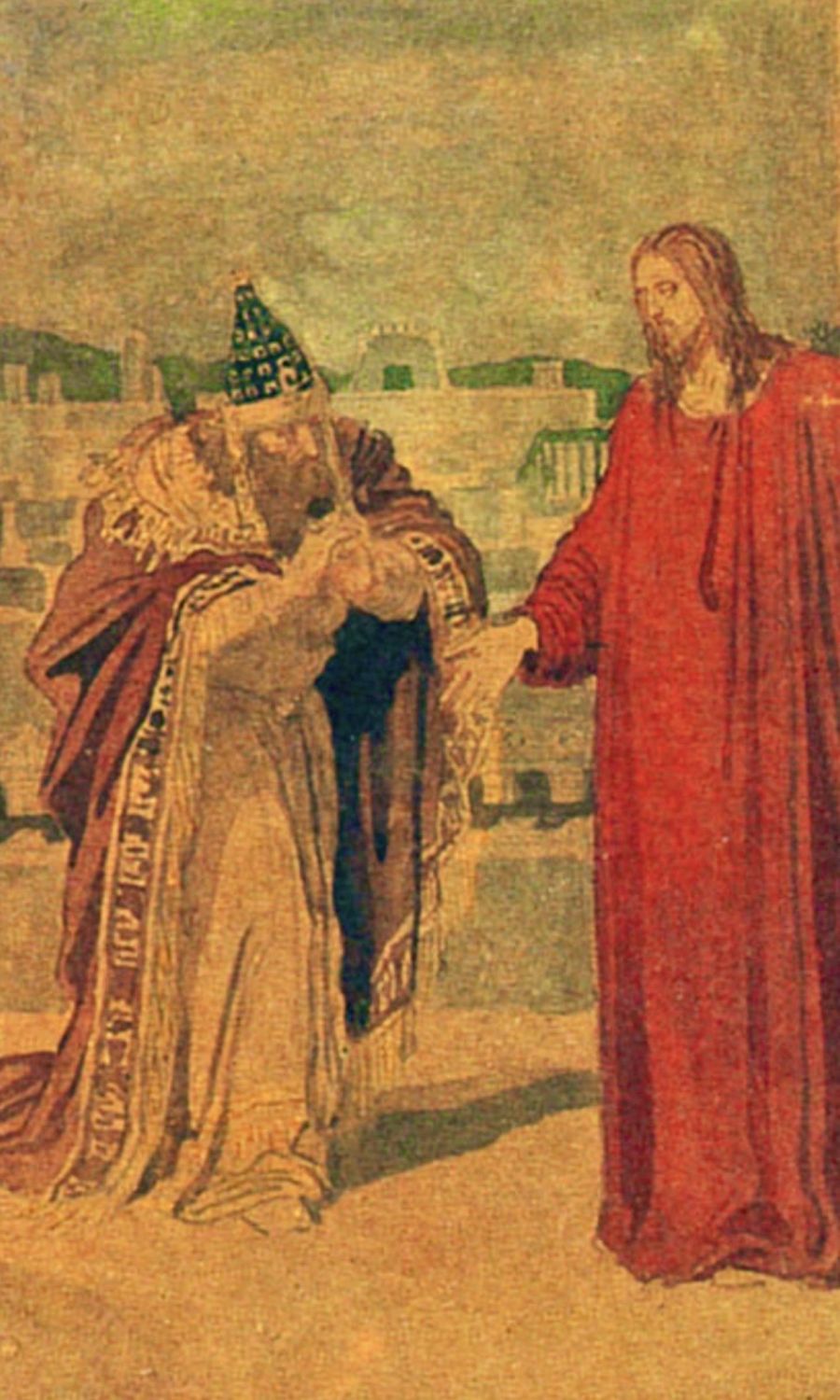
Jn introduces the Gospel passage with the highly representative Jewish leader, insisting on the imperfection of believing in prodigies that only grasp the outward side.

On the contrary, it seems to emphasise that the devotion-show so coveted by religious leaders only arouses deviant expectations and ambiguous hearts (2:18-25).

In the fourth Gospel, the notable represents precisely the Jews intrigued by the figure of Jesus [called Jews because they were related to the Judaizers of the first communities].

Some of them question themselves and do not silence the questions, but remain perplexed - because they are educated to other messianic, peremptory and clamorous expectations.

In fact, they cultivated the whole issue concerning the Kingdom of God (vv.3.5) in an approximate and conformist manner.

In addition, Jesus teaches that all speculation does not bring good results for life in the Spirit.

Our profound experience is not generated from what woman and man devise or do for God, from their possibilities - as assumed in ancient religions.

We must rely on the Grace that enters the scene, overturning petty hopes - in this way, not relying on our own measures, skills and dexterity; nor on thoughts, as established as they are inadequate.

The new Rabbi makes it clear that to understand the Mystery one must shake off the outer book of the Law, and embark on an experience of ideal and practical transmutation, like a Birth - alongside a regenerating Agent.

Christ prompts Nicodemus to make the leap from normal traditional devotion, with its reasonable intentions and expectations, to the adventure of Faith that grasps, dreams and maps out the future, surpassing the habitual chain of expectations.

One does not understand the Newness of God according to common knowledge, starting with the patriarchs - or by reading it in the watermark of a normative, albeit sharable.

The new order of existence is superior to all dexterity, restraint, and resilience. That which is born from the flesh is, however, subject to all boundaries.

Vice versa, the path 'from above' creates a new personality, thanks to which we are enabled to correspond perfectly to the Calling by Name, which propose itself again wave after wave in an increasing and dissimilar manner.

Recreated by the indestructible Life that Comes, we too are enabled to generate something similar to the same Nature that gives birth to us. As sparks somehow conforming to the divine: similis sibi similem parit.

Precisely: the too normal is unable to redefine the codes of a new look, and of the inconceivable space of unknown love.

What does not coincide with the inherited ideas is actually activating the new developments.

What is contrary to established customs, or fashions, is preparing another world, a different person, another trail to follow.

The Kingdom is not set up: it is welcomed - because it always throws us off guard.

The relationship with the God of religions usually comes up with static and reassuring recipes, but the experience of Faith in Christ convinces “by Way” that each stage must instead correspond to another genesis.

Indeed, the thorny trials are all called to a leap of over-nature; to sprout again.

Birth in the Spirit does not happen once and for all: only then will living not be a reward, nor perishing a punishment.

For we have become like a Wind.


[Monday 2nd wk. in Easter, April 13, 2026]

259 Last modified on Monday, 13 April 2026 12:00
don Giuseppe Nespeca

Giuseppe Nespeca è architetto e sacerdote. Cultore della Sacra scrittura è autore della raccolta "Due Fuochi due Vie - Religione e Fede, Vangeli e Tao"; coautore del libro "Dialogo e Solstizio".

First, in Nazareth, he makes him grow, raises him, educates him, but then follows him: "Your mother is there" (Pope Francis)
Prima, a Nazareth, lo fa crescere, lo alleva, lo educa, ma poi lo segue: “La tua madre è lì” (Papa Francesco)
Unity is not made with glue [...] The great prayer of Jesus is to «resemble» the Father (Pope Francis)
L’Unità non si fa con la colla […] La grande preghiera di Gesù» è quella di «assomigliare» al Padre (Papa Francesco)
Divisions among Christians, while they wound the Church, wound Christ; and divided, we cause a wound to Christ: the Church is indeed the body of which Christ is the Head (Pope Francis)
Le divisioni tra i cristiani, mentre feriscono la Chiesa, feriscono Cristo, e noi divisi provochiamo una ferita a Cristo: la Chiesa infatti è il corpo di cui Cristo è capo (Papa Francesco)
The glorification that Jesus asks for himself as High Priest, is the entry into full obedience to the Father, an obedience that leads to his fullest filial condition [Pope Benedict]
La glorificazione che Gesù chiede per se stesso, quale Sommo Sacerdote, è l'ingresso nella piena obbedienza al Padre, un'obbedienza che lo conduce alla sua più piena condizione filiale [Papa Benedetto]
All this helps us not to let our guard down before the depths of iniquity, before the mockery of the wicked. In these situations of weariness, the Lord says to us: “Have courage! I have overcome the world!” (Jn 16:33). The word of God gives us strength [Pope Francis]
Tutto questo aiuta a non farsi cadere le braccia davanti allo spessore dell’iniquità, davanti allo scherno dei malvagi. La parola del Signore per queste situazioni di stanchezza è: «Abbiate coraggio, io ho vinto il mondo!» (Gv 16,33). E questa parola ci darà forza [Papa Francesco]
It does not mean that the Lord has departed to some place far from people and from the world. Christ's Ascension is not a journey into space toward the most remote stars […] Christ's Ascension means that he no longer belongs to the world of corruption and death that conditions our life. It means that he belongs entirely to God (Pope Benedict)
Non vuol dirci che il Signore se ne è andato in qualche luogo lontano dagli uomini e dal mondo. L’Ascensione di Cristo non è un viaggio nello spazio verso gli astri più remoti […] L’Ascensione di Cristo significa che Egli non appartiene più al mondo della corruzione e della morte che condiziona la nostra vita. Significa che Egli appartiene completamente a Dio (Papa Benedetto)
«When the servant of God is troubled, as it happens, by something, he must get up immediately to pray, and persevere before the Supreme Father until he restores to him the joy of his salvation. Because if it remains in sadness, that Babylonian evil will grow and, in the end, will generate in the heart an indelible rust, if it is not removed with tears» (St Francis of Assisi, FS 709)
«Il servo di Dio quando è turbato, come capita, da qualcosa, deve alzarsi subito per pregare, e perseverare davanti al Padre Sommo sino a che gli restituisca la gioia della sua salvezza. Perché se permane nella tristezza, crescerà quel male babilonese e, alla fine, genererà nel cuore una ruggine indelebile, se non verrà tolta con le lacrime» (san Francesco d’Assisi, FF 709)
Wherever people want to set themselves up as God they cannot but set themselves against each other. Instead, wherever they place themselves in the Lord’s truth they are open to the action of his Spirit who sustains and unites them (Pope Benedict

Due Fuochi due Vie - Vol. 1 Due Fuochi due Vie - Vol. 2 Due Fuochi due Vie - Vol. 3 Due Fuochi due Vie - Vol. 4 Due Fuochi due Vie - Vol. 5 Dialogo e Solstizio I fiammiferi di Maria

duevie.art

don Giuseppe Nespeca

Tel. 333-1329741


Disclaimer

Questo blog non rappresenta una testata giornalistica in quanto viene aggiornato senza alcuna periodicità. Non può pertanto considerarsi un prodotto editoriale ai sensi della legge N°62 del 07/03/2001.
Le immagini sono tratte da internet, ma se il loro uso violasse diritti d'autore, lo si comunichi all'autore del blog che provvederà alla loro pronta rimozione.
L'autore dichiara di non essere responsabile dei commenti lasciati nei post. Eventuali commenti dei lettori, lesivi dell'immagine o dell'onorabilità di persone terze, il cui contenuto fosse ritenuto non idoneo alla pubblicazione verranno insindacabilmente rimossi.






