Mar 6, 2026 Written by 

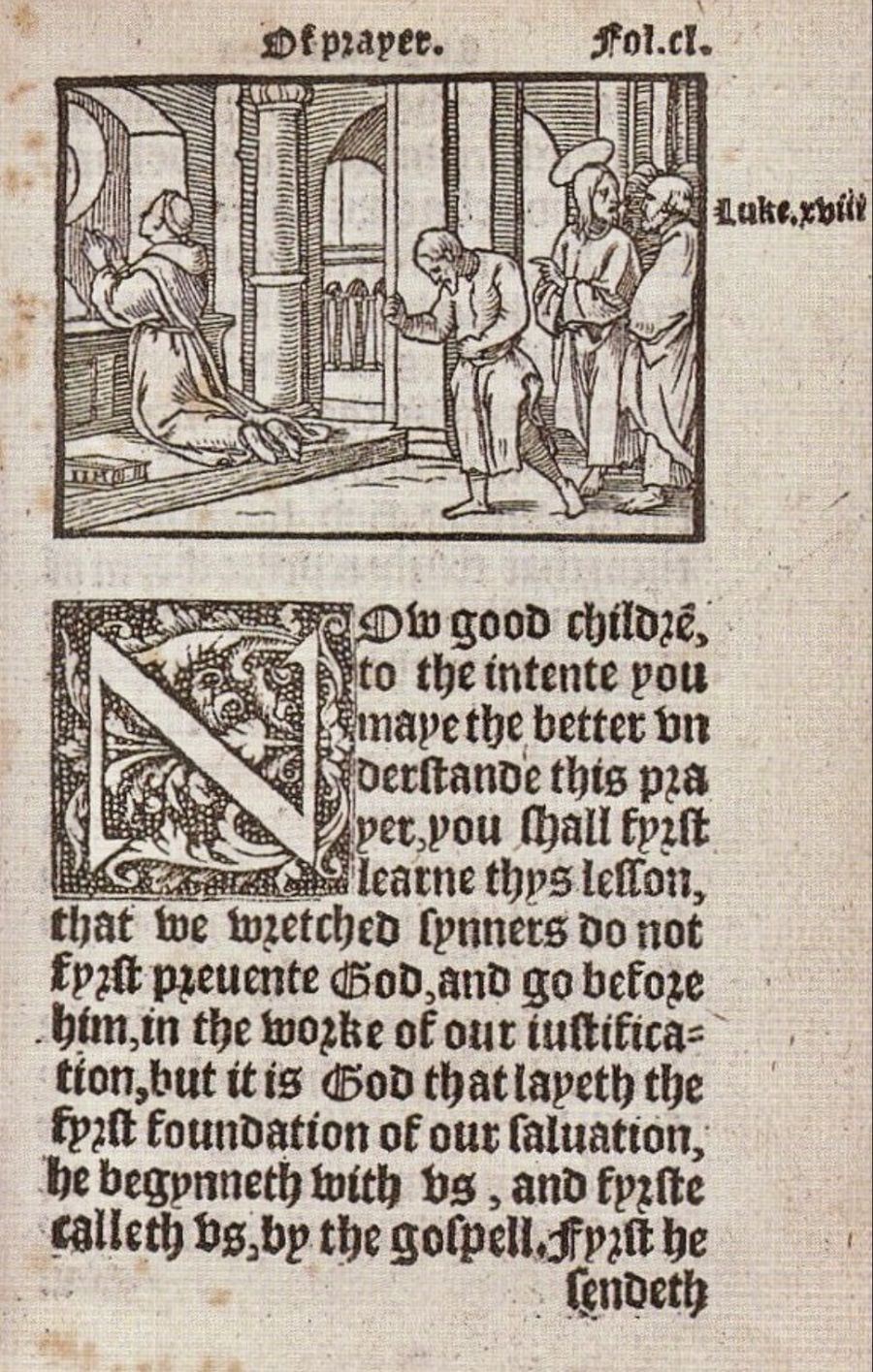
Prayer of Faith, or of manner. I-Farisee and I-Publican

(Lk 18:9-14)


Mechanism of retribution denies the essential experience of the life of Faith: ‘allowing oneself to be a saved person, living from Mystery’ - instead of the closed circle of narrow “justices” that have nowhere to go.

To introduce oneself into the newness of Christ it’s enough to have met oneself and to be sincere: a strange holiness, accessible to all.

It comes to reality, even the most intimate: we are not omnipotent in goodness; we cannot do much good, from sophistication, from ideas, from muscles.

By leaving room for the Father's intervention, we learn to trust in what we receive, more than relying on the expectations even of others, or on what is proposed and imposed.

Our concrete history can be reflected in the form of Prayer. But if dialogue with God doesn’t emerge from a penetrating perception and is satisfied with external goals, Listening becomes empty.

The spirit of “greatness” (also moral and spiritual) sinks inexorably - and into true misery: the epidermal one.

It doesn’t see the Father's exceptionality: He who transmits life.

Those who live by comparisons and have a contemptuous evaluation of the considered inferior ones, do not enjoy openings.

They remain without space or time for the action of the multifaceted being, in the variety of situations.

They misplace themselves in front of God and neighbor - denying themselves the joy of Gratis and Novelty.

In this way, they never trust in what’s more reliable than a worldview, or in their own leadership initiatives.

They do not grasp anything they do not already know, because they do not read inside.

They are in constant monologue: with themselves [but never reaching the self’s bottom] and those of their own circle.

So they don't pour out happiness - which comes from amazement.

In all circumstances, they find only a theater, an echo’s rumble of others’ voices, and around them.

Not the intimacy of exceptional and beloved person as it is.

The subject of archaic religious life is in fact “the our" - the ego.

If Jesus had asked which of the two could return home justified, everyone would have pointed to the pharisee, the reserved one apart.

In the life of Faith, the Subject is instead the Mystery, the Eternal, the Living One.

It’s He who works, by creating: and only He acts here too.

He justifies, that is, He places justice where there is none. The self-sufficient person has no need.

This is the real and royal Principle, engine of our realization and of authentic prayer-hearing, stripped of merits and pride, but capable of recovering the ‘opposite sides’.

God fears flawless liturgies and individual prayers in which nothing happens and from which one comes out without having experienced his «Creative Action» and his forgiveness.

Work not ours. Energy and sting that even in our innermost being brings us an Alliance of ‘faces’, a conviviality of differences.

In the spiritual and social life of the "polyhedron" and of the daily brief, we are enabled to translate the need for a ‘jointing-sentiment’, which the Father communicates in a broad manner, and giving us time.

Much more than a struggle between opposing worldviews: divine Justice is unprecedented, and growing - it cannot be bought by manner deeds.


To internalize and live the message:


When do I see myself as a pharisee and when publican?

How can I meet myself, by contemplating God? And while I meet others?


[Saturday 3rd wk. in Lent, March 14, 2026]

325 Last modified on Saturday, 14 March 2026 11:59
don Giuseppe Nespeca

Giuseppe Nespeca è architetto e sacerdote. Cultore della Sacra scrittura è autore della raccolta "Due Fuochi due Vie - Religione e Fede, Vangeli e Tao"; coautore del libro "Dialogo e Solstizio".

The Church keeps watch. And the world keeps watch. The hour of Christ's victory over death is the greatest hour in history (John Paul II)
Veglia la Chiesa. E veglia il mondo. L’ora della vittoria di Cristo sulla morte è l’ora più grande della storia (Giovanni Paolo II)
Before the Cross of Jesus, we apprehend in a way that we can almost touch with our hands how much we are eternally loved; before the Cross we feel that we are “children” and not “things” or “objects” [Pope Francis, via Crucis at the Colosseum 2014]
Di fronte alla Croce di Gesù, vediamo quasi fino a toccare con le mani quanto siamo amati eternamente; di fronte alla Croce ci sentiamo “figli” e non “cose” o “oggetti” [Papa Francesco, via Crucis al Colosseo 2014]
The devotional and external purifications purify man ritually but leave him as he is replaced by a new bathing (Pope Benedict)
Al posto delle purificazioni cultuali ed esterne, che purificano l’uomo ritualmente, lasciandolo tuttavia così com’è, subentra il bagno nuovo (Papa Benedetto)
If, on the one hand, the liturgy of these days makes us offer a hymn of thanksgiving to the Lord, conqueror of death, at the same time it asks us to eliminate from our lives all that prevents us from conforming ourselves to him (John Paul II)
La liturgia di questi giorni, se da un lato ci fa elevare al Signore, vincitore della morte, un inno di ringraziamento, ci chiede, al tempo stesso, di eliminare dalla nostra vita tutto ciò che ci impedisce di conformarci a lui (Giovanni Paolo II)
The school of faith is not a triumphal march but a journey marked daily by suffering and love, trials and faithfulness. Peter, who promised absolute fidelity, knew the bitterness and humiliation of denial:  the arrogant man learns the costly lesson of humility (Pope Benedict)
La scuola della fede non è una marcia trionfale, ma un cammino cosparso di sofferenze e di amore, di prove e di fedeltà da rinnovare ogni giorno. Pietro che aveva promesso fedeltà assoluta, conosce l’amarezza e l’umiliazione del rinnegamento: lo spavaldo apprende a sue spese l’umiltà (Papa Benedetto)
If, in his prophecy about the shepherd, Ezekiel was aiming to restore unity among the dispersed tribes of Israel (cf. Ez 34: 22-24), here it is a question not only of the unification of a dispersed Israel but of the unification of all the children of God, of humanity - of the Church of Jews and of pagans [Pope Benedict]
Se Ezechiele nella sua profezia sul pastore aveva di mira il ripristino dell'unità tra le tribù disperse d'Israele (cfr Ez 34, 22-24), si tratta ora non solo più dell'unificazione dell'Israele disperso, ma dell'unificazione di tutti i figli di Dio, dell'umanità - della Chiesa di giudei e di pagani [Papa Benedetto]
St Teresa of Avila wrote: «the last thing we should do is to withdraw from our greatest good and blessing, which is the most sacred humanity of Our Lord Jesus Christ» (cf. The Interior Castle, 6, ch. 7). Therefore, only by believing in Christ, by remaining united to him, may the disciples, among whom we too are, continue their permanent action in history [Pope Benedict]
Santa Teresa d’Avila scrive che «non dobbiamo allontanarci da ciò che costituisce tutto il nostro bene e il nostro rimedio, cioè dalla santissima umanità di nostro Signore Gesù Cristo» (Castello interiore, 7, 6). Quindi solo credendo in Cristo, rimanendo uniti a Lui, i discepoli, tra i quali siamo anche noi, possono continuare la sua azione permanente nella storia [Papa Benedetto]

Due Fuochi due Vie - Vol. 1 Due Fuochi due Vie - Vol. 2 Due Fuochi due Vie - Vol. 3 Due Fuochi due Vie - Vol. 4 Due Fuochi due Vie - Vol. 5 Dialogo e Solstizio I fiammiferi di Maria

duevie.art

don Giuseppe Nespeca

Tel. 333-1329741


Disclaimer

Questo blog non rappresenta una testata giornalistica in quanto viene aggiornato senza alcuna periodicità. Non può pertanto considerarsi un prodotto editoriale ai sensi della legge N°62 del 07/03/2001.
Le immagini sono tratte da internet, ma se il loro uso violasse diritti d'autore, lo si comunichi all'autore del blog che provvederà alla loro pronta rimozione.
L'autore dichiara di non essere responsabile dei commenti lasciati nei post. Eventuali commenti dei lettori, lesivi dell'immagine o dell'onorabilità di persone terze, il cui contenuto fosse ritenuto non idoneo alla pubblicazione verranno insindacabilmente rimossi.






