Feb 4, 2026 Written by 

Sons, little dogs and free movement

Eucharistic crumbs

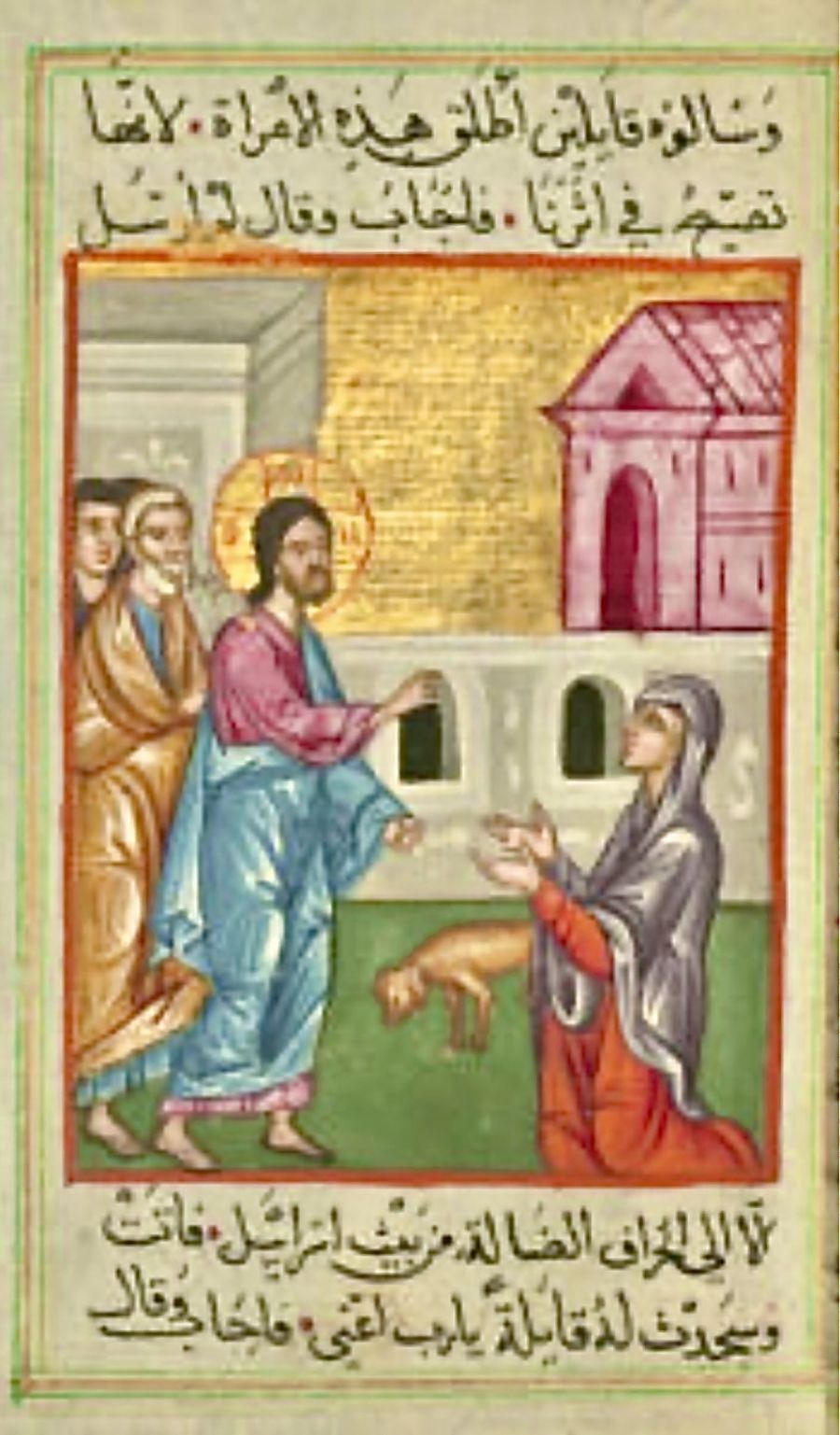
(Mk 7:24-30)


Religious law prevented dealing with foreign people and other ethnicities, borders, or culture.

At the beginning, Jesus [that is: He in the first communities, His Mystical Body] seems not to want to occupy Himself with it (v.27).

But after helping the crowds and his people to emancipate themselves from the prison of the norms of purity (vv. 14-23) the young Rabbi himself had emerged from the conformist ways of experiencing God.

He makes an Exodus even from national and race territories that at that time were seizing the vital sap of the souls - thus flying over the "sacred" preconceptions.

To make us grow in Faith, Christ promotes the most varied existence. In this way, outside the standard myopia, He can find astounding adherences.

Faith: New Principle, which does not alienate us from ourselves. And crumbles any illusion of exclusivity.


The singular initiatives of the Son are born on the basis of the all-personal experience of the divine, of a Father who bestows unconditionally.

Provident, and unequal from the stingy God of ancient religions: sovereign all discordant from creatures, alien, predatory, and (incomprehensibly) addicted to habit.

With an unusual stunt, the young Rabbi tries to open the Judaizing mentality, overcoming borders.

Even the dialogue with a woman not of his people was a "novelty" alien to the mentality of the time’s crowds. Initiative foreign even to the conceptions of the first two generations of believers; marked by a creed still blocked and mixed with idols.

But there was a whole people of strangers [the mestizo «Woman» and her spiritual ‘offspring’] who felt they had no future... and this called into question the many aprioriisms of the time.

In short, even the church of Mk had not fully grasped the meaning of the «bread of the sons» - all available, for it to be "recognized".


Because of rivalry, ancient peoples used to call foreigners with the contemptuous nickname of «dog»: synonymous with impudence, meanness and ignoble baseness.

The Lord's very harsh phrase (v.27) reflects a comparison coming from poor areas and from family life, where once there were plenty of pets and youth.

There was also a difference between ‘children’ generated by listening to the Word of God and those who adjusted themselves “by scent”. But although no one denied sustenance to the «sons» to give it to the «dogs» around them - the latter had at least the right of crumbs fallen on the ground.

For differents and far - even bad-considered - it’s not a problem to resort to Jesus in an instinctive way; indeed, even today they would be satisfied with the shatters.

[Unfortunately, not infrequently strangers and difforms are hungrier of the real Manna from Heaven].


Christian community should not lack the nourishment of the body and the food of wisdom for everyone (Mk 6:42-44).

Faith has no nationality, and it is the only immediate language and relationship valid for communication between God and woman and man.

Christ is a sapiential feeds for a free circulation; not a sign to be hindered and kept closed.

Breaking the Bread is to participate our existence at root; what we have and are. Metre of what we proclaim, believe and practice.


[Thursday 5th wk. in O.T.  February 12, 2026]

438 Last modified on Thursday, 12 February 2026 12:07
don Giuseppe Nespeca

Giuseppe Nespeca è architetto e sacerdote. Cultore della Sacra scrittura è autore della raccolta "Due Fuochi due Vie - Religione e Fede, Vangeli e Tao"; coautore del libro "Dialogo e Solstizio".

There is the path of those who, like those two on the outbound journey, allow themselves to be paralysed by life’s disappointments and proceed sadly; and there is the path of those who do not put themselves and their problems first, but rather Jesus who visits us, and the brothers who await his visit (Pope Francis)
C’è la via di chi, come quei due all’andata, si lascia paralizzare dalle delusioni della vita e va avanti triste; e c’è la via di chi non mette al primo posto se stesso e i suoi problemi, ma Gesù che ci visita, e i fratelli che attendono la sua visita (Papa Francesco)
So that Christians may properly carry out this mandate entrusted to them, it is indispensable that they have a personal encounter with Christ, crucified and risen, and let the power of his love transform them. When this happens, sadness changes to joy and fear gives way to missionary enthusiasm (John Paul II)
Perché i cristiani possano compiere appieno questo mandato loro affidato, è indispensabile che incontrino personalmente il Crocifisso risorto, e si lascino trasformare dalla potenza del suo amore. Quando questo avviene, la tristezza si muta in gioia, il timore cede il passo all’ardore missionario (Giovanni Paolo II)
This is the message that Christians are called to spread to the very ends of the earth. The Christian faith, as we know, is not born from the acceptance of a doctrine but from an encounter with a Person (Pope Benedict)
È questo il messaggio che i cristiani sono chiamati a diffondere sino agli estremi confini del mondo. La fede cristiana come sappiamo nasce non dall'accoglienza di una dottrina, ma dall'incontro con una Persona (Papa Benedetto)
From ancient times the liturgy of Easter day has begun with the words: Resurrexi et adhuc tecum sum – I arose, and am still with you; you have set your hand upon me. The liturgy sees these as the first words spoken by the Son to the Father after his resurrection, after his return from the night of death into the world of the living. The hand of the Father upheld him even on that night, and thus he could rise again (Pope Benedict)
Dai tempi più antichi la liturgia del giorno di Pasqua comincia con le parole: Resurrexi et adhuc tecum sum – sono risorto e sono sempre con te; tu hai posto su di me la tua mano. La liturgia vi vede la prima parola del Figlio rivolta al Padre dopo la risurrezione, dopo il ritorno dalla notte della morte nel mondo dei viventi. La mano del Padre lo ha sorretto anche in questa notte, e così Egli ha potuto rialzarsi, risorgere (Papa Benedetto)
The Church keeps watch. And the world keeps watch. The hour of Christ's victory over death is the greatest hour in history (John Paul II)
Veglia la Chiesa. E veglia il mondo. L’ora della vittoria di Cristo sulla morte è l’ora più grande della storia (Giovanni Paolo II)
Before the Cross of Jesus, we apprehend in a way that we can almost touch with our hands how much we are eternally loved; before the Cross we feel that we are “children” and not “things” or “objects” [Pope Francis, via Crucis at the Colosseum 2014]
We may ask ourselves: who is a witness? A witness is a person who has seen, who recalls and tells. See, recall and tell: these are three verbs which describe the identity and mission (Pope Francis, Regina Coeli April 19, 2015)
Possiamo domandarci: ma chi è il testimone? Il testimone è uno che ha visto, che ricorda e racconta. Vedere, ricordare e raccontare sono i tre verbi che ne descrivono l’identità e la missione (Papa Francesco, Regina Coeli 19 aprile 2015)

Due Fuochi due Vie - Vol. 1 Due Fuochi due Vie - Vol. 2 Due Fuochi due Vie - Vol. 3 Due Fuochi due Vie - Vol. 4 Due Fuochi due Vie - Vol. 5 Dialogo e Solstizio I fiammiferi di Maria

duevie.art

don Giuseppe Nespeca

Tel. 333-1329741


Disclaimer

Questo blog non rappresenta una testata giornalistica in quanto viene aggiornato senza alcuna periodicità. Non può pertanto considerarsi un prodotto editoriale ai sensi della legge N°62 del 07/03/2001.
Le immagini sono tratte da internet, ma se il loro uso violasse diritti d'autore, lo si comunichi all'autore del blog che provvederà alla loro pronta rimozione.
L'autore dichiara di non essere responsabile dei commenti lasciati nei post. Eventuali commenti dei lettori, lesivi dell'immagine o dell'onorabilità di persone terze, il cui contenuto fosse ritenuto non idoneo alla pubblicazione verranno insindacabilmente rimossi.






