Jan 27, 2026 Written by 

Expectations, misunderstandings - and the spirit of the valley

Domestic side, not domestications

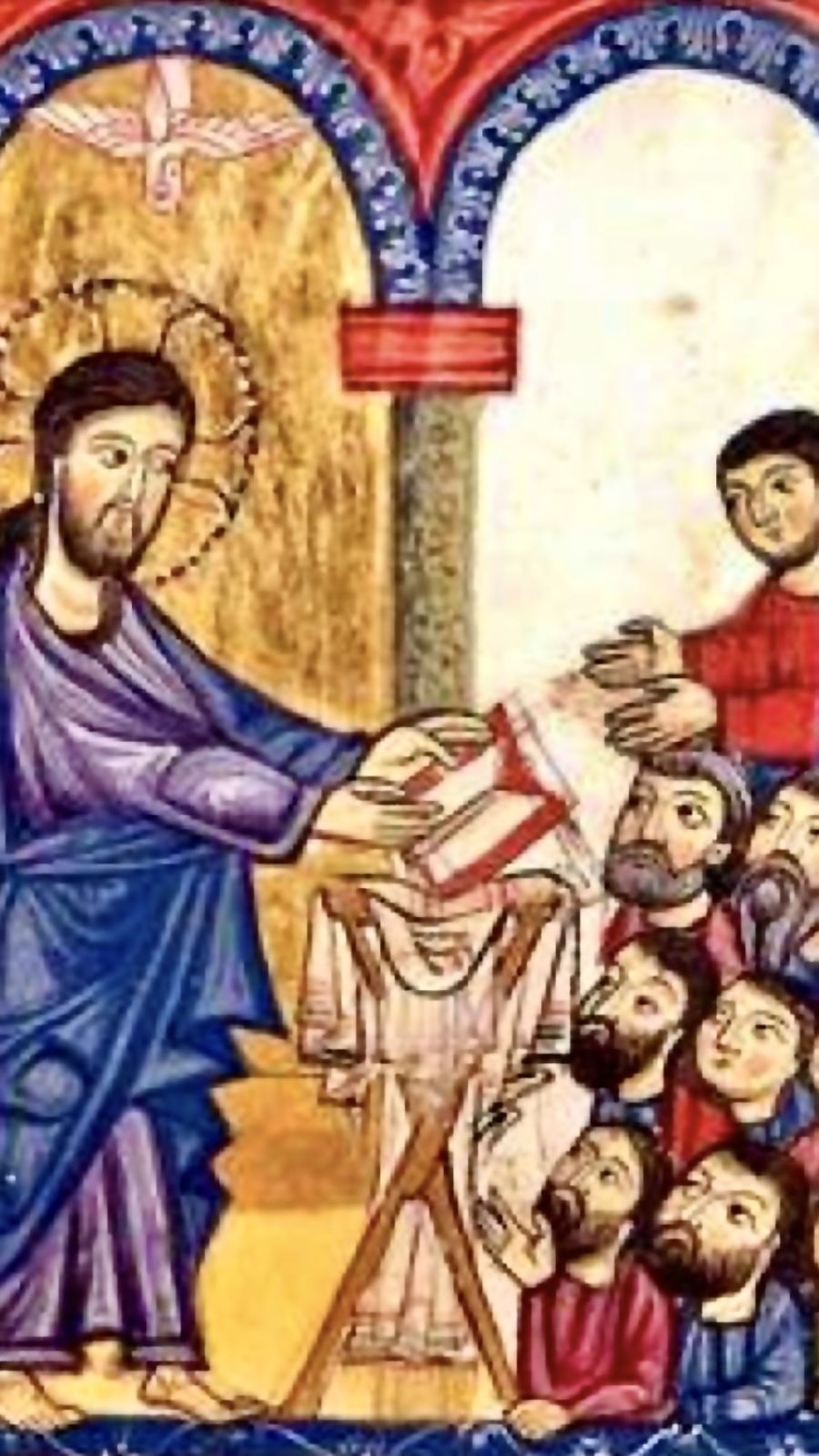
(Mk 6:1-6)


Where Faith is lacking, only small changes take place, not the staggering wonders of the alternative presence of God’s Kingdom (v.5).

We do not realize that Lord may come from humble, dishonourable origins, as ours could be  - without great dynastic lineages.

But Faith in Christ bids farewell to the idea prevalent in top-down cultures and religions, all of which are ill-suited to deal with the normalcy of life that flows.


Jesus avoids rigid models or great appearance patterns. He gives himself with simplicity to his villagers and aims at the formation of authentic believers.

Their Trust must be placed only in the Kingdom of God - a dimension that really breaks the balance, because it’s introduced into daytime existence, and ferments it from invisible roots.

As Father’s Envoy, he would like all the people to be builders and banners of other dreams - but in his native village he feels like he is blocked by those who are unable to ‘decipher the dimension of the divine in the human’.

He must face the dull incomprehension of the centers of power, but sometimes also defaults and very hopes - quiet or divisive - of the popular reality that frequents places of worship.


The villagers expected the usual now addicted blessings, or perhaps a charismatic leader in the fight against the Romans - and here they gladly used to leverage the blaze of religious identity, to inflame souls.

They would have accepted a belligerent captain, who reflected archaic beliefs - instead they find themselves disappointed in the inapparent reality before their eyes.

They do not know how to discover the God’s plot in the history of the least.

Conversely, there are numerous divine signs inscribed in what is in a minor way manifested, wich can help us discover the not purely earthly dimension of things, relationships, presences.


Many people misunderstand the spirit of strength that Faith transmits to us: it breaks the balance because it does not offer guarantees already imagined - but it’s basically domestic and entirely natural.

Each Seed has its own particular destiny and development.

So why is the boy they have met since birth so different?

For the fact that there is no equation between what is thought in a conformist way, and the Lord. Not even giving emphasis to resolutions.


Both great expectations and proximity can be an obstacle to a daily knowledge of what of extraordinary is hidden behind the ordinary dimension of events and people.

Even many confreres or collaborators of Saints have not been able to grasp the exceptionality of a common life lived in fidelity and dedication to their own Call by Name.

All the more real the less flashy.

Misunderstanding and village jealousy of those who live next door [and chase a god of their own, disfigured] is a source of bitterness, but it does not stop us.

Experience of rejection pushes to change direction (v.6b).


The soul lives under the sign of Uniqueness that renounces prejudice, quiet life, simple approval, easy success.

And closed doors can be an added value! They open us to the journey of the soul in the Spirit, to the eccentric Announcement, to an astounding Mission.

In this way, like Jesus, we too willingly refuse to affix ready-made seals to the spirit of mediocrity that does not annoy anyone.


[Wednesday 4th wk. in O.T.  February 4, 2026]

221 Last modified on Wednesday, 04 February 2026 11:59
don Giuseppe Nespeca

Giuseppe Nespeca è architetto e sacerdote. Cultore della Sacra scrittura è autore della raccolta "Due Fuochi due Vie - Religione e Fede, Vangeli e Tao"; coautore del libro "Dialogo e Solstizio".

In the crucified Jesus, a kind of transformation and concentration of the signs occurs: he himself is the “sign of God” (John Paul II)
In Gesù crocifisso avviene come una trasformazione e concentrazione dei segni: è Lui stesso il "segno di Dio" (Giovanni Paolo II)
Only through Christ can we converse with God the Father as children, otherwise it is not possible, but in communion with the Son we can also say, as he did, “Abba”. In communion with Christ we can know God as our true Father. For this reason Christian prayer consists in looking constantly at Christ and in an ever new way, speaking to him, being with him in silence, listening to him, acting and suffering with him (Pope Benedict)
Solo in Cristo possiamo dialogare con Dio Padre come figli, altrimenti non è possibile, ma in comunione col Figlio possiamo anche dire noi come ha detto Lui: «Abbà». In comunione con Cristo possiamo conoscere Dio come Padre vero. Per questo la preghiera cristiana consiste nel guardare costantemente e in maniera sempre nuova a Cristo, parlare con Lui, stare in silenzio con Lui, ascoltarlo, agire e soffrire con Lui (Papa Benedetto)
In today’s Gospel passage, Jesus identifies himself not only with the king-shepherd, but also with the lost sheep, we can speak of a “double identity”: the king-shepherd, Jesus identifies also with the sheep: that is, with the least and most needy of his brothers and sisters […] And let us return home only with this phrase: “I was present there. Thank you!”. Or: “You forgot about me” (Pope Francis)
Nella pagina evangelica di oggi, Gesù si identifica non solo col re-pastore, ma anche con le pecore perdute. Potremmo parlare come di una “doppia identità”: il re-pastore, Gesù, si identifica anche con le pecore, cioè con i fratelli più piccoli e bisognosi […] E torniamo a casa soltanto con questa frase: “Io ero presente lì. Grazie!” oppure: “Ti sei scordato di me” (Papa Francesco)
Thus, in the figure of Matthew, the Gospels present to us a true and proper paradox: those who seem to be the farthest from holiness can even become a model of the acceptance of God's mercy and offer a glimpse of its marvellous effects in their own lives (Pope Benedict))
Nella figura di Matteo, dunque, i Vangeli ci propongono un vero e proprio paradosso: chi è apparentemente più lontano dalla santità può diventare persino un modello di accoglienza della misericordia di Dio e lasciarne intravedere i meravigliosi effetti nella propria esistenza (Papa Benedetto)
Man is involved in penance in his totality of body and spirit: the man who has a body in need of food and rest and the man who thinks, plans and prays; the man who appropriates and feeds on things and the man who makes a gift of them; the man who tends to the possession and enjoyment of goods and the man who feels the need for solidarity that binds him to all other men [CEI pastoral note]
Nella penitenza è coinvolto l'uomo nella sua totalità di corpo e di spirito: l'uomo che ha un corpo bisognoso di cibo e di riposo e l'uomo che pensa, progetta e prega; l'uomo che si appropria e si nutre delle cose e l'uomo che fa dono di esse; l'uomo che tende al possesso e al godimento dei beni e l'uomo che avverte l'esigenza di solidarietà che lo lega a tutti gli altri uomini [nota pastorale CEI]
St John Chrysostom urged: “Embellish your house with modesty and humility with the practice of prayer. Make your dwelling place shine with the light of justice; adorn its walls with good works, like a lustre of pure gold, and replace walls and precious stones with faith and supernatural magnanimity, putting prayer above all other things, high up in the gables, to give the whole complex decorum. You will thus prepare a worthy dwelling place for the Lord, you will welcome him in a splendid palace. He will grant you to transform your soul into a temple of his presence” (Pope Benedict)

Due Fuochi due Vie - Vol. 1 Due Fuochi due Vie - Vol. 2 Due Fuochi due Vie - Vol. 3 Due Fuochi due Vie - Vol. 4 Due Fuochi due Vie - Vol. 5 Dialogo e Solstizio I fiammiferi di Maria

duevie.art

don Giuseppe Nespeca

Tel. 333-1329741


Disclaimer

Questo blog non rappresenta una testata giornalistica in quanto viene aggiornato senza alcuna periodicità. Non può pertanto considerarsi un prodotto editoriale ai sensi della legge N°62 del 07/03/2001.
Le immagini sono tratte da internet, ma se il loro uso violasse diritti d'autore, lo si comunichi all'autore del blog che provvederà alla loro pronta rimozione.
L'autore dichiara di non essere responsabile dei commenti lasciati nei post. Eventuali commenti dei lettori, lesivi dell'immagine o dell'onorabilità di persone terze, il cui contenuto fosse ritenuto non idoneo alla pubblicazione verranno insindacabilmente rimossi.






