Dec 26, 2025 Written by 

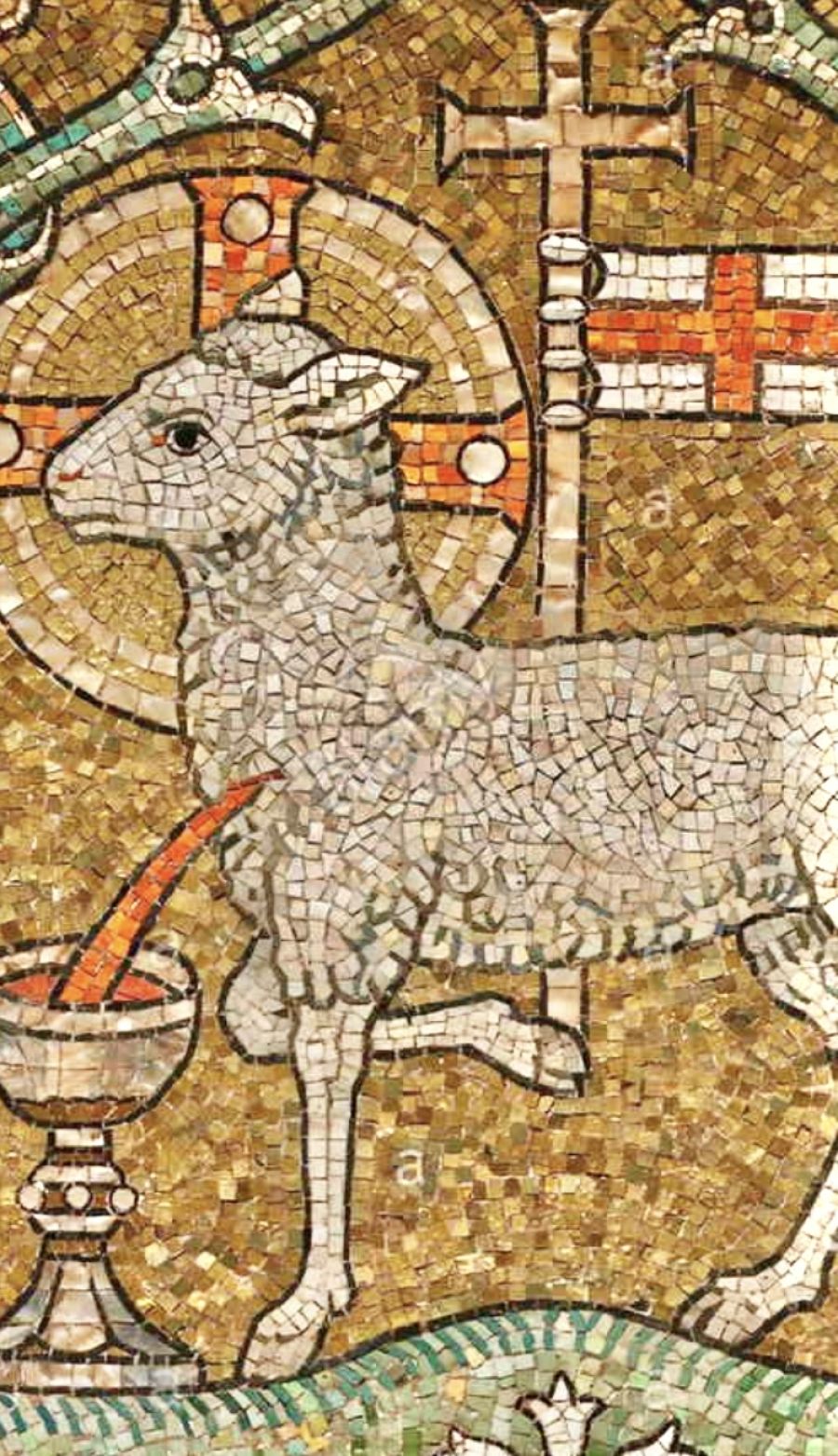
Here is the Lamb, in lambs. Healthy Tenderness Revolution

Brother, in the brethren all

(Jn 1:29-34)


In the fourth Gospel the Baptist is not «the forerunner», but a «witness» of the Lamb Light that raises basic questions.

Alarmed, the authorities put him under investigation.

But it’s not he who sweeps away «sin», that is, the humiliation of unbridgeable distances - and the inability to correspond to the personal Vocation, for Life without limit.

Hindrance even underlined by the logic of the «world»: by the false teaching, by the very structure of the ancient official institution, so linked to the interweaving between religion and power.

Condemned to «noon-day» [culmination and full light] on Easter eve, Jesus crosses his earthly end with the hour when the priests of the Temple began to immolate the lambs of propitiation [originally, an apotropaic sacrifice that preceded transhumance].

As for the Lamb of the fathers in foreign land, who had spared them from the slaughter - his Blood gives impetus to cross the land of arid slavery, devoid of warmth and intimate consonance.


As is known, the effigy of the Lamb belongs to the sacrificial theological strand, stemming from the famous text of Isaiah 53 and from all the sacral imagery of the ancient East [which had elaborated a literature and a widespread thought on the King Messiah].

According to the biblical conception, the sovereign was a figure of the whole people and represented them. The Anointed would have had the ideal task of dragging away and atoning for human iniquities.

But Jesus does not "expiate" rather «extirpates». Not even "propitiates": the Father does not reject the precarious condition of his creatures.

In Christ who «supports and removes» all our shame and weaknesses, the Father’s Action is made intimate - for this reason decisive.

He doesn’t annihilate transgressions with a sort of amnesty, even vicarious: it would not be authentic salvation to touch only the suburbs and not the Core, to reactivate us.

An outer dress does not belong to us and will never be ours; it is not assimilated, nor does it become real life. Deletions don’t educate, far from it.

It’s true that a lamb in a world of cunning wolves has no escape. By introducing it you see it perish, but not as a designated victim: it was the only way for the beastmen who believe they were people, to understand that they were still only beasts.

The Risen One introduces into the world a new force, a different dynamism, a way of teaching the soul that becomes a conscious process.

Only by educating us, does the Most High-neighbour annihilate and overcome the instinct of the fairs feeding each other, believing themselves to be authentic human beings - even spiritual.


A third allusion to the figure of the Lamb insists on the votive icon and archetypal category associated with the sacrifice of Abraham, where God himself provides for the victim (Gn 22).

Of course he provides: he did not create us angelic, but malformed, transient. Yet, every divine Gift passes through our shaky ‘condition’ - which is not sin, nor guilt, but a matter of fact; so nourishment, and resource.

We are Perfect in the multiplicity of our creative slopes, even in the limit: a blasphemy for the ancient religious man... a reality for the person of Faith.

The authentic Lamb is not just a [moral] reference: the meekness of those who are called to give everything of themselves, even their skin.

It is an image of the (blatant) ‘boundary’ of those who could never make it to genius in life, so they ‘let themselves be found’ and loaded on the shoulders.

In this way, no decision-making delirium.

It will be the Friend of our vocational nucleus who will transmit strength and devise the way to make us return to the House that is truly ours: the Tent that stitches together the scattered events.

Dwelling that rewires all the being we should - and maybe even could - have brought to fruit.


Incarnation here means that the Lamb is depiction of an accepted - unusual - globality of the divine Face in men.

Totality finally solid - paradoxical, conciliated - that recovers its opposite innocent, natural, spontaneous, incapable of miracle.

Difference between religiosity and Faith.


[Weekday Liturgy of January 3]

236 Last modified on Saturday, 03 January 2026 11:59
don Giuseppe Nespeca

Giuseppe Nespeca è architetto e sacerdote. Cultore della Sacra scrittura è autore della raccolta "Due Fuochi due Vie - Religione e Fede, Vangeli e Tao"; coautore del libro "Dialogo e Solstizio".

Seen from the capital Jerusalem, that land is geographically peripheral and religiously impure because it was full of pagans, having mixed with those who did not belong to Israel. Great things were not expected from Galilee for the history of salvation. Instead, right from there — precisely from there — radiated that “light” on which we meditated in recent Sundays: the light of Christ. It radiated right from the periphery (Pope Francis)
Vista dalla capitale Gerusalemme, quella terra è geograficamente periferica e religiosamente impura perché era piena di pagani, per la mescolanza con quanti non appartenevano a Israele. Dalla Galilea non si attendevano certo grandi cose per la storia della salvezza. Invece proprio da lì - proprio da lì - si diffonde quella “luce” sulla quale abbiamo meditato nelle scorse domeniche: la luce di Cristo. Si diffonde proprio dalla periferia (Papa Francesco)
Christ and his intimates tried to strengthen the sense of sharing, returning to the profound spirit of what once the clan, the family, the community were - expressions of God's love that manifests itself...
Cristo e i suoi intimi tentavano di rafforzare il senso di condivisione, tornando allo spirito profondo di ciò che un tempo erano appunto il clan, la famiglia, la comunità - espressioni dell’amore di Dio che si manifesta…
The Church was built on the foundation of the Apostles as a community of faith, hope and charity. Through the Apostles, we come to Jesus himself. Therefore, a slogan that was popular some years back:  "Jesus yes, Church no", is totally inconceivable with the intention of Christ (Pope Benedict)
La Chiesa è stata costituita sul fondamento degli Apostoli come comunità di fede, di speranza e di carità. Attraverso gli Apostoli, risaliamo a Gesù stesso. È pertanto del tutto inconciliabile con l'intenzione di Cristo uno slogan di moda alcuni anni fa: "Gesù sì, Chiesa no" (Papa Benedetto)
Intimidated by the nightmare of demons and concrete dangers, the crowds could not see the possibility of emancipation from an existence of obsessions - slavish, frightened, lost, overwhelmed...
Intimidite dall’incubo di demoni e pericoli concreti, le folle non riuscivano a vedere possibilità di emancipazione da un’esistenza di ossessioni - pedissequa, spaventata, smarrita, sopraffatta…
Justification incorporates us into the long history of salvation that demonstrates God’s justice: faced with our continual falls and inadequacies, he did not give up, but wanted to make us righteous (Pope Francis)
La giustificazione ci inserisce nella lunga storia della salvezza, che mostra la giustizia di Dio: di fronte alle nostre continue cadute e alle nostre insufficienze, Egli non si è rassegnato, ma ha voluto renderci giusti (Papa Francesco)
Against this cultural pressure, which not only threatened the Israelite identity but also the faith in the one God and in his promises, it was necessary to create a wall of distinction, a shield of defence to protect the precious heritage of the faith; this wall consisted precisely in the Judaic observances and prescriptions (Pope Benedict)
Contro questa pressione culturale, che minacciava non solo l’identità israelitica, ma anche la fede nell’unico Dio e nelle sue promesse, era necessario creare un muro di distinzione, uno scudo di difesa a protezione della preziosa eredità della fede; tale muro consisteva proprio nelle osservanze e prescrizioni giudaiche (Papa Benedetto)
It is not an anecdote. It is a decisive historical fact! This scene is decisive for our faith; and it is also decisive for the Church’s mission (Pope Francis)

Due Fuochi due Vie - Vol. 1 Due Fuochi due Vie - Vol. 2 Due Fuochi due Vie - Vol. 3 Due Fuochi due Vie - Vol. 4 Due Fuochi due Vie - Vol. 5 Dialogo e Solstizio I fiammiferi di Maria

duevie.art

don Giuseppe Nespeca

Tel. 333-1329741


Disclaimer

Questo blog non rappresenta una testata giornalistica in quanto viene aggiornato senza alcuna periodicità. Non può pertanto considerarsi un prodotto editoriale ai sensi della legge N°62 del 07/03/2001.
Le immagini sono tratte da internet, ma se il loro uso violasse diritti d'autore, lo si comunichi all'autore del blog che provvederà alla loro pronta rimozione.
L'autore dichiara di non essere responsabile dei commenti lasciati nei post. Eventuali commenti dei lettori, lesivi dell'immagine o dell'onorabilità di persone terze, il cui contenuto fosse ritenuto non idoneo alla pubblicazione verranno insindacabilmente rimossi.






