Dec 15, 2025 Written by 

Magnificat: Religious kinship, and the Snap of Faith

(Lk 1:46-55)


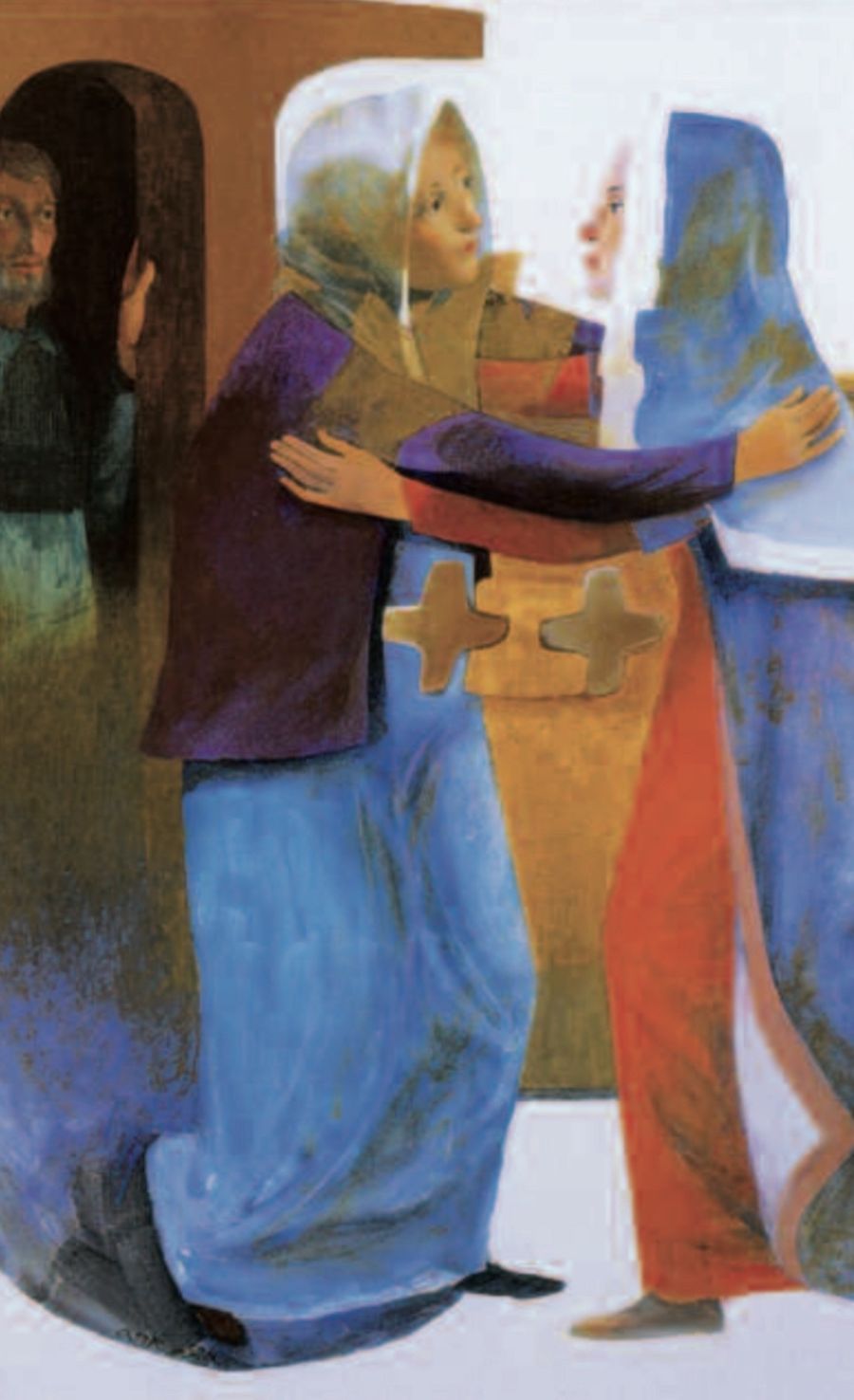
The hymn-song-ensemble of Mary and Elizabeth summarizes and celebrates the history of salvation. It reflects a Judeo-Christian liturgical lauda characteristic of the first communities of 'anawim.

The small and faithful experience the ideal outline of history, of which they paradoxically become the engine.

The two Women give voice to the poor and minority churches, often challenged by the forces of imperial power in dramatic duels.

They depict early assemblies, tiny fraternities; hearths of cohabitation and intimate life.

In them, believing souls experienced a God who does not remain impassive to the cry of the lowly, persecuted.

In a framework of family visitation and (precisely) praise, the whole destination of the new People is reflected.

The difference between the two figures emphasizes the leap of Faith in Mary, compared to the expectations of religious kinship.

In Elizabeth, the First Covenant has already run its full course, and would not go much further.

Human history is barren, but God makes it fruitful with newness and joy, which finally changes the boundaries.

The foreseen ways have come to an end; still blind and submissive to the powers of the earth... They do not make the weak strong.


Faith entirely transmutes the foundations of anti-divine history, because it allows the Spirit to take possession of personal life and fertilize it, making it capable of blessing action.

In Mary's way of believing we grasp within what do not know - because we have a guiding Vision, a sacred image that acts inside, like an innate instinct.

And we already possess what we hope for - because Faith is a stroke of the hand, an action that appropriates, an act-magnet (cf. Heb 11:1).

[Its pinnacle is discovering impossible recovery stupors, starting with the shadowy sides and even that we hate of ourselves - very affair of the discarded].

The Hymn thus expresses the trajectory of the believer's life and the direction of our existence, which recomposes the shaky being in the new harmony of the divine plan.


A classical thesis already from the First Testament: God lifts the wretched from the dust and raises the poor from the rubbish.

He does not address those who are full of themselves, but to whoever  knows how to turn to the depths, and like Mary how to extend them to others.

Within this event of losing oneself in order to find oneself - a logic embodied by both the disciples and the churches - we find the experience of Easter morning.

Lk evangelist of the poor celebrates this reversal of situations in many episodes of people and events at the margins.

The Magnificat also reiterates: the Lord's choices are truly eccentric. Freely He passes for the defeated and the mocked, who find gain in loss and life from death.

Mary in particular becomes an expressive figure of baseness [ταπείνωσις (tapeínōsis, “lowering”), from ταπεινός (tapeinós, “low”); v.48] as the ‘root’ of the transformation of being - into the Unpredictable of God.


He is Faithful.


[Weekday Liturgy, December 22]

223 Last modified on Monday, 22 December 2025 12:01
don Giuseppe Nespeca

Giuseppe Nespeca è architetto e sacerdote. Cultore della Sacra scrittura è autore della raccolta "Due Fuochi due Vie - Religione e Fede, Vangeli e Tao"; coautore del libro "Dialogo e Solstizio".

To repent and believe in the Gospel are not two different things or in some way only juxtaposed, but express the same reality (Pope Benedict)
Convertirsi e credere al Vangelo non sono due cose diverse o in qualche modo soltanto accostate tra loro, ma esprimono la medesima realtà (Papa Benedetto)
The fire of God's creative and redeeming love burns sin and destroys it and takes possession of the soul, which becomes the home of the Most High! (Pope John Paul II)
Il fuoco dell’amore creatore e redentore di Dio brucia il peccato e lo distrugge e prende possesso dell’anima, che diventa abitazione dell’Altissimo! (Papa Giovanni Paolo II)
«The Spirit of the Lord is upon me, because he has anointed me to preach good news to the poor» (Lk 4:18). Every minister of God has to make his own these words spoken by Jesus in Nazareth [John Paul II]
«Lo Spirito del Signore è sopra di me; per questo mi ha consacrato con l'unzione e mi ha mandato per annunziare un lieto messaggio» (Lc 4, 18). Ogni ministro di Dio deve far sue nella propria vita queste parole pronunciate da Gesù di Nazareth [Giovanni Paolo II]
It is He himself who comes to meet us, who lowers Heaven to stretch out his hand to us and raise us to his heights [Pope Benedict]
È Lui stesso che ci viene incontro, abbassa il cielo per tenderci la mano e portarci alla sua altezza [Papa Benedetto]
As said st. Augustine: «The Word of God which is explained to you every day and in a certain sense "broken" is also daily Bread». Complete food: basic and “compote” food - historical and ideal, in actuality
Come diceva s. Agostino: «La Parola di Dio che ogni giorno viene a voi spiegata e in un certo senso “spezzata” è anch’essa Pane quotidiano». Alimento completo: cibo base e “companatico” - storico e ideale, in atto
What begins as a discovery of Jesus moves to a greater understanding and commitment through a prayerful process of questions and discernment (John Paul II)
Quel che inizia come una scoperta di Gesù conduce a una maggiore comprensione e dedizione attraverso un devoto processo di domande e discernimento (Giovanni Paolo II)
John's Prologue is certainly the key text, in which the truth about Christ's divine sonship finds its full expression (John Paul II)
Il Prologo di Giovanni è certamente il testo chiave, nel quale la verità sulla divina figliolanza di Cristo trova la sua piena espressione (Giovanni Paolo II)
Innocence prepares, invokes, hastens Peace. But are these things of so much value and so precious? The answer is immediate, explicit: they are very precious gifts (Pope Paul VI)
L’innocenza prepara, invoca, affretta la Pace. Ma si tratta di cose di tanto valore e così preziose? La risposta è immediata, esplicita: sono doni preziosissimi (Papa Paolo VI)
We will not find a wall, no. We will find a way out […] Let us not fear the Lord (Pope Francis)
Non troveremo un muro, no, troveremo un’uscita […] Non abbiamo paura del Signore (Papa Francesco)
Raw life is full of powers: «Be grateful for everything that comes, because everything was sent as a guide to the afterlife» [Gialal al-Din Rumi]
La vita grezza è colma di potenze: «Sii grato per tutto quel che arriva, perché ogni cosa è stata mandata come guida dell’aldilà» [Gialal al-Din Rumi]
It is not enough to be a pious and devoted person to become aware of the presence of Christ - to see God himself, brothers and things with the eyes of the Spirit

Due Fuochi due Vie - Vol. 1 Due Fuochi due Vie - Vol. 2 Due Fuochi due Vie - Vol. 3 Due Fuochi due Vie - Vol. 4 Due Fuochi due Vie - Vol. 5 Dialogo e Solstizio I fiammiferi di Maria

duevie.art

don Giuseppe Nespeca

Tel. 333-1329741


Disclaimer

Questo blog non rappresenta una testata giornalistica in quanto viene aggiornato senza alcuna periodicità. Non può pertanto considerarsi un prodotto editoriale ai sensi della legge N°62 del 07/03/2001.
Le immagini sono tratte da internet, ma se il loro uso violasse diritti d'autore, lo si comunichi all'autore del blog che provvederà alla loro pronta rimozione.
L'autore dichiara di non essere responsabile dei commenti lasciati nei post. Eventuali commenti dei lettori, lesivi dell'immagine o dell'onorabilità di persone terze, il cui contenuto fosse ritenuto non idoneo alla pubblicazione verranno insindacabilmente rimossi.






