Nov 9, 2025 Written by 

The Movement of the Priesthood of Christ

Our blindness, between religious sense and Faith

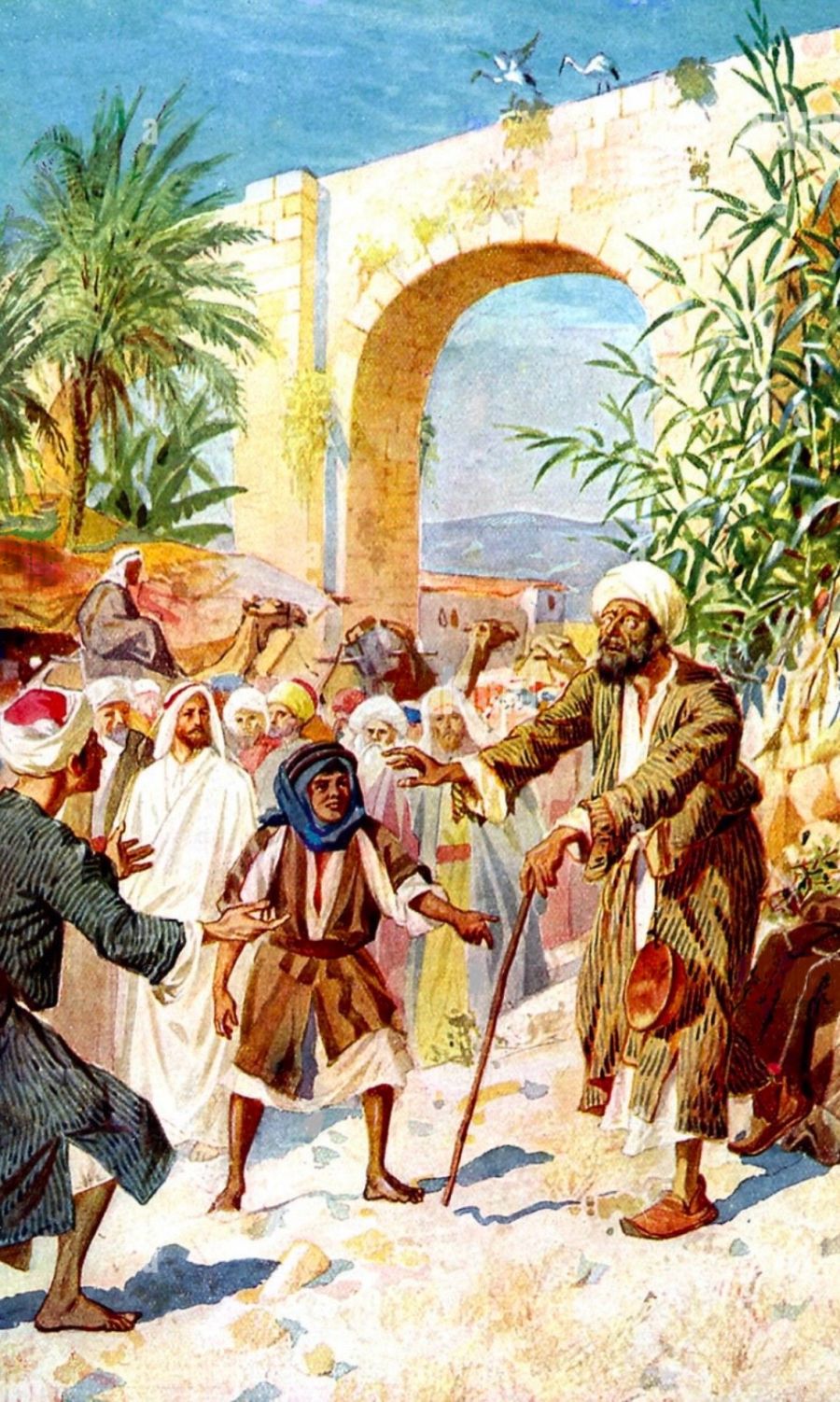
(Lk 18:35-43)


The blind man without a name and crouched at the edges represents us: he is not biologically blind, but one who adjust himself at random.

He cannot «look up» [the key verb to vv.41-43 is «aná-blèpein»] because he does not cultivate ideals; he is satisfied with what gives the contour, which anesthetizes him.

Consequence: the victims of an indolent ideology can confuse the Son of God who donates all of himself and transmits vitality, with the ‘son of David’ (vv.38-39) - who does not convey, but rather takes away life.

The misunderstanding has serious consequences.

Initially every seeker of God risks exchanging the Lord for a phenomenal superman and captain who blesses and favors friends e.g. in their expectations of tranquility, lack of concern and mediocre stasis.

It is a huge defect of sight, because the criteria of wise and solid existence are reversed at all - risking to stick life in a puddle; at most, dragging it to the ground.

If one finds oneself at this level of myopia, it is better to «lift one’s gaze» folded over one’s navel, for short-term petty interests.

Who does not "see well" becomes a man of habit, every day is accompanied to the same places by the same people.

He stands still, «sitting» (v.35) at the edge of a road where people proceed and does not limit as much as him to survive resigned, without snaps.

Such clumsy ones [by choice] - everything expect from the recognition of others; they only live of that. And all they do is repeating identical words and gestures.

Their horizon at hand does not allow them to enter the flow of the Way, where people get busy: building, evolving, expressing themselves, providing for less fortunate sisters and brothers.

An existence dragged to the margins of any interest that is not one’s own money pouch.

These persons live on the movement of others; they are full of small benevolences and opinions bartered by those who pass, for listlessness never re-examined and made their own.

The Word of the Nazarene [in the language of the Gospels the epithet "being of Nazareth" meant "revolutionary, hot-headed, subversive"] triggers the listless.

Personal contact with Jesus corrected his gaze, made him recover the ideal optics - transmitting a diametrically opposite model of a successful man.

In short, Jesus corrects the inert myopia of those who are fond of their ‘place’.

Religiosity or personal Faith: it’s a decisive choice. To start away (from there), reinvent life, abandon the mantle [cf. Mc 10,50] on which common comments and offerings were collected.

Opening the eyes and «rising them up», as an already divine man would do. Pocketing nothing but pearls of light, instead of alms.

In such wise, the Gospel invites a perspective view, which does not fit.

The ‘Fratelli Tutti’ encyclical also proposes visual angles that provoke decision and action: new, invigorating, visionary, daring eyes, filled with 'passage' and Hope.


On muddy roads you can get dirty and you are uncertain, but there we all can proceed in wisdom: on the way that belongs to us; in the movement of the Priesthood of Christ.

With healthy ‘perception’.


[Monday 33rd wk. in O.T.  November 17, 2025]

149 Last modified on Monday, 17 November 2025 12:00
don Giuseppe Nespeca

Giuseppe Nespeca è architetto e sacerdote. Cultore della Sacra scrittura è autore della raccolta "Due Fuochi due Vie - Religione e Fede, Vangeli e Tao"; coautore del libro "Dialogo e Solstizio".

"Too bad! What a pity!" “Sin! What a shame!” - it is said of a missed opportunity: it is the bending of the unicum that we are inside, which every day surrenders its exceptionality to the normalizing and prim outline of common opinion. Divine Appeal of every moment directed Mary's dreams and her innate knowledge - antechamber of her trust, elsewhere
“Peccato!” - si dice di una occasione persa: è la flessione dell’unicum che siamo dentro, che tutti i giorni cede la sua eccezionalità al contorno normalizzante e affettato dell’opinione comune. L’appello divino d’ogni istante orientava altrove i sogni di Maria e il suo sapere innato - anticamera della fiducia
It is a question of leaving behind the comfortable but misleading ways of the idols of this world: success at all costs; power to the detriment of the weak; the desire for wealth; pleasure at any price. And instead, preparing the way of the Lord: this does not take away our freedom (Pope Francis)
Si tratta di lasciare le strade, comode ma fuorvianti, degli idoli di questo mondo: il successo a tutti i costi, il potere a scapito dei più deboli, la sete di ricchezze, il piacere a qualsiasi prezzo. E di aprire invece la strada al Signore che viene: Egli non toglie la nostra libertà (Papa Francesco)
Inside each woman and man resides a volcano of potential energies which are not to be smothered and aligned. The Lord doesn’t level the character; he doesn’t wear out the creatures. He doesn't make them desolate. The Kingdom is Near: it reinstates the imbalances. It does not mortify them, it convert them and enhances them
Dentro ciascuna donna e uomo risiede un vulcano di energie potenziali che non devono essere soffocate e allineate. Il Signore non livella il carattere; non sfianca le creature. Non le rende desolate. Il Regno è Vicino: reintegra gli squilibri. Non li mortifica, li tramuta e valorizza
The Person of Christ opens up another panorama to the perception of the two short-sighted (because ambitious) disciples. But sometimes it is necessary to take a leap in the dark, to contact one's vocational Seed; heal the gaze of the soul, recognize himself, flourish; make true Communion
La Persona di Cristo spalanca alla percezione dei due discepoli miopi (perché ambiziosi) un altro panorama. Ma talora bisogna fare un salto nel buio, per contattare il proprio Seme vocazionale; guarire lo sguardo dell’anima, riconoscersi, fiorire; fare vera Comunione
«Too pure water has no fish». Accepting ourselves will complete us: it will make us recover the co-present, opposite and shadowed sides. It’s the leap of profound Faith. And seems incredible, but the Rock on which we build the way of being believers is Freedom
«L’acqua troppo pura non ha pesci». Accettarsi ci completerà: farà recuperare i lati compresenti, opposti e in ombra. È il balzo della Fede profonda. Sembra incredibile, ma la Roccia sulla quale edifichiamo il modo di essere credenti è la Libertà
Our shortages make us attentive, and unique. They should not be despised, but assumed and dynamized in communion - with recoveries that renew relationships. Falls are therefore also a precious signal: perhaps we are not using and investing our resources in the best possible way. So the collapses can quickly turn into (different) climbs even for those who have no self-esteem
Le nostre carenze ci rendono attenti, e unici. Anche le cadute sono dunque un segnale prezioso: forse non stiamo utilizzando e investendo al meglio le nostre risorse

Due Fuochi due Vie - Vol. 1 Due Fuochi due Vie - Vol. 2 Due Fuochi due Vie - Vol. 3 Due Fuochi due Vie - Vol. 4 Due Fuochi due Vie - Vol. 5 Dialogo e Solstizio I fiammiferi di Maria

duevie.art

don Giuseppe Nespeca

Tel. 333-1329741


Disclaimer

Questo blog non rappresenta una testata giornalistica in quanto viene aggiornato senza alcuna periodicità. Non può pertanto considerarsi un prodotto editoriale ai sensi della legge N°62 del 07/03/2001.
Le immagini sono tratte da internet, ma se il loro uso violasse diritti d'autore, lo si comunichi all'autore del blog che provvederà alla loro pronta rimozione.
L'autore dichiara di non essere responsabile dei commenti lasciati nei post. Eventuali commenti dei lettori, lesivi dell'immagine o dell'onorabilità di persone terze, il cui contenuto fosse ritenuto non idoneo alla pubblicazione verranno insindacabilmente rimossi.






