Sep 26, 2026 Written by 

Homicidal vintners, and the true enemy of God

(Mt 21:33-43.45-46)


Christ introduces everyone to an adventurous, uncomfortable journey, not without pitfalls that throw the situation upside down and destabilize - but it is the Way for each of us to recognize himself.

Otherwise we would not get closer to the Source of perception, imagination, reality and creativity - virtues that are necessary for rebirth, even from global emergency.

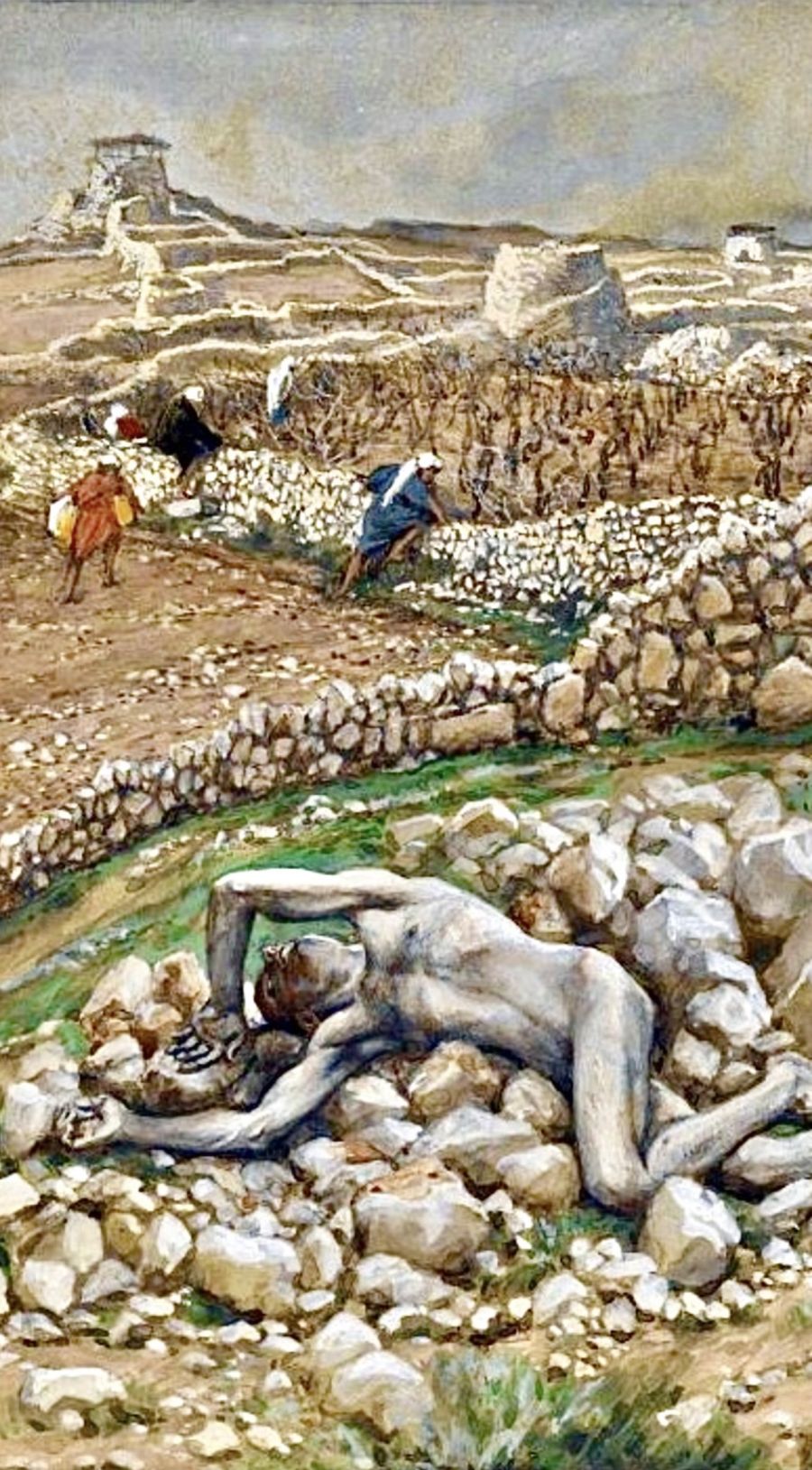
Jesus uses the figure of the Vineyard to describe the work of God and the response of men - first and foremost spiritual leaders (v.23).

Religious leaders were like this: hostile to divine action; equipped to appear, nevertheless violent and sclerotic.

The directors to whom Jesus addresses, follow the entire metaphor step by step - and they seem to find themselves unguarded. They only remain speechless at the end.

Why does He ask them imperatively: «Listen you» [which is not a simple invitation]?

From the beginning speaks with a master tone. Why?

He is Lord of those to whom he actually addresses: the Christ so much invoked by new caste of "pharisees" back in the communities, where top of the class already claimed to manage the Vineyard in their own way.

In no uncertain terms, the parable denounces the abuse of authority perpetrated in third generation assemblies, especially by their chiefs.

Church elders who were already annoyed at taking care of the little people, who on the other hand came to the threshold of the communities with the hope of being welcomed.

Conversely, it was precisely these «last» the new prophets called by God to awaken the immobility situation (of bosses) - comparable to the same swampy reality of other religions of time.


Everywhere and even today some potentates discriminate and manipulate consciences in order to protect their world - by eliminating Jesus Present, who recurs in the small, innocent and transparent ones.

Veterans accustomed to directing do not notice that they are decreeing their own condemnation (v. 41).

Of course, Christ does not intend to ridicule anyone: He wanted to lead people to ‘tell the truth’ about themselves.

In Gospel the behavior of the titled people does not change. On the contrary, feeling unmasked gets worse it, and only the hesitation of losing face in public can restrain them (vv.45-46).

But now they know who they are - so much so that they are ashamed to openly plot.

Categories that are considered closer to Paradise - those who produce inedible grapes - excluded from the testimony of the Kingdom innervated by tinies’ crowd.

There will inevitably be a new beginning, and the replacement of inept settlers (v.43).

It is «good news»: the Eternal one achieves his purpose despite the repeated refusals of those who should serve Him, and instead use Him.

In short, for Jesus the great enemy of God is expediency.


Even amidst ungenerous brutality and accusations of being deluded dreamers, new and more faithful Heralds of the Spirit are ready for succession.

An unstoppable course, sprinkled by the stream of blood of the prophets (v.46).

Outcasts, shunned, expelled, and to be crushed - but not locked into mental patterns: capable of giving free rein to regenerative energies.


Consciousness of the world, divorced from compromise.


[27th Sunday in O.T. (year A), October 4, 2026]

24 Last modified on Saturday, 26 September 2026 04:00
don Giuseppe Nespeca

Giuseppe Nespeca è architetto e sacerdote. Cultore della Sacra scrittura è autore della raccolta "Due Fuochi due Vie - Religione e Fede, Vangeli e Tao"; coautore del libro "Dialogo e Solstizio".

He is “the very stone which the builders rejected” (cf. Mt 21:42), because they judged him to be hostile to the law and a danger to public order [Pope Benedict]
Egli è “la pietra che i costruttori hanno scartato” (cfr Mt 21,42), perché l’hanno giudicato nemico della legge e pericoloso per l’ordine pubblico [Papa Benedetto]
"His" in a very literal sense: the One whom only the Son knows as Father, and by whom alone He is mutually known. We are now on the same ground, from which the prologue of the Gospel of John will later arise (Pope John Paul II)
“Suo” in senso quanto mai letterale: Colui che solo il Figlio conosce come Padre, e dal quale soltanto è reciprocamente conosciuto. Ci troviamo ormai sullo stesso terreno, dal quale più tardi sorgerà il prologo del Vangelo di Giovanni (Papa Giovanni Paolo II)
That 'always seeing the face of the Father' is the highest manifestation of the worship of God. It can be said to constitute that 'heavenly liturgy', performed on behalf of the whole universe [John Paul II]
Quel “vedere sempre la faccia del Padre” è la manifestazione più alta dell’adorazione di Dio. Si può dire che essa costituisce quella “liturgia celeste”, compiuta a nome di tutto l’universo [Giovanni Paolo II]
But what moves me even more strongly to proclaim the urgency of missionary evangelization is the fact that it is the primary service which the Church can render to every individual and to all humanity [Redemptoris Missio n.2]
Ma ciò che ancor più mi spinge a proclamare l'urgenza dell'evangelizzazione missionaria è che essa costituisce il primo servizio che la chiesa può rendere a ciascun uomo e all'intera umanità [Redemptoris Missio n.2]
Freedom and love coincide! On the contrary, obeying one’s selfishness leads to rivalry and conflict (Pope Benedict)
Libertà e amore coincidono! Al contrario, obbedire al proprio egoismo conduce a rivalità e conflitti (Papa Benedetto)
Are they not all spirits charged with a ministry, sent to serve those who are to inherit salvation? (Heb 1:14)
Non sono essi tutti spiriti incaricati di un ministero, inviati per servire coloro che devono ereditare la salvezza? (Eb 1,14)
The Church with its permanent contradiction: between the ideal and reality, the more annoying contradiction, the more the ideal is affirmed sublime, evangelical, sacred, divine, and the reality is often petty, narrow, defective, sometimes even selfish (Pope Paul VI)
La Chiesa con la sua permanente contraddizione: tra l’ideale e la realtà, tanto più fastidiosa contraddizione, quanto più l’ideale è affermato sublime, evangelico, sacro, divino, e la realtà si presenta spesso meschina, angusta, difettosa, alcune volte perfino egoista (Papa Paolo VI)
At first they say “yes” to God’s will, but their piety becomes routine and God no longer matters to them [Pope Benedict]
Essi, prima, dicono “sì” alla volontà di Dio. Ma la loro religiosità diventa routine, e Dio non li inquieta più [Papa Benedetto]
And «each of us can say: "for love to me"» (Pope Francis)
E «ognuno di noi può dire: “per amore a me”» (Papa Francesco)
We too, to reach a more conscious confession of Jesus Christ must follow, like Peter, a path made of attentive, caring listening (Pope John Paul II)
Anche noi per giungere a una più consapevole confessione di Gesù Cristo dobbiamo percorrere, come Pietro, un cammino fatto di ascolto attento, premuroso (Papa Giovanni Paolo II)

Due Fuochi due Vie - Vol. 1 Due Fuochi due Vie - Vol. 2 Due Fuochi due Vie - Vol. 3 Due Fuochi due Vie - Vol. 4 Due Fuochi due Vie - Vol. 5 Dialogo e Solstizio I fiammiferi di Maria

duevie.art

don Giuseppe Nespeca

Tel. 333-1329741


Disclaimer

Questo blog non rappresenta una testata giornalistica in quanto viene aggiornato senza alcuna periodicità. Non può pertanto considerarsi un prodotto editoriale ai sensi della legge N°62 del 07/03/2001.
Le immagini sono tratte da internet, ma se il loro uso violasse diritti d'autore, lo si comunichi all'autore del blog che provvederà alla loro pronta rimozione.
L'autore dichiara di non essere responsabile dei commenti lasciati nei post. Eventuali commenti dei lettori, lesivi dell'immagine o dell'onorabilità di persone terze, il cui contenuto fosse ritenuto non idoneo alla pubblicazione verranno insindacabilmente rimossi.






