Apr 8, 2026 Written by 

Faith and Salvation: Life «not with measure», already on earth

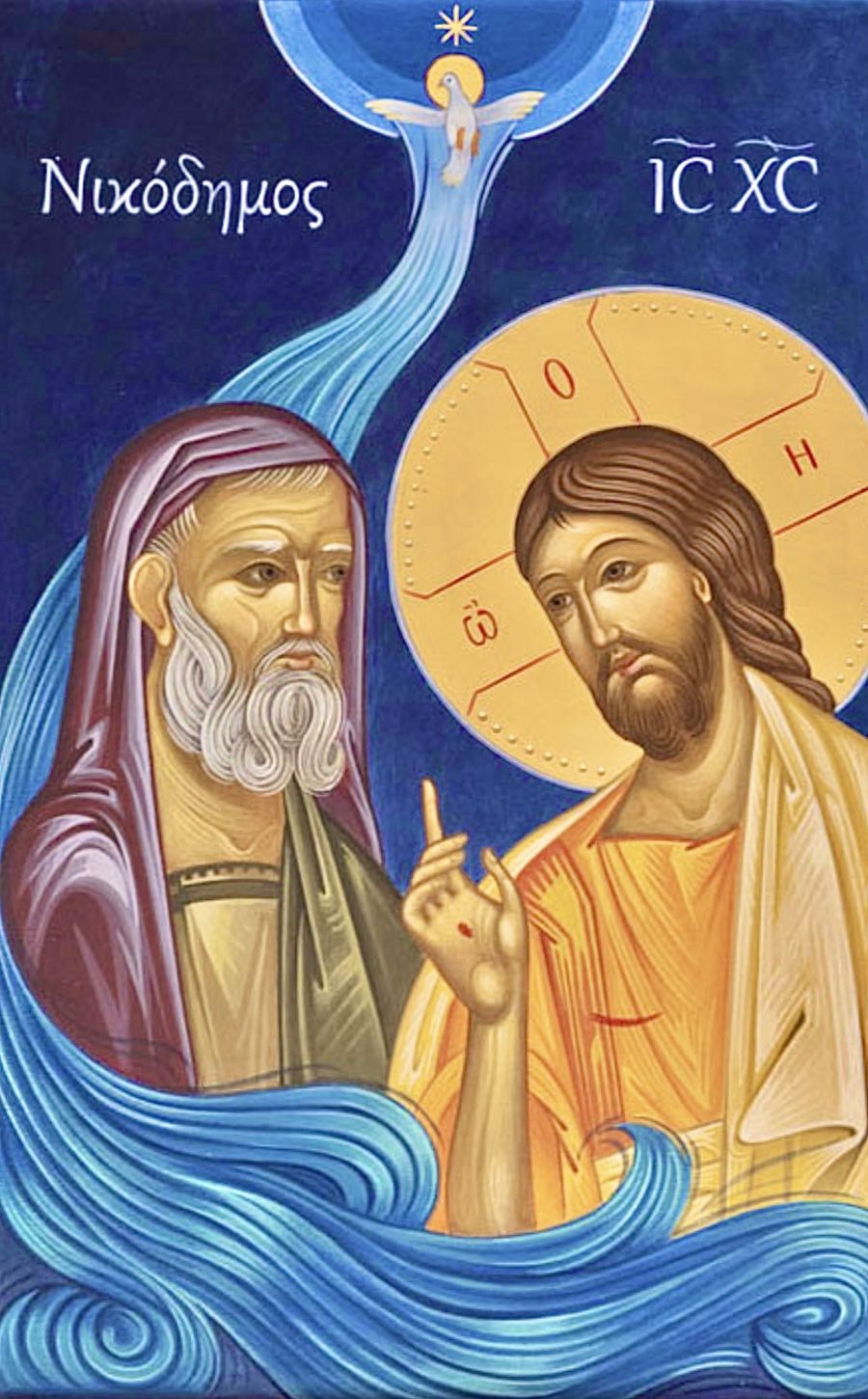
(Jn 3:31-36)


In the Gospel passage, John uses descriptive categories [from above, from below, from heaven, from the earth - that is, our whole “domain”].

Natural terms, to introduce us to the Person of the revealing Son, and the importance of his proposal for real life.

Indeed, the divine condition of the Father's Envoy proceeds from the human dimension.

However, his earthly nature is incomparable to his origin as a being from heaven, superior to any possible contention.

The Messiah testimony about the world above is a Word that challenges us. But it is not accepted (cf. Jn 1:11) by a «world» (Jn 1:10) that loves only what corresponds to it.

Yet those who accept such a testimony (cf. Jn 1:12) harbour within themselves the same Revealer - because of the identity between the Person and the Word.

In the expressions of the One who unveils, God's plans and action are made manifest (v.33).

It is the Master of Nazareth who shows the truth of the Most High.

For the Father has bestowed upon the Son his entire Spirit «not with measure»  (v.34); no limits, no restrictions, as e.g. in prophets, kings or patriarchs.

And he who believes in the Son is of the Father - he is already at the level of eternity: he has in him the same «Life of the Eternal» (v. 36).

He who welcomes Christ already lives in God. He is turned to the Father; he enjoys his ineffable presence, assimilates and speaks his ‘language’ unique.

He becomes capable of non-unilateral relationships, because he knows how to recover opposites.

Only from the fullness of the gifts of the Spirit [and its participation: v.34] comes adherence to a Torah imprinted in the heart, as well as self-acknowledged obedience.

In this way, it becomes Resemblance, which takes the story of the new Master as its criterion.


Keeping the precepts of the Pentateuch seemed to bring «long days and years of life and so much peace» (Pr 3,1-2).

A [normal] expected fulfilment was assumed from the fulfilments of the Law and oral tradition.

Salvation, on the other hand, does not come from origins, from 'territory' (v.31) - culture and ethnicity.

Nor does redemption proceed from the outcome of a verification of ancient teaching.

Complete realisation seizes us - rather - from believing in the Son (v.36): absolute ‘birth’ [always renewed] imparted by the Spirit who does not hinder.

Spirit of divine configuration, communicated (precisely) «not with measure».


Ancient religions promise “eternal life” - in some cases, almost a consolation prize after the hardships of this vale of tears.

Alienation that breaks wings, produces alibis, and makes one external, already registered and predictable.

The «Life of the Eternal» (v.36), the very, intimate Life of God, is instead a condition that dwells, bursting into our paths.

It does so with eccentric, unprecedented inclinations; previously inconceivable - where we are ourselves, not reduced creatures.

It can be experienced in the concrete, even excessive, ways of being that correspond to an unveiling, a 'revelation' within us.


Especially in the Fourth Gospel, the dimension of the Eternal is a protruding measure, yes, but embodied and in action. Not by natural virtue, but by openness to Totality.

For the action of the Spirit, which ceaselessly creates and regenerates - and weaves a radical empathy into being.

It is not we who produce the Love that fills and activates, or that can return us to life without restriction.

But the dimension of Sons who from Baptism know and recognise themselves in the Fullness, concerns us.

Then - as in Jesus the Son - everything is placed in our hands (v.35).


To internalize and live the message:


What vocational excess have you left in abeyance?


[Thursday 2nd wk. of Easter, April 16, 2026]

91 Last modified on Wednesday, 08 April 2026 04:08
don Giuseppe Nespeca

Giuseppe Nespeca è architetto e sacerdote. Cultore della Sacra scrittura è autore della raccolta "Due Fuochi due Vie - Religione e Fede, Vangeli e Tao"; coautore del libro "Dialogo e Solstizio".

First, the world of the Bible presents us with a new image of God. In surrounding cultures, the image of God and of the gods ultimately remained unclear and contradictory (Deus Caritas est n.9)
Vi è anzitutto la nuova immagine di Dio. Nelle culture che circondano il mondo della Bibbia, l'immagine di dio e degli dei rimane, alla fin fine, poco chiara e in sé contraddittoria (Deus Caritas est n.9)
God loves the world and will love it to the end. The Heart of the Son of God pierced on the Cross and opened is a profound and definitive witness to God’s love. Saint Bonaventure writes: “It was a divine decree that permitted one of the soldiers to open his sacred wide with a lance… The blood and water which poured out at that moment was the price of our salvation” (John Paul II)
Il mondo è amato da Dio e sarà amato fino alla fine. Il Cuore del Figlio di Dio trafitto sulla croce e aperto, testimonia in modo profondo e definitivo l’amore di Dio. Scriverà San Bonaventura: “Per divina disposizione è stato permesso che un soldato trafiggesse e aprisse quel sacro costato. Ne uscì sangue ed acqua, prezzo della nostra salvezza” (Giovanni Paolo II)
Thus, paradoxically, from a sign of condemnation, death and failure, the Cross becomes a sign of redemption, life and victory, through faith, the fruits of salvation can be gathered (Pope Benedict)
Così la Croce, paradossalmente, da segno di condanna, di morte, di fallimento, diventa segno di redenzione, di vita, di vittoria, in cui, con sguardo di fede, si possono scorgere i frutti della salvezza (Papa Benedetto)
[Nicodemus] felt the fascination of this Rabbi, so different from the others, but could not manage to rid himself of the conditioning of his environment that was hostile to Jesus, and stood irresolute on the threshold of faith (Pope Benedict)
[Nicodemo] avverte il fascino di questo Rabbì così diverso dagli altri, ma non riesce a sottrarsi ai condizionamenti dell’ambiente contrario a Gesù e resta titubante sulla soglia della fede (Papa Benedetto)
Those wounds that, in the beginning were an obstacle for Thomas’s faith, being a sign of Jesus’ apparent failure, those same wounds have become in his encounter with the Risen One, signs of a victorious love. These wounds that Christ has received for love of us help us to understand who God is and to repeat: “My Lord and my God!” Only a God who loves us to the extent of taking upon himself our wounds and our pain, especially innocent suffering, is worthy of faith (Pope Benedict)
Quelle piaghe, che per Tommaso erano dapprima un ostacolo alla fede, perché segni dell’apparente fallimento di Gesù; quelle stesse piaghe sono diventate, nell’incontro con il Risorto, prove di un amore vittorioso. Queste piaghe che Cristo ha contratto per amore nostro ci aiutano a capire chi è Dio e a ripetere anche noi: “Mio Signore e mio Dio”. Solo un Dio che ci ama fino a prendere su di sé le nostre ferite e il nostro dolore, soprattutto quello innocente, è degno di fede (Papa Benedetto)
We see that the disciples are still closed in their thinking […] How does Jesus answer? He answers by broadening their horizons […] and he confers upon them the task of bearing witness to him all over the world, transcending the cultural and religious confines within which they were accustomed to think and live (Pope Benedict)
Vediamo che i discepoli sono ancora chiusi nella loro visione […] E come risponde Gesù? Risponde aprendo i loro orizzonti […] e conferisce loro l’incarico di testimoniarlo in tutto il mondo oltrepassando i confini culturali e religiosi entro cui erano abituati a pensare e a vivere (Papa Benedetto)

Due Fuochi due Vie - Vol. 1 Due Fuochi due Vie - Vol. 2 Due Fuochi due Vie - Vol. 3 Due Fuochi due Vie - Vol. 4 Due Fuochi due Vie - Vol. 5 Dialogo e Solstizio I fiammiferi di Maria

duevie.art

don Giuseppe Nespeca

Tel. 333-1329741


Disclaimer

Questo blog non rappresenta una testata giornalistica in quanto viene aggiornato senza alcuna periodicità. Non può pertanto considerarsi un prodotto editoriale ai sensi della legge N°62 del 07/03/2001.
Le immagini sono tratte da internet, ma se il loro uso violasse diritti d'autore, lo si comunichi all'autore del blog che provvederà alla loro pronta rimozione.
L'autore dichiara di non essere responsabile dei commenti lasciati nei post. Eventuali commenti dei lettori, lesivi dell'immagine o dell'onorabilità di persone terze, il cui contenuto fosse ritenuto non idoneo alla pubblicazione verranno insindacabilmente rimossi.






