


don Giuseppe Nespeca
Giuseppe Nespeca è architetto e sacerdote. Cultore della Sacra scrittura è autore della raccolta "Due Fuochi due Vie - Religione e Fede, Vangeli e Tao"; coautore del libro "Dialogo e Solstizio".
My brother would not have died…
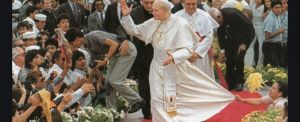
Lord, if you had been here, my brother would not have died" (Jn 11:21, 32).
These words, which you have heard read in the Gospel of today's Mass, are pronounced first by Martha, then by Mary, the two sisters of Lazarus, and are addressed to Jesus of Nazareth, who was their friend and their brother's friend.
Today's liturgy presents the theme of death to our attention. This is now the fifth Sunday of Lent and the time of Christ's passion is approaching. The time of death and resurrection. Today we look at this fact through the death and resurrection of Lazarus. In Christ's messianic mission, this shattering event serves as a preparation for Holy Week and Easter.
2. ". . . my brother would not have died".
The voice of the human heart resounds in these words, the voice of a heart that loves and bears witness to what death is. All the time we hear about death and read news about the death of various people. There is systematic information on this subject. There is also death statistics. We know that death is a common and unceasing phenomenon. If around 145,000 people die on the globe every day, we can say that people die every moment. Death is a universal phenomenon and an ordinary fact. The universality and ordinariness of the fact confirm the reality of death, the inevitability of death, but, at the same time, they erase in a certain sense the truth about death, its penetrating eloquence.
The language of statistics is not enough here. The voice of the human heart is needed: the voice of a sister, as in today's Gospel, the voice of a person who loves. The reality of death can only be expressed in all its truth in the language of love.
For love resists death, and desires life . . .
Each of the two sisters of Lazarus does not say 'my brother is dead', but says: 'Lord, if you had been here, my brother would not have died'.
The truth about death can only be expressed from a perspective of life, from a desire for life: that is, from remaining in the loving communion of a person.
The truth about death is expressed in today's liturgy in relation to the voice of the human heart.
3. At the same time it is expressed in relation to the mission of Christ, the world's redeemer.
Jesus of Nazareth was the friend of Lazarus and his sisters. The death of his friend was also felt in his heart with a particular echo. When he came to Bethany, when he heard the weeping of the sisters and others who were fond of the deceased, Jesus "was deeply moved, he was troubled", and in this inner disposition he asked: "Where have you laid him?" (John 11: 33).
Jesus of Nazareth is at the same time the Christ, the one the Father sent to the world: he is the eternal witness of the Father's love. He is the ultimate spokesman of this love before men. He is in a certain sense the Host of it with regard to each and all. In him and for him the eternal love of the Father is confirmed and fulfilled in human history, confirmed and fulfilled in a superabundant manner.
And love opposes death and wants life.
Man's death, ever since Adam, is opposed to love: it is opposed to the love of the Father, the God of life.
The root of death is sin, which also opposes the Father's love. In human history, death is united with sin, and like sin it is opposed to love.
4. Jesus Christ came into the world to redeem man's sin; every sin that is rooted in man. That is why he confronted the reality of death; for death is united with sin in human history: it is the fruit of sin. Jesus Christ became man's redeemer through his death on the cross, which was the sacrifice that repaired all sin.
In his death, Jesus Christ confirmed the testimony of the Father's love. The love that resists death, and desires life, was expressed in the resurrection of Christ, of him who, to redeem the sins of the world, freely accepted death on the cross.
This event is called Easter: the paschal mystery. Every year we prepare for it through Lent, and today's Sunday now shows us this mystery at close quarters, in which God's love and power have been revealed, as life has brought victory over death.
5. What happened in Bethany at the tomb of Lazarus was almost the last announcement of the paschal mystery.
Jesus of Nazareth stood by the tomb of his friend Lazarus, and said: "Lazarus, come out!" (John 11: 43). With these words, full of power, Jesus raised him to life and brought him out of the tomb.
Before performing this miracle, Christ "lifted up his eyes and said: 'Father, I thank you that you have listened to me. I knew that you always listen to me, but I said this for the people around me, so that they might believe that you sent me'" (John 11: 41-42).At the tomb of Lazarus a particular confrontation of death with the redemptive mission of Christ took place. Christ was the witness of the eternal love of the Father, of that love that resists death and desires life. By raising Lazarus, he bore witness to this love. He also bore witness to God's exclusive power over life and death.
At the same time, at Lazarus' tomb, Christ was the prophet of his own mystery: of the paschal mystery, in which the redemptive death on the cross became the source of new life in the resurrection.
8. The pilgrimage, which you have undertaken today because of the Jubilee, introduces you, dear soldiers gathered here from different countries, into the mystery of redemption, through the liturgy of today's Lenten Sunday, which invites us to pause, I would say, on the frontier of life and death, to worship the presence and love of God.
Here are the words of the prophet Ezekiel: "Says the Lord God: 'You shall know that I am the Lord, when I open your graves and raise you from your graves, O my people'" (Ez 37:12, 13).
These words were fulfilled at the tomb of Lazarus in Bethany. They were definitively fulfilled at the tomb of Christ on Calvary. Today's liturgy makes us aware of this.
In the resurrection of Lazarus, God's power over man's spirit and body was manifested.
In Christ's resurrection, the Holy Spirit was granted as the source of new life: divine life. This life is man's eternal destiny. It is his vocation received from God. In this life, the eternal love of the Father is realised.
For love desires life and is opposed to death.
Dear brothers! Let us live this life! Let sin not dominate in us! Let us live this life, the price of which is redemption through Christ's death on the cross!
"And if the Spirit of him who raised Jesus from the dead dwells in you, he who raised Jesus from the dead will also give life to your mortal bodies through his Spirit who dwells in you" (Rom 8:11).
May the Holy Spirit dwell in you always through the grace of Christ's redemption. Amen.
[Pope John Paul II, Homily for the Jubilee of the Military 8 April 1984]
He takes on the drama of death
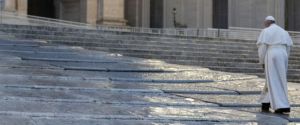
The Gospel [...] is the resurrection of Lazarus (cf. Jn 11:1-45). Lazarus was Martha and Mary’s brother; they were good friends of Jesus. When Jesus arrives in Bethany, Lazarus has already been dead for four days. Martha runs towards the Master and says to Him: “If you had been here, my brother would not have died!” (v. 21). Jesus replies to her: “Your brother will rise again” (v. 23) and adds: “I am the resurrection and the life; he who believes in me, though he die, yet shall he live” (v. 25). Jesus makes himself seen as the Lord of life, he who is capable of giving life even to the dead. Then Mary and other people arrive, in tears, and so Jesus — the Gospel says — “was deeply moved in spirit and troubled.... Jesus wept” (vv. 33, 35). With this turmoil in his heart, he goes to the tomb, thanks the Father who always listens to him, has the tomb opened and cries aloud: “Lazarus, come out!” (v. 43). And Lazarus emerges with “his hands and feet bound with bandages and his face wrapped with a cloth” (v. 44).
Here we can experience first hand that God is life and gives life, yet takes on the tragedy of death. Jesus could have avoided the death of his friend Lazarus, but he wanted to share in our suffering for the death of people dear to us, and above all, he wished to demonstrate God’s dominion over death. In this Gospel passage we see that the faith of man and the omnipotence of God, of God’s love, seek each other and finally meet. It is like a two lane street: the faith of man and the omnipotence of God’s love seek each other and finally meet. We see this in the cry of Martha and Mary, and of all of us with them: “If you had been here!”. And God’s answer is not a speech, no, God’s answer to the problem of death is Jesus: “I am the resurrection and the life” ... have faith. Amid grief, continue to have faith, even when it seems that death has won. Take away the stone from your heart! Let the Word of God restore life where there is death.
Today, too, Jesus repeats to us: “Take away the stone”. God did not create us for the tomb, but rather he created us for life, [which is] beautiful, good, joyful. But “through the devil’s envy death entered the world” (Wis 2:24) says the Book of Wisdom, and Jesus Christ came to free us from its bonds.
We are thus called to take away the stones of all that suggests death: for example, the hypocrisy with which faith is lived, is death; the destructive criticism of others, is death; insults, slander, are death; the marginalization of the poor, is death. The Lord asks us to remove these stones from our hearts, and life will then flourish again around us. Christ lives, and those who welcome him and follow him come into contact with life. Without Christ, or outside of Christ, not only is life not present, but one falls back into death.
The resurrection of Lazarus is also a sign of the regeneration that occurs in the believer through Baptism, with full integration within the Paschal Mystery of Christ. Through the action and power of the Holy Spirit, the Christian is a person who journeys in life as a new creature: a creature for life, who goes towards life.
May the Virgin Mary help us to be compassionate like her son Jesus, who made our suffering his own. May each of us be close to those who are in difficulty, becoming for them a reflection of God’s love and tenderness, which frees us from death and makes life victorious.
[Pope Francis, Angelus 29 March 2020]
Treasure and Pearl, rituals and Net. Beautiful and rotten
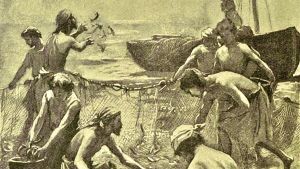
Completeness: Duplicity

From the fascinating proposal of Faith to the fatigue of withdrawal
(Mt 13:36-43)
The parable of the Sower as historically narrated by Jesus (vv.3-8) and that of the tares (vv.24-30) denote the total positivity of his Message.
The Lord proclaimed a new world; above all a different, tolerant and benevolent Heaven.
Even vv.18-23 contain a Good News, rather than a judgment: in our field both good wheat and weeds arise spontaneously, but all this is not a curse; on the contrary (v.23c).
It must however be admitted that the metaphor of vv.37-43 transforms the original parable (vv.24-30) into a moral allegory.
With symbolic elements, the different figurative expressions take up the original narrative of Jesus, trying to interpret it according to the common codes of traditional rabbinic preaching.
As for the teachers of Israel, here too the [next] intent is to shake the listeners, in order to emphasize the personal, community and spiritual importance of the fundamental choices - in the present.
At House (v.36), that is, in the Church, a debate is created first of all on the explanation of why Jesus does not impose a preventive sterilization of the wheat field.
In the uncertainty, particular clarifications are attempted - according to which, however, the passage [which is the result of subsequent editing, debate and reflection] risks overturning the meaning of the Jesus parable itself.
Well, in his people of brethren and in society, the Master did not intend to erase a priori the profitable sense of the ineffable and mysterious dynamics of ‘mixing’: reality of this world with full rights.
Such is the essential, universalist Proclamation of the young Rabbi, in spite of the ancient purist clichés.
Legalist religiosity was selective, élitist, conformist; attentive to the maintenance of social hierarchies.
In this way, it constituted a dense-mesh cultural hood, and evaluated in an abstract, preventive mode, what should be considered good or bad for all.
Yet the idea of algid perfection [sterile of life] did not allow the energies of concrete existence to prepare the future and generate the same Novelty of the Spirit.
Christ's encounter with the believer changes everything in his life, certainly - but not from an assumed gradation of values, procedures and pre-written sentences.
In reality one becomes attentive to perceive the eccentricity of the sisters and brothers by the fact that one has experienced the blessing embrace of the Father on his own "defects".
Not for a sense of emotional paternalism, but because not infrequently the resources that solve real problems and activate the Redemption of God come from the whirlwind of precious contradictions and indigences that we have inside.
They make us less one-sided, more flexible and complete. Exceptional, alive; able to rely on the internal world, instead of the external one.
So capable to implement a turning point.
We see it: to make the world grow and reborn from the global crisis, each subject (even institutional) is called to reinvent itself outside of every score already arranged and recognized.
And today perhaps starting from what in the habit of thought was considered nothing but sin, or annoying dissonance; incompleteness, limit... so on.
Suddenly and blatantly, imbalances and fluctuations make a difference also in terms of quality. They become opportunities not to be missed: an extra gear; spring power, a drive to activate the unprecedented, and open up.
Here is a substantial difference between common religiosity and the life of Faith. The character of Duplicity makes us healthier and more perfect - and God is not biased.
Indeed, in the eyes of the Father it is precisely the unrepeatable uncertainties [not by protocol] that make every one of his sons special, unique.
In short, you grow, get richer, and correspond to your personal Vocation, only by putting into play, integrating and transmuting boundaries - not denying them.
[Tuesday 17th wk. in O.T. July 28, 2026]
Difference between Parable and Allegory, religiosity and Faith
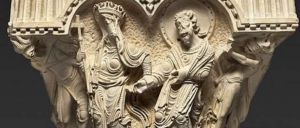
(Mt 13:36-43)
Completeness: Duplicity
From the fascinating proposal of Faith to the fatigue of retreat (2)
The parable of the Sower as historically narrated by Jesus (vv.3-8) and the parable of the tares (vv.24-30) denote the total positivity of his Message.
The Lord proclaimed a new world; first of all a different, tolerant and benevolent Heaven.
The principle of our life as saved is not what we do for God, but what He (Generous and Patient) creates for us.
Just like a condescending and longsuffering Parent, who ceaselessly provides opportunities for life.
The Master intended to shift the criterion of the pious life: from personal effort to allowing oneself to be saved, surrendering one's point of view.
Redemption is rooted in His providential initiative, in His gratuitous liberality, in His serene calm.
All conditions that allow each one a process of interaction, assimilation and reworking: a broad time of growth.
But the reflection that immediately follows - just a few decades after the Lord's death - begins to suffer from the dominant cultural cliché on the side, and unfortunately undermines both its character and its transparency.
The Son proclaimed only the longsuffering of the Father: Subject, Motive and Engine of our ability to face every path of flourishing.
In later reflection, the original parables become allegories, overflowing with symbols of defined moralistic meaning - all in all, banal.
In this way, we see them veined with impersonal considerations about the quality of the soil, or even of the Seed!
The latter - no longer identified with His Word, but in a certain zealous type of disciples [of little specific weight and proposal: those who would always feel surrounded by adversaries].
Such an inauspicious passage testifies to the difficulty of understanding the Son of God's astounding call from the earliest communities.
The Lord intended to suggest a path of Faith to all, precisely to supplant the anxiogenic yoke of the religious model - which, on the other hand, remained as an attractive archetype of discernment criteria.
A heavy yoke, albeit a usual one, that did not start from Love; for the very fact that it presupposed stinginess, inadequacies, and shame everywhere - even in the spiritual life [shrunken, perpetually in the balance, stingy, always insufficient].
We know the situations.
Instead, even vv.18-23 contain a glad tidings, rather than a judgement: in our field both good wheat and weeds arise spontaneously, but this is not a curse regardless; on the contrary (v.23c).
However, it must be admitted that the metaphor of vv.37-43 transforms the original parable (vv.24-30) into a moral allegory.
The metaphor that follows the initial parable is intended to emphasise that the presence of "evil" in the world is not to be attributed to the lack of vitality of the Seed, nor to the divine Work.
The protagonist of the passage [from v.18 and v.36] is no longer God and His munificent gesture, who spares no expense in sowing His Seed, but rather the type of soil - or here the new "good seed": the apostle himself - who would become the true "subject" of the spiritual path.
One thus enters the minefield of devotions: it seems that it is the woman and the man, the one who actually receives the Word, who must focus on himself, and identify his own shortcomings.
In addition - having finally become aware of them, a clear conscience, a natural ability and even familiarity - to strive to 'improve' according to models, on pain of exclusion from the ranks of the 'best'.
[All this leads normal people to a depersonalisation of the very quality of the Calling, and to an insane expenditure of energy].
The ethical idea - in fact - erases trust. It does not enhance the propulsive dynamism of ordinary existence. It always finds before it imperfections and tangles to unravel.
It is these, and thoughts, that get in the way. Conversely, in order to realise and complete oneself, such ballasts should be placed in the background, thrown behind one's back; flown forward.
The danger of such an approach is that it will end up piling distinction upon distinction, obsessing people with invincible sin. And affect the character lines of those who take the legalist binary seriously.
Such disembodied ethics cages the most sensitive - who unfortunately gradually exchange self-consciousness for the guilt-ridden myths [artefacts] of perfection.
Except for the careless and opportunistic, 'religion' taken head-on has always rhymed with prison.
Indeed, it still paradoxically makes the judgement of still being 'bad seed' the protagonist of our path! Other people's opinion and exterior.
In addition, there is the torment of still feeling under the cloak of perpetual 'sin': transgression and guilt that the fundamental option for God was intended to exorcise.In fact, epidermic sentencing does not know the different and very normal energies of man - all mouldable and potentially preparatory, to be fully perceived, assumed, invested.
Every prejudice, even a sacred one, actually overlooks the multifacetedness of the person, and finally turns into that deadening principle of self and others, which by proclamation would never want to be.
Because of extrinsic or recondite efforts, every external paradigm ends up losing the Way of God's Newness, its relevance, and the real Vocation - perhaps mistaking them for ballast.
The metaphor (vv.37-43) is precisely the result of the interpretation of early assemblies still under the influence of the ancient target of external, formal, apparent 'sterilisation' and 'coherence' - ethical rather than relational.
Similarly to what has already been mentioned above, even vv.18-23 contain a Glad Tidings, rather than a judgement: in our field both good wheat and weeds arise spontaneously, but this is not a curse regardless; on the contrary (v.23c).
However, it must be admitted that the metaphor of vv.37-43 transforms the original parable (vv.24-30) into a moral allegory.
With symbolic elements, the different figurative expressions take up the original narrative of Jesus, trying to interpret it according to the common codes of traditional rabbinic preaching.
As with the teachers of Israel, the next intent here is to shake up the listeners, in order to emphasise the personal, communal and spiritual importance of the diriment choices - in today's world.
However, in this passage we get the impression that the editors got caught up in the banal idea of immediate and decisive justice.
And yet haste is always inimical to the things of God.... [apart from the fact that time is often the medicine that makes useless branches, or so many parasitic elements, spontaneously wither].
In the House (v.36), i.e. in the Church, there is first of all a debate as to why Jesus does not impose a preventive sterilisation of the cornfield.
In doing so, he unfortunately opens the door to that 'purism' which the Son of God abhorred as nefarious.
This, although the evangelist's attempt to stem defections was understandable - screening well any attempt to adapt to cultural frames, to situations.
But by yielding to evaluations of efficacy and outline, the central point of the original narration of the Son of Man - and He Himself - is as if broken up into pattern elements.
A casuistry perhaps easier to digest, but even independent of the sense of the main narrative (vv.18-23).
Finally, there is the risk of identifying the Will of God with that of a Church of the elect and impecunious. A community almost placed upstream of any growth process.
In the uncertainty, particular clarifications are attempted here - according to which, however, the passage, the result of subsequent drafting, debate and reflection, risks overturning the meaning of the Jesus parable itself.
Indeed, in his people of brothers and society, the Master did not intend to erase a priori the fruitful sense of the ineffable and mysterious dynamics of 'mixing': a reality of this world in its own right.
Such was the essential, universalist proclamation of the young Rabbi; in spite of ancient purist clichés, or spineless fashions.
Legalistic religiosity was selective, elitist, conformist; concerned with maintaining social hierarchies.
As such, it constituted a tightly knit cultural cloak, and assessed in an abstract, pre-emptive way what should be considered good or bad for everyone.
Yet the idea of icy perfection [sterile of life] did not allow the preparatory energies of concrete existence to prepare the future and generate the very Newness of the Spirit.
Yet (the passage in Matthew bears witness to this) soon after Christ's death the conviction of undefiledness and the mentality of distinctions began to creep in again and take over.
This was due to the fact that externally, small communities had to confront (head-on) the rankings, the context of religions, moralistic conformisms, and the usual paradigms of widespread culture.
In some cases, this configuration led to a lack of humanity.
Historically speaking - in the second and third generation of believers, the acceptance of Jesus as Lord of one's life was perhaps in danger of becoming more binding and identifying than propelling the character of personal uniqueness - activating Freedom.
Christ's encounter with the believer changes everything in his life, certainly - but not from a presupposed hierarchy of values, procedures and pre-written sentences.
One actually becomes alert to perceive the eccentricity of one's brothers and sisters because one has experienced the Father's blessing embrace of one's 'faults'.Not out of a sense of emotional paternalism, but because not infrequently the resources that solve the real problems and activate God's Redemption come from the whirlwind of precious contradictions and destitution within us.
It is precisely these that make us less one-sided, more ductile and complete. Exceptional, alive; able to rely on the inner world instead of the outer world.
Therefore capable of a breakthrough.
Instead, exclusivism - where established morality takes the lion's share, hand in hand with appearance - has never let the living Faith, nor the world, grow.
We can see it: in order to make the world grow and make it reborn from the global crisis, each subject [even institutional] is called upon to reinvent itself outside of any already arranged and recognised score.
And today, perhaps precisely from what in the custom of thought was considered nothing more than a flaw, or annoying dissonance; incompleteness, limitation... and so on.
Suddenly and blatantly, imbalances and oscillations also make a difference in terms of quality.
They become opportunities not to be missed: an extra gear; spring power, a drive to activate the unheard of, and open up.
Here is a substantial difference between common religiosity and the life of Faith.
Duplicity makes us healthier and more perfect - and God is not prejudiced.
On the contrary, in the Father's eyes, it is precisely the unrepeatable uncertainties (not protocol) that make each of his children special, unique.
In short, one grows, is enriched and corresponds to one's personal Vocation only by bringing into play, integrating and transmuting boundaries - not by denying them.
The fire that burns: Christ Himself

47. Some recent theologians are of the opinion that the fire which both burns and saves is Christ himself, the Judge and Saviour. The encounter with him is the decisive act of judgement. Before his gaze all falsehood melts away. This encounter with him, as it burns us, transforms and frees us, allowing us to become truly ourselves. All that we build during our lives can prove to be mere straw, pure bluster, and it collapses. Yet in the pain of this encounter, when the impurity and sickness of our lives become evident to us, there lies salvation. His gaze, the touch of his heart heals us through an undeniably painful transformation “as through fire”. But it is a blessed pain, in which the holy power of his love sears through us like a flame, enabling us to become totally ourselves and thus totally of God. In this way the inter-relation between justice and grace also becomes clear: the way we live our lives is not immaterial, but our defilement does not stain us for ever if we have at least continued to reach out towards Christ, towards truth and towards love. Indeed, it has already been burned away through Christ's Passion. At the moment of judgement we experience and we absorb the overwhelming power of his love over all the evil in the world and in ourselves. The pain of love becomes our salvation and our joy. It is clear that we cannot calculate the “duration” of this transforming burning in terms of the chronological measurements of this world. The transforming “moment” of this encounter eludes earthly time-reckoning—it is the heart's time, it is the time of “passage” to communion with God in the Body of Christ[39]. The judgement of God is hope, both because it is justice and because it is grace. If it were merely grace, making all earthly things cease to matter, God would still owe us an answer to the question about justice—the crucial question that we ask of history and of God. If it were merely justice, in the end it could bring only fear to us all. The incarnation of God in Christ has so closely linked the two together—judgement and grace—that justice is firmly established: we all work out our salvation “with fear and trembling” (Phil 2:12). Nevertheless grace allows us all to hope, and to go trustfully to meet the Judge whom we know as our “advocate”, or parakletos (cf. 1 Jn 2:1).
[Pope Benedict, Encyclical Spe Salvi no.47]
Co-existence and intertwining
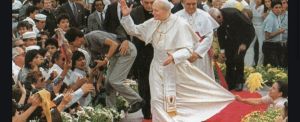
5. One of the parables narrated by Jesus on the growth of the Kingdom of God on earth makes us discover very realistically the character of struggle that the kingdom entails, due to the presence and action of an "enemy", who "sows tares (or weeds) in the midst of the wheat". Jesus says that when "the harvest flourished and bore fruit, behold, the weeds also appeared". The servants of the master of the field would like to pluck it, but the master does not allow them to do so, "lest . . . uproot the wheat also. Let the one and the other grow together until the harvest, and at the time of the harvest I will say to the reapers, 'Harvest the darnel first and bind it in bundles to burn it; but the wheat put it in my barn' (Mt 13:24-30). This parable explains the coexistence and often the intertwining of good and evil in the world, in our lives, in the very history of the Church. Jesus teaches us to see things with Christian realism and to treat every problem with clarity of principles, but also with prudence and patience. This presupposes a transcendent vision of history, in which we know that everything belongs to God and every final outcome is the work of his Providence. However, the final fate - with an eschatological dimension - of the good and the bad is not hidden: it is symbolised by the harvesting of the wheat in the storehouse and the burning of the tares.
[Pope John Paul II, General Audience 25 September 1991]
Evil in the world, God's patience
These Sundays the liturgy proposes several Gospel parables, that is, short stories which Jesus used to announce the Kingdom of Heaven to the crowds. Among those in today’s Gospel, there is a rather complex one which Jesus explained to the disciples: it is that of the good grain and the weed, which deals with the problem of evil in the world and calls attention to God’s patience (cf. Mt 13:24-30, 36-43). The story takes place in a field where the owner sows grain, but during the night his enemy comes and sows weed, a term which in Hebrew derives from the same root as the name “Satan” and which alludes to the concept of division. We all know that the demon is a “sower of weed”, one who always seeks to sow division between individuals, families, nations and peoples. The servants wanted to uproot the weed immediately, but the field owner stopped them, explaining that: “in gathering the weeds you root up the wheat along with them” (Mt 13:29). Because we all know that a weed, when it grows, looks very much like good grain, and there is the risk of confusing them.
The teaching of the parable is twofold. First of all, it tells that the evil in the world comes not from God but from his enemy, the evil one. It is curious that the evil one goes at night to sow weed, in the dark, in confusion; he goes where there is no light to sow weed. This enemy is astute: he sows evil in the middle of good, thus it is impossible for us men to distinctly separate them; but God, in the end, will be able to do so.
And here we arrive at the second theme: the juxtaposition of the impatience of the servants and the patient waiting of the field owner, who represents God. At times we are in a great hurry to judge, to categorize, to put the good here, the bad there.... But remember the prayer of that self-righteous man: “God, I thank you that I am good, that I am not like other men, malicious” (cf. Lk 18:11-12). God, however, knows how to wait. With patience and mercy he gazes into the “field” of life of every person; he sees much better than we do the filth and the evil, but he also sees the seeds of good and waits with trust for them to grow. God is patient, he knows how to wait. This is so beautiful: our God is a patient father, who always waits for us and waits with his heart in hand to welcome us, to forgive us. He always forgives us if we go to him.
The field owner’s attitude is that of hope grounded in the certainty that evil does not have the first nor the last word. And it is thanks to this patient hope of God that the same weed, which is the malicious heart with so many sins, in the end can become good grain. But be careful: evangelical patience is not indifference to evil; one must not confuse good and evil! In facing weeds in the world the Lord’s disciple is called to imitate the patience of God, to nourish hope with the support of indestructible trust in the final victory of good, that is, of God.
In the end, in fact, evil will be removed and eliminated: at the time of harvest, that is, of judgment, the harvesters will follow the orders of the field owner, separating the weed to burn it (cf. Mt 13:30). On the day of the final harvest, the judge will be Jesus, He who has sown good grain in the world and who himself became the “grain of wheat”, who died and rose. In the end we will all be judged by the same measure with which we have judged: the mercy we have shown to others will also be shown to us. Let us ask Our Lady, our Mother, to help us to grow in patience, in hope and in mercy with all brothers and sisters.
[Pope Francis, Angelus 20 July 2014]
The Church is imperceptible beginning, not extraordinary term
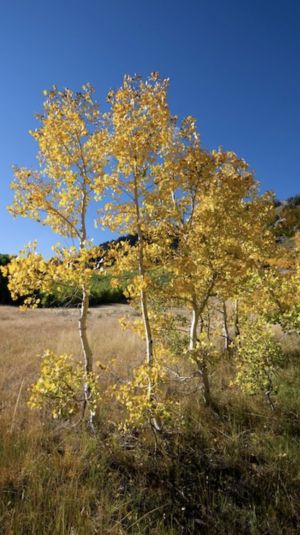
(Mt 13:31-35)
Jesus helps people to discover the things of God and man in everyday life.
The Master teaches that the extraordinary of the eternal world is hidden in ordinary things: life itself is a transparency of the Mystery.
He reveals the Kingdom becoming Present, describing precisely the essential characteristics of the community of disciples - and using here the simple comparisons of the «mustard seed» and the «leaven».
To say: the authentic Church is within reach of everyone, everywhere - nonetheless exiguous; inapparent, yet intimately dynamic.
In it, we experience a contrast between beginnings and term: we experience the Kingdom 'within' each one that welcomes the character of an inapparent Word-event, but one that activates transformative and hospitable capacities.
The first term of comparison related to the life of the people [the little seed] mentions the story of a very small grain: a common concrete event, which is not very noticeable.
Around the Lake of Galilee, mustard shrubs can reach a maximum height of 3 metres, no more.
It is not the same development as the majestic cedars of Lebanon - rather of just any small tree in the kitchen garden (v.32), however, capable of giving a little refreshment to the birds that take refuge there.
It indicates a presence of little fuss: quite normal, mixed in with aubergines, courgettes and cucumbers...
Nothing big, yet hospitable to those suffering from the powerful heat of those places.
In short, the fraternities that the Lord dreams of will have nothing magnificent and outward, but they will know how to give shelter and rest.
The strength of the «mustard speck» is intimate, yet strong-willed: it will grow - though not by much.
That is, the authentic Church should not resemble a majestic ocean liner.
Maybe it will be more like a small barque: no big deal - yet it will raise hopes of life.
It will do so through the discreet witness of amiable evangelisers, who still proclaim and work, radiating light, captivating people.
Whoever approaches the threshold of the churches - the reference is to the distant and pagan - must feel at ease, at home.
Even the 'wanderers' will be fully entitled to take up their position and build their nest [in such a common Abode] even if they then decide to take flight again as soon as they have used it.
The next comparison - of the «leaven» (v.33) - insists on caring for the life goals of other brethren, with respect to the Community of believers.
In this way, it is called to be a sign of the Father's concern for all his sons.
The leaven is not useful to itself, but to the mass.
Likewise, the Church shall not serve itself; it will not be concerned with its own celebration and development [material, or with a view to proselytism; and so on].
Every Fraternity in Christ is a function of people's lives alone, where and how they are - just as they are.
To internalize and live the message:
What seed had you neglected because of its smallness, and then it turned out to be essential for your growth and the needs of others as well?
[Lunedì 17.a sett. T.O. 27 luglio 2026]
The Church is an imperceptible beginning, not an extraordinary end
(Mt 13:31-35)
Jesus helps people discover the things of God and of man in everyday life.
The Master teaches that the extraordinary nature of the eternal world is hidden in ordinary things: life itself is a transparency of the Mystery.
He reveals the Kingdom that is becoming Present, describing the essential characteristics of the community of disciples - and using here the simple comparisons of the 'mustard seed' and 'yeast'.
In other words, the authentic Church is within everyone's reach, everywhere - yet small, inconspicuous, and yet intimately dynamic.
In it, we experience a contrast between beginning and end: we experience the Kingdom 'within' each one who welcomes the character of a humble Word-event, but which activates transformative and hospitable capacities.
The first point of comparison linked to people's lives [the seed] refers to the story of a very small grain of wheat: a concrete, common story that is not particularly noticeable.
Around the Sea of Galilee, mustard bushes can reach a maximum height of 3 metres, no more.
This is not the growth of majestic cedars of Lebanon, but rather a small tree in a home garden (v. 32), yet capable of providing a little refreshment to the birds that take refuge there.
It indicates a presence that is not very noticeable: completely normal, mixed in with aubergines, courgettes and cucumbers...
Nothing great, yet hospitable to those who suffer the intense heat of those places.
In short, the brotherhoods that the Lord dreams of will have nothing magnificent or outwardly impressive, but they will be able to offer shelter and rest.
The strength of the 'mustard seed' is intimate, yet stubborn: it will grow - even if not by much.
In other words, the authentic Church should not resemble a majestic ocean liner.
Perhaps it will be more like a small boat: nothing special, yet capable of inspiring hope for life.
It will do so through the discreet witness of loving evangelisers who continue to proclaim and work, radiating light and captivating people.
Anyone who approaches the threshold of churches – I am referring to those who are distant and pagan – must feel at ease, at home.
Even the 'wanderers' will have every right to take up residence and build their nest [in this common dwelling] even if they decide to fly away again as soon as they have served their purpose.
The next comparison - that of 'yeast' (v. 33) - emphasises the importance of caring for the life goals of other brothers and sisters in the community of believers.
In this way, it is called to be a sign of the Father's care for all his children.
Yeast is not useful to itself, but to the dough.
In the same way, the Church must not serve itself; it will not be concerned with its own celebration or development (material, proselytism, etc.).
Every Fraternity in Christ is a function of the life of the people, wherever and however they find themselves - just as they are.
To internalise and live the message:
What seed did you neglect because of its smallness, and then it proved essential for your growth and the needs of others?
[Parables: Narrative for transmutation]
The mystery of common blindness. Lost? Ready for transformation
(Mt 13:34-35)
St Paul expresses the meaning of the 'mystery of blindness' that contrasts with his journey with the famous expression 'thorn in the side': wherever he went, enemies were already waiting for him, and unexpected disagreements arose.
So it is for us: disastrous events, catastrophes, emergencies, the disintegration of old reassuring certainties - all external and murky; until recently considered permanent.
Perhaps in the course of our existence, we have already realised that misunderstandings have been the best way to reactivate ourselves and introduce the energies of renewed life.
These are resources or situations that we might never have imagined as allies in our own and others' fulfilment.
Erich Fromm says:
'To live is to be born every moment. Death occurs when we cease to be born. Birth is therefore not an act; it is an uninterrupted process. The purpose of life is to be born fully, but the tragedy is that most of us die before we are truly born'.
Indeed, in a climate of unrest or absurd differences [which force us to regenerate], the most neglected inner virtues sometimes come to the fore.
New energies - seeking space - and external powers. Both malleable; unusual, unimaginable, unorthodox.
But they find solutions, the real way out of our problems; the path to a future that is not simply a reorganisation of the previous situation, or of how we imagined 'we should have been and done'.
With one cycle concluded, we begin a new phase; perhaps with greater rectitude and frankness - brighter and more natural, humanising, closer to the 'divine'.
Authentic and engaging contact with our deepest states of being is generated in an acute way precisely by detachments.They lead us to a dynamic dialogue with the eternal reserves of transmuting forces that inhabit us and belong to us.
A primordial experience that goes straight to the heart.
Within us, this path 'fishes' for the creative, fluctuating, unprecedented option.
In this way, the Lord transmits and opens his proposal using 'images'.
An arrow of Mystery that goes beyond the fragments of consciousness, culture, procedures, and what is common.
For a knowledge of oneself and of the world that goes beyond that of history and current events; for an active awareness of other contents.
Until the turmoil and chaos themselves guide the soul and compel it to a new beginning, to a different perspective (completely shifted), to a new understanding of ourselves and the world.
Well, the transformation of the universe cannot be the result of cerebral or dirigiste teaching; rather, it is the result of a narrative exploration that does not distance people from themselves.
And Jesus knows this.
We see this great figure, this force in the Passion, in resistance to the powerful. We wonder: what gave birth to this life, to this interiority so strong, so upright, so consistent, spent so totally for God in preparing the way for Jesus? The answer is simple: it was born from the relationship with God (Pope Benedict)
Noi vediamo questa grande figura, questa forza nella passione, nella resistenza contro i potenti. Domandiamo: da dove nasce questa vita, questa interiorità così forte, così retta, così coerente, spesa in modo così totale per Dio e preparare la strada a Gesù? La risposta è semplice: dal rapporto con Dio (Papa Benedetto)
The lamp is a symbol of the faith that illuminates our life, while the oil is a symbol of the charity that nourishes the light of faith, making it fruitful and credible (Pope Francis)
La lampada è il simbolo della fede che illumina la nostra vita, mentre l’olio è il simbolo della carità che alimenta, rende feconda e credibile la luce della fede (Papa Francesco)
Jesus wants our existence to be laborious, that we never lower our guard, so as to welcome with gratitude and wonder each new day given to us by God. Every morning is a blank page on which a Christian begins to write with good works (Pope Francis)
Gesù vuole che la nostra esistenza sia laboriosa, che non abbassiamo mai la guardia, per accogliere con gratitudine e stupore ogni nuovo giorno donatoci da Dio. Ogni mattina è una pagina bianca che il cristiano comincia a scrivere con le opere di bene (Papa Francesco)
And this is the problem: when the People put down roots in the land and are the depository of the Law, they are tempted to place their security and joy in something that is no longer the Word of God (Pope Benedict)
Ed ecco il problema: quando il popolo si stabilisce nella terra, ed è depositario della Legge, è tentato di riporre la sua sicurezza e la sua gioia in qualcosa che non è più la Parola del Signore (Papa Benedetto)
Despite the scarcity of information about him, St Bartholomew stands before us to tell us that attachment to Jesus can also be lived and witnessed to without performing sensational deeds. Jesus himself, to whom each one of us is called to dedicate his or her own life and death, is and remains extraordinary (Pope Benedict)
La figura di san Bartolomeo, pur nella scarsità delle informazioni che lo riguardano, resta comunque davanti a noi per dirci che l'adesione a Gesù può essere vissuta e testimoniata anche senza il compimento di opere sensazionali. Straordinario è e resta Gesù stesso, a cui ciascuno di noi è chiamato a consacrare la propria vita e la propria morte (Papa Benedetto)
Faith is more than just empirical or historical facts; it is an ability to grasp the mystery of Christ’s person in all its depth [Pope Benedict]
La fede va al di là dei semplici dati empirici o storici, ed è capace di cogliere il mistero della persona di Cristo nella sua profondità [Papa Benedetto]
Consequently, just as for Christ carrying the cross was not an option but a mission to be embraced for love, so it is for Christians too. In our world today, where the forces that divide and destroy seem to dominate, Christ does not cease to offer to all his clear invitation [Pope Benedict]
This transition from the 'old' to the 'new' characterises the entire teaching of the 'Prophet' of Nazareth [John Paul II]
Questo passaggio dal “vecchio” al “nuovo” caratterizza l’intero insegnamento del “Profeta” di Nazaret [Giovanni Paolo II]








duevie.art
don Giuseppe Nespeca
Tel. 333-1329741
Disclaimer
Questo blog non rappresenta una testata giornalistica in quanto viene aggiornato senza alcuna periodicità. Non può pertanto considerarsi un prodotto editoriale ai sensi della legge N°62 del 07/03/2001.
Le immagini sono tratte da internet, ma se il loro uso violasse diritti d'autore, lo si comunichi all'autore del blog che provvederà alla loro pronta rimozione.
L'autore dichiara di non essere responsabile dei commenti lasciati nei post. Eventuali commenti dei lettori, lesivi dell'immagine o dell'onorabilità di persone terze, il cui contenuto fosse ritenuto non idoneo alla pubblicazione verranno insindacabilmente rimossi.