Brothers all and ourselves
(Lk 11:27-28)
"At first attachment may look like love, but as it develops it becomes more and more clearly the opposite, characterised by clinging, holding back, fear" (Jack Kornfield).
In the ancient mentality, the joy of the mother was the proclaimed greatness of the son.
Jesus disputes that the authenticity of the Beatitude can be linked to clan relationships and physical kinship, or to social impressions.
The Lord dismantles all externality. He rejects this crude way of conceiving the blessedness of life.
One is not happy because of an illustrious surname or blood. Even being the nephew of a cardinal or king would mean nothing.
Full Happiness depends on the perception of one's essential roots and the precious uniqueness that we are - it does not come to us from a tribe, from social recollection, or because we have always belonged.
It is here that the Word of God introduces us into an understanding of the unique reason why we were born, and draws us into integral energy; making us new every day.
The Word lives in our Eternal side; it is beyond time, and seems to make us foreign. Yet it is not a disharmonious rival.
Travelling towards the Goal we do not know, we advance with it. Without definitions first.
Thus the brothers; each in the unfolded and original Word, for growth. Without judgments first.
Sacred Scripture is a key to reading events; an event that passes through us and at the same time a kind of genetic code.
Sense that allows each one to relive Christ in a serene and confident manner, despite any frayed sides of the personality.
Every joy of human relationships in the home thus becomes a platform for our leap towards the larger human family. An astonishment.
In such an exodus, particular affections are gradually supplemented by discovery, by an unthinking mission, by the qualitative and blissful life of universal sharing.
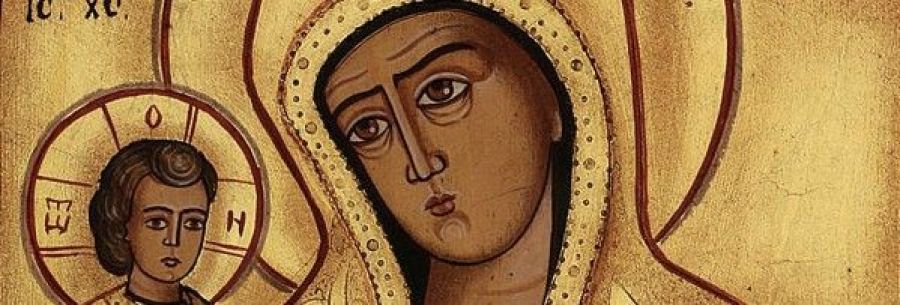
Mary generated the Messiah, but even more she made the Word an uncommon Person.
Her true title to glory - what is worthy of her - is having been able to accept the proposal of a path of growth that rewrote expectations and history.
Those who cling to the more ordinary aspects of material existence, or of consortia - and to the all-too-poor assurances [to which we gladly cling, however] - risk entering into a terrible crisis when so many assurances crumble.
The personal and social difference between mediocre religiosity and the ideal trajectory of faith?
In their trials, the secret life with God and the codes of the soul gain breath and enjoy the loss of already recognised advantages!
"Blessed rather are those who hear the Word of God and [keep it]" (v.28).
Blessedness', fullness of being and humanisation, demands a detachment from habitual situations, even of small parental ties - to which we cling.
Sometimes even institutional 'charisma' (or 'kinship') prejudices come to naught.
Customary manners, routine domestications, so many imprisoned emotions, but also group codes... can be an obstacle to the development and flowering of the inner seed that belongs to us.
Thus, even in the devotion to Mary we want to recognise the value of a journey in progress.
We wish to grasp how to welcome the Vocation - be it individual, relationship, community, and the Logos of God itself.
And how to try to understand them in depth, letting them shape our destination.
Let us then seek how to make space within, respecting the distinct characters.
In addition, precisely by re-weaving the knots of being, we might guess how to re-weave the identity-personal character with creative input.
How then to give birth to the other as it proceeds. How to suckle it and nourish it with gradually more solid food, and accompany it, support it.
Finally, how to radiate it, so that it also overflows and unleashes around it the Spirit of Life that ennobles creaturely dignity - exalting its aspirations.
Ancient piety referred to a project of unilateral coexistence, which nevertheless nourished the individual soul in an intimate way.
But sometimes too much 'knowing how to be in the world' [around] did not bring out the unusual sides, which also demanded space.
This also applies to us; especially in times of global crisis.
Avoiding what is surprising does not build communion in the epochal Newness of the divine Spirit: that is, conviviality of differences.
Well, although situated in an era of emergency, the wide-ranging hazard of Faith instead proposes to us a 'fire' of life, of passion.
Here is an alternative intoxication, truly satisfying. A brio that overcomes tacit, suffocating convictions.
Faith's life wants precisely to break the conformist uniformity and its trance of blocks, languages and ties (a slipknot).Conformities or opinions that do not unblock difficult situations, nor enable transformational breakthroughs.
They become [it is worth repeating] slipknots.
Conversely, the Way of Exodus in the Lord gives an experience of discovery and revival of virtues to which we have not yet fully blossomed.
As with the Blessed Mother: in integral Joy, not through quietisms - nor with revenge that distances us from our 'brothers and sisters' and from ourselves.
To internalise and live the message:
Do you feel that your personal story still lies in death, and is not yet redeemed by an Easter victory?
For what reason?
To what full Hope or idea of fortune - to what and to Whom - are you attached?
Or do you allow yourself to be seduced by quietisms, manipulators, and winning mindsets?