


From below, not from a summit
(Mk 4: 26-34)
Here we are introduced to a different mentality, to a new Family, to another Kingdom, not very "elevated"; indeed, completely reversed. Different from that expected on a mighty mountain (Ez 17:22).
It will not be portrayed by the majesty of the cedar of Lebanon [which once covered the mountain slopes of the Near East] but by a simple shrub in the kitchen garden (Mk 4:32a).
And the very origins of this new reality will not come from the top of a lofty stem, but from a small seed, simply planted on the ground.
Little grain like the others. Nothing remarkable in itself. Which develops horizontally, rather (v.32b).
How much gas must be given to accelerate the spread of the Kingdom? According to Jesus, one must wait for each one to meet himself, without neurosis.
The Kingdom of God is the sphere in which He reigns: the alternative society that believers inaugurate here, not looking nose-up at the afterlife.
The new reality will transcend time, because it is characterised by love for all: it will transcend the chronicle and even history.
This is also why the Gospels do not borrow images mediated by a particular cult and the sacred.
To make it clear that the Churches are not even limited to the earthly spatial-temporal dimension, the Master pretends not to know that - even at a slow pace - after sowing, the farmer cleans the field, protects the scattered seed, irrigates.
It is not amnesia his, but a special emphasis on what counts and distinguishes the soul's affair, contended between religiosity and Faith.
The image is simple, paradoxically mediated by the culture of the fields - to explain the rhythm of life in the Spirit.
It will sprout from the soil, sprout and blossom on a foundation that is not shaky, a genuine foundation without vocational dissent, far from external prejudices - which we detest underneath.
Then, on the horizon of every stretch of the journey there is always a new plant, another genesis, a different flowering in the time of the seasons, a different effervescence to be introduced into the already capitalised arrangement.
In commentary on the Tao Tê Ching (ix), Master Wang Pi writes: "The four seasons succeed one another. When their work is done, they pass away'.
A proposal that knows no borders, it appeals to all. Just let the seed do its normal thing - thus integrating energies; giving space, and even yielding.
[This would ensure the continued attraction and maturation of people and communities].
It is not an esoteric ideal, measured on people set apart, exceptionally gifted, particular, and titled: it is for the "ordinary" man (v.26) - but not scatter-brained, and who at the moment when he has to activate himself casts aside, that is, destined for all mankind.
Then he waits, and it is here that he lays down voluntarism and opens the door to the dreaming side - no longer trying to correct spontaneous processes and set things right according to his head.
In fact, in vv. 26-29, the work of the farmer is reduced to: sowing the seed and putting his hand to the sickle [in the ancient world, not the time of verification and reckoning, but the turning point of the feast that made everyone feel fulfilled, and everyone rejoice].
The focus of life in the Spirit escapes the person's stubbornly active work.
The seed-Word-event is planted underground, stands in the dark, rots and takes root, without anyone being able to accelerate its development, or later pull up the shrub to make it stand out.
As the Tao (ix) says: 'He who fills up what he possesses, had better desist' - and even 'when the work is done, to withdraw is the Way of Heaven'.
Jesus does not say that God's Blessing can possibly be thrown into a narrow field, as a careful miser would do: the Message of Salvation must be radiated unsparingly.
His Word opens the brain and limits sectarian thoughts, inviting one to overlook any temptation to exclusivism and define boundaries. Why?
The Seed has a vitality of its own, which does not depend on the outside. An ivy climbs, an oak tree takes root; an undergrowth flower knows how to stay in the shade, a sunflower soars; so on.
The Grain is even capable of self-healing - thus leading to a process of more solid self-healing.
This Grain of the Word (in us: the personal Calling) possesses a silent power, a hidden, yet irresistible direction and strength - not dependent on emotional swings or advantageous situations.
Easily it can be trampled upon, but the vocation recoils.
The more you stifle it, the more it re-enters with renewed energy.
We cannot deny our inclination, except by strengthening it - or by creating and accentuating discomforts on an identity [not character] basis, i.e. not our own.
One Mission is not worth the other.
The Seed grows on its own, intertwined with the soil and the climate, yet according to deep individual character.
It defies cerebral explanation: 'How, he himself does not know' (v.27).
After the sowing season, it is useless - indeed, harmful - to attempt to drug the path of growth.
Nothing but a rhythm of spontaneous development can properly direct existence.
In fact, the doer resumes normal life.
Left to its own devices, the little hidden grain goes its own way, all the way down.
This is the evolutionary factor.
No farmer tramples on his field, nor does he investigate what is going on, importuning: development, growth and ripening are guaranteed for himself.
He who would enter would disturb the shoots.
Whoever would dig to check the grain that is intertwining its roots with the soil would ruin everything.Our sacred identity is inextricably bound up with personal singularity: it is entangled with an unrepeatable sensitivity and vicissitude.
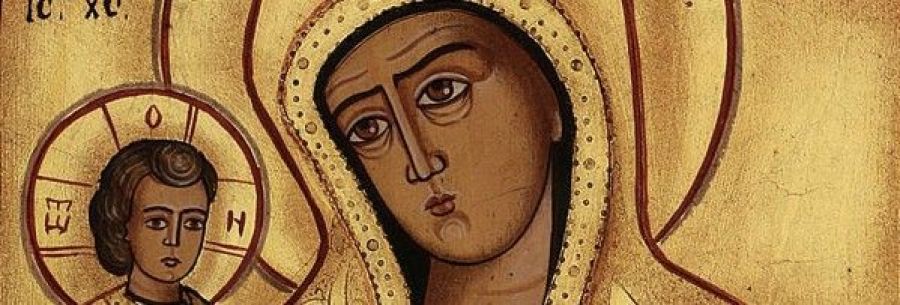
Here, becoming One with the perennial Infant Christ, we recognise Him in us - and then we bear fruit.
It is the darkness, the silence, the waiting, that make the tender shoots sprout, in their uniqueness and authenticity.
It would only damage them if one wanted to interfere, modifying, superimposing patterns and trends... never conforming to realities in spontaneous singular development.
It is the classic forcing of those who must at all costs condition us, and impose beliefs that have nothing to do with it.
The result is an abortion, caused by external influence [indeed, of nosy 'guides'] that easily stunts development.
When we put prejudices and beliefs aside and let go of the instinct that sees the divine self, faithful in growth and surprises, we will be enchanted and amazed.
We will have confirmation of what we sensed: ours - so lived, intense, fragrant - is a profound and sensitive intelligence.
The assimilation of the Word of God and the call of the creaturely vocation intertwine in time.
Beware of the precipitation of those who immediately want a 'result' that is not to be ourselves in relation to the innate quintessence and personal mission, which emanate from the hidden Source.
[The anger that is sometimes triggered also brings authenticity out into the open. So that we manifest the kernel of unrepeatable inclination].
In short, the time of love is not immediate, it unfolds along a path, whose periods cannot be marked by hasty designs or spiritual guides, only irritating - if not by the 'Spirit'.
"Holy" because by its Action it cuts off the germs of death; it helps to distinguish what is life, and wants us to manifest the inherent unseen.
"Ruah haQodesh": the only trustworthy, inherent, caring Master, endowed with an unclouded mind. From the disruptive force - which throws all organised, 'safe' and too cerebral reality into the air; therefore close to death.
The dynamism may be very slow, but no one will stop it, despite the destruction it has suffered. It will pick up again after humiliations and holes in the water.
These are lacerating moments, but they are reinterpreted by the soul on the journey as precious indications: prohibitions of access and ways out, if not precise signals.
That is why - after transmitting the Message - no running: one must have respect for space and time for growth.
If the Word of God does not intertwine its vital course with the individual subject's life story, there is a risk of anaesthetising or alienating precisely the most motivated souls - albeit unskilled in terms of cunning; weak, sensitive.
It is then useless to defuse the symptoms of malaise when someone feels held hostage - a stranger to himself.
If we are forced to remove or hide our authentic emotions from the homologising opinions of the 'best', we will vainly resemble them - dispersing the richness of our Name.
If the expert, instead of helping to broaden the panorama, were to impose no change, the person who allows himself to be plagiarised would not rediscover his own simplicity.
And life (even that spent most nobly, in the gift of self) would sooner or later become a nightmare, constantly subject to manipulation, just around the corner.
Indeed, Jesus could not stand managers who pretended to intervene with their conformism and 'proper' lifestyles.
Enough, then, of "regents" who place under an asphyxiating cloak the path that is ours by nature.
There are times when the feverish and pressing work must go into the background, so that the masterpiece we are inside can grow on its own.
Thus the fruit will surprise and exceed normal or prescribed expectations.
If the beginning is small and hidden, the inner call will go in symbiosis with that of the Word.
In this way, even the call of events and the genius of the time will be well interpreted and assimilated, within the extraordinary nature of each.
Jesus seems to be against the work of directors who control the movement and behaviour [of all others - except their own].
They must only unfold the Message, not their own opinion; then keep silent and do not meddle in the affairs of others.
Only - try to foster the assimilation of the Word, and the multifaceted pursuit of one's outspoken character.
The natural path goes and evolves in symbiosis with a process of rooting God's Proclamation in us on our ledges.
No one can disturb this exceptional richness, which is born and develops 'automatically' (v.28 Greek text) so that we are enabled to give birth to the inner world, the essence, the Jesus that broods in our hearts; not others.
Incarnation: it only continues and enriches if we do not delegate the unparalleled freedom of movement.Unparalleled breath that acts as a catalyst for exceptional, unrepeatable, singularly individual though related potentialities; to full maturity.
Life always develops in such a way that it can be difficult for us to understand - but in the experience of fullness of being and inner attunement with oneself, there is not so much to understand as to experience.
The result will be an out-scaling that realises in the round, on every side the inclination of the person.
Like a gradual unfolding that then channels itself into a particular trajectory - now made astounding also in terms of relationships: already blissful; exuberant, luxuriant.
Personal and selfless.
"Laying hold of the sickle" (v.29) means that at this point the person of Faith is awakened for the Kingdom, ready to give life to himself and his brethren. Overflowing its experience of wholeness to others, even distant or wandering like birds (v.32).
Together, a Church that - without thinking too much about 'how it should be' - convinces all those in need of shelter from arsure.
An experience that will convince them, only if as sons and brothers we have listened to that need for listening and understanding - sometimes so unexpressed. Recharging passion, rekindling insight and life.
The Seed can be transmitted everywhere by the same "birds" (once only distant) that alight there, more or less enough for each one to take flight again and propose themselves to others - elsewhere - with interest.
The Kingdom of God is a living community, made up of believers who move and wait, transform and pull out of the field every varied, unconscious and dormant resource.
[The unexplored side - in fact - does not attract the attention of just any master. And the quality not designated from the outside is also likely to be overlooked, because it is not very magnificent (often not even explicit)].
"And he said: How shall we compare the Kingdom of God? Or in what parable shall we put it? Like a grain of mustard seed that when sown on the earth is smaller than all the seeds on earth" (Mk 4:30-31).
In short, the parables of the kingdom in Mt 13 and here in Mk 4 do not narrate a solemn, epochal, majestic, peremptory reality, which is self-evident and imposing.
Rather, the new kingdom will be likened to a common shrub, growing modestly - silently, in the kitchen garden (v.32) - among aubergines, lettuce, and cucumbers; daisies, weeds, and violets.
But for each one and without bounds.
To say: we each evolve into tiny signs - nothing extraordinary - but we are well-rounded persons, not puppets or facsimiles, nor merely extensions of the past.
We are not by character - we want to free ourselves from others' models - nor by prestige or unreachable (but trivial) excellence and showy grandiosity.
We remain nothing much, like the flowers of the undergrowth, or at most spinach; but we want to express ourselves without forcing.
We long to feel our vital energy circulating, leading out of the tedious, rambling herd.
After all, one can also love poorly - not something predictable, or someone who conditions and overpowers us.
Nightmares dissolve. This is how we proclaim Paradise.
To internalise and live the message:
What sense does the small hope of a few believers without a conspicuous, self-confident, doctrinal, and voluntarist heritage have for the social and cultural concert - today global -?








