


don Giuseppe Nespeca
Giuseppe Nespeca è architetto e sacerdote. Cultore della Sacra scrittura è autore della raccolta "Due Fuochi due Vie - Religione e Fede, Vangeli e Tao"; coautore del libro "Dialogo e Solstizio".
Casual Incarnation
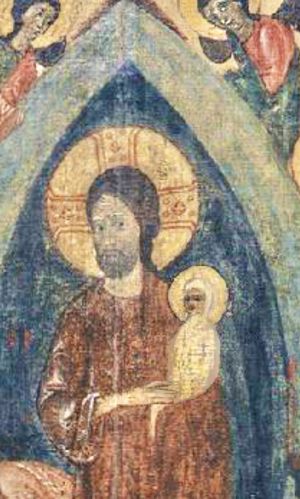
(Mt 1:1-16.18-23)
Since the 7th century, the event of the first Dawn preceding the Coming of the Sun of Justice has been identified by Pope Sergius in the birth of Mary - according to Dante «a fixed term of eternal counsel».
The Mother of God is a figure who in the panorama of spirituality brings a radical novelty, because she does not generate the awaited David, but rather the most humble and favorable Person, with non-aggressive energy.
In her icon of «newly generated girl», she is also an image of the different, but real humanity, "accomplice" of our condition; from the heart not more artificial and stone [legalist] but of flesh.
So today’s Feast is a sort of prefiguration of Christmas, an event of Revelation of a disconcerting but finally authentic Face of God - and of the realized creatures.
Here, then, we are asked by the Gospel about the weight to be given to the rigidity of the norms, which in the history of spirituality have often devoured the spontaneous being of those called by the Father.
Genuineness that simply stimulates to express oneself, starting from one’s own vocational character.
Even the cultures animated by Wisdom of Nature attest to its weight.
The Tao Tê Ching (LVII) writes: «When with correction the world is ruled, with falsehood weapons are used [...] For this the saint says: I do not act and the people are transformed by themselves [...] I do not crave and the people become simple».
In the ancient East the genealogies indicated only men, and it is surprising that Mt mentions the name of as many as five women, considered only slavish creatures, unreliable, impure by nature.
But in the story of Mary‘s four companions there is not a little a-normal (even for the chosen model of life) but that it is worth it.
In order to reach the human fullness of the Son, God did not claim to overcome historical events, but on the contrary He took them on and valued them.
The path that leads to Christ is not question of climbing, nor of results or performance to be calibrated better and better in a linear crescendo - therefore moralizing and dirigist, which does not impose turns that matter, nor solves the real problems.
In events, the Eternal manages to give wings unfolded not so much to strength and genius, but to all the poor origins, to the smallness of our nature, which suddenly turns into totally unpredictable wealth.
And if we constantly tear the thread, the Lord re-ties it down - not to fix it, to put a patch on it and to resume as before, but to redo a whole new plot. Starting from the defeats.
It is the energy of inadequacy and failure that makes us re-enter ourselves and finally “lose” our minds. Other configurations of the soul await us.
In the Gospels of Childhood [in Mt] God takes on two Names: Redeemer [Yeshua: God is Savior] and With-us. The sense of these prerogatives is not mechanical, but theological.
The proper Name of the Son Jesus describes his Work of recovering the whole being.
And the characteristic attribute Immanu'El [taken from Isaiah] points all the sons - our (many) addresses, that we are each, growing over time.
Incarnation: the Father is placed at the side of his intimates.
Not only does He not fear to make himself impure in contact with things concerning the dynamics of the earth: He even recognizes himself in their Condition.
For this reason, Joseph‘s discomfort even gives rise to the culmination of the entire History of Salvation.
What is striking about Mt’s narration is: the possibility of irruption of the salvific Plan’s top spring not from a religious certainty, but from a Doubt!
Every eminent Gift passes through the “flesh”, and here - in the unsafe - what seemed controversial becomes fruitful.
Embarrassment and the improbable finally activate intense and full life.
The Spirit that slips into the holes of standard mentalities finds a ‘point’ within us that allows us to flourish differently now, in transparency.
The true turning points of history. The difference between devotion and Faith.
[Nativity of the Blessed Virgin Mary, September 8]
He knows how to find in our failure

Dear Brothers and Sisters,
With our great pilgrimage to Mariazell, we are celebrating the patronal feast of this Shrine, the feast of Our Lady’s Birthday. For 850 years pilgrims have been travelling here from different peoples and nations; they come to pray for the intentions of their hearts and their homelands, bringing their deepest hopes and concerns. In this way Mariazell has become a place of peace and reconciled unity, not only for Austria, but far beyond her borders. Here we experience the consoling kindness of the Madonna. Here we meet Jesus Christ, in whom God is with us, as today’s Gospel reminds us – Jesus, of whom we have just heard in the reading from the prophet Micah: “He himself will be peace” (5:4). Today we join in the great centuries-old pilgrimage. We rest awhile with the Mother of the Lord, and we pray to her: Show us Jesus. Show to us pilgrims the one who is both the way and the destination: the truth and the life.
The Gospel passage we have just heard broadens our view. It presents the history of Israel from Abraham onwards as a pilgrimage, which, with its ups and downs, its paths and detours, leads us finally to Christ. The genealogy with its light and dark figures, its successes and failures, shows us that God can write straight even on the crooked lines of our history. God allows us our freedom, and yet in our failures he can always find new paths for his love. God does not fail. Hence this genealogy is a guarantee of God’s faithfulness; a guarantee that God does not allow us to fall, and an invitation to direct our lives ever anew towards him, to walk ever anew towards Jesus Christ.
Making a pilgrimage means setting out in a particular direction, travelling towards a destination. This gives a beauty of its own even to the journey and to the effort involved. Among the pilgrims of Jesus’s genealogy there were many who forgot the goal and wanted to make themselves the goal. Again and again, though, the Lord called forth people whose longing for the goal drove them forward, people who directed their whole lives towards it. The awakening of the Christian faith, the dawning of the Church of Jesus Christ was made possible, because there were people in Israel whose hearts were searching – people who did not rest content with custom, but who looked further ahead, in search of something greater: Zechariah, Elizabeth, Simeon, Anna, Mary and Joseph, the Twelve and many others. Because their hearts were expectant, they were able to recognize in Jesus the one whom God had sent, and thus they could become the beginning of his worldwide family. The Church of the Gentiles was made possible, because both in the Mediterranean area and in those parts of Asia to which the messengers of Jesus travelled, there were expectant people who were not satisfied by what everyone around them was doing and thinking, but who were seeking the star which could show them the way towards Truth itself, towards the living God.
We too need an open and restless heart like theirs. This is what pilgrimage is all about. Today as in the past, it is not enough to be more or less like everyone else and to think like everyone else. Our lives have a deeper purpose. We need God, the God who has shown us his face and opened his heart to us: Jesus Christ. Saint John rightly says of him that only he is God and rests close to the Father’s heart (cf. Jn 1:18); thus only he, from deep within God himself, could reveal God to us – reveal to us who we are, from where we come and where we are going. Certainly, there are many great figures in history who have had beautiful and moving experiences of God. Yet these are still human experiences, and therefore finite. Only HE is God and therefore only HE is the bridge that truly brings God and man together. So if we Christians call him the one universal Mediator of salvation, valid for everyone and, ultimately, needed by everyone, this does not mean that we despise other religions, nor are we arrogantly absolutizing our own ideas; on the contrary, it means that we are gripped by him who has touched our hearts and lavished gifts upon us, so that we, in turn, can offer gifts to others. In fact, our faith is decisively opposed to the attitude of resignation that considers man incapable of truth – as if this were more than he could cope with. This attitude of resignation with regard to truth, I am convinced, lies at the heart of the crisis of the West, the crisis of Europe. If truth does not exist for man, then neither can he ultimately distinguish between good and evil. And then the great and wonderful discoveries of science become double-edged: they can open up significant possibilities for good, for the benefit of mankind, but also, as we see only too clearly, they can pose a terrible threat, involving the destruction of man and the world. We need truth. Yet admittedly, in the light of our history we are fearful that faith in the truth might entail intolerance. If we are gripped by this fear, which is historically well grounded, then it is time to look towards Jesus as we see him in the shrine at Mariazell. We see him here in two images: as the child in his Mother’s arms, and above the high altar of the Basilica as the Crucified. These two images in the Basilica tell us this: truth prevails not through external force, but it is humble and it yields itself to man only via the inner force of its veracity. Truth proves itself in love. It is never our property, never our product, just as love can never be produced, but only received and handed on as a gift. We need this inner force of truth. As Christians we trust this force of truth. We are its witnesses. We must hand it on as a gift in the same way as we have received it, as it has given itself to us.
“To gaze upon Christ” is the motto of this day. For one who is searching, this summons repeatedly turns into a spontaneous plea, a plea addressed especially to Mary, who has given us Christ as her Son: “Show us Jesus!” Let us make this prayer today with our whole heart; let us make this prayer above and beyond the present moment, as we inwardly seek the Face of the Redeemer. “Show us Jesus!” Mary responds, showing him to us in the first instance as a child. God has made himself small for us. God comes not with external force, but he comes in the powerlessness of his love, which is where his true strength lies. He places himself in our hands. He asks for our love. He invites us to become small ourselves, to come down from our high thrones and to learn to be childlike before God. He speaks to us informally. He asks us to trust him and thus to learn how to live in truth and love. The child Jesus naturally reminds us also of all the children in the world, in whom he wishes to come to us. Children who live in poverty; who are exploited as soldiers; who have never been able to experience the love of parents; sick and suffering children, but also those who are joyful and healthy. Europe has become child-poor: we want everything for ourselves, and place little trust in the future. Yet the earth will be deprived of a future only when the forces of the human heart and of reason illuminated by the heart are extinguished – when the face of God no longer shines upon the earth. Where God is, there is the future.
“To gaze upon Christ”: let us look briefly now at the Crucified One above the high altar. God saved the world not by the sword, but by the Cross. In dying, Jesus extends his arms. This, in the first place, is the posture of the Passion, in which he lets himself be nailed to the Cross for us, in order to give us his life. Yet outstretched arms are also the posture of one who prays, the stance assumed by the priest when he extends his arms in prayer: Jesus transformed the Passion, his suffering and his death, into prayer, and in this way he transformed it into an act of love for God and for humanity. That, finally, is why the outstretched arms of the Crucified One are also a gesture of embracing, by which he draws us to himself, wishing to enfold us in his loving hands. In this way he is an image of the living God, he is God himself, and we may entrust ourselves to him.
“To gaze upon Christ!” If we do this, we realize that Christianity is more than and different from a moral code, from a series of requirements and laws. It is the gift of a friendship that lasts through life and death: “No longer do I call you servants, but friends” (Jn 15:15), the Lord says to his disciples. We entrust ourselves to this friendship. Yet precisely because Christianity is more than a moral system, because it is the gift of friendship, for this reason it also contains within itself great moral strength, which is so urgently needed today on account of the challenges of our time. If with Jesus Christ and his Church we constantly re-read the Ten Commandments of Sinai, entering into their full depth, then a great, valid and lasting teaching unfolds before us. The Ten Commandments are first and foremost a “yes” to God, to a God who loves us and leads us, who carries us and yet allows us our freedom: indeed, it is he who makes our freedom real (the first three commandments). It is a “yes” to the family (fourth commandment), a “yes” to life (fifth commandment), a “yes” to responsible love (sixth commandment), a “yes” to solidarity, to social responsibility and to justice (seventh commandment), a “yes” to truth (eighth commandment) and a “yes” to respect for other people and for what is theirs (ninth and tenth commandments). By the strength of our friendship with the living God we live this manifold “yes” and at the same time we carry it as a signpost into this world of ours today.
“Show us Jesus!” It was with this plea to the Mother of the Lord that we set off on our journey here. This same plea will accompany us as we return to our daily lives. And we know that Mary hears our prayer: yes, whenever we look towards Mary, she shows us Jesus. Thus we can find the right path, we can follow it step by step, filled with joyful confidence that the path leads into the light – into the joy of eternal Love. Amen.
[Pope Benedict, homily, 8 September 2007]
Mary Child, point of convergence
Today we celebrate "with joy the Nativity of the Blessed Virgin Mary: from her arose the sun of justice, Christ, our God!"
This Marian feast is an invitation to joy, precisely because with the birth of Mary Most Holy, God gave the world a concrete guarantee that salvation was now imminent: humanity, which for millennia, in more or less conscious ways, had been waiting for something or someone who could free it from pain, evil, anguish and despair, and which had found in the Chosen People, especially in the Prophets, the spokespeople of the reassuring and consoling Word of God, could finally look, moved and anxious, to Mary "the Child," who was the point of convergence and arrival of a complex of divine promises, mysteriously echoed in the very heart of history.
It is precisely this Child, still small and fragile, who is the 'Woman' of the first announcement of future Redemption, set by God in opposition to the tempting serpent: 'I will put enmity between you and the woman, between your offspring and her offspring: he will crush your head and you will strike his heel!' (Gen 3:15).
It is precisely this Child who is the 'Virgin' who 'will conceive and bear a Son, who will be called Emmanuel, which means: God with us' (cf. Is 7:14; Mt 1:23).
It is precisely this Child who is the "Mother" who will give birth in Bethlehem to "the one who is to be ruler over Israel" (cf. Mt 5:1f).
Today's liturgy applies to Mary the passage from the Letter to the Romans in which St Paul describes God's merciful plan for the elect: Mary is predestined by the Trinity for a very high mission; she is called; she is sanctified; she is glorified.
God predestined her to be intimately associated with the life and work of his only-begotten Son. For this reason, he sanctified her in a wonderful and unique way from the first moment of her conception, making her "full of grace" (cf. Lk 1:28); he made her conform to the image of his Son: a conformity that, we can say, was unique, because Mary was the first and most perfect disciple of the Son.
God's plan for Mary culminated in that glorification which made her mortal body conform to the glorious body of the risen Jesus. Mary's assumption into heaven, body and soul, represents the final stage in the story of this creature, in whom the heavenly Father manifested his divine pleasure in an exalted manner.
The whole Church, therefore, cannot fail to rejoice today in celebrating the Nativity of Mary Most Holy, who - as St John Damascene movingly affirms - is that 'virginal and divine door, from which and through which God, who is above all things, is about to make his bodily entrance into the world... Today a shoot has sprung from the trunk of Jesse, from which a Flower substantially united with the divinity will be born into the world. Today, on earth, from earthly nature, He who once separated the firmament from the waters and raised it high, has created a heaven, and this heaven is far more divinely splendid than the first!" (St John Damascene, Homily on the Nativity of Mary: PG 96,661s).
3. Looking to Mary means mirroring ourselves in a model that God himself has given us for our elevation and sanctification.
And Mary today teaches us first of all to keep intact our faith in God, the faith that was given to us in Baptism and that must continually grow and mature in us throughout the various stages of our Christian life. Commenting on the words of St. Luke (Lk 2:19), St. Ambrose expresses himself thus: "We recognise in everything the modesty of the Holy Virgin, who, unblemished in body as well as in words, meditated in her heart on the matters of faith" (St Ambrose, Expos. Evang. sec. Lucam, II, 54: CCL, XIV, p. 4). We too, dear brothers and sisters, must continually meditate in our hearts on "the things concerning the faith"; that is, we must be open and receptive to the Word of God, so that our daily life - on a personal, family and professional level - may always be in perfect harmony and coherence with the message of Jesus, with the teaching of the Church, and with the examples of the Saints.
Mary, the Virgin Mother, reaffirms to us all today the supreme value of motherhood, the glory and joy of women, and also that of Christian virginity, professed and accepted 'in view of the Kingdom of Heaven' (cf. Mt 19:12), that is, as a testimony, in this transitory world, of that final world, in which the saved will be "like the angels of God" (cf. Mt 22:30).
[Pope John Paul II, homily in Frascati, 8 September 1980]
Everything is in the Small
"Everything is in the small things." God's style of acting in small things but opening up great horizons for us was the focus of Pope Francis' meditation during Mass celebrated at Santa Marta on Tuesday, 8 September, the liturgical memorial of the Nativity of Mary.
Referring to the text of the opening prayer recited shortly before — in which the Lord is asked for "the grace of unity and peace" — the Pontiff focused on two verbs already highlighted in his homilies of "recent days": to reconcile and to pacify. God, he said, "reconciles: he reconciles the world with himself and in Christ." Jesus, brought to us by Mary, the peacemaker, "gives peace to two peoples, and makes two peoples into one: the Jews and the Gentiles. One people. He makes peace. Peace in hearts." But, the Pope asked, "how does God reconcile?" What is his "style"? Perhaps he "holds a large assembly? Do they all agree? Do they sign a document?" No, he replied, "God pacifies in a special way: he reconciles and pacifies in small ways and along the way."
Francis' reflection then began with the concept of "small," that "small" mentioned in the first reading (Micah 5:1-4): "And you, Bethlehem of Ephrathah, so small..." This was the Pope's comment: "So small: but you will be great, because your leader will be born from you and he will be peace. He himself will be peace," because from that "small" "comes peace." This is God's style, who chooses "small things, humble things to do great works." The Lord, the Pope explained, "is the Great One" and we "are the little ones," but the Lord "advises us to make ourselves small like children in order to enter the kingdom of Heaven," where "the great, the powerful, the proud, the arrogant cannot enter." God, therefore, "reconciles and pacifies in the small."
The Pontiff then addressed the second concept, according to which the Lord reconciles "even on the way: walking". And he explained: "The Lord did not want to pacify and reconcile with a magic wand: today — bang! — everything done! No. He set out to walk with his people". An example of this action of God can be found in the Gospel of the day (Matthew 1:1-16, 18-23). This passage, the genealogy of Jesus, may seem a little repetitive: "This begot this, this begot this, this begot this... It is a list," Francis pointed out. Yet, he explained, "it is God's journey: God's journey among men, good and bad, because in this list there are saints and there are criminal sinners."
A list, therefore, where we also encounter "much sin." However, "God is not afraid: he walks. He walks with his people. And on this journey, he increases the hope of his people, the hope in the Messiah." This is the "closeness" of God. Moses said to his people: "But think: what nation has a God as close to them as we do?" So "this walking in small ways, with his people, this walking with the good and the bad, gives us our way of life." To "walk as Christians," to "pacify" and "reconcile" as Jesus did, we have the way: "With the Beatitudes and with that protocol by which we will all be judged. Matthew 25: 'Do this: small things.'" This means "in small things and on the journey."
At this point, the Pope added another element. The people of Israel, he said, 'dreamed of liberation', they had 'this dream because it had been promised to them'. Joseph also 'dreams', and his dream 'is a bit like a summary of the dream of this whole story of God's journey with his people'. But, Francis added, "it is not only Joseph who has dreams: God dreams. Our Father God has dreams, and he dreams beautiful things for his people, for each one of us, because he is a Father and, being a Father, he thinks and dreams the best for his children."
In conclusion: "This almighty and great God teaches us to do the great work of pacification and reconciliation in small ways, on our journey, without losing hope in that ability" to have "great dreams" and "great horizons."
Therefore, the Pontiff invited everyone — in this commemoration of the beginning of a decisive stage in the history of salvation, the birth of Our Lady — to ask for "the grace we have asked for in prayer, for unity, that is, for reconciliation and peace." But "always on the journey, in closeness with others" and "with great dreams." With the style of the "small", that smallness, he recalled, which is found in the Eucharistic celebration: "a small piece of bread, a little wine...". In "this 'smallness' there is everything. There is God's dream, there is his love, there is his peace, there is his reconciliation, there is Jesus".
[Pope Francis, St. Martha, in L'Osservatore Romano 09/09/2015]
THE PEACOCK’S TAIL – (by Francesco Giovannozzi, psychologist and psychotherapist)
I read in the newspaper that some peacocks have invaded a small town.
The news was published some time ago – except that a few days ago the newspaper reported that a man had run some of them over in his car.
And so here is a starting point for reflection.
The peacock is one of the most fascinating animals; it has long been a symbol of beauty.
It generally represents self-indulgence. And everything centres on outward appearance.
The female peacock is less showy than the male; she is smaller, and unlike the male, when she displays her tail in a fan-shaped spread, she does not have the colourful feathers.
There is also the well-known Aesop’s fable in which a crow adorns itself with a peacock’s feathers to look beautiful.
In Greek mythology, the peacock was the symbol of the goddess Juno: the plumage of its tail is said to derive from the giant Argus Panoptes, who had a hundred eyes.
Upon his death, the goddess placed his eyes on the peacock’s tail.
According to more ancient traditions, the peacock, with its eyes and the splendid colours of its tail, evokes the starry sky, and was often associated with the idea of immortality.
Peacock-like behaviour also exists amongst human beings.
Men, too, spread their ‘tail’.
And here, too, it is all a question of degree.
It is one thing to show one’s ‘tail’ now and then or when asked; it is quite another to go through life with one’s tail constantly spread, perpetually on display.
I think it must also be tiring – first of all for oneself, and then for others as well.
Just as the peacock spreads its tail to be noticed and to attract female peacocks, the ‘peacock-like’ individual flaunts all their ‘talents’ to attract admiration and win public approval.
Here too, I should clarify: the normal desire to show one’s best side is not the same as the psychopathological condition characterised by a lack of empathy and an incessant, destructive sense of grandeur.
Such attitudes do not concern only individuals: often, such behaviours also affect people when they become parents.
They prioritise their own image above all else, even before the child’s needs and emotional requirements, seeking the admiration of their children and craving the approval of those around them.
With parents like this, children do not thrive; they must constantly seek the affection of adults, which should instead be given freely.
These parents want to appear perfect and expect their children to mirror them: their children, too, must be better than others, through academic success, physical fitness or stylish clothing.
But this façade, this beautiful ‘peacock’s tail’, conceals some serious issues.
Such parents rarely take responsibility for their own behaviour. When they do something inappropriate, they almost never apologise.
They put on an air of superiority to conceal their own weaknesses.
We sometimes behave inappropriately towards our children – but we must not always give the impression that we have acted correctly.
The child’s reaction may well be justified.
If we insist on always being right, we risk confusing our children about how to perceive reality.
The ‘peacock’ parent then perceives every request from their child for personal growth and autonomy as an offence.
And in adulthood, establishing healthy boundaries or emotional distance becomes a difficult struggle.
Often, this type of parent also demands their children’s constant attention, and every relationship their children form becomes a source of suspicion or jealousy.
These parents become manipulative and often undermine the foundations of independence and autonomy.
Growing up with such individuals or parents can give rise to insecure behaviour, with a likelihood of developing anxious, doubtful attitudes, as the child unconsciously feels compelled to satisfy the demands of others.
I have touched upon the subject of ‘peacock parents’ because, having worked in the field of child development, I have frequently observed such attitudes more prominently in parental figures and only secondarily in children.
I would like to mention or recall a concept from Jung: the child’s unconscious stems from the parental unconscious.
I have also noticed that showing off was more common amongst professional parents – people with a high level of education.
In these cases, due to their behaviour, resolving the situation became complicated.
Very often, these parents decided for themselves when to end psychotherapy, either because they grew tired of accompanying their child to sessions, or because they felt personally implicated – and so they distanced themselves from the process.
Looking back at the last short article – entitled «the histrionic» [«l’istrione»] – it occurs to me that it rhymes with «peacock» [«pavone»].
As always, these reflections are drawn from my specialist training and from my practical experience in my professional work – primarily in the field of child and adolescent psychology.
Dr Francesco Giovannozzi – psychologist – psychotherapist
Fraternal Correction and common Prayer, everywhere. «In the Midst»
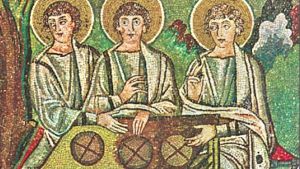
Discernment becomes acute: symbolism of the Hand
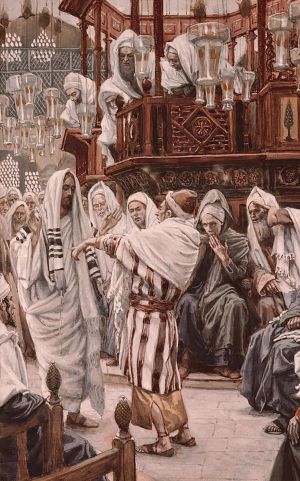
Different concerns, and Humanizing Action
(Lk 6:6-11)
Providing good and uplifting the real person - as he or she is, in his or her uniqueness - is the only absolute value; the criterion of the entire Gospel.
Even the Torah in its core and sense wanted to be an important means of human, personal, religious pedagogy - not the end.
The norms accompany us willingly, when they facilitate the way to dialogue with the Lord in us and in our brothers and sisters. But the "letter" is cold and unfounded in itself.
Once the Meeting has taken place, priority must be given to God’s Project, solicitous to realize and make us flourish; not to procedures.
In fact, the prescriptions put everyone and always on alert towards the ‘different need’.
For this reason, solidarity and fraternity are placed above any devotional and identity homage, or doctrinal necessity, as well as external observance of worship (if lived by automatons).
The same norms must be understood so that they lead to life with and in Christ - for the realization and fullness of being.
Otherwise the scrupulous virtue of religion turns into malicious action and vice of faith - which loses the totality of the person [v.9 Greek text].
In this way, on synagogue day, there is no need to celebrate a restoration that stamps the clock.
Rather, we gather in assembly to better restore women and men to their dignity as sublime beings, to be promoted in an unlimited way.
The Sabbath of the Messiah is not a day of custom’s partiality: it is a time of recovered well-being - of Liberation and Creation, of promotion of the vital energies, according to the original and full Plan of the Father.
In fact, in the place of the habitual rite, where the traditional compressed mentality prevails, Jesus does not go to pray, but to teach and cure.
Not even the paralyzed person had asked for healing - so much it seemed normal to him to be there in that way and not to receive attention or any stimulus; not even the good.
Nevertheless, Love is the core and essence of the Law: even in the precept day, help was allowed by same prescriptions, in case of extreme need or repercussion on others.
Jesus is saying that unlocking the person who cannot do anything good [«right hand, arid»: v.6] is a matter of life or death, even for the whole community [heal or «annihilate»: v.9].
Observing the Lord’s day means, even for us: strengthening the expressive possibilities of humanity and reintegrating it into a ‘new order’.
In order to fulfil the redemptive 'precept', deviant attitudes must first also be assumed, and saved - like preparatory energies for new arrangements.
We cannot afford further neglect.
The crisis that affects everyone leaks the difference between... unconscious content, and truth; fossilizations and hidden energies; religiosity and Faith - character of life in Christ and in the Spirit.
In its sides of limitation and Completeness, legalism or Liberation, stasis and Rebirth, return to "as always" or Regeneration, formalism and Joy [so on], today discernment becomes more acute.
[Monday 23rd wk. in O.T. September 7, 2026]
Discernment becomes acute
Different solicitations: the Humanising Action, and the dry action of the misanthropes
(Lk 6:6-11)
Commenting on the Tao Tê Ching (XLVII), Master Ho-shang Kung writes: "The saint knows the great by basing himself on the small, the external by examining the internal".
And he reiterates: 'Without ascending into the heavens or descending into the abyss, the saint knows Heaven and Earth: he knows them with the heart.
Procuring the good and lifting up the real person - as he is, in his uniqueness - is the only non-negotiable value; the criterion of the entire Gospel.
Even the Torah in its core and meaning was meant to be an important means of human, personal, religious pedagogy - not the end.
Norms gladly accompany us, when they facilitate the way to dialogue with the Lord, encountering Him in us and in our brothers and sisters.
But the 'letter' is cold and unmotivated.
Once the encounter has taken place, precedence must be given to God's Project, which is solicitous to fulfil us and allow us to flourish; not to procedures.
In fact, prescriptions put everyone and always on the alert for "different needs".
Hence, solidarity and fraternity are placed above any devout and identity-based obsequies, or doctrinal necessities, as well as outward observance of worship [if lived by automatons].
The same standards must be understood so that they lead to life with and in Christ - to fulfilment and fullness of being.
Otherwise the scrupulous virtue of religion turns into malign action and vice of faith - which loses the totality of the person [v.9 Greek text].
In this way, on the day of the synagogue, one does not celebrate a card-stamping restoration.
Rather, one gathers in assembly to better restore man to his dignity as a sublime being, to be promoted in an unlimited way.
The Sabbath of the Messiah is not the day of customary partialities: gestures and words express the Face of the Father, his solicitude.
It is a time of both Liberation and Creation, of promoting vital energies, according to the original and full Plan.
But in the place of habitual ritual, where the traditional [i.e. à la page] compassionate mentality prevails, Jesus does not go to pray, but to teach and heal.
Not even the paralysed man had asked for healing - so much so that it seemed normal for him to stand there like that and receive no attention, no encouragement; not even good.
Nevertheless, Love is the core and essence of the Law: even on the day of precept, help was still permitted (by the same prescriptions) in case of extreme need or repercussion on others.
The Lord is saying to [his intimate] church leaders:
Unlocking the person who fails to do any good ["barren right hand": v.6] is a matter of life and death, even for the whole community [heal or "annihilate": v.9].
When the wigwams of indifferent and dry religion, and the first-raters of distorted devotion, are provoked, the pious mask disappears.
They become violent even in the face of the good that God works on those who are misguided - and devoted to the worst without even realising it.
The hand [action] to be healed remains first and foremost that of the one-sided mummies to whom the strong teaching of the episode is addressed.
Observing the day of the Lord means, for us too: enhancing man's expressive possibilities and reintegrating him into a 'new order'.
This by clearing the environment prone to sectarianism [or ideologism] of old and new owls who intend to save appearances in order to maintain power, fake doctrinal prestige, and subservience of consciences.
But in order to fulfil the redemptive 'precept', deviant attitudes must also be assumed first, and saved - like preparatory energies for new arrangements.
Master Ho-shang again: 'When those at the top love the Way, those at the bottom love virtue; when those at the top love war, those at the bottom love strength'.
The plagiarism agencies of some particular 'churches' that want souls locked into relationships of domination would gladly plan to keep the sick in their dependent state.
For some perverse mechanisms of pastoral care and mass catechesis, the fearful and insecure must remain anonymous; even in the time of the synodal journey.
The voiceless are always useful, so that the well-introduced can continue to float about the world - with their unchanged foibles or theories.
For pious, moralistic, or partisan interests [this one private and glamorous, i.e. full of legalistic pitfalls] would gladly leave them uncertain and unaware, or worse - even if Jesus himself showed up to set them free.
We can no longer afford this.
We can no longer condone neglect: the current jolt of the global crisis is accelerating the fall of masks, of swampy or histrionic attitudes; and of symbolic practices that are an end in themselves.
The emergence that affects everyone makes it easier to understand the difference between unconscious contents and truths, sedentary fossilisations and hidden energies; religiosity and Faith - the discriminator of life in Christ and the Spirit.
In its sides of limitation and Wholeness, legalism and Liberation, stasis and Rebirth, return to as always or Regeneration, formalism and Gladness, discernment becomes more acute today.
Having already judged it useless to take advantage of the official religious institution to introduce into it the novelty of the Kingdom, [e.g. as far back as chapter 3 of Mk, first of the Gospels] a new community project is advocated.
The Master wants to guide people from all walks of life to feel and live deeply their own and others' human dimension, marked by the paradoxically fruitful experience of fallibility.
Only when they internalise its meaning and live in this way will authorities and believers truly experience compassion for the limitations of the flesh - a characteristic understanding of being 'human'.
In this work, the Lord always starts with the masses abandoned by their shepherds.
The authentic incipit comes from people who are insignificant but disengaged from the authorities of the religious-political fabric, and from the official lines of dynastic succession.
To internalise and live the message:
When have you noticed virtues of religion converted into vices of faith?
What do you mean by Salvation secured by the Kingdom of God?
Theology and symbolism of the Hand:
"Let us therefore reflect again on the signs in which the Sacrament has been given to us. At the centre is the very ancient gesture of the laying on of hands, by which He took possession of me saying: "You belong to me". But with this He also said: 'You are under the protection of my hands. You are under the protection of my heart. You are kept in the hollow of my hands and just so you stand in the vastness of my love. Stay in the space of my hands and give me yours'.
Let us remember then that our hands have been anointed with oil, which is the sign of the Holy Spirit and his power. Why the hands? Man's hand is the instrument of his action, it is the symbol of his ability to face the world, in fact to "take it in hand". The Lord has laid his hands on us and now wants our hands to become his hands in the world. He wants them no longer to be instruments to take things, men, the world for us, to reduce it to our possession, but instead to transmit his divine touch, placing themselves at the service of his love. He wants them to be instruments of service and thus an expression of the mission of the whole person who stands as a guarantor of Him and brings Him to men. If man's hands symbolically represent his faculties and, generally, technique as the power to dispose of the world, then the anointed hands must be a sign of his capacity to give, of his creativity in shaping the world with love - and for this, of course, we need the Holy Spirit. In the Old Testament, anointing is a sign of the assumption of service: the king, the prophet, the priest does and gives more than he gives himself. In a way, he is dispossessed of himself in service, in which he makes himself available to one greater than himself. If Jesus presents himself today in the Gospel as the Anointed One of God, the Christ, then this means precisely that he acts on the mission of the Father and in unity with the Holy Spirit and that, in this way, he gives the world a new kingship, a new priesthood, a new way of being a prophet, who does not seek himself, but lives for him in whose sight the world was created. Let us place our hands today once again at his disposal and pray to him to take us by the hand again and to guide us".
[Pope Benedict, Chrism homily 13 April 2006]
Symbology of the hand

Let us reflect once again on the signs in which the Sacrament has been given to us. At the centre is the very ancient rite of the imposition of hands, with which he took possession of me, saying to me: "You belong to me".
However, in saying this he also said: "You are under the protection of my hands. You are under the protection of my heart. You are kept safely in the palm of my hands, and this is precisely how you find yourself in the immensity of my love. Stay in my hands, and give me yours".
Then let us remember that our hands were anointed with oil, which is the sign of the Holy Spirit and his power. Why one's hands? The human hand is the instrument of human action, it is the symbol of the human capacity to face the world, precisely to "take it in hand".
The Lord has laid his hands upon us and he now wants our hands so that they may become his own in the world. He no longer wants them to be instruments for taking things, people or the world for ourselves, to reduce them to being our possession, but instead, by putting ourselves at the service of his love, they can pass on his divine touch.
He wants our hands to be instruments of service, hence, an expression of the mission of the whole person who vouches for him and brings him to men and women. If human hands symbolically represent human faculties and, in general, skill as power to dispose of the world, then anointed hands must be a sign of the human capacity for giving, for creativity in shaping the world with love. It is for this reason, of course, that we are in need of the Holy Spirit.
In the Old Testament, anointing is the sign of being taken into service: the king, the prophet, the priest, each does and gives more than what derives from himself alone. In a certain way, he is emptied of himself, so as to serve by making himself available to One who is greater than he.
If, in today's Gospel, Jesus presents himself as God's Anointed One, the Christ, then this itself means that he is acting for the Father's mission and in unity with the Holy Spirit. He is thereby giving the world a new kingship, a new priesthood, a new way of being a prophet who does not seek himself but lives for the One with a view to whom the world was created.
Today, let us once again put our hands at his disposal and pray to him to take us by the hand, again and again, and lead us.
[Pope Benedict, Chrism homily 13 April 2006]
Man is not an inert witness to the lordship of God
2. The Gospel of the kingdom links Christ with the Sacred Scriptures that, using a royal image, celebrate God's lordship over the cosmos and history. Thus we read in the Psalter: "Say among the nations, "The Lord reigns! Yea, the world is established, it shall never be moved; he will judge the peoples'" (Ps 96: 10). The kingdom is thus God's effective but mysterious action in the universe and in the tangle of human events. He overcomes the resistance of evil with patience, not with arrogance and outcry.
For this reason Jesus compares the kingdom of God to a mustard seed, the smallest of all seeds, but destined to become a leafy tree (cf. Mt 13: 31-32), or to the seed a man scatters on the ground: "he sleeps and rises night and day, and the seed sprouts and grows, he knows not how" (Mk 4: 27). The kingdom is grace, God's love for the world, the source of our serenity and trust: "Fear not, little flock", Jesus says, "for it is your Father's good pleasure to give you the kingdom" (Lk 12: 32). Fears, worries and nightmares fade away, because in the person of Christ the kingdom of God is in our midst (cf. Lk 17: 21).
3. But man is not a passive witness to God's entrance into history. Jesus asks us "to seek" actively "the kingdom of God and his righteousness" and to make this search our primary concern (Mt 6& ;33). To those who "supposed that the kingdom of God was to appear immediately" (Lk 19: 11), he prescribed an active attitude instead of passive waiting, telling them the parable of the 10 pounds to be used productively (cf. Lk 19: 12-27). For his part, the Apostle Paul states that "the kingdom of God does not mean food and drink but righteousness" (Rom 14: 17) above all, and urges the faithul to put their members at the service of righteousness for sanctification (cf. Rom 6: 13, 19).
The human person is thus called to work with his hands, mind and heart for the coming of God's kingdom into the world. This is especially true of those who are called to the apostolate and are, as St Paul says, "fellow workers for the kingdom of God" (Col 4: 11), but it is also true of every human person.
[John Paul II, General Audience 6 December 2000]
Winning with good
1. At the beginning of the New Year, I once again address the leaders of nations and all men and women of good will, who recognize the need to build peace in the world. For the theme of this 2005 World Day of Peace I have chosen Saint Paul's words in the Letter to the Romans: "Do not be overcome by evil, but overcome evil with good" (12:21). Evil is never defeated by evil; once that road is taken, rather than defeating evil, one will instead be defeated by evil.
The great Apostle brings out a fundamental truth: peace is the outcome of a long and demanding battle which is only won when evil is defeated by good. If we consider the tragic scenario of violent fratricidal conflicts in different parts of the world, and the untold sufferings and injustices to which they have given rise, the only truly constructive choice is, as Saint Paul proposes, to flee what is evil and hold fast to what is good (cf. Rom 12:9).
Peace is a good to be promoted with good: it is a good for individuals, for families, for nations and for all humanity; yet it is one which needs to be maintained and fostered by decisions and actions inspired by good. We can appreciate the profound truth of another saying of Saint Paul: "Repay no one evil for evil" (Rom 12:17). The one way out of the vicious circle of requiting evil for evil is to accept the Apostle's words: "Do not be overcome by evil, but overcome evil with good" (Rom 12:21).
[Pope John Paul II, Message for the 2005 World Day of Peace]
Simon, a Pharisee and rich 'notable' of the city, holds a banquet in his house in honour of Jesus. Unexpectedly from the back of the room enters a guest who was neither invited nor expected […] (Pope Benedict)
Simone, fariseo e ricco “notabile” della città, tiene in casa sua un banchetto in onore di Gesù. Inaspettatamente dal fondo della sala entra un’ospite non invitata né prevista […] (Papa Benedetto)
God excludes no one […] God does not let himself be conditioned by our human prejudices (Pope Benedict)
Dio non esclude nessuno […] Dio non si lascia condizionare dai nostri pregiudizi (Papa Benedetto)
«The Russian mystics of the first centuries of the Church gave advice to their disciples, the young monks: in the moment of spiritual turmoil take refuge under the mantle of the holy Mother of God». Then «the West took this advice and made the first Marian antiphon “Sub tuum Praesidium”: under your cloak, in your custody, O Mother, we are sure there» (Pope Francis)
«I mistici russi dei primi secoli della Chiesa davano un consiglio ai loro discepoli, i giovani monaci: nel momento delle turbolenze spirituali rifugiatevi sotto il manto della santa Madre di Dio». Poi «l’occidente ha preso questo consiglio e ha fatto la prima antifona mariana “Sub tuum praesidium”: sotto il tuo mantello, sotto la tua custodia, o Madre, lì siamo sicuri» (Papa Francesco)
The Cross of Jesus is our one true hope! That is why the Church “exalts” the Holy Cross, and why we Christians bless ourselves with the sign of the cross. That is, we don’t exalt crosses, but the glorious Cross of Christ, the sign of God’s immense love, the sign of our salvation and path toward the Resurrection. This is our hope (Pope Francis)
La Croce di Gesù è la nostra unica vera speranza! Ecco perché la Chiesa “esalta” la santa Croce, ed ecco perché noi cristiani benediciamo con il segno della croce. Cioè, noi non esaltiamo le croci, ma la Croce gloriosa di Gesù, segno dell’amore immenso di Dio, segno della nostra salvezza e cammino verso la Risurrezione. E questa è la nostra speranza (Papa Francesco)
In the divine attitude justice is pervaded with mercy, whereas the human attitude is limited to justice. Jesus exhorts us to open ourselves with courage to the strength of forgiveness, because in life not everything can be resolved with justice. We know this (Pope Francis)
Nell’atteggiamento divino la giustizia è pervasa dalla misericordia, mentre l’atteggiamento umano si limita alla giustizia. Gesù ci esorta ad aprirci con coraggio alla forza del perdono, perché nella vita non tutto si risolve con la giustizia; lo sappiamo (Papa Francesco)
The basis of Christian construction is listening to and the fulfilment of the word of Christ (Pope John Paul II)
Alla base della costruzione cristiana c’è l’ascolto e il compimento della parola di Cristo (Papa Giovanni Paolo II)
These divisions are seen in the relationships between individuals and groups, and also at the level of larger groups: nations against nations and blocs of opposing countries in a headlong quest for domination [Reconciliatio et Paenitentia n.2]
Queste divisioni si manifestano nei rapporti fra le persone e fra i gruppi, ma anche a livello delle più vaste collettività: nazioni contro nazioni, e blocchi di paesi contrapposti, in un'affannosa ricerca di egemonia [Reconciliatio et Paenitentia n.2]
Mary "Girl" [...] point of convergence and arrival of a complex of divine promises, mysteriously echoed in the very heart of history (Pope John Paul II)








duevie.art
don Giuseppe Nespeca
Tel. 333-1329741
Disclaimer
Questo blog non rappresenta una testata giornalistica in quanto viene aggiornato senza alcuna periodicità. Non può pertanto considerarsi un prodotto editoriale ai sensi della legge N°62 del 07/03/2001.
Le immagini sono tratte da internet, ma se il loro uso violasse diritti d'autore, lo si comunichi all'autore del blog che provvederà alla loro pronta rimozione.
L'autore dichiara di non essere responsabile dei commenti lasciati nei post. Eventuali commenti dei lettori, lesivi dell'immagine o dell'onorabilità di persone terze, il cui contenuto fosse ritenuto non idoneo alla pubblicazione verranno insindacabilmente rimossi.