Dec 23, 2025 Written by 

Pre-existence of the Son

5. The fullest synthesis of this truth is contained in the Prologue of the Fourth Gospel. It can be said that in that text the truth about the divine pre-existence of the Son of Man acquires a further, in a certain sense definitive explication: "In the beginning was the Word, and the Word was with God, and the Word was God. He was in the beginning with God: all things were made through him . . . In him was life, and the life was the light of men; the light shines in the darkness, but the darkness did not receive it" (Jn 1:1-5).

In these phrases the evangelist confirms what Jesus said of himself when he declared: "I came forth from the Father and have come into the world" (Jn 16:28), or when he prayed that the Father would glorify him with that glory that he had taken of him before the world was (cf. Jn 17:5). At the same time, the pre-existence of the Son in the Father is closely connected with the revelation of the Trinitarian mystery of God: the Son is the eternal Word, he is "God from God", of the same substance as the Father (as the Council of Nicaea expressed it in the Symbol of Faith). The Council formula precisely reflects John's Prologue: "The Word was with God and the Word was God". Affirming the pre-existence of Christ in the Father is tantamount to recognising his Divinity. To his substance, as to the substance of the Father, belongs eternity. This is what is indicated by the reference to the eternal pre-existence in the Father.

6. John's Prologue, through the revelation of the truth about the Word contained therein, constitutes as it were the definitive completion of what the Old Testament had already said about Wisdom. See, for example, the following statements: "Before the ages, from the beginning he created me; for all eternity I shall not fail" (Sir 24:9), "My creator pitched my tent and said to me: pitch your tent in Jacob" (Sir 24:8). Wisdom, of whom the Old Testament speaks, is a creature and at the same time has attributes that place her above the whole of creation: "Though unique, she can do all things; though remaining in herself, she renews all things" (Wis 7:27).

The truth about the Word, contained in John's Prologue, reconfirms in a certain sense the revelation about wisdom in the Old Testament, and at the same time transcends it in a definitive way. The Word not only "is with God", but "is God". Coming into this world in the person of Jesus Christ, the Word "came among his own people", for "the world was made through him" (cf. Jn 1:10-11). He came among "his own" because he is "the true light, the one who enlightens every man" (cf. Jn 1:9). The self-revelation of God in Jesus Christ consists in this "coming" into the world of the Word, who is the eternal Son.

7. "The Word became flesh and dwelt among us; and we beheld his glory, glory as of the only begotten of the Father, full of grace and truth" (Jn 1:14). Let us say it once again: John's Prologue is the eternal echo of the words with which Jesus says: "I came forth from the Father and have come into the world" (Jn 16:28), and of those with which he prays that the Father will glorify him with that glory that he had with him before the world was (cf. Jn 17:5). The Evangelist has before his eyes the Old Testament revelation about Wisdom, and at the same time the entire Paschal event: the departure through the cross and the resurrection, in which the truth about Christ, Son of Man and true God, became completely clear to those who were his eyewitnesses.

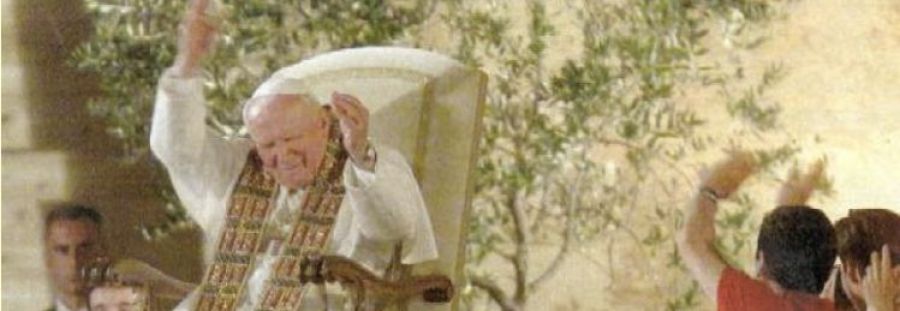
[Pope John Paul II, General Audience 2 September 1987]

2 Last modified on Tuesday, 23 December 2025 03:47
don Giuseppe Nespeca

Giuseppe Nespeca è architetto e sacerdote. Cultore della Sacra scrittura è autore della raccolta "Due Fuochi due Vie - Religione e Fede, Vangeli e Tao"; coautore del libro "Dialogo e Solstizio".

Email This email address is being protected from spambots. You need JavaScript enabled to view it.
Raw life is full of powers: «Be grateful for everything that comes, because everything was sent as a guide to the afterlife» [Gialal al-Din Rumi]
La vita grezza è colma di potenze: «Sii grato per tutto quel che arriva, perché ogni cosa è stata mandata come guida dell’aldilà» [Gialal al-Din Rumi]
It is not enough to be a pious and devoted person to become aware of the presence of Christ - to see God himself, brothers and things with the eyes of the Spirit. An uncomfortable vision, which produces conflict with those who do not want to know
Non basta essere persone pie e devote per rendersi conto della presenza di Cristo - per vedere Dio stesso, i fratelli e le cose con gli occhi dello Spirito. Visione scomoda, che produce conflitto con chi non ne vuol sapere
An eloquent and peremptory manifestation of the power of the God of Israel and the submission of those who did not fulfill the Law was expected. Everyone imagined witnessing the triumphal entry of a great ruler, surrounded by military leaders or angelic ranks...
Ci si attendeva una manifestazione eloquente e perentoria della potenza del Dio d’Israele e la sottomissione di coloro che non adempivano la Legge. Tutti immaginavano di assistere all’ingresso trionfale d’un condottiero, circondato da capi militari o schiere angeliche…
May the Holy Family be a model for our families, so that parents and children may support each other mutually in adherence to the Gospel, the basis of the holiness of the family (Pope Francis)
La Santa Famiglia possa essere modello delle nostre famiglie, affinché genitori e figli si sostengano a vicenda nell’adesione al Vangelo, fondamento della santità della famiglia (Papa Francesco)
John is the origin of our loftiest spirituality. Like him, ‘the silent ones' experience that mysterious exchange of hearts, pray for John's presence, and their hearts are set on fire (Athinagoras)
Giovanni è all'origine della nostra più alta spiritualità. Come lui, i ‘silenziosi’ conoscono quel misterioso scambio dei cuori, invocano la presenza di Giovanni e il loro cuore si infiamma (Atenagora)
Stephen's story tells us many things: for example, that charitable social commitment must never be separated from the courageous proclamation of the faith. He was one of the seven made responsible above all for charity. But it was impossible to separate charity and faith. Thus, with charity, he proclaimed the crucified Christ, to the point of accepting even martyrdom. This is the first lesson we can learn from the figure of St Stephen: charity and the proclamation of faith always go hand in hand (Pope Benedict)
La storia di Stefano dice a noi molte cose. Per esempio, ci insegna che non bisogna mai disgiungere l'impegno sociale della carità dall'annuncio coraggioso della fede. Era uno dei sette incaricato soprattutto della carità. Ma non era possibile disgiungere carità e annuncio. Così, con la carità, annuncia Cristo crocifisso, fino al punto di accettare anche il martirio. Questa è la prima lezione che possiamo imparare dalla figura di santo Stefano: carità e annuncio vanno sempre insieme (Papa Benedetto)
“They found”: this word indicates the Search. This is the truth about man. It cannot be falsified. It cannot even be destroyed. It must be left to man because it defines him (John Paul II)
“Trovarono”: questa parola indica la Ricerca. Questa è la verità sull’uomo. Non la si può falsificare. Non la si può nemmeno distruggere. La si deve lasciare all’uomo perché essa lo definisce (Giovanni Paolo II)

Due Fuochi due Vie - Vol. 1 Due Fuochi due Vie - Vol. 2 Due Fuochi due Vie - Vol. 3 Due Fuochi due Vie - Vol. 4 Due Fuochi due Vie - Vol. 5 Dialogo e Solstizio I fiammiferi di Maria

duevie.art

don Giuseppe Nespeca

Tel. 333-1329741


Disclaimer

Questo blog non rappresenta una testata giornalistica in quanto viene aggiornato senza alcuna periodicità. Non può pertanto considerarsi un prodotto editoriale ai sensi della legge N°62 del 07/03/2001.
Le immagini sono tratte da internet, ma se il loro uso violasse diritti d'autore, lo si comunichi all'autore del blog che provvederà alla loro pronta rimozione.
L'autore dichiara di non essere responsabile dei commenti lasciati nei post. Eventuali commenti dei lettori, lesivi dell'immagine o dell'onorabilità di persone terze, il cui contenuto fosse ritenuto non idoneo alla pubblicazione verranno insindacabilmente rimossi.






