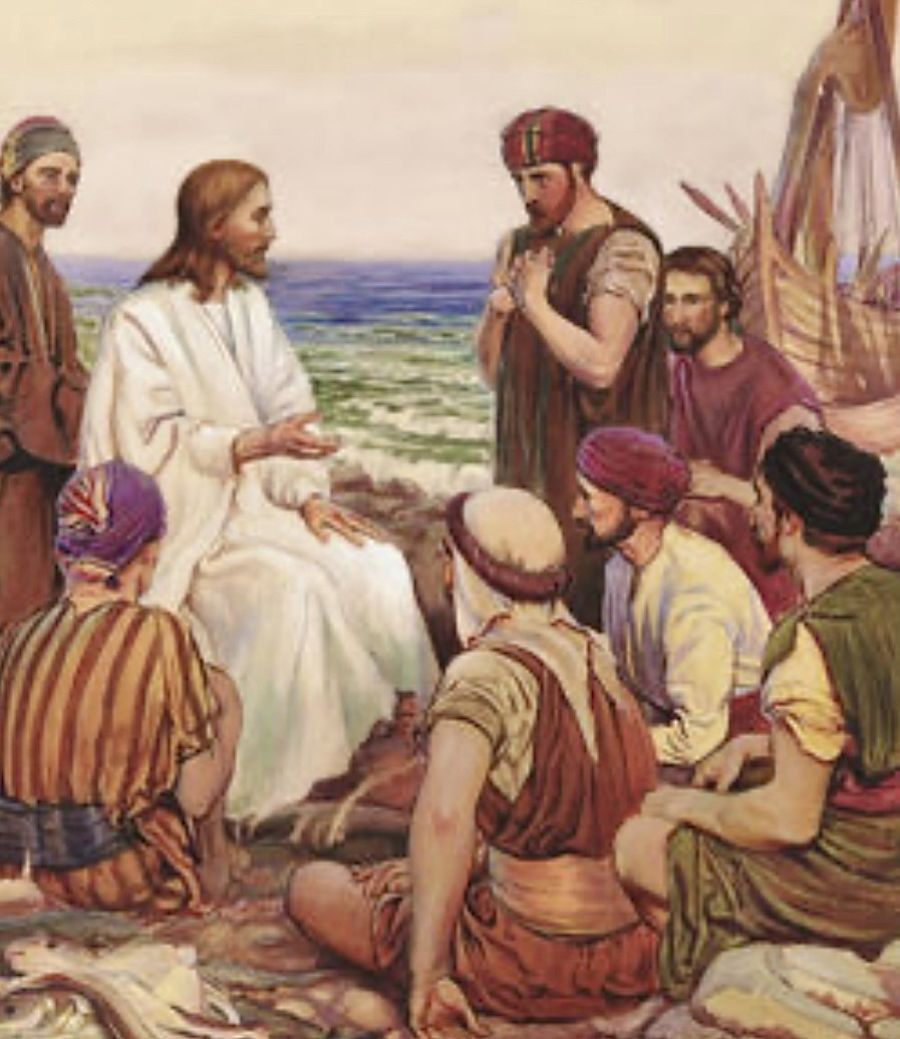
Jesus explains to his closest disciples that the Son of Man will not enjoy worldly triumphs, and that he will have to suffer greatly at the hands of the elders, the chief priests and the scribes. He then rebukes Peter – who represents us all – for his superficial way of thinking, which is not in accordance with God.
But anyone who came into contact with Francis immediately realised that he was a man who thought according to God and not according to men.
Indeed, his words and his actions were so different from the common way of thinking and behaving that they aroused amazement.
The Sources, precious testimonies of the time, confirm this.
“Truly, Francis always carried that little bunch of myrrh* in his heart; he always gazed upon the face of his Christ; he always remained in contact with the Man of Sorrows, who knows all suffering” (FF 672).
In the sufferings of the poor, he saw those of the Poor One par excellence: Christ; and he strove to alleviate them in every way.
“Once, whilst returning from Siena, he met a poor man. It so happened that Francis, because of illness, was wearing a cloak over his habit.
Looking with compassionate eyes upon that man’s misery, he said to his companion:
«We must give this cloak back to this poor man: for it is his. Indeed, we have received it on loan, until such time as we might come across someone poorer than ourselves».
His companion, however, considering the state in which the compassionate father found himself, flatly refused: he had no right to neglect his own needs in order to provide for another.
But the Saint said:
«I believe that the Great Almsgiver will accuse me of theft if I do not give what I am wearing to those who are more in need» (FF 1143).
An example of thinking according to God and according to men.
Two vastly different ways of thinking: love that gives itself completely, without regard for the sufferings to be borne to the point of exhaustion – and self-love that flees, or wishes to flee, from everything that is trial, suffering, discomfort or inconvenience.
Francis had chosen Christ and loved: he thought as Jesus did, according to the measure of the Gospel.
The Herald of the Great King, in truth, continually repeated to the Son of God, through the very fact of his existence:
«You are the Christ».
In all that he did, its echo could always be heard.
* Myrrh, enclosed in special pouches or sachets, was worn around the neck by the elegant women of the time. Here, the sprig of myrrh symbolises the suffering Christ, ever lovingly present in Francis’s heart.
«Get behind me, satan! [you] are a stumbling block to me, for you do not have in mind the things of God, but the things of men!» (Mt 16:23)
22nd Sunday in Ordinary Time, year A (Mt 16:21–27)